Valentine's Day 2026 is shaping up to be a unique retail event. For the first time in years, the holiday falls on a Saturday, which completely changes the math for marketers. We aren't just looking at a quick "after-work dinner" rush; we are looking at an entire weekend dedicated to connection, self-care, and experience-based spending.
If your current plan is just to put a red filter over your homepage and offer a 10% discount, you're likely leaving money on the table. Today's consumers are smarter, more sensitive, and—frankly—a bit tired of the same old tropes. National Retail Federation (NRF) data shows that 2025 spending hit a record $27.5 billion, with the average consumer spending nearly $190. To capture that in 2026, you need a strategy with genuine human empathy. This guide will give Valentine's Day marketing ideas and promotions according to real data and comments to help you resolve the customers' pain points.
1. The empathy-first strategy: solve the "lonely exclusion"
For many, Valentine's Day isn't a celebration; it's a series of digital triggers. Whether it's due to a recent breakup, grief, or simply the pressure of being single, a significant portion of your audience may feel alienated by your marketing.
The opt-out email campaign
One of the most powerful moves you can make is to follow the "Thoughtful Marketing Movement" pioneered by brands like Bloom & Wild. By sending a simple email in late January asking customers if they'd like to opt out of Valentine's Day communications, you build a level of brand trust that a sale simply cannot buy.
While it sounds counterintuitive to stop marketing to people, this strategy actually protects your long-term revenue. Industry benchmarks show that "sensitive marketing" opt-outs can reduce unsubscribe rates by up to 30% during peak holidays because customers feel respected rather than hounded.
Move beyond "romantic" imagery
Social media communities, particularly on Reddit, have become vocal about the "exclusionary" nature of February marketing. On threads like r/dating, you'll often find users expressing frustration with the holiday's binary focus: "I'm tired of being told I'm half a person because I don't have a date".
At the same time, other users in the same discussion offer a more inclusive perspective, with one commenter noting that, "That being said, I think too many people focus on the dating/romantic relationship part of valentines day. I agree with the other person who said you need to love yourself before you can love another person. Treat yourself on V-day, your parents, a good friend... there are many types of love out there and prospective partners will find that new found confidence in yourself appealing, so it goes both ways."
So, in 2026 Valentine's day, it is recommended to shift your visual storytelling. Instead of exclusively featuring couples, highlight:
-
Self-Love: 28% of non-celebrants still plan to mark the occasion by "treating themselves". You may set up collections for personal use.
-
Friendships: Lean into "Galentine's" or "Palentine's" themes for Friday, February 13th. In this way, you can set up collections for date nights or friendships.
-
Pet Gifting: Spending on pets has remained a consistent and growing trend, with 32% of shoppers planning gifts for their "fur-babies."
2. Kill the "pink tax": value-based product bundling
The "Pink Tax" is the practice of charging more for a product simply because it's marketed as "feminine" or "romantic". It is a massive pain point in 2026. Savvy shoppers on platforms like TikTok and Reddit quickly call out brands that just take a standard product, dye it red, and add a $20 markup.
Avoid the "lazy bundle" trap
Consumers have a "clearance radar." They can tell when a "Love Bundle" is just a collection of slow-moving stock tossed into a heart-shaped box. To win, you must create experience-based bundles.
For example, if you sell home goods, don't just bundle two mugs. You can bundle two mugs, a premium hot cocoa mix, and a QR code to a curated "Saturday Morning" Spotify playlist. You aren't selling objects; you are selling a Saturday morning experience.
Or, the skincare brand should avoid bundling three random products and instead offers a "Sunday Reset Kit" featuring a gentle cleanser, a calming mask, and a reusable headband, paired with a short digital guide on a 15-minute nighttime routine. The bundle price reflects the routine and service, not a discount dump.
Transparent pricing vs. the pink tax
Consumers do not reject higher prices—they reject unexplained higher prices. When launching limited editions, be transparent about the value. If a product costs more, explain why.
The jewelry, for example, launches a Valentine's limited edition necklace priced 18% higher than its core line and clearly states the reasons: recycled gold sourcing, hand-set stones, and a capped production run of 300 units. The product page includes a difference breakdown, reducing price friction at checkout. This "human-to-human" transparency builds the confidence needed to lower cart abandonment rates.
3. Offer product customization for a personal touch
A generic gift feels like an afterthought. Personalization is the antidote to the "Pink Tax" frustration because it adds undeniable, unique value. This is where Print-on-Demand (POD) becomes a merchant's best friend. It allows you to offer custom products without holding thousands of dollars in inventory.
But how to implement it? The goal is to make the customer the "co-creator" of the gift. For example, if you sell personalized apparel and decor, you can use POD services to offer embroidered initials on sweatshirts or custom names on jewelry dishes. Instead of just a "Love" mug, offer one where the customer can upload a photo of their pet or a specific date.
Most POD apps have a "Live Preview" tool on your product page. When a customer types their partner's name or uploads a photo, they should see exactly what the finished product looks like before they hit "Add to Cart." This instant gratification reduces return rates and significantly boosts conversion.
4. Capture anti-Valentine's demand and turn It into sales
Not everyone wants to lean into the "roses and romance" narrative. In fact, a growing segment of the market, particularly Gen Z and Millennials, prefers to poke fun at the holiday's commercialism. Social media insights show that "Anti-Valentine's" searches often peak among single demographics who feel ignored by traditional ads.
This is your chance to use bold humor and "rebellious" branding. It's about making your customers feel "seen" in their skepticism.
-
Ironic Product Lines: Think breakup-themed coffee mugs, "Self-Partnered" hoodies, or candles with scents like "Better Off Alone." Ironic slogans like "Happy Valentine's Day (I Guess)" or "My Dog is My Valentine" resonate deeply on platforms like TikTok where relatability is currency.
-
Dark Humor & Sarcasm: Pivot your valentine advertising for one specific segment to be entirely black and white, contrasting the sea of red and pink. Use subject lines like "For those who hate heart-shaped boxes."
Then, frame product as a way to "ignore the noise" and focus on personal peace. Pair this with a limited-time "Anti-V-Day" discount code (e.g., NO-ROSES-20) to spark urgency among those who usually skip the holiday shopping rush.
5. Leverage user-generated content (UGC) to build social proof
Social proof acts as the ultimate psychological green light. According to consumer trends, nearly 79% of people say UGC highly impacts their purchasing decisions.
You should start gathering UGC as early as January. Reach out to customers who bought from you and offer a small incentive (like a $5 credit) for a photo of their gift in action:
-
On-Site Integration: Don't just keep these photos on social media like Instagram. Embed an Instagram gallery directly on your Valentine's collection page or homepage. A "Real-life" photo next to a professional studio shot provides the transparency shoppers crave.
-
The Trustpilot Flip: Take a glowing review from Trustpilot, specifically one that mentions "fast shipping" or "great quality", and turn it into a high-quality graphic for your email header.
Besides, you may run a "Love Letters" contest. Ask followers to tag your brand in a photo of their "self-love" or "friendship" purchase. Repost the winners to your Stories daily to create a "social proof loop" that builds momentum toward the 14th.
6. Accessible AI: personalized promotions
In the past, high-level personalization felt like something only enterprise brands could afford. But now you don't need a "gift concierge" or a team of developers to work smarter. For small and medium business owners, AI has become a quiet partner that handles the heavy lifting of data and content creation.
Smart discounting and loyalty that protects your margins
One of the biggest mistakes during the holidays is "blind discounting"—throwing out a 20% off code and hoping for the best. Modern AI tools like Loyalty & Push can now calculate exactly how much a discount will increase a specific user's spending while maintaining your profit margins.
Instead of a blanket sale, AI can help you set up intelligent member tiers and point redemption plans. It can even categorize your products automatically and generate the perfect product lists for your promotional emails. If your store hits a "dry spell" (like low average revenue per account), AI can even suggest operational strategies to pivot your messaging in real-time. It's like having a data scientist on staff who ensures your loyalty program actually builds loyalty rather than just eating your profits.
Maximize your valentine promotion with intelligent discovery
High-converting promotion isn't just the offer; it's the timing. with intelligent product recommendation tools, you can display personalized suggestions across your store based on how a customer actually behaves.
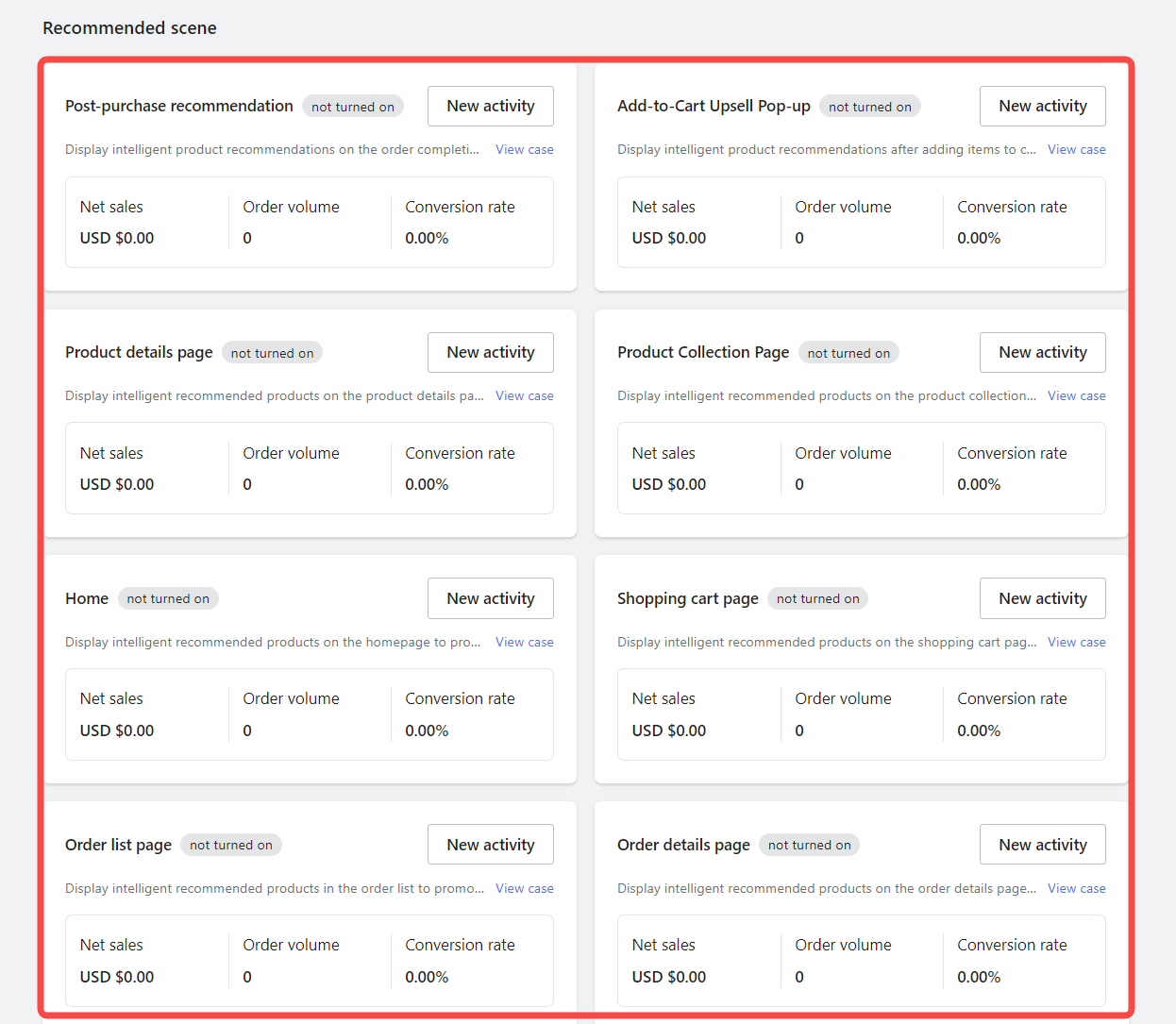
For instance, when a shopper looking at a pair of earrings, AI surfaces a matching necklace on the product page, or a premium gift box at the cart stage, instead of showing them random items. This covers the full journey from the homepage to post-purchase, which ensures that your campagin feels like a helpful suggestion rather than a pushy sales pitch. When customers see what they actually need, engagement and conversion rates tend to climb naturally.
Automate your Valentine's advertising for high-impact results
For many store owners, the hardest part of a holiday is the creative work. Holiday advertising usually requires high-quality headlines, compelling copy, and eye-catching images—all of which take time you don't have.
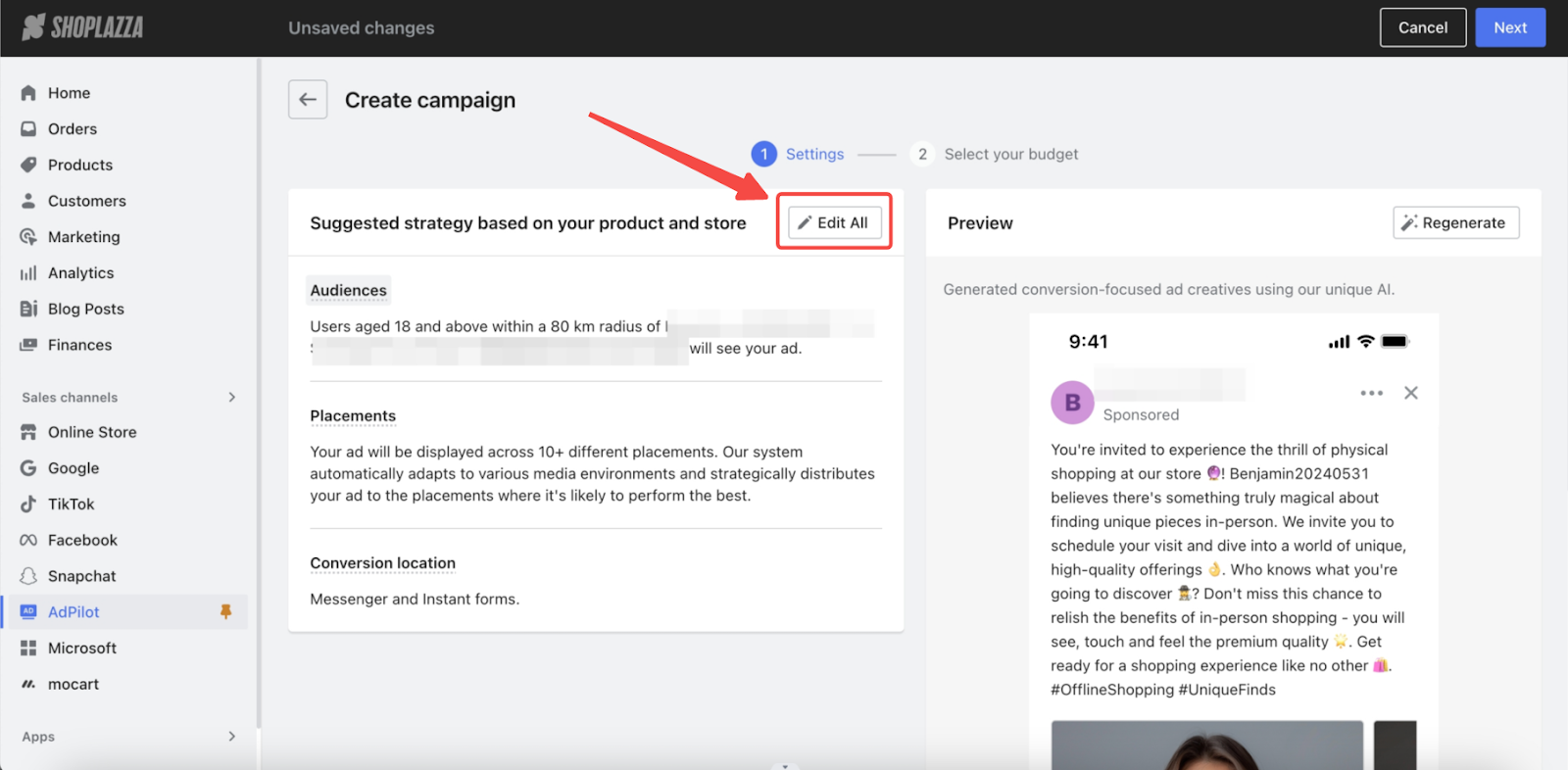
Tools like AdPilot have changed the game here. They allow merchants (especially those with physical shops like clothing or home goods) to generate professional ad content in seconds. These tools connect directly to platforms like Meta, allowing you to launch effective ads on Facebook and Instagram without needing prior ad experience. Whether you're launching a new product or a brand-wide event, AI-driven valentine advertising helps you reach the right audience with content that actually resonates, boosting both your online traffic and your offline foot traffic.
7. The Saturday surge: logistics and shipping tactics
Since Valentine's Day 2026 is a Saturday, your shipping strategy is your marketing strategy.
Solve "shipping anxiety" with radical transparency
Don't hide your deadlines in a footer. Use a high-visibility countdown banner: "Order in the next 4 hours for guaranteed Saturday delivery." By February 10th, you should pivot your homepage to focus on:
-
Digital Gift Cards: For the ultimate procrastinator.
-
BOPIS (Buy Online, Pick Up In-Store): If you have physical locations, this is your biggest competitive advantage in the final 48 hours.
Streamline order processing for peak demand
When the surge hits, manual order entry is a recipe for disaster. You should use automated order and fulfillment system that allows you to manage multiple stores, sync inventory in real-time, and process bulk shipments with a single click. By automating the mundane task, like printing labels and updating stock levels, you reduce human error and ensure that your Valentine's orders are packed and shipped the moment they are placed.
Master your overseas stock and global fulfillment
To hit the Valentine's window, overseas stock should ideally be in local warehouses by mid-January to avoid peak-season port congestion.
Efficient fulfillment is about a seamless flow from the warehouse to the doorstep. This is where the Shoplazza Fulfillment team excels. They maintain close communication and rapid response times, assisting merchants in handling exception orders and coordinating item replacements. Their service covers the United States, Australia, and major global markets, providing an integrated solution from first-mile transportation and overseas warehousing to last-mile delivery. Whether your order volume is large or small, Shoplazza Fulfillment ensures stable, high-quality logistics so you can focus on scaling.
8. The "Feb 15th" retention loop: beyond the one-time buy
Most Valentine marketing ideas and guides stop at the holiday itself, but the day after Valentine's is a goldmine for customer retention.
Launch the "love it or swap it" campaign. On February 16th, send a follow-up email. Ask the recipient if they loved the gift. If they didn't, make the exchange process painless. As seen with retailers like Supergoop, a frictionless return portal doesn't just manage stock; it instills a sense of confidence that makes customers return throughout the rest of the year.
Market your online store
Success in 2026 requires moving past the outdated playbook of generic discounts and heart-shaped banners. With these innovative and actionable Valentine's Day marketing ideas, you can create a high-converting, inclusive experience that resonates with every shopper, whether they are celebrating romance, friendship, or the power of self-love.
FAQs about Valentine's Day marketing
Q1: What is the most effective way to use a valentine promotion?
The most effective promotions shift from generic discounts to personalized relevance. Use AI to recommend products based on a customer's specific browsing history or "gift persona" (e.g., "The Homebody" vs. "The Adventurer"). Since Valentine's 2026 is a Saturday, promotions bundled with "weekend experiences" or digital vouchers for local activities often see higher conversion rates than standalone products.
Q2: How can I reduce "shipping anxiety" for my customers?
Radical transparency is your best tool. Use high-visibility countdown banners on your homepage that clearly state the "order-by" deadline for guaranteed Saturday delivery. Pairing this with an integrated fulfillment partner or Shoplazza Fulfillment ensures your stock is already in local overseas warehouses, allowing you to provide real-time tracking and reliable last-mile delivery that beats the February 14th deadline.
Q3: How can I use UGC if I'm in a new store?
If you lack a library of customer photos, start by turning text-based reviews from platforms like Trustpilot into sleek, branded social media graphics. You can also seed products to micro-influencers in exchange for "unboxing" videos. Feature these "first impressions" on your product pages to provide the visual social proof that new shoppers need to feel secure.
Q4: Should I offer a discount or a free gift?
It depends on your brand positioning. While 2025 NRF data shows over half of consumers seek sales, luxury or boutique brands often see better results with "Value-Adds." Free Express Shipping or a Bonus Self-Care Gift (like a premium candle with a jewelry purchase) maintain your profit margins and increases perceived value without the "cheapening" effect of a flat percentage discount.