As an ecommerce seller, your checkout page is the final bridge between a casual browser and a loyal customer. In the fast-paced American market, a clunky payment process is the quickest way to lose a sale. Today, shopping is no longer just about clicking "Buy Now". It's about biometric taps, "Pay in 4" flexibility, and instant bank-to-bank settlements. This guide breaks down the most important digital payment methods in the US for 2026, what they mean for your conversion rates, and how platforms like Shoplazza help merchants accept most of them through a single, unified checkout.
Overview of digital payment adoption in the United States
As digital commerce accelerates, understanding the adoption of digital payment methods in the US reveals which technologies drive transactions, influence customer behavior, and shape merchant strategies.
Adoption trends and market size
According to Di Market, the US digital payments market has reached $136.88 billion in 2025, with an explosive 16.2% CAGR between 2025 and 2033. US ecommerce is no longer just a luxury; it is a necessity, with total sales approaching the trillion-dollar mark. For sellers, the data is clear: mobile-first transactions now dominate, and the choice of payment methods directly dictates whether a customer hits "confirm" or abandons their cart.
Consumer usage and merchant acceptance gap
While nearly 70% of online adults now use digital or mobile payments regularly, many small-to-medium businesses (SMEs) still lag behind. This "acceptance gap" is a major pain point; 60% of small business owners would switch platforms for faster access to funds, yet many are stuck with legacy systems that settle in 3–5 days. Bridging this gap with modern, real-time solutions is the top priority for high-growth sellers this year.
Key different digital payment methods in the US
To maximize your online store's revenue, you must offer a strategic mix of digital payment methods in the us that cater to both speed-hungry Gen Z shoppers and security-conscious Boomers.
Major digital wallets and mobile apps
Digital wallets have officially surpassed physical cards as the most popular online payment method in 2026, driven by a 60% adoption rate for in-app and mobile purchases.
- Apple Pay: The leader in US contactless payments, accepted at over 92% of major retail chains (Source from SQ Magazine). It remains the go-to choice for Gen Z, with 71% of young digital wallet users selecting it as their primary method. Apple Pay is projected to reach 60–65 million active users by 2025, nearly double the ~35 million users expected for Google Pay, highlighting its dominant position in mobile commerce adoption.
- PayPal: Despite the rise of NFC wallets, PayPal remains the king of online checkouts with a 47.4% market share among web-based services. Its "familiarity" factor makes it essential for high-trust, high-value purchases.
- Google Wallet / Pay: A major payment option for Android users, Google Wallet had an estimated 35 million US users in 2025, compared with Apple Pay’s ~65.6 million. While smaller in reach, it remains a key digital wallet for mobile-first households, particularly among Android users and mid-income consumers, offering tap-to-pay functionality, stored credentials, and seamless integration with online and in-store checkout.
- Venmo: A social commerce powerhouse. While originally for splitting bills, it is now a major merchant tool, allowing verified users to send up to $60,000 weekly.
- Cash App: Favored by younger demographics for its "all-in-one" approach, allowing users to buy stocks or Bitcoin directly alongside their retail spending.
⭕️ Notice: Merchants building on Shoplazza can enable PayPal, Apple Pay and Google Pay, directly from the dashboard without separate API integrations. And some of them are supported under Shoplazza Payments, the platform's built-in payment solution. Besides, if you activate Smart Payment Buttons by PayPal on Shoplazza, the system can recognize your customers as Venmo users, then automatically show the Venmo payment option.
Digital card payments
Traditional cards are no longer just plastic; they have been "digitized" through tokenization to provide a secure underlying instrument for nearly all wallet-based transactions.
- Credit & Debit Cards: Remain the backbone of US commerce, with over 800 million credit cards and 581 million active bankcard accounts currently in circulation in early 2026, according to Expensify and ACA Internationa. Credit cards hold the largest share of the market, accounting for 35% of all payment transactions, as 77% of consumers prioritize them for their robust fraud protection and superior rewards programs.
- Contactless "Tap-to-Pay" Cards: NFC-enabled plastic has become the standard, with 68% of U.S. card transactions now being contactless-enabled as of 2026. For sellers, the "tap" has effectively replaced the "swipe," slashing in-person checkout times by 63% compared to cash and proving 60% faster than traditional chip-based dip payments.
Bank-to-bank and instant transfers
The launch of FedNow has triggered a "real-time tipping point" in the US. For ecommerce sellers, this shift is revolutionary. Many businesses now demand instant settlement to eliminate the 3-day waiting period of traditional banks, directly freeing up liquid capital to restock inventory faster.
- FedNow: The Federal Reserve’s instant rail reached 1,600 participating banks in early 2026. Its "Request for Payment" (RFP) feature allows ecommerce sites to send a digital bill directly to a customer’s banking app, enabling a "Pay-by-Bank" checkout that settles in seconds and bypasses expensive interchange fees entirely.
- Zelle: The king of P2P volume, processing over $1.2 trillion in 2025. It is a vital tool for small ecommerce players and service providers, as nearly 30% of its volume now comes from small business transactions, offering a trusted, bank-integrated way to receive "cash-like" digital payments without high credit card fees.
- ACH Payments: Remain the standard for high-value B2B orders and recurring subscriptions. Nacha reports that the widespread adoption of Same-Day ACH allows merchants to settle 80% of transactions within a single business day, making it the most cost-effective "bulk" payment rail.
Are there emerging and alternative methods in the US?
Newer payment types are filling the gaps for budget-conscious shoppers and tech-forward consumers.
Buy Now, Pay Later (BNPL)
.png?width=1630&height=1060&name=Buy%20Now%2c%20Pay%20Later%20(BNPL).png)
The US BNPL market has surged to an estimated $198.21 billion in 2026, growing at a CAGR of over 16% as it moves from a "trend" to a fundamental budgeting tool. For ecommerce sellers, BNPL is a conversion powerhouse: 46% of Gen Z consumers now use it regularly, often doubling their participation rates from previous years to avoid high-interest credit card debt.
- Affirm: The preferred choice for high-ticket "considered" purchases like electronics, home fitness (Peloton), and furniture. It appeals to Millennials and Gen X who prefer fixed, transparent payment schedules for large investments.
- Klarna: The undisputed lifestyle and fashion leader, heavily favored by Gen Z. Its "all-in-one" shopping app and partnerships with brands like DoorDash mean consumers now use it for both high-end apparel and high-frequency, low-ticket items like groceries.
- Afterpay: Dominates the "Pay in 4" model, particularly for beauty and discretionary retail. It is favored by shoppers who want to manage weekly cash flow without a hard credit check, helping merchants increase average order values by up to 30%.
⭕️ Notice: For merchants who want to offer BNPL without negotiating separate contracts, Shoplazza Payments includes native support for Klarna, Affirm, and Afterpay. Merchants based in the US can enable all three from a single settings page, with no additional integration required.
QR Codes
Once a pandemic-era backup, QR codes are now a mainstay for social commerce and omnichannel retail. In 2026, over 102 million Americans scan QR codes for payments and information, fueling a QR-based spending market projected at $3 trillion annually. For ecommerce sellers, embedding "scan-to-pay" codes in live streams, social media ads, and even physical packaging has become a key driver for the $2.2 trillion US social commerce market.
Cryptocurrency
Merchant adoption has reached a new milestone, with 39% of US retailers now accepting digital assets at checkout as of early 2026. Growth is no longer driven by speculation but by Stablecoins (like USDC and USDT). These "dollar-pegged" tokens account for $390 billion in annual payment volume, as 18% of crypto-using shoppers prefer them to avoid the price volatility of Bitcoin while enjoying transaction fees that are often 40% lower than traditional rails.
Merchant strategies for online digital payment optimization
To turn your checkout from a friction point into a competitive advantage, you must implement a strategic framework that aligns technical efficiency with the evolving habits of American shoppers.
Simplify your payments
Managing disparate vendors for every card and wallet can drain your operational resources and complicate financial reporting. If you run an online store on Shoplazza, you can use a unified solution like Shoplazza Payments. It accepts the most popular digital payment methods, including Klarna and Affirm, all through a single integration, covering 180+ countries and regions without the need to negotiate separate contracts with individual providers.
This payment solution is built for ecommerce velocity, offering settlements as fast as T+2 and boosting payment success rates by an average of 17%. Furthermore, Shoplazza provides a "panoramic view" of your capital across multiple storefronts, making your daily financial reconciliation and cash flow monitoring more convenient than ever before.
Prioritize high-conversion methods
A "wallets-first" strategy is essential for capturing the mobile-dominant market. By prioritizing Apple Pay and Google Pay at the top of your checkout, you cater to the 60% of shoppers who prefer biometric authentication over manual entry. However, a smart strategy also includes localized fallbacks; if a high-value transaction is declined on a credit card, offering an immediate "Pay-by-Bank" (A2A) or BNPL alternative can save a sale that would otherwise be lost. This tiered approach ensures you capture every segment of the US demographic, from rewards-driven credit users to cash-flow-conscious Millennials.
Reduce checkout friction
Every extra second at checkout increases the likelihood of cart abandonment. To combat this, sellers should implement one-tap payment flows and network tokenization, which allow returning customers to check out without re-entering sensitive data. Tokenization doesn't just speed up the process; it improves authorization rates by ensuring card details stay updated even if a physical card is replaced. Merchants who use split-testing to optimize their button placements and minimize form fields often see a significant lift in mobile conversion rates, which now account for nearly half of all US ecommerce volume.
Manage fees and fraud risk
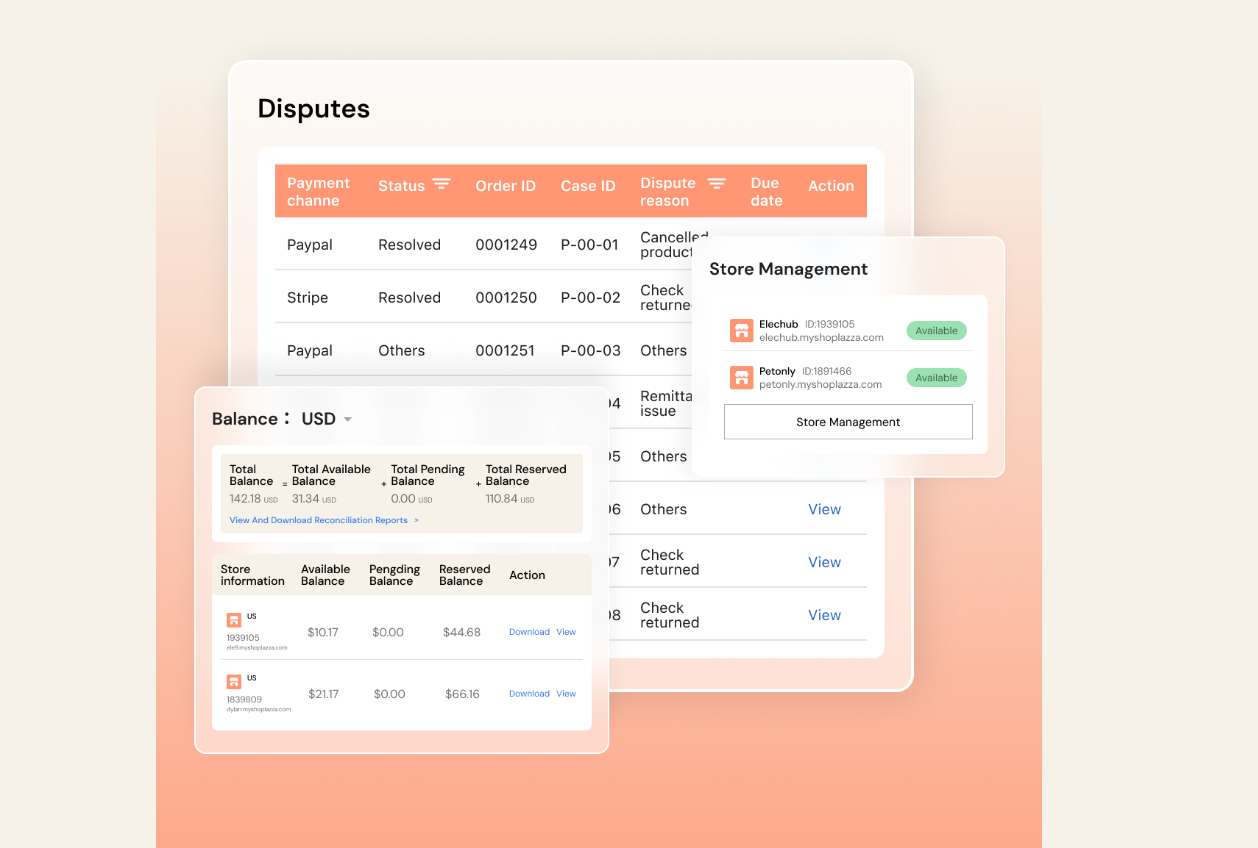
As fraud complexity rises, merchants must balance the cost of interchange fees and BNPL payouts against the cost of lost inventory. Shoplazza Payments addresses this with an integrated AI-powered risk control system that helps identify and block fraudulent orders in real time. This proactive approach has helped merchants reduce dispute rates by an average of 16%. Additionally, the Smart Dispute Resolution (SDR) feature integrates with premium tools like Visa’s Verifi RDR and Mastercard’s Ethoca. By automating dispute handling and providing early warnings, it safeguards your payment account health and significantly reduces the risk of costly chargebacks.
Did you struggle with the shutdown? Shoplazza has also passed PCI DSS v4 certification, and supports automatic channel switching during peak sales periods, so if one payment channel goes down during a high-traffic promotion, transactions route to a backup channel with no disruption to the customer experience.
Expand acceptance strategically
A forward-thinking merchant should always be looking toward the next rail of efficiency. In 2026, this means integrating FedNow or real-time payment APIs to facilitate instant, low-fee bank settlements that bypass traditional card networks. While cards and wallets remain the core of US retail, planning for stablecoin pilots (using USDC) can provide a competitive edge for high-ticket or international B2B transactions. By staying agile and testing these emerging methods, you ensure your business is prepared for the shift toward a truly "instant" global economy.
Conclusion
The landscape of digital payment methods in the US rewards merchants who move fast and stay flexible. Platforms like Shoplazza help sellers act on that directly: Shoplazza Payments supports Apple Pay, Google Pay, Klarna, Affirm, Afterpay, Visa, and Mastercard under one integration, settles funds as fast as T+2, and uses AI-based fraud detection to protect your margins. For merchants who want to stop managing payment complexity and start converting more customers, it's worth exploring Shoplazza's payment setup.
FAQs about US payment methods
Q1: What are the most popular digital payment methods in the US in 2026?
The leading digital payment methods include Apple Pay (~65.6M users), Google Wallet (~35M users), PayPal, Venmo, Cash App, credit/debit cards, and bank-based transfers like Zelle and FedNow. Wallets dominate mobile-first and social commerce transactions.
Q2: How widely accepted is Apple Pay compared to other wallets?
Apple Pay is accepted at over 92% of major US retail chains, making it the most broadly accepted contactless wallet. In comparison, Google Wallet and other Android wallets are slightly less pervasive but still key for digital-first consumers.
Q3: What role does BNPL play in US digital payments?
Buy Now, Pay Later (BNPL) services like Affirm, Klarna, and Afterpay are now mainstream. They appeal to Gen Z and budget-conscious shoppers, helping increase average order value but adding complexity to refunds and merchant cash flow.
Q4: Are cryptocurrencies widely used for US retail payments?
PayPal and the National Cryptocurrency Association found that approximately 39%-40% of US merchants accept cryptocurrency, often stablecoins like USDC, for retail purchases. While not yet mainstream, crypto adoption is growing among tech-savvy consumers seeking faster, borderless payments.
Q5: How can merchants optimize for digital payments to increase conversion?
Merchants can streamline checkout by offering the most popular digital payment methods or integrate with solutions like Shoplazza Payments, which integrates Visa, Mastercard, Klarna, and more. Its AI-driven tools help manage fees and detect fraud, reducing disputes and increasing payment success rates by up to 17%. Combined with one-page checkout and saved payment data, this approach minimizes friction, accelerates transactions, and encourages customers to complete purchases.
Q6: Which ecommerce platforms support the most US digital payment methods natively?
Shoplazza is one of the few platforms that supports Apple Pay, Google Pay, Klarna, Affirm, and Afterpay through a single built-in payment solution — Shoplazza Payments. Merchants can activate these methods from the dashboard without separate contracts, and the platform handles fraud detection, dispute resolution, and multi-store fund management in one place.