AI is no longer a "nice-to-have" for online sellers. It has become a practical operating system for modern commerce. For anyone asking how to use AI for dropshipping, the answer now goes far beyond writing product descriptions or running ads faster. AI touches product selection, store creation, pricing, marketing, fulfillment, and customer experience. When used correctly, it reduces trial-and-error, shortens launch cycles, and improves decision quality. This guide breaks down where AI delivers measurable value and how dropshipping businesses can apply it in real, scalable ways.
Key takeaways
- AI is no longer optional in dropshipping. It functions as a core operating layer across product research, store setup, marketing, fulfillment, and customer experience. (20 uses cases referred)
- Sellers applying AI systematically report up to 37% higher revenue, driven by more accurate product selection, demand-based pricing, and improved conversion rates.
- AI-powered store builders like Shoplazza significantly lower the entry barrier, allowing non-technical sellers to launch and scale faster. No sign-up needed to try!
- AI accelerates execution but does not replace judgment. Strategic decisions still require human oversight to avoid over-automation mistakes.
Why use AI for dropshipping?
Dropshipping runs on two variables: speed and accuracy. Sellers who identify demand early, price dynamically, respond to customers instantly, and catch fulfillment issues before they escalate consistently outperform those who don't. AI excels at all four.
The underlying reason is data volume. A single dropshipping operation generates signals from ad platforms, supplier feeds, customer reviews, search engines, social content, and competitor sites simultaneously. No individual operator can process that volume in real time — but AI can, and does it continuously.
The business case is well established. Companies applying AI across sales and marketing report revenue uplift of 10–15%, driven by improved targeting and personalization. For ecommerce specifically, sellers using AI tools report up to 37% higher revenue, largely from more accurate product selection and demand-responsive pricing. The question is no longer whether to use AI, but how to implement it systematically without operational complexity. The 20 use cases below answer that question directly.
How to use AI for dropshipping stores setup?
Before applying AI across your funnel, you need a functional store. AI has compressed what used to be a weeks-long setup process into something most sellers can complete in a single session.
Step 1: Describe your store and let AI build it
In the Shoplazza AI store builder, you may describe what you want to sell, who you are selling to, and which market you are targeting. For example, you might type: "Create a pet supplies store for first-time dog owners in the U.S." Not sure what products to include or how the store should look? That is expected. The AI fills in the gaps by suggesting product categories, structuring collections, and generating a complete storefront layout.
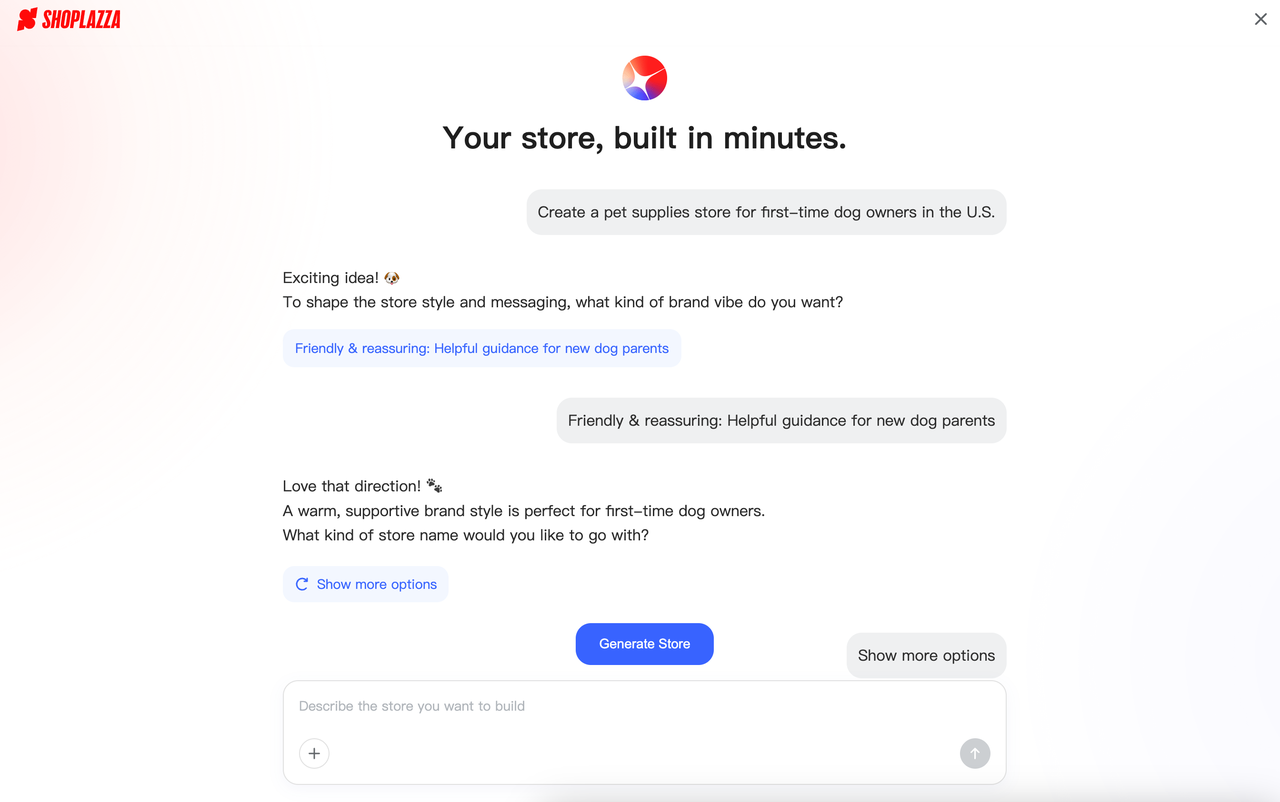
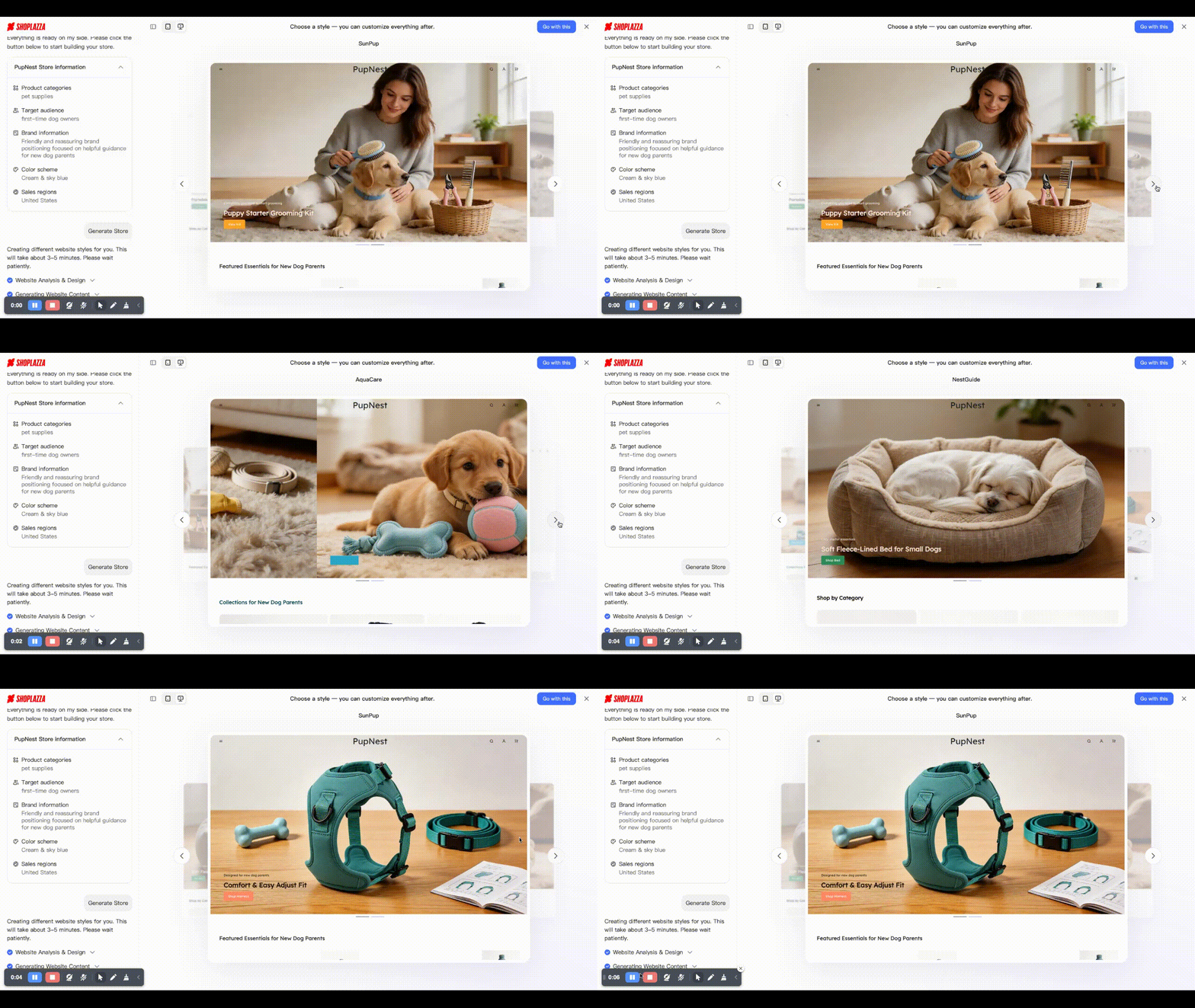
Bonus? Navigation menus, product pages, and essential policy pages are created automatically, all adapted to local language conventions and shopping habits. If you already have product images, uploading them helps the AI refine the store even further. No sign-up is required to preview; you only register when you're ready to publish.
Step 2: Connect suppliers and import products
Once the store framework is ready, the next challenge is sourcing products. Shoplazza supports to directly connect with mainstream supplier platforms like CJdropshipping that support global warehousing and international shipping.
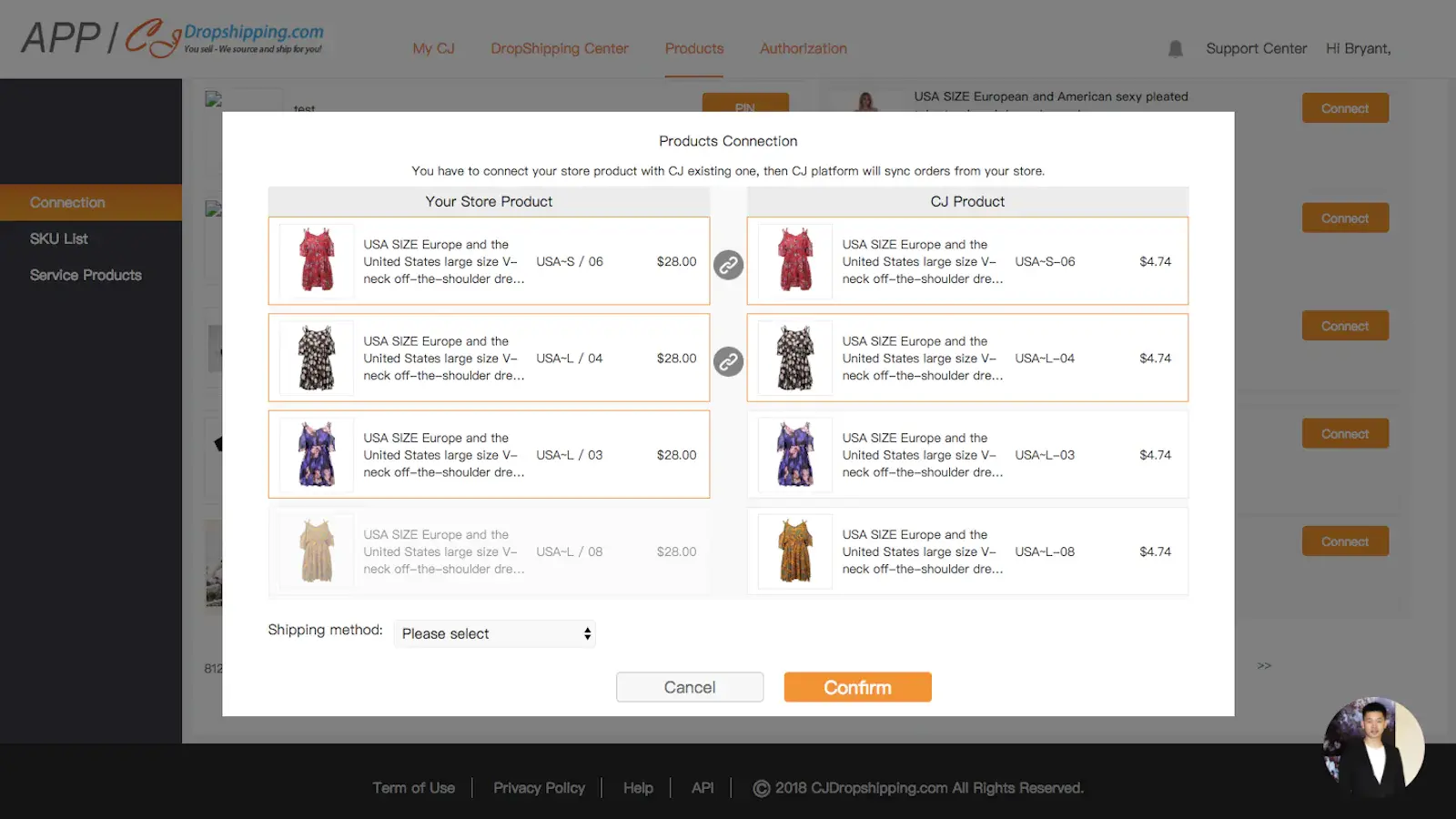
Instead of manually importing products one by one, you can add trending items with a single click. Product titles, images, pricing, and inventory levels sync automatically. Stock changes update in real time, reducing the risk of overselling. There is no SKU limit, which means you can test multiple products or expand categories without worrying about technical constraints.
Step 3: Start selling across channels
With products live, distribution becomes the priority. Shoplazza supports one-click integrations with TikTok, Facebook, and Pinterest, and other social media channels. This function allows you to turn social traffic into orders without additional setup.
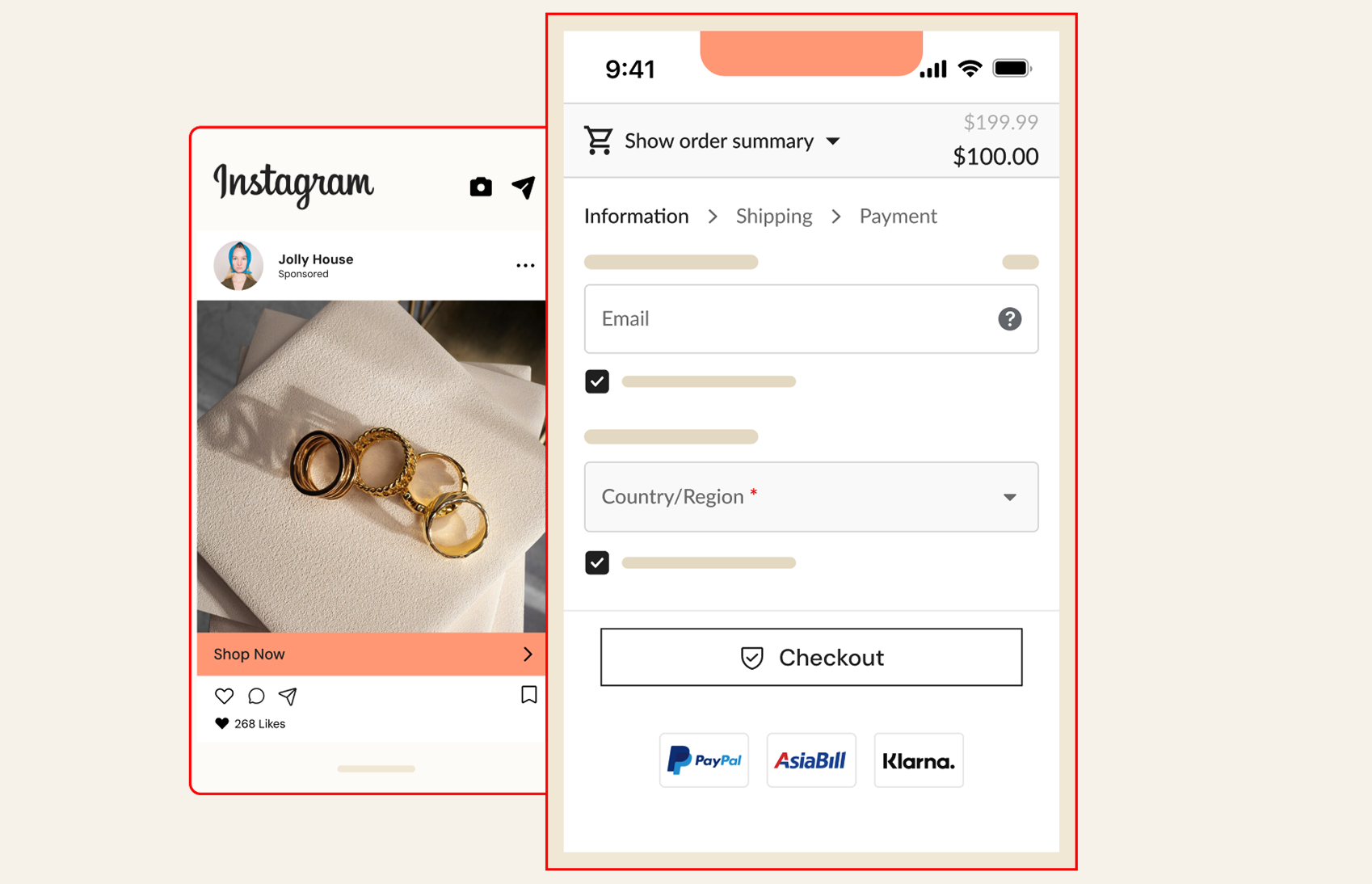
When a customer places an order, the system automatically pushes the order details to the connected supplier. The supplier ships directly to the customer, while tracking and status updates sync back to your dashboard. From traffic acquisition to order fulfillment, everything runs in one backend, giving you full visibility without operational complexity.
20 AI use cases for dropshipping (with AI tools recommended)
Got a dropshipping store already? Now it's time to implement AI thoroughly. The following 20 examples and cases show how AI powered dropshipping can be applied across your entire funnel.
Market research and product sourcing (5 use cases)
Trend scanning
Trend scanning is about spotting products before they become overcrowded. AI does this by continuously analyzing short-form content and paid ads across platforms like TikTok, Facebook, and Instagram. In practice, AI tools track:
- Engagement velocity (how fast likes, comments, and shares)
- Ad duplication frequency (who are running similar creatives)
- Creative freshness (new hooks, formats, or angles entering the market)
For example, tools like Sell The Trend analyze engagement rates and ad spend. It helps you launch before saturation. A practical signal is when engagement rises sharply while ad spend and advertiser count remain relatively low. That usually indicates early demand rather than saturation.
Hot-selling product discovery
Once a trend is detected, the next step is confirming whether it is actually selling. AI-powered suppliers and large language models can help validate this quickly. You can use AI-enabled supplier platforms to filter products by recent order growth, repeat purchase rates, and shipping regions. Many platforms surface "fast-moving" or "rising" products based on real transaction data rather than popularity alone.
You can also use Gemini as a research assistant. For example, prompt it with: "Analyze recent TikTok pet product trends and identify items with commercial intent and low market saturation. Highlight any products appearing repeatedly across multiple creator accounts." Gemini can summarize patterns from public content, highlight repeated product mentions, and suggest product categories worth deeper validation.
Competitor product spying
Competitor monitoring is no longer about manually checking stores. AI automates this by tracking changes across dozens of competitor sites in real time. It monitors:
- Price changes and discount timing
- New bundles or upsell offers
- Copy or positioning shifts
- Product availability changes
For example, some AI tools inspect a competitor pricing phone cases at $15 (your $12 cost), with upsell strategies boosting their AOV by 25%. You can copy and refine for your edge instead of reacting weeks later.
Supplier validation
Choosing the wrong supplier is one of the fastest ways to lose money in dropshipping. To reduce risk, AI helps valuate suppliers based on:
- Average shipping time consistency
- Refund and dispute ratios
- Review sentiment trends over time
- Stock stability across weeks
A practical approach is to ask Gemini to assist with comparison. For example: "Compare three suppliers for this product and create a scorecard based on delivery speed, review quality, and refund risk." This produces a structured comparison rather than relying on gut feeling, helping you choose suppliers that can support scale.
Demand forecasting
Demand forecasting helps answer a critical question: Should I scale or pause? AI models combine internal and external data to guide that decision. It analyzes:
- Historical sales patterns
- Weekly and seasonal demand cycles
- Search volume changes from tools like Google Trends
- Engagement signals from ads and social content
For fast-moving categories, this kind of forecasting is the difference between riding a demand spike and missing it entirely.
Content and creative (5 use cases)
Product imagery
Product visuals are one of the highest-leverage conversion variables in a dropshipping store — and one of the most neglected. Most supplier images are plain, low-resolution, or watermarked. Shoplazza's built-in AI image tool, LazzaStudio, solves this without a photographer or design budget.

Describe the scene you want in plain language, like "Calming dog chews on a natural wood surface, soft morning light, minimal white background", and LazzaStudio generates 2K or 4K commercial-grade product images in minutes. It also supports AI model photography for apparel and lifestyle categories, covering diverse skin tones and body types across North America, Southeast Asia, and the Middle East. New users get 100 free points to start, with professional images produced at as low as $0.07 each.
Product descriptions
Generic, spec-heavy product descriptions do two things poorly: they don't rank in search, and they don't convert visitors. AI fixes both when given the right prompt. Try: "Write a 200-word product description for a wrinkle-free travel blazer for frequent business travelers. Tone: professional and trust-building. Include keywords related to comfort, durability, and easy care. Lead with the primary benefit, not the feature." The result aligns copy with buyer intent and improves organic visibility without keyword stuffing. Always review and adjust for brand voice before publishing.
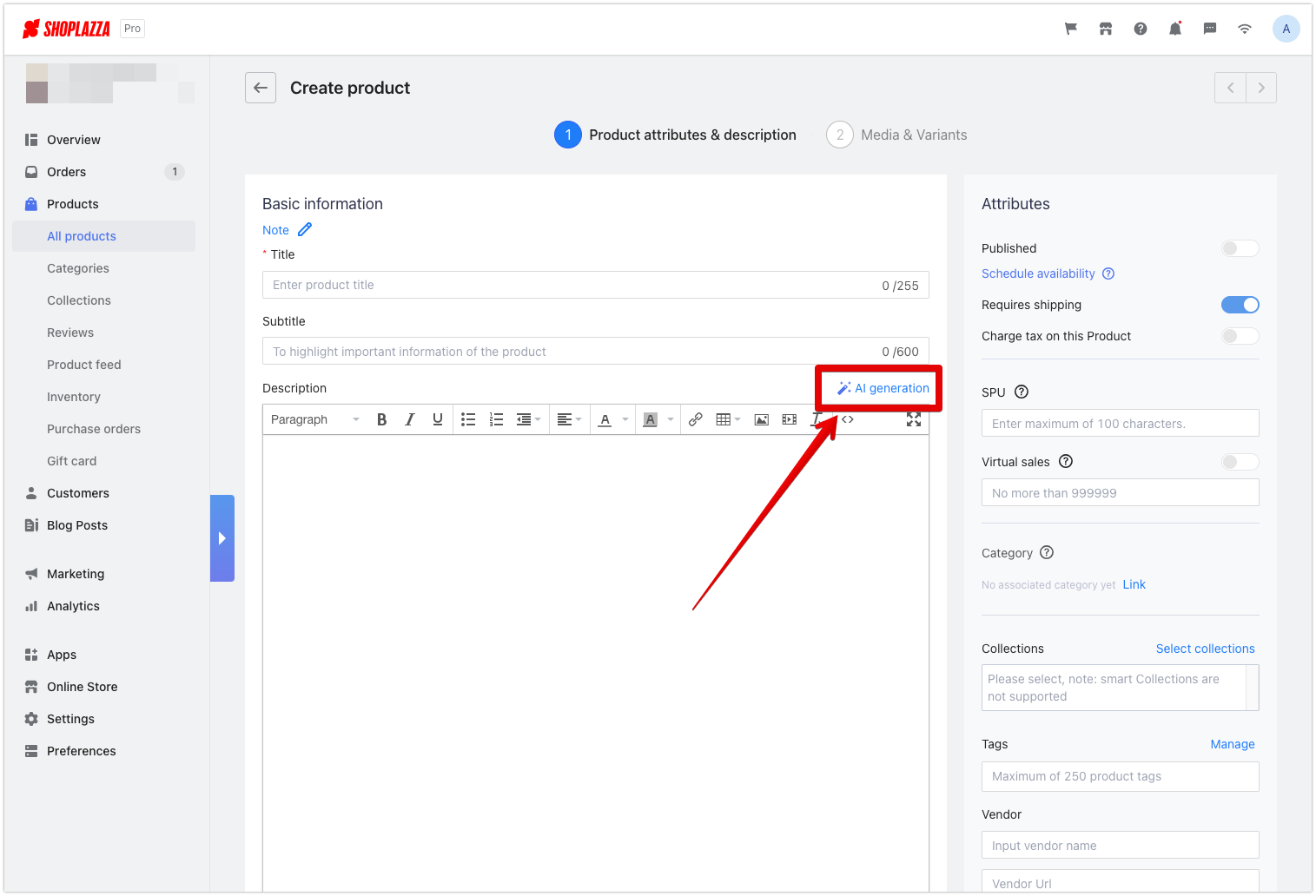
If you're building on Shoplazza, you don't need a separate tool for this. The platform includes a built-in AI description generator directly on the product editing page. Just input your product details and generate a ready-to-publish description in seconds, then refine as needed before going live.
Video ads
AI simplifies short-form video production by turning product pages into ad-ready content. Tools like Predis.ai, AdCreative.ai, or Banana can extract key features, write scripts, and generate visuals optimized for TikTok or Reels. Example prompt: "Create a 15-second TikTok script highlighting before-and-after results for a skincare serum. Use a direct hook in the first three seconds and end with a clear call to action." This enables rapid creative testing without a video team.
Social captions
The same caption performing well on Instagram rarely lands the same way on TikTok or Pinterest. Platform audiences have different content expectations, and AI can generate platform-specific variations automatically. Tools like Copy.ai let you input a product and target audience, then generate 20 to 50 caption variations adapted for each channel's tone and format. It saves hours of manual copywriting each week while maintaining consistent brand messaging across platforms.
Voiceovers
For dropshippers targeting multiple international markets, localizing video content into different languages is a significant production bottleneck. AI voiceover tools like Murf AI resolve this by converting written scripts into natural-sounding audio in 20-plus languages, with controls for tone, pace, and emotional register. A product demo produced in English can be localized into Spanish, Arabic, or Bahasa Indonesia in minutes — no voice talent, no recording setup, no scheduling delays.
Marketing and sales (5 use cases)
Email personalization
AI improves email performance by tailoring messages to real customer behavior. For abandoned carts, tools like Omnisend segment users based on browsing depth and cart value, sending reminders such as "Complete your yoga mat order—enjoy 10% off today." For loyalty programs, AI agents on Loyalty & Push can create campaigns based on membership tier, points balance, and spending power, automatically sending exclusive emails to high-value customers.
A/B testing and CRO
A/B testing helps identify which page elements actually drive conversions by comparing different versions of content, layouts, or offers. With AI analyse, you don't have to rel y on assumptions. Marketers test headlines, pricing blocks, CTAs, and visuals to see what performs best. Tools like CustomFit.ai make this practical without coding by dynamically modifying website content in real time. You can test and personalize product, home, or checkout pages, add new content blocks, and use AI-driven insights to continuously improve conversion rates and upselling performance.
Dynamic pricing
Static pricing in a competitive dropshipping market is a margin problem. When a competitor drops their price by $2 and you don't respond for three days, you lose orders you could have kept. Dynamic pricing tools like AutoDS monitor competitor listings and demand signals in real time, adjusting prices automatically within preset profit thresholds.
A practical configuration: set a floor margin of 35% and allow the system to match or slightly undercut competitor prices within that boundary. This maintains competitiveness without requiring daily manual price checks or risking margin erosion.
Influencer matching
AI removes guesswork from influencer selection by analyzing audience overlap, engagement authenticity, and niche relevance. Tools such as Reply.io score creators based on how closely their followers match your target customer. For example, a fitness brand can prioritize TikTok influencers with 80% audience alignment, securing more effective collaborations without paying premium rates for mismatched reach.
Visual search
Visual search allows shoppers to find products using images instead of keywords. AI analyzes image attributes such as color, shape, and texture to match visually similar products. Tools like Clerk.io and Visual Layer enable customers to upload or tap images to discover related items, improving product discovery and increasing add-to-cart rates, especially on mobile-first ecommerce stores.
Operations and customer experience (5 use cases)
Fraud and issues detection
Revenue loss in dropshipping comes from two directions most sellers underestimate: fraudulent orders and search visibility erosion.
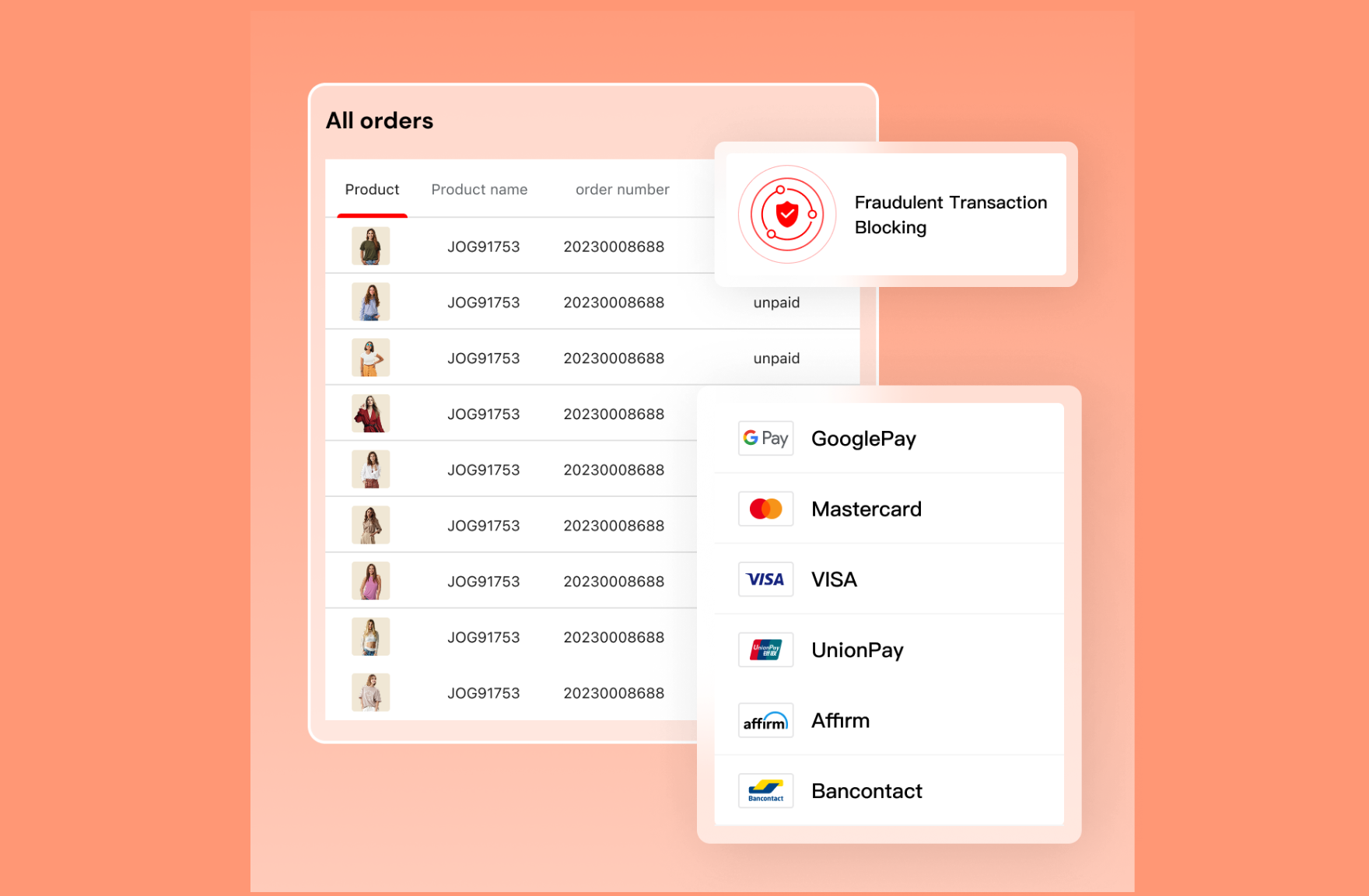
On the fraud side, AI-powered risk control tools detect high-risk orders by flagging IP mismatches, unusual cart values, and repeat chargeback patterns before shipment. Shoplazza Payments takes this a step further with a built-in AI risk control system. It automatically identifies suspicious orders and consolidates them into a dedicated section of your order management dashboard, making it straightforward to review, action, and reduce chargeback exposure without a separate fraud tool.
On the visibility side, tools like AlphaRank automatically audit technical SEO issues, optimize metadata and structured data, and generate search-ready content. In this way, it may protect organic traffic that poor site health can quietly erode over time.
Chatbot support
Always-on customer support no longer requires a large team. Solutions like SaleSmartly Chat combine AI-powered intelligent routing with automated follow-up workflows, ensuring inquiries reach the right agent instantly while maintaining engagement after conversations end. Built-in scheduling and collaboration tools balance speed and service quality. According to McKinsey, "next best experience" AI capabilities can lift customer satisfaction by 15–20%, increase revenue by 5–8%, and reduce service costs by up to 30%.
Inventory prediction
Stock issues often surface too late, after ads are live and orders pile up. With Shoplazza, inventory, shipping, and order status are integrated directly into one backend, removing the need for extra plugins. The system monitors supplier stock in real time and forecasts shortages, so you can switch to backup suppliers during peak demand, which is especially valuable for fast-moving categories like electronics.
Sentiment analysis
Customer feedback hides valuable signals, but only if it is analyzed at scale. Tools like Hotjar aggregate reviews, heatmaps, and feedback tags to reveal recurring issues. For example, repeated "too dim" comments on a lamp product highlight the need to adjust listings, visuals, or specifications. Acting on sentiment trends early helps reduce returns and improves product-market alignment.
Workflow automation
Tools like Zapier and Make connect apps to automate tasks such as notifying teams of new orders, syncing customer data, triggering email campaigns, and updating CRM records. These platforms build end-to-end workflows without coding, reducing manual errors and keeping operations consistent across sales, marketing, and support.
Common mistakes when use AI
AI can accelerate dropshipping operations, but missteps in implementation often reduce its impact. The following examples highlight common mistakes and practical fixes to ensure AI truly supports growth instead of creating problems.
Publish unedited AI content
AI-generated text produced without brand-specific prompts or human review tends to be generic, occasionally inaccurate, and structurally repetitive across listings. Search engines penalize thin, duplicated content, and customers notice copy that reads like it was written for no one in particular. The fix is straightforward: treat AI output as a first draft, not a final product. Review every piece, adjust tone to match your brand voice, verify any factual claims, and optimize for the specific search intent of your target buyer.
Over-automate before testing
Activating AI across all workflows simultaneously, like pricing, inventory, email, ads, before validating each automation individually is one of the fastest ways to introduce compounding errors. A mispriced product combined with a poorly configured email sequence and an oversold inventory item creates three customer problems at once. To fix it, you may roll out each automation on a limited segment first, monitor relevant KPIs for at least one week, and only expand after confirming the output is accurate and the logic holds under real conditions.
Ignore ad platform policy updates
AI-generated ad creatives can breach platform policies in ways that aren't immediately obvious — prohibited claims, restricted product categories, or disallowed creative formats. TikTok, Meta, and Google update their advertising policies regularly, and an AI prompt that produced compliant ads three months ago may generate flagged content today. You can build a monthly policy review into your workflow and update your AI prompts and templates accordingly.
Rely on a single AI tool
No single AI platform excels equally at trend research, creative production, pricing optimization, and customer support simultaneously. Sellers who use one tool for everything consistently underperform those who match specialized tools to specific functions. Use Browse AI for competitor monitoring, LazzaStudio for product imagery, CustomFit AI for CRO, and Murf AI for voiceovers. Each chosen because it's the best available option for that specific task.
Skip data feedback loops
AI models improve with data, but only if you feed them performance signals consistently. Sellers who deploy AI automations and never update them with fresh engagement, sales, or return data end up running systems optimized for conditions that no longer exist. You may build a regular cadence, weekly for fast-moving metrics like ads and pricing, monthly for product and supplier decisions, to review performance data and adjust AI configurations accordingly.
Treat AI as a strategy replacement
AI is a powerful execution tool. It is not a substitute for understanding your customer, selecting the right niche, or making positioning decisions under market uncertainty. Sellers who delegate strategy to AI alongside execution tend to optimize in the wrong direction faster. Use AI to remove friction from decisions you've already made well — not to make decisions you haven't thought through yet.
Use AI for your dropshipping business
With such detailed use cases and setup guide, you’ve probably got a good idea of how to use AI for dropshipping to boost efficiency and sales. The next step is putting it into action. With Shoplazza, you can create a fully AI-powered store in minutes—no coding, no hassle—so you can focus on growing your business instead of juggling repetitive tasks.
FAQ about AI for dropshipping
Q1: What is the best AI tool for beginners in dropshipping?
It depends on your needs. There are many AI tools for different dropshipping tasks, from product research to marketing automation. For store building, Shoplazza stands out as beginner-friendly. It’s free to try without signing up, allows you to create a fully functional store, and includes built-in tools to handle product listings, inventory, and basic daily operations.
Q2: Is AI suitable for beginners in dropshipping?
Absolutely. Many AI tools are designed for non-technical users, simplifying tasks like product research, ad creation, and store setup. Beginners can leverage AI to reduce the learning curve, automate repetitive tasks, and focus on strategy and marketing rather than manual processes.
Q3: Can AI really improve dropshipping profitability?
Yes. AI helps optimize ad targeting, adjust pricing dynamically, and reduce operational mistakes. By minimizing wasted spend, boosting conversion rates, and streamlining workflows, AI directly improves margins and can increase overall profitability without constant manual intervention.
Q4: Do AI-generated product descriptions harm SEO?
Not if properly edited. Search engines prioritize original, helpful, and relevant content. Using AI to draft descriptions is safe as long as you review, refine, and integrate brand-specific keywords, ensuring content aligns with user intent and adds value to your listings.
Q5: Will AI replace human decision-making in ecommerce?
No. AI acts as a support tool, providing insights, predictions, and efficiency. Strategic decisions—such as selecting product niches, planning campaigns, or scaling operations—still require human judgment and contextual understanding to navigate markets effectively.