Online shoppers abandon carts at alarming rates — over 70 % of ecommerce carts remain unpurchased before checkout (Statista). A key reason: unanswered questions or uncertainty at the final step. Live chatbox let brands respond instantly, clarify doubts, and guide visitors to complete purchases. With so many options available, choosing the right one can be challenging. This guide will review the top live chat tools for ecommerce in 2026, explain their strengths, and help you find the best fit for your store.
Quick answer: comparison table
Below is a snapshot of leading live chat tools, what they're best for, and how they compare in key areas.
| tool | best for | key strength | ai capability |
| SaleSmartly Chat | cross‑border ecommerce | omnichannel unified messaging | advanced multilingual ai |
| JivoChat Live Chat | proactive engagement | proactive triggers + crm | built‑in ai agent |
| WildGoose Live Chat | data‑driven support | real‑time analytics | multilingual support |
Benefits of live chat for ecommerce
Live chat for ecommerce delivers measurable advantages for both customer experience and business performance, helping brands turn browsers into buyers and streamline support operations. Key benefits include:
- Higher conversion rates: Stores with live chat see 10–20 % higher conversions as visitors receive instant answers that reduce uncertainty.
- Lower cart abandonment: Real‑time support can recover shoppers before they leave, decreasing abandonment rates significantly.
- Improved customer satisfaction: Immediate assistance leads to higher satisfaction scores and stronger loyalty.
- Increased sales opportunities: Agents can upsell or cross‑sell during live conversations.
- Better operational efficiency: Support teams can handle multiple chats at once, reducing workload and response times.
3 Best live chat tools for reducing cart abandonment in ecommerce
Here are three standout platforms that help reduce cart abandonment while boosting engagement and sales.
SaleSmartly Chat
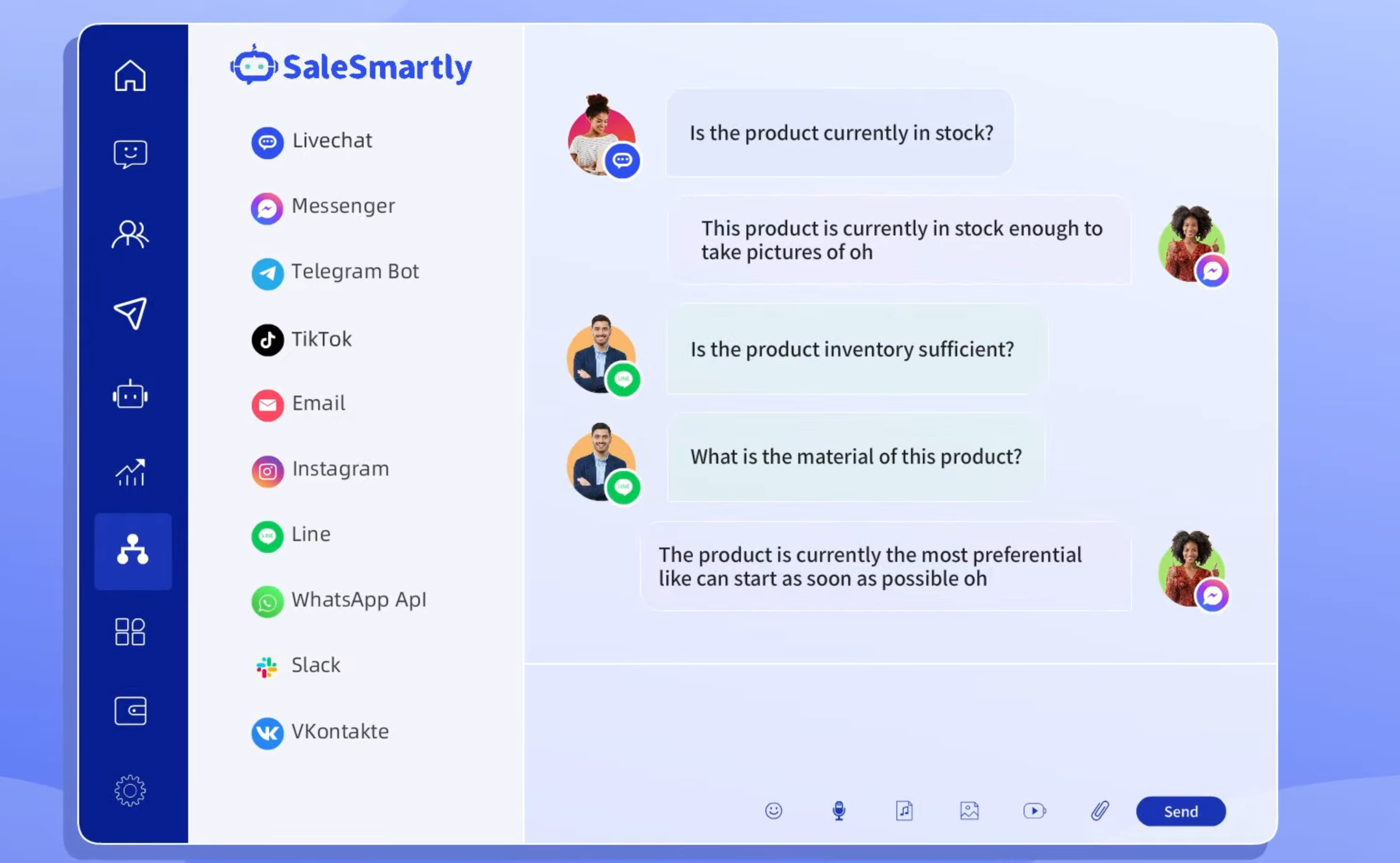
SaleSmartly Chat is an omnichannel customer communication platform designed for ecommerce brands that operate across multiple markets and channels. Unlike traditional live chat widgets, it combines messaging, automation, and customer data into a single system, allowing teams to manage conversations and sales interactions in one place. The platform has gained traction among cross-border sellers due to its ability to connect social platforms, messaging apps, and websites seamlessly. As ecommerce becomes more fragmented, tools like SaleSmartly are positioned as infrastructure for both customer support and revenue growth, rather than just a support add-on.
What makes it different?
- Unified Omnichannel Dashboard: Integrates major global channels—including Live Chat, WhatsApp, Facebook Messenger, TikTok, Instagram, Telegram, LINE, Email, and VKontakte—into a single interface for centralized communication management
- AI-Powered Multilingual Communication: Enables real-time translation across 134 languages, allowing brands to communicate with global customers without friction
- AI Chatbot & Automation Engine: Handles FAQs, order updates, and pre-sale inquiries while supporting automated follow-ups and lifecycle messaging
- Bulk Messaging & Proactive Engagement: Supports large-scale outreach campaigns, abandoned cart recovery, and proactive customer engagement
- Intelligent Routing & Team Collaboration: Uses AI-based routing, smart scheduling, and internal collaboration tools to improve response efficiency and workload distribution
- Customer Data & Personalization Layer: Builds unified customer profiles with tagging, interaction history, and segmentation for tailored communication
- In-Chat Conversion Tools: Embeds product recommendations and sales prompts directly within conversations to support purchase decisions
- Analytics & Performance Insights: Provides real-time data visualization and reporting to monitor customer behavior, engagement trends, and team performance
Why you may like it?
- Reduces manual workload by automating repetitive customer interactions
- Helps increase conversion through proactive engagement and in-chat selling
- Supports scalable operations as order volume and support demand grow
- Enables more personalized customer experiences through data-driven interactions
JivoChat Live Chat
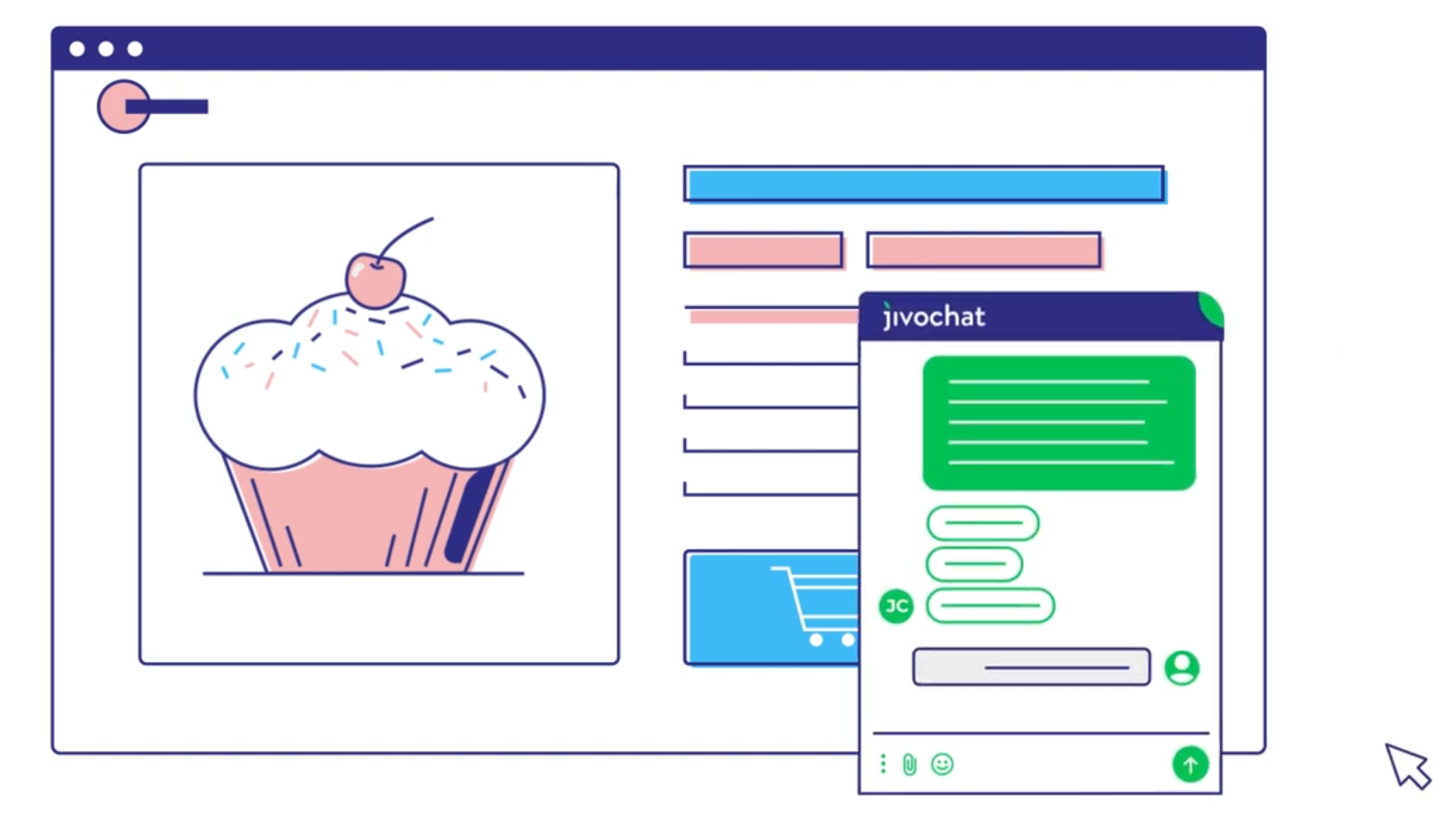
JivoChat Live Chat is an omnichannel business messenger built to help ecommerce teams engage website visitors in real time and convert more traffic into sales. It goes beyond a standard chat widget by combining live chat, social messaging, CRM, and team collaboration into one platform. JivoChat is particularly known for its proactive engagement approach—triggering conversations with visitors before they leave—and for supporting multiple communication formats, including calls and video. For ecommerce brands that want to reduce bounce rates and respond faster across channels, JivoChat functions as both a communication hub and a lightweight sales tool.
What makes it different?
- Proactive Chat Engagement: Automatically initiates conversations with visitors using targeted prompts to reduce bounce and increase interaction rates
- Omnichannel Messaging Hub: Connects Live Chat, WhatsApp, Instagram, Email, and other channels into a single inbox for centralized communication
- Voice & Video Communication: Supports callbacks and real-time video calls, enabling more direct and high-touch customer interactions
- Built-in CRM & Deal Tracking: Allows teams to tag users, set reminders, and manage sales pipelines directly within the chat interface
- Typing Insight Technology: Shows what visitors are typing before they send messages, helping agents prepare faster and respond more effectively
- Multi-Agent Collaboration: Enables chat transfers, team participation in conversations, and internal messaging within the same platform
- Unified Team Workspace: Combines customer chats and internal team communication, reducing the need for separate tools
- Performance Analytics: Tracks key customer service metrics and conversation data to support optimization and decision-making
Why you may like it?
- Helps capture and engage visitors before they leave your site without converting
- Improves response speed with real-time insights and centralized communication
- Supports higher conversion through proactive messaging and direct interaction formats
- Reduces tool fragmentation by combining chat, CRM, and team communication
- Enables more efficient teamwork with built-in collaboration features
- Offers flexible communication options suited for both support and sales scenarios
WildGoose Live Chat
WildGoose Live Chat is a customer service and communication tool designed for ecommerce teams managing multiple channels. It centralizes interactions from website chat, email, Facebook, Instagram, Telegram, and LINE into a single platform, making team collaboration and response management more efficient. Brands using WildGoose report measurable results:
- conversion and repurchase rates improve by 20–30%
- labor efficiency increases while costs drop by 30–70%
- customer satisfaction rises with complaint rates falling 10–15%
- private domain traffic grows by 10–30%
With its focus on multi-channel support and data-driven insights, WildGoose helps businesses scale while maintaining service quality and operational control.
What makes it different?
- Automatic Multilingual Translation: Translates incoming and outgoing messages automatically, enabling seamless communication between global customers and support teams
- Data-Driven Performance Analytics: Provides detailed metrics on workload, response efficiency, and service quality to support operational optimization
- Agent Collaboration System: Supports multi-agent handling, internal communication, and coordinated responses across multiple channels
- Unified Communication Workflow: Combines external customer messaging and internal team collaboration within a single interface
Why you may like it?
- Helps improve conversion and repeat purchase rates through more responsive communication
- Reduces operational costs by increasing team efficiency and minimizing manual workload
- Enhances customer satisfaction with faster, more consistent support experiences
- Supports scalable growth by organizing high-volume, multi-channel interactions
- Enables better decision-making with clear visibility into team performance and service quality
What makes a great ecommerce live chat tool?
A great live chat tool does more than answer questions. But do you know what makes it truly effective for ecommerce teams and customers? Here's what to look for.
Ecommerce-native integrations
Platforms like Shoplazza support SaleSmartly Chat, JivoChat Live Chat, and WildGoose Live Chat, allowing agents to access order history, cart data, and customer profiles directly within the chat. This real-time contextual information helps support teams answer questions accurately, recommend relevant products, and guide shoppers efficiently, improving both customer satisfaction and conversion rates while reducing friction during the buying process.
AI automation & chatbots
AI-powered chatbots can manage 50–80% of repetitive customer queries, including FAQs, order tracking, and refund policy questions. By automating these routine tasks, businesses free up human agents for complex issues. The trend in 2026 shows AI agents increasingly handling tier-1 support, delivering instant responses, reducing response times, and maintaining consistent service quality across high-volume interactions.
Omnichannel messaging
Top live chat tools bring together messages from your website chat, email, WhatsApp, Messenger, and Instagram into a single inbox. For example, JivoChat lets agents reply to Instagram DMs and Facebook messages without switching apps. This unified inbox prevents fragmented communication, ensures every customer message is seen, and helps teams respond faster, providing a smoother, more consistent experience across all channels.
Conversion-focused features
Effective live chat tools include features that actively boost sales. For instance, SaleSmartly Chat can trigger a message when a visitor lingers on a product page, while exit-intent popups can re-engage users about abandoned carts. Agents can also share product recommendations directly in chat or set up cart recovery flows, nudging visitors toward completing their purchase without interrupting their browsing experience.
Scalability and team workflow
As teams grow, managing chats efficiently becomes crucial. Tools like WildGoose allow routing rules to assign chats to the right agent, track agent performance, and manage service-level agreements (SLAs). This ensures no message is missed, workload is balanced, and team productivity scales smoothly with increasing traffic and customer inquiries.
How do I choose the best live chat software for my website?
Picking the right live chat software isn't just about features; it's about how it fits your store, your customers, and your team. The right choice can make support easier and sales smoother.
Define your store stage
The stage of your ecommerce store shapes the live chat you need. Beginners often use free one for basic free chat, keeping costs low while handling initial customer queries. Growth-stage stores benefit from automation and integrations like JivoChat, which connects chat with WhatsApp, Instagram, and CRM tools. Scaling businesses rely on omnichannel solutions like SaleSmartly Chat to manage large volumes, multiple channels, and analytics dashboards efficiently.
Map your customer journey
Different stages of the customer journey need tailored chat strategies. Pre-sale chats, like product questions handled via WildGoose Live Chat, help convert visitors hesitant about pricing or features. Post-sale support, such as order tracking via Shoplazza-integrated JivoChat, reduces follow-up tickets. Retention-focused chats can use proactive engagement, sending personalized offers or reminders, as seen in SaleSmartly's abandoned cart campaigns, boosting repeat purchases.
Decide human vs AI balance
Consider how much of your support should be human versus AI. Human-led chat delivers nuanced responses, ideal for high-value products, but is more expensive. AI-driven chat, like SaleSmartly Chat, handles FAQs, order tracking, and returns, scaling easily during peak traffic. Many stores adopt a hybrid model, letting AI handle common questions and routing complex inquiries to human agents.
Evaluate total cost
The total cost includes more than a subscription. For example, JivoChat may require add-ons for video or callback features. Operational costs, such as training agents to use these tools, must also be factored. Understanding the full cost ensures you choose software that fits both your budget and your team's workload.
Key trends in ecommerce live chat
Live chat is evolving fast. To stay competitive, ecommerce brands need to follow trends backed by data, from AI-driven support to chat as a revenue channel. Here's what's shaping 2026.
AI agents replacing tier‑1 support
AI is rapidly becoming core to ecommerce chat support. Nearly all ecommerce brands surveyed now use AI in customer interactions, with 96 % planning or already using AI to automate significant portions of support — up sharply from previous years. Many expect AI to handle larger shares of interactions soon, releasing human agents to focus on complex issues rather than routine queries.
Unified commerce integration
Seamless integration between live chat, orders, inventory, and customer data is becoming essential. Retailers are moving toward unified commerce architectures where all operational data supports AI and human workflows alike. This enables faster, more contextual responses since chat agents and systems pull accurate, up‑to‑date order and product information from the same source.
Chat as a sales channel
Ecommerce live chat isn't just for support — it increasingly drives sales. Recent data shows chat engagement improves conversion rates significantly, with shoppers who use chat far more likely to complete purchases and even spend more per order. These sales‑driven chats can offer product suggestions, upsells, and personalized recommendations in real time, turning support interactions into revenue opportunities .
Voice and multimodal support (emerging)
Voice and video are gaining traction as extensions of text‑based chat. While video demos and consultations help high‑touch or complex buying decisions, voice interactions on mobile devices are becoming more common, especially for quick status checks or simple questions. As these formats grow, brands using them gain an edge in accessibility and customer engagement across different preferences.
Common mistakes to avoid when using live chat softwares
Choosing a live chat tool is just the first step — even the best software can fail if mismanaged. Many ecommerce stores make avoidable mistakes that hurt user experience, conversion, and team efficiency.
- Installing chat without staffing: Launching live chat without assigned agents leaves customers waiting, increasing frustration and cart abandonment.
- Over-automation: Excessive reliance on bots can frustrate users who need human assistance, harming satisfaction and trust.
- Ignoring mobile experience: Mobile visitors form the majority of ecommerce traffic; poorly optimized chat can reduce engagement and sales.
- Choosing based on price only: Low-cost tools may lack essential features like analytics, automation, or integrations.
- Not integrating with CRM/order system: Without integration, agents lack context, slowing responses and reducing personalization.
Conclusion
Live chat tools for ecommerce are no longer optional—they're a central part of how brands engage, convert, and retain customers in 2026. With AI automation, omnichannel messaging, and data insights, the right system can turn support into a revenue driver while improving team efficiency. Evaluate your store's stage, customer journey, and growth plans to choose a solution that aligns with your broader ecommerce goals.
FAQs about live chat software for ecommerce
Q1: Does live chat increase ecommerce sales?
Yes, live chat can significantly boost ecommerce sales. By providing instant answers to customer questions, resolving doubts, and offering personalized guidance, live chat helps reduce cart abandonment and increase trust. According to a 2025 report by Forrester, websites with live chat see up to 38% higher conversion rates compared to those without, making it a valuable tool for driving revenue.
Q2: What is the best live chat software for ecommerce?
Several live chat tools cater to different business needs. More advanced solutions, like SaleSmartly Chat, JivoChat, or WildGoose, provide omnichannel support, automation, and analytics for larger ecommerce operations. Choice depends on your budget, team size, and sales goals.
Q3: Should I use chatbot or live agents?
For most ecommerce stores, a hybrid approach works best. Live chat software for ecommerce allows AI chatbots to handle repetitive queries like FAQs, order tracking, or refund policies, while human agents handle complex or high-value conversations. This balance improves scalability, reduces agent workload, and maintains a personalized customer experience, ensuring both efficiency and quality support.
Q4: How fast should live chat response time be?
Response time is crucial for keeping customers engaged. Ideally, live chat replies should be under 30 seconds to prevent frustration and abandoned carts. A 2025 Zendesk study found that immediate responses increase satisfaction scores by over 25%, while delayed replies often lead to lost sales. Fast response builds trust, encourages conversions, and improves overall user experience.
Q5: Can live chat improve customer retention?
Yes, live chat plays a key role in retaining customers. Quick, personalized support during and after purchase encourages repeat orders. Platforms like JivoChat and WildGoose also allow proactive follow-ups, lifecycle messaging, and tailored recommendations. Research from Salesforce in 2025 shows that companies using live chat with proactive engagement see a 20–30% increase in repeat purchases and stronger customer loyalty.