Have you noticed that many online stores launch bundle deals during sales events or new product releases? Sometimes buying a single item doesn't feel worth it, but a bundle makes it easier for customers to buy. This is the power of product bundling. If you run your own store, you might face the same challenge: lots of traffic, but low average order value, or some accessories just don't sell and pile up in stock.
Smart bundling can raise your order value, make customers feel they're getting a deal, and help move inventory while promoting new products. In this guide, we'll cover what product bundling is, the main types, product bundling strategies and plugins needed, practical tips, and things to watch out for, so you can boost conversions and order value with the right bundle strategy.
What is product bundling?
Product bundling is a marketing strategy where multiple products are sold together as a single package. Bundles are designed to be more appealing than buying each item separately. The main goal is to increase average order value (AOV) and conversion rates, while giving customers a sense of higher value and encouraging them to buy more at once.
Bundling also makes shopping easier for customers, helps sellers manage inventory, promotes related products, and improves the overall shopping experience. You'll see product bundling in retail stores, e-commerce sites, and service industries, like software suites, product kits, or value packs.
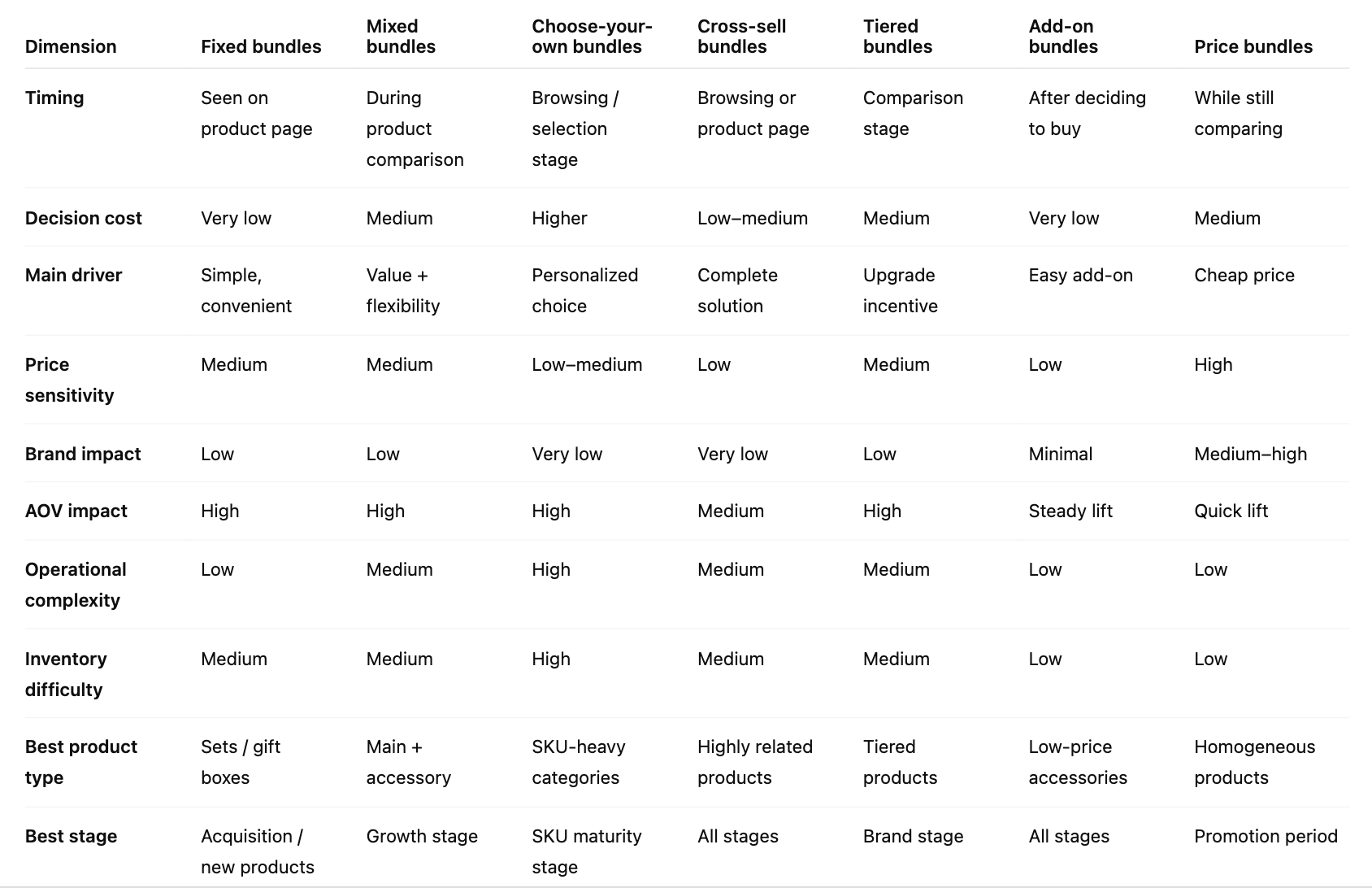
Quick overview: bundling types comparison table
The table below compares seven common types of product bundles and their key features, helping you quickly understand which bundle works best for different situations.
7 Main types of product bundling
Below, we break down the 7 common types of product bundling used in e-commerce, including their features, typical use cases, advantages, and potential risks, along with real cross-border e-commerce examples.
Fixed / pure bundles
Fixed bundles combine multiple products into one set sold only as a package. Customers cannot buy individual items separately. These bundles usually provide a "complete solution," giving the full value in one purchase. Pure bundles are common in cross-border retail and themed gift boxes because they emphasize buying everything at once.
Typical use cases
Fixed bundles work well for products that complement each other, like camera accessory kits or office supply sets. Amazon's Virtual Bundles is a classic example, where sellers bundle multiple add-ons (camera + lens cleaning kit + memory card) via Brand Registry, offering better value than buying each item separately and boosting overall sales and AOV.
Advantages
- Sell related products as a complete solution, increasing perceived value
- Simplify customer decision-making, improving conversion rates
- Promote secondary or lesser-known products
Risks
- If the bundle doesn't match customer needs, conversion may drop
- Customers may be discouraged if items can't be purchased individually
- Improper pricing can compress profit margins
Mixed bundles
Mixed bundles let customers buy the full package or choose individual items. This approach is more flexible than pure bundles, allowing customers to decide what to purchase, which suits varied consumer needs.
Typical use cases
Mixed bundles fit situations where sellers want to offer combined discounts without forcing customers into the full package, like modern electronics or home goods. For example, Samsung's Galaxy phone + Buds + watch bundle on Walmart lets customers either buy the full package at a discount or select items individually, balancing flexibility and savings.
Advantages
- Customers can choose whether to buy the bundle
- Offers discounts while keeping individual product sales intact
- Lowers barriers to bundle adoption and reaches more customers
Risks
- Improper bundle pricing may reduce attractiveness
- Customers may favor individual items, lowering bundle conversion
- Requires more SKU management and inventory planning
Choose-your-own bundles
Choose-your-own bundles let customers pick several items from a designated product pool to form their own set, often paired with deals like "Pick N items for a discount." This type emphasizes user involvement and encourages larger orders.
Typical use cases
Works well for categories with many SKUs, mid-range prices, and brands aiming to increase multi-item purchases, such as cosmetics, accessories, or apparel. Promotions like "Pick any 3 items for XX% off" are common on AliExpress, Amazon, and independent stores, letting customers mix and match popular or small items.
Advantages
- Increases customer engagement and sense of choice
- Boosts multi-item purchases and AOV
- Ideal for promotional periods and holidays
Risks
- Too many choices may cause decision fatigue
- Bundle rules can be complex
- Inventory and pricing logic may be hard to manage
Cross-sell bundles
Cross-sell bundles recommend complementary or related products alongside the main item. Unlike traditional bundles, these rely on user intent, suggesting additional items based on purchase paths or behavior data after a customer selects a main product.
Typical use cases
Ideal for categories needing accessories or add-ons, like electronics, photography gear, or gaming devices. "Frequently Bought Together" sections often show relevant add-ons, e.g., phone case + screen protector for a selected phone.
Advantages
- Offers highly relevant add-on options
- Enhances shopping experience and product completeness
- Significantly increases average order value
Risks
- Weak relevance may be ignored by customers
- Too many suggestions can clutter the page
- Accessory pricing must be careful to protect profit
Tiered bundles
Tiered bundles create multiple levels of package combinations, from basic to advanced to full-featured sets, each offering increasing value. Price and value anchors encourage customers to upgrade from basic to higher tiers, raising AOV and optimizing the buying path. Common in retail for quantity discounts and tiered product strategies.
Typical use cases
Best for products with wide price ranges or clear functional tiers, such as software subscriptions, toolkits, or outdoor gear. Sellers may offer "Buy 2 get 10% off, Buy 3 get 20% off" or "Basic / Standard / Premium" bundles, each tier adding services or extra items.
Advantages
- Guides upgrades using price and value comparison
- Clear tiers meet different budgets
- Suited for structured products or services
Risks
- Poorly defined tiers can confuse customers
- Higher tiers need clear value justification
- Requires precise pricing strategy to maintain conversions
Add-on bundles
Add-on bundles are offered after a customer decides to buy a core product, suggesting extra products or combinations to encourage quick add-ons. This strategy focuses on "light decision-making," raising AOV during the checkout flow.
Typical use cases
Common in product pages, cart recommendations, or pre-checkout prompts. For example, "Add-on Items + Free Shipping Threshold" at checkout nudges customers to add small items to reach free shipping.
Advantages
- Very low decision effort, increasing add-on sales
- Keeps the shopping flow continuous
- Helps sell small or low-awareness items
Risks
- Weakly related add-ons may be ignored
- Too many suggestions can disrupt the buying experience
- Frequent add-on promotions may create dependency
Price-based bundles
Price-based bundles combine multiple products at an attractive total price, making the bundle cheaper than buying each item separately. This strategy relies on price incentives rather than product functionality or complementary use.
Typical use cases
Very common in e-commerce promotions, especially during holidays, end-of-season sales, or new product launches. Brands often bundle popular items with accessories to create appealing set prices. For example, Glossier frequently offers discounted sets, like the Glossier You Fleur bundle, combining perfume and lip balm at a price far below buying them separately.
Advantages
- Price is clear and appealing, boosting conversions
- Quickly increases order volume and AOV
- Works well for price-sensitive shoppers
Risks
- Frequent discounting can lower brand perception
- Profit margins may shrink
- Deep discounts may train customers to wait for bundles
How to use product bundling? 5 Smart strategies
In practice, bundling isn't just about putting products together. Smart design and strategy are key to making it work. Here are some product bundling marketing strategies and tips to optimize bundles and make them more appealing to buyers.
Use AI to improve efficiency
Managing many SKUs and complex combinations manually can be difficult. AI recommendation systems solve this by analyzing user profiles, browsing behavior, purchase history, and product relationships. It automatically matches high-potential bundles for each customer.
When users can choose items freely, AI ensures related products are visible. For example, Shoplazza's Intelligent Product Recommendation lets sellers set rules based on tags, sales, or stock, and displays suggestions on product pages, homepages, and carts. This reduces manual work, shortens decision time, and increases conversions and revenue.
Explain "why buy together"
Price alone isn't enough. Show customers the actual value of buying a bundle. For example, a skincare set with cleanser, toner, and serum isn't just cheaper—it's a complete routine that saves time and decision effort. Copy and page design should clearly highlight benefits like convenience, complete use, or enhanced experience, not just discounts. Emphasize how products complement each other to build trust and brand authority.
Place bundles in the right spots
Where you show bundles affects conversions. Key points include:
- On product pages, display bundle suggestions to catch buyers with strong purchase intent.
- On the cart page, offer add-ons or upgrades to nudge customers who already decided to buy.
- On homepages or promo pages, pre-show bundles to guide exploration.
Use user behavior and buying paths to place recommendations without disrupting the experience while maximizing exposure.
Don't ignore stock and SKU rules
Bundles involve multiple SKUs, so inventory management is crucial. If one item is out of stock, the whole bundle may become unavailable, hurting conversions. Track stock in real time, set alerts, and plan alternatives or limits to prevent shortages. Reviewing historical sales and popular SKUs helps adjust bundles and maintain stable availability.
Combine by usage scenario
Customers respond better to bundles that match their needs. Travel sets might include skincare, toiletries, and portable accessories; office bundles could include notebooks, stationery, and organizers; holiday gift sets might feature perfume, chocolate, or small gifts. Scenario-based bundles show how buying the set is easier than picking items individually, increasing perceived value and purchase motivation. Focus on clear copy and page layout to make the scenario obvious and compelling.
How to create and set up product bundles properly?7 Tips
Before launching a bundle, sellers need a clear method to design and execute it effectively.
Clarify your sales goals
The type and impact of a bundle depend on your objectives:
- If the goal is to raise average order value, use tiered or price-based bundles to naturally guide users to higher-value purchases.
- If the goal is faster conversions, fixed or mixed bundles reduce decision friction and help users buy quickly.
- If the goal is clearing inventory, add-on or price bundles can push slow-moving products through discounts.
Clear goals guide product selection, bundle design, and pricing, preventing ineffective campaigns.
Understand your customers
Effective bundles start with knowing what your customers want, not random combinations. Use data to match bundles to buyer behavior:
- Website clicks and browsing data to see which products and combos attract attention.
- Email marketing engagement and conversions to identify high-potential items.
- Past orders to find products frequently bought together.
- User activity and purchase stage to create different bundles for new, potential, or returning customers.
These insights help create accurate customer profiles, align bundles with behavior, and boost conversion while avoiding wasted effort.
Choose the right products
More isn't always better. Too many items or complex combos can overwhelm customers. Ideal bundles should be complementary, functionally progressive, or match a specific use scenario. Tips for selection:
- Pick products often bought together or with high relevance.
- Keep bundles simple: 2–4 items is usually best.
- Combine main and supporting products to meet key goals like raising order value or clearing stock.
- Check inventory to avoid missing items breaking the bundle.
- Consider different bundles for different customer types, like new-customer packs or upgrade sets for loyal buyers.
Smart product selection increases purchase intent and makes bundle management easier.
Set reasonable price ranges
Product bundle pricing directly affects conversion and profit. Prices should show clear value while protecting margins. Guidelines:
- Start with the cost and margin of each product to know your baseline.
- Adjust discounts according to the goal: 5–10% for AOV growth, 15–25% for inventory clearance.
- Use price anchoring: make basic and advanced bundles clearly different to guide higher-value choices.
- Watch competitors' prices and market acceptance to stay competitive.
- For flexible choice bundles, set sensible price ranges to avoid discounts cutting too deeply into profit.
With careful pricing, customers perceive real value while your store maximizes profit.
Choose the right product bundle plugins
Using the right plugin can make creating product bundles much easier and improve the customer experience. A good plugin helps you quickly set up bundles, manage inventory, calculate discounts automatically, and even generate dedicated pages for your bundles, making the campaign more efficient.
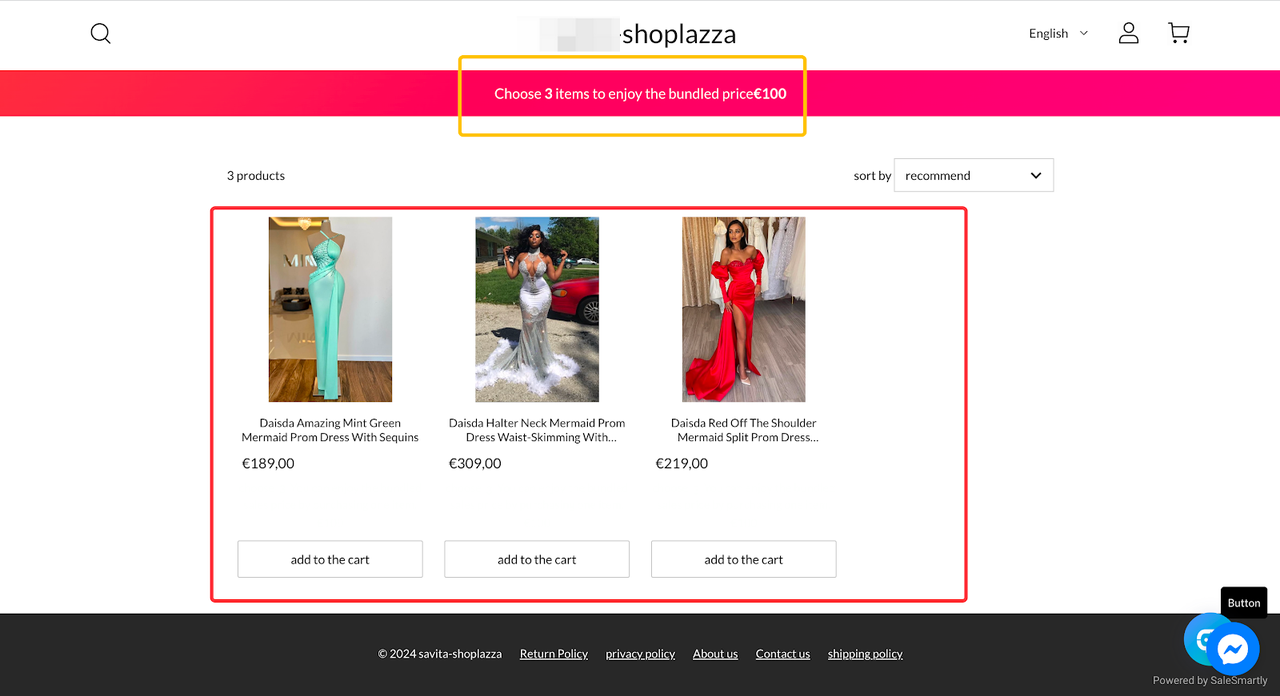
For example, Shoplazza's Bundle Sales plugin and Shopify Bundles both work without coding or complex setup, and their basic versions are free.
While Shoplazza:
- Supports price-based bundles, combo bundles, or complete sets.
- Allows flexible selection of main and related products.
- Generates a dedicated page to display all bundles.
- One-click add-to-cart for customers.
- Includes automatic product availability, time control, and inventory sync.
Sellers often praise its auto-scheduling feature: "I can set promotion start and end dates in advance. Everything runs automatically, saving a lot of manual work."
On the other hand, Shopify:
- Lets sellers create fixed sets or multi-item bundles.
- Customers can choose product attributes like size or color.
- Supports images, multiple attributes, and product options for custom bundle pages.
However, some sellers report limitations: "Setup is simple but limited, and it supports POS, but overall rating is low (2.7). It also conflicts with Shopify's subscription apps, and each bundle can only include up to 3 options."
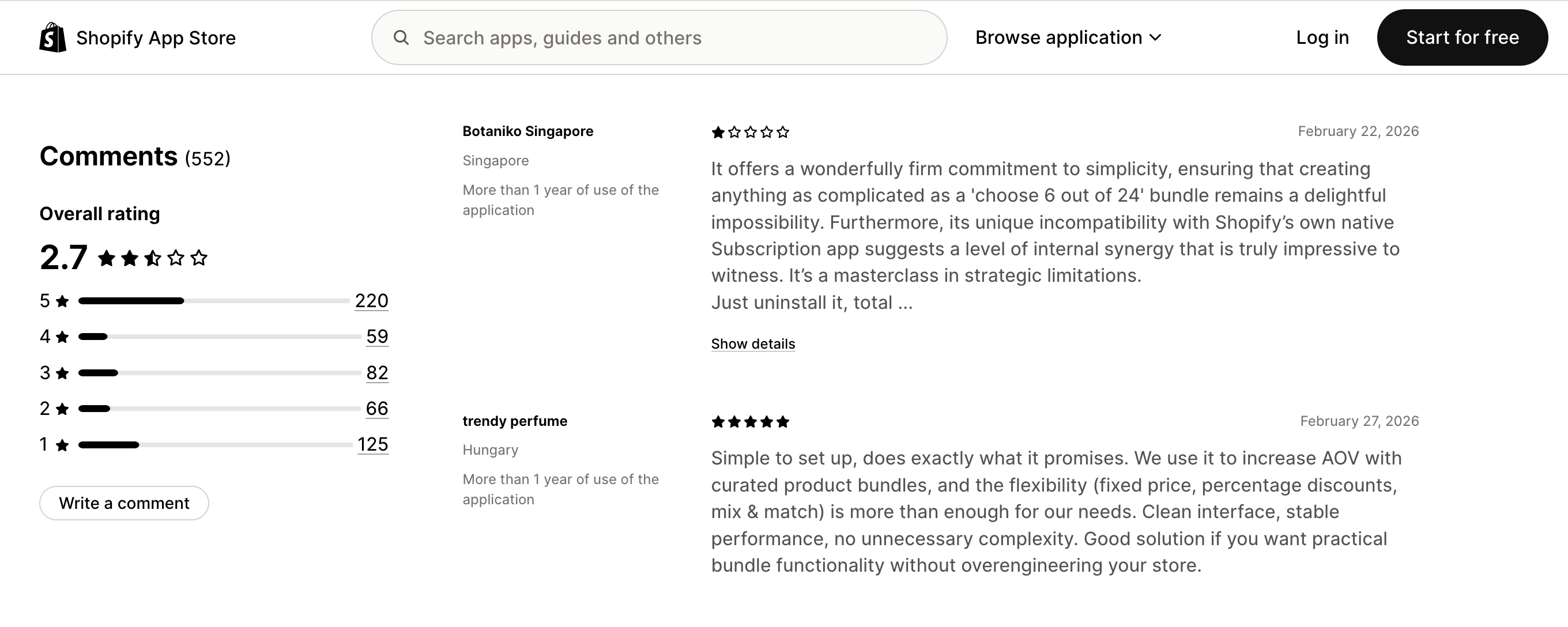
Source: Shopify Bundles
For more advanced features and bundle styles, paid plugins in Shopify App Store like BOGOS Free Gift Bundle Upsell are available. They support buy X get Y, free gifts, bundling, and bulk discounts, though costs are higher.
In contrast, Shoplazza natively supports buy X get Y, precentage discount code, and fixed discount code features without relying on extra plugins. This makes running promotions easier and reduces dependency on third-party tools.
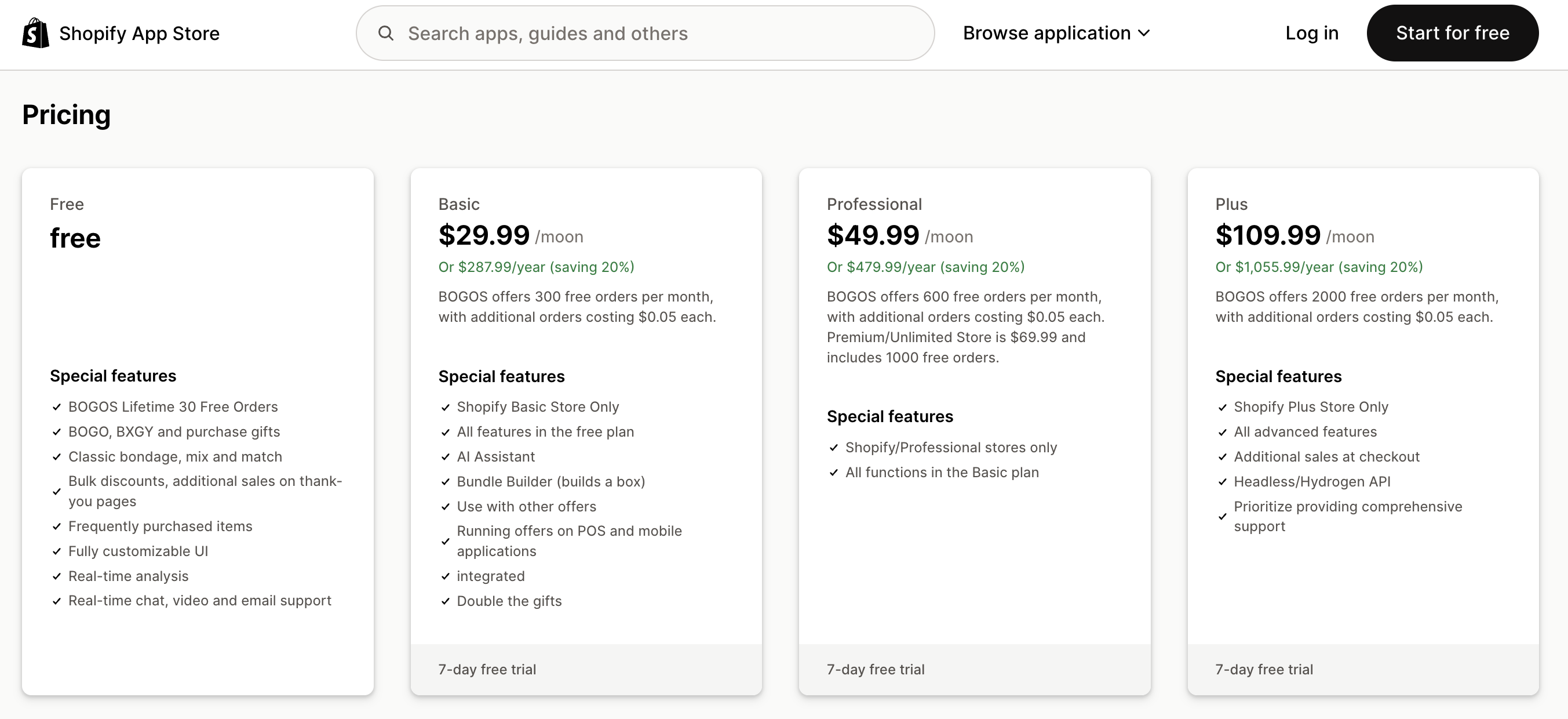
Source: BOGOS Free Gift Bundle Upsell's price
Set up bundle campaigns in the backend
The backend setup is crucial for running successful bundle campaigns. Sellers need to configure the campaign name, duration, discount type, and bundled products based on prior research. It's also important to set product availability rules and monitor inventory.
Since many bundles involve multiple SKUs, using automated system features is highly recommended to ensure campaigns run smoothly. For example, Shoplazza's Bundle Sales plugin allows automatic scheduling to start or end campaigns at specific times, reducing manual work and avoiding missed promotion windows.
After setup, sellers can track SKU performance through the backend dashboard and adjust bundle strategies in real time. This helps maintain smooth campaign execution, increase average order value, and boost conversions.
Regulations and risk management for product bundling
Running bundle sales on e-commerce platforms requires more than marketing and technical setup—compliance and risk management are equally important. Different countries have rules on pricing, consumer protection, and anti-competitive practices, and sellers must ensure their bundles follow local laws.
First, pay attention to price fairness and anti-discrimination. Bundles that charge different prices for different customer groups or force low-demand items can violate regulations. For example, the U.S. Federal Trade Commission (FTC) prohibits unfair or misleading bundling practices and requires clear disclosure of bundle prices versus individual item prices. The EU also has strict rules, ensuring bundles do not limit consumer choice or obscure pricing.
Second, follow platform compliance rules. On Amazon, sellers must clearly display individual item prices and cannot force customers to buy add-on products to get the main item. Violations can result in product removal or account restrictions.
To reduce legal risk, sellers can:
- Clearly show which items are included in the bundle and their individual prices.
- Avoid forcing low-demand products; allow customers to choose bundles or single items freely.
- Check local regulations in each market, such as U.S. FTC guidelines or EU consumer protection directives.
- Review pricing strategies for compliance to prevent unfair pricing or misleading discounts.
- Establish transparent return and refund policies to protect consumers and reduce platform violations.
Set up bundle sales for your products
Well-designed bundle sales can increase average order value, speed up inventory turnover, and improve the customer experience. The key is to choose the right bundle type based on your sales goals, analyze customer data, select the right products, and set reasonable prices. With proper compliance and tools like Shoplazza's bundle sales features, bundles become efficient, precise, and professional, boosting sales while enhancing your brand image.
FAQs about product bundling
Q1: Will bundle sales reduce individual product profits?
If discounts are too high, single-product margins can drop. For example, bundling a bestselling makeup item with a slow-moving skincare product may dilute profits if pricing isn't set carefully. Proper pricing and smart bundle design, however, can raise overall order value while maintaining healthy margins.
Q2: Which products are suitable for bundling?
Products that are complementary, functionally related, or pair a bestseller with a slower-moving item work best. Examples include electronics accessories like headphones and charging cables, or apparel sets combining tops and bottoms. Data analysis and customer behavior insights help identify the most effective combinations.
Q3: If a bundle isn't selling, should I adjust the products or the price first?
Start by optimizing the product mix. Make the bundle logic clear and align it with customer needs before changing the price. For instance, remove items that aren't commonly purchased together or replace them with items customers prefer. Adjusting the combination is often more effective than simply lowering the price.