You found a winning product. You set up a supplier. Now you need a store. So you Google "best website builder," pick one of the well-known names, and spend a weekend building your site. Then you go to connect your supplier and find out the platform does not support it natively. Or you realize the checkout process has too many steps. Or the promotional tools you need cost extra.
This is one of the most common and avoidable mistakes dropshippers make. Picking the wrong website builder does not just waste your time — it can cost you sales, customers, and momentum at the exact moment your business is trying to get off the ground. This guide will focus on checklist specifically for dropshippers. It covers the eight features that actually matter, what to watch out for, and what platform handles dropshipping operations better.
Why most website builders fall short for dropshipping?
Most website builders were not designed with dropshipping in mind. They were built for bloggers, service businesses, and portfolio sites — people who need to publish content and collect a contact form submission. That is a very different set of requirements from running a dropshipping business.
Dropshipping has specific operational demands: connecting directly to suppliers, importing products at scale, automating order routing, syncing inventory in real time, and providing a checkout experience that converts across devices and countries. These are not optional extras — they are the core infrastructure your store runs on.
According to Grand View Research, the global dropshipping market was valued at USD 365.67 billion in 2024 and is projected to grow to USD 1,253.79 billion by 2030, driven by rising ecommerce adoption and global digital payment infrastructure. As competition grows and the business model matures, the platform you build on matters more than ever.
The problem is that most general website builders look capable on the surface. They have ecommerce features, payment integrations, and app stores. But when a dropshipper digs deeper, they often find that critical features — like automated fulfillment or real-time stock sync — require third-party apps that cost an additional $15 to $30 per month each. Multiply that by a few apps, and a platform advertised at $17 per month quickly becomes a $70 to $80 per month operation before you've made a single sale.
What to look for in a drag and drop website builder for dropshipping?
Here are the eight features that should guide your decision. Not every builder handles all of these well — and knowing which ones matter most to your business will make the choice clear.
Supplier and product import tools
The foundation of any dropshipping operation is the connection between your store and your suppliers. A builder that does not support direct supplier integrations — or requires complex workarounds to set them up — will slow you down from day one.
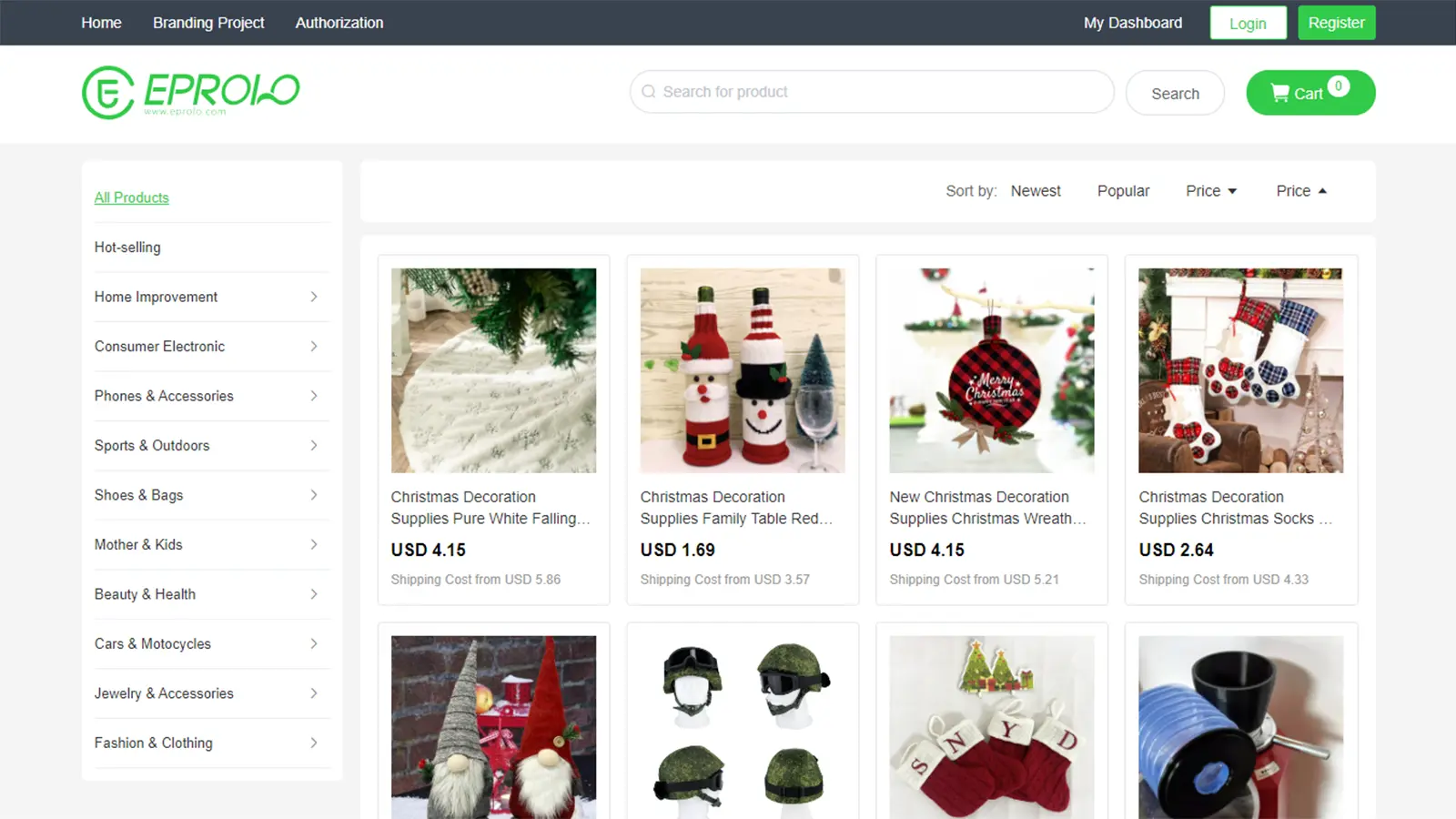
The major suppliers in the dropshipping space include AliExpress, CJdropshipping, EPROLO, Doba, and more. A good website builder should connect to these directly, either through native integrations, a dedicated plugin, or bulk import, and allow you to import products with their images, descriptions, pricing, and variants in a few clicks. Manual product entry at any real volume is not practical — you need bulk import support.
Automated order fulfillment
When a customer places an order on your store, that order needs to reach your supplier accurately and immediately. Doing this manually — copying customer details, submitting orders one by one, tracking confirmations — is not scalable. It introduces human error, creates delays, and takes up time you should be spending on marketing.
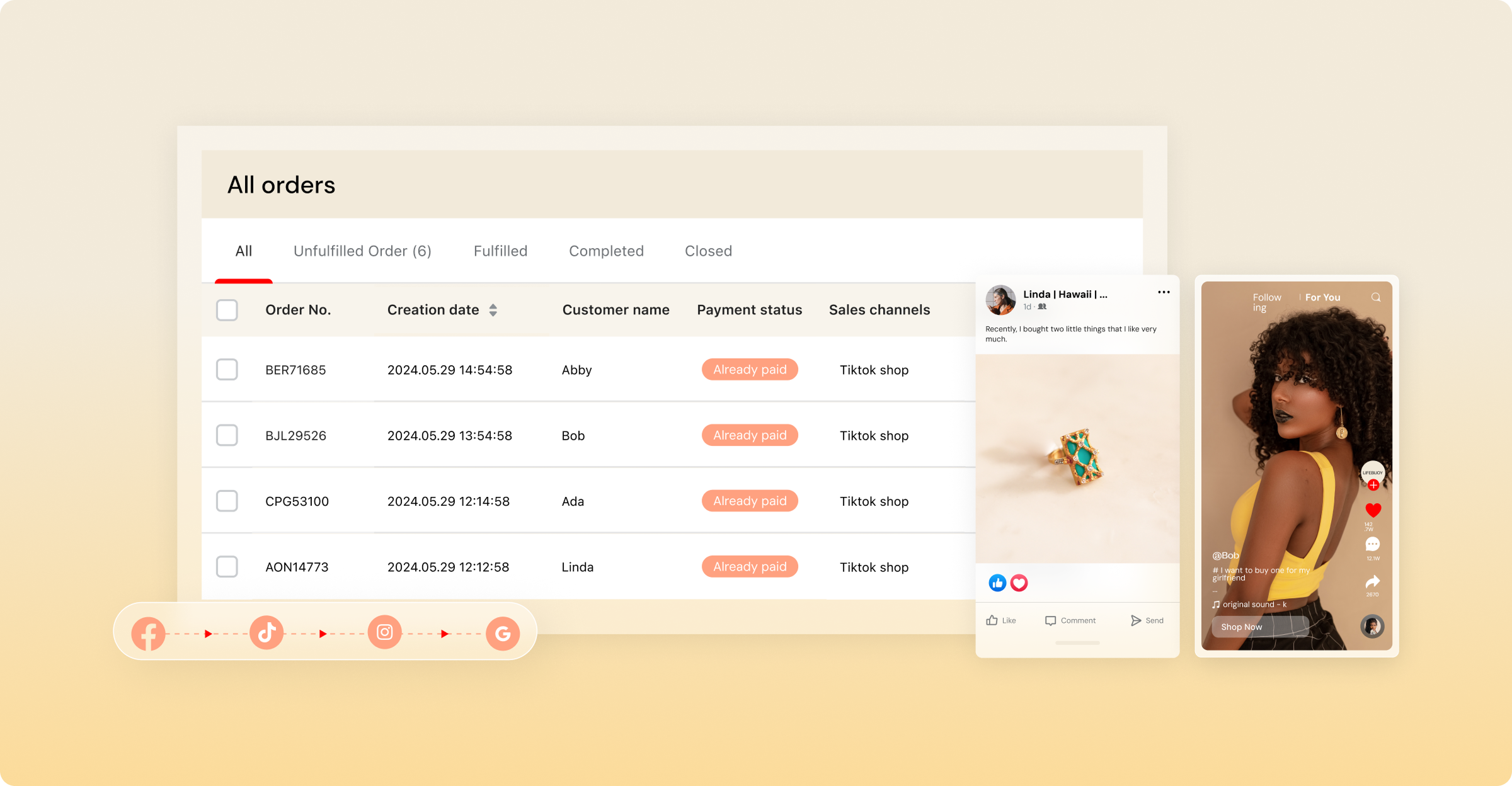
A dropshipping-capable builder should route orders to the correct supplier automatically the moment a purchase is completed. Ideally, this includes automated tracking updates sent to the customer, so you are not managing shipping inquiries manually either.
Real-time inventory and stock sync
Running out of stock happens. What should not happen is your store continuing to sell a product that is already out of stock on the supplier's end. That situation leads to cancelled orders, customer service headaches, and refund requests — none of which you want.
A dropshipping-ready website builder should sync your inventory levels with your supplier automatically, removing or marking products as unavailable when stock runs out and updating quantities in real time. This is a feature that most general-purpose website builders simply do not offer without a paid third-party app.
Real-time stock sync also protects your pricing. If a supplier changes a product's wholesale price, smart inventory tools can flag or automatically adjust your retail price accordingly, protecting your margins without manual monitoring.
Fast, frictionless checkout
Cart abandonment is one of the most studied problems in ecommerce — and the numbers are not encouraging. According to the Baymard Institute, the average cart abandonment rate across ecommerce is approximately 70%, meaning roughly 7 out of every 10 people who add something to their cart do not complete the purchase.
On mobile devices, the situation is worse. Mobile cart abandonment rates consistently sit above 75%, largely because of slow load times, small form fields, and complicated checkout flows. Since the majority of dropshipping traffic often comes through social media ads, which are overwhelmingly consumed on mobile, A checkout experience that is not optimized for mobile is a direct revenue problem.
The builder should offer a streamlined, ideally one-click or accelerated checkout (like Reformia). Guest checkout should be the default — forcing customers to create an account before purchasing is one of the top reasons shoppers abandon carts, accounting for around 26% of abandonment events. Every extra step between "add to cart" and "order confirmed" is a step where you can lose the sale.
Built-in promotional tools
Dropshipping is a competitive business. You are likely selling products that other stores also carry, which means your ability to run promotions, like flash sales, discount codes, bulk discount, is a meaningful differentiator.
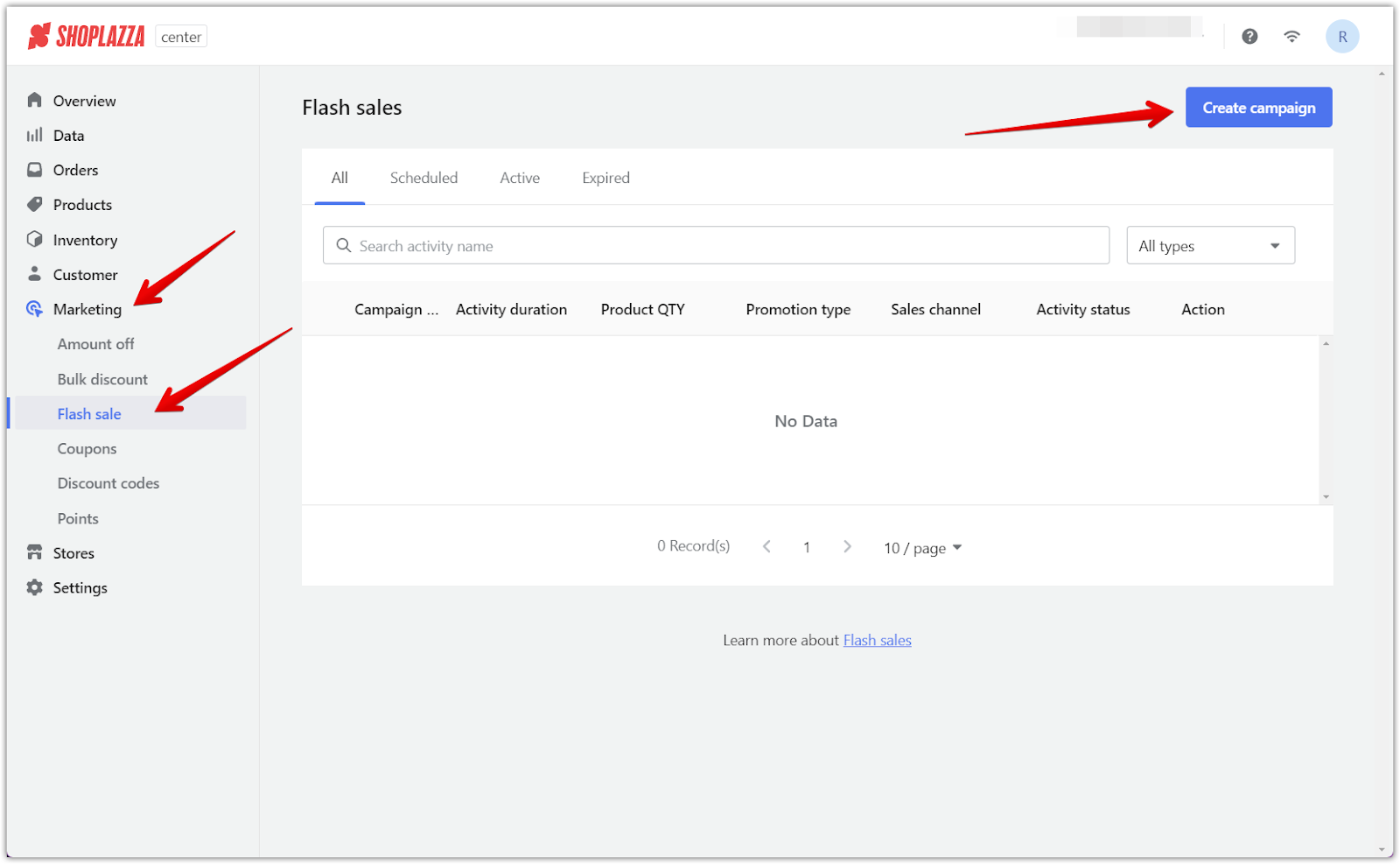
The problem is that many website builders do not include these tools natively. They treat promotional features as add-ons, available through third-party apps that each carry their own monthly subscription fee. Flash sales might require one app. Bundle discounts might require another. Coupon management might be a third.
This "app fatigue" problem is widely discussed among dropshippers on forums and review platforms. Paying $15 to $30 per month per app just to access standard promotional features adds up quickly and meaningfully to your operating costs.
Multi-currency and international selling support
Most dropshipping stores do not target a single country. A store selling phone accessories might run ads to the US, UK, Canada, and Australia simultaneously. Without multi-currency support, customers in those markets see prices in a foreign currency, often without a conversion indicator, which creates friction and reduces trust.
Built-in multi-currency support automatically displays prices in the local currency based on the visitor's location. Lack of local payment options and currency mismatch are documented contributors to cart abandonment, particularly in international markets.
Page speed and mobile performance
A slow store loses sales. Research consistently shows that a one-second delay in page load time can reduce conversions by approximately 7%, and that 57% of shoppers will abandon a page that takes more than three seconds to load.
Drag and drop website builders vary significantly in how much code weight they add to a page. Some produce clean, lightweight output; others generate bloated HTML and CSS that slows load times, especially on mobile connections. When evaluating a builder, check whether it optimizes images automatically, uses content delivery networks (CDNs) for faster global loading, and produces mobile-responsive layouts without requiring you to manually redesign the mobile version of every page.
SEO basics built in
Paid advertising is how most dropshipping stores get their first sales, but organic search traffic is how the most sustainable ones reduce their customer acquisition costs over time. A website builder that gives you control over your SEO — meta titles, meta descriptions, image alt text, URL structure, and sitemap generation — is one that supports long-term growth, not just short-term launches.
Some builders handle SEO settings in a straightforward way; others bury them or limit what you can customize. If you ever plan to build blog content, product category pages, or landing pages optimized for search, check that the builder supports these natively before committing.
What drag and drop website builder works best for dropshipping?
Applying the eight criteria above to the major options on the market, one platform is purpose-built for exactly this use case. Shoplazza was founded in 2017 specifically to help online sellers, especially for dropshippers, build and grow stores without technical complexity.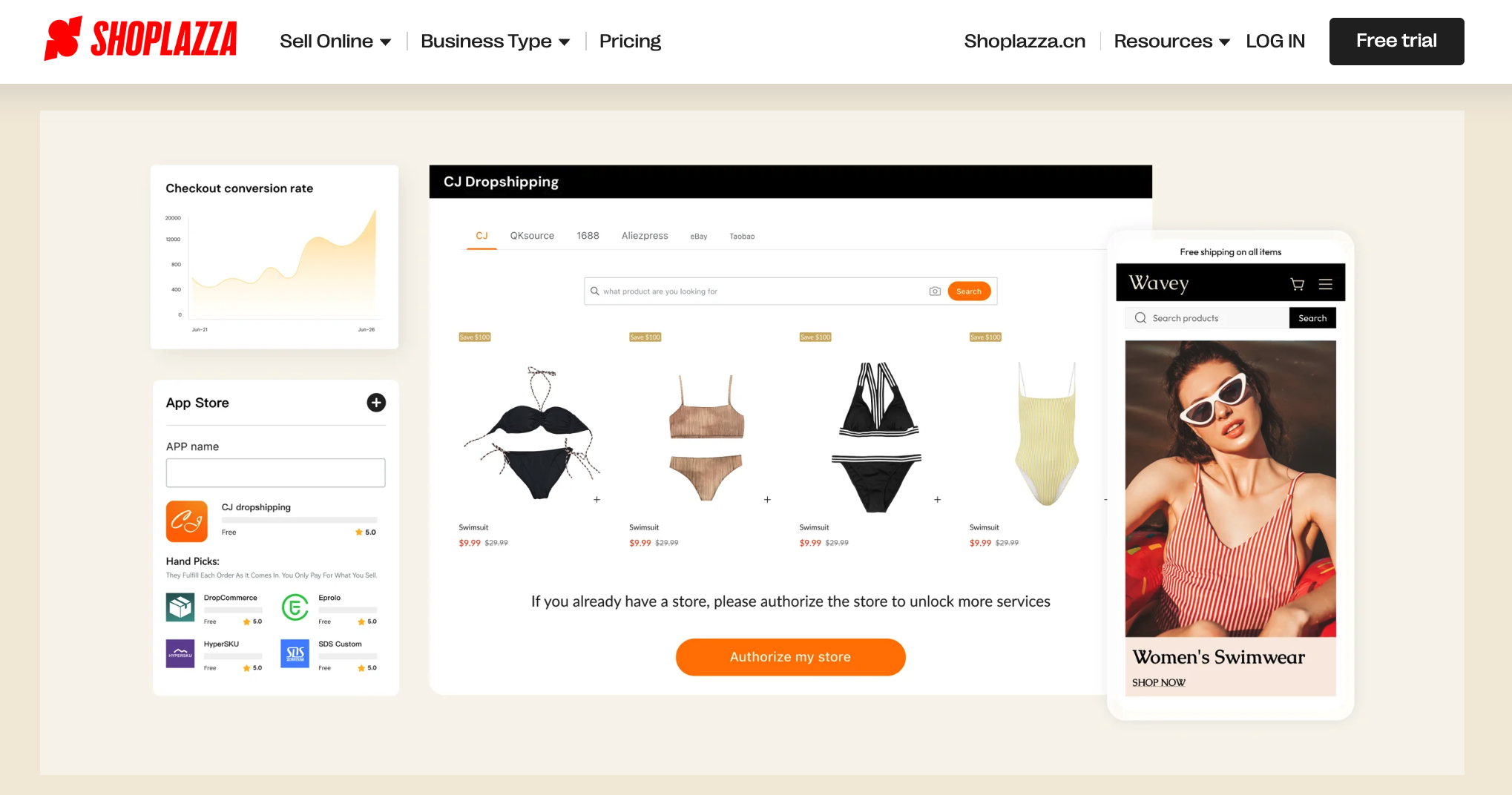
For supplier connectivity, Shoplazza integrates directly with CJdropshipping and EPROLO, and supports Skuowner for syncing product data — including images, descriptions, and variants — from AliExpress, Doba, and Amazon. Bulk product imports via Excel are also supported for sellers working with less common suppliers.
For order management, Shoplazza automates the fulfillment process from purchase to shipment, with real-time tracking updates available to both the merchant and the customer. Inventory levels sync with suppliers automatically, reducing the risk of overselling.
On the promotional side and upsell tools are all built into the platform, no additional apps required. For international selling, Shoplazza includes multi-currency support and a 1-click checkout designed to reduce cart abandonment across devices.
The no-code Page Builder covers every section of the store — homepage, product pages, collection pages, and landing pages — through a drag and drop interface that requires no design or coding experience.
Shoplazza offers a 7-day free trial with no credit card required. The Basic plan is $39 per month, and it is discounted by 25% when billed annually, bringing it down to approximately $29.25 per month.
Common mistakes dropshippers make when choosing a builder
Even with a clear checklist, there are a few patterns that lead dropshippers to the wrong platform. Here is what to avoid.
- Choosing based on brand name rather than dropshipping-specific features. The most widely advertised website builders are not always the most capable for dropshipping. Name recognition is not a substitute for checking whether the platform supports supplier integrations, automated fulfillment, and real-time stock sync before you build your store on it.
- Underestimating app costs. A platform that looks affordable at $17 per month can become $70 to $80 per month once you add the apps needed to run a real dropshipping operation. Always calculate the total cost — base plan plus the apps you actually need — before committing.
- Ignoring mobile checkout quality. Most dropshipping traffic arrives via paid social ads on mobile devices. If the builder you choose produces a slow or clunky mobile checkout experience, you are losing sales before your store ever has a chance to prove itself. Test the mobile checkout on any platform before you commit.
Conclusion
The right drag and drop website builder for dropshipping is not necessarily the most popular one — it is the one that handles your actual operational needs out of the box. Supplier integrations, automated fulfillment, real-time inventory sync, fast mobile checkout, and built-in promotional tools are not luxuries — they are the infrastructure a dropshipping store runs on. Choose Shoplazza now and you will spend less time managing tools and more time growing your business.
Common questions about website builder for dropshipping
Q1 : What is the best drag and drop website builder for dropshipping?
For dropshipping specifically, Shoplazza is one of the strongest options available. It includes native supplier integrations with CJdropshipping and AliExpress (via Skuowner), automated order fulfillment, real-time inventory sync, built-in promotional tools, and multi-currency support — all without requiring third-party apps for core functionality.
Q: Is Shoplazza good for dropshipping?
Yes. Shoplazza was built with ecommerce operations — including dropshipping — as a core use case. It connects directly to major suppliers like CJdropshipping and EPROLO, supports product imports from AliExpress via Skuowner, automates order fulfillment, and includes promotional tools like flash sales and discount codes natively. It also supports multi-currency selling and offers a no-code drag and drop page builder for store design. A 7-day free trial is available with no credit card required.
Q3: Do I need coding skills to build a dropshipping store?
No. Modern drag and drop website builders like Shoplazza are designed for users with no coding or design background. You can build and customize every page of your store — homepage, product pages, and landing pages — using a visual editor. The same applies to connecting suppliers, setting up payments, and managing orders. The platforms handle the technical infrastructure; you focus on product selection and marketing.
Q4: Can I use a free website builder for dropshipping?
Free plans on general website builders are generally not suitable for serious dropshipping operations. They typically restrict ecommerce features, display platform branding on your store, limit you to a subdomain instead of a custom domain, and do not include supplier integration or fulfillment automation. For testing a product concept, a free trial on a dedicated ecommerce platform is a better option. Shoplazza offers a 7-day free trial with full feature access and no credit card required.