Running an online store means wearing a lot of hats. You're the buyer, the marketer, the customer service rep, and the analyst, often all in the same afternoon. Marketing, in particular, tends to swallow time that could go toward actually growing the business. According to a Gartner study cited by Think with Google, only 15% of CEOs believe their marketing leaders are currently AI-savvy. For independent sellers, that gap is actually an opportunity. AI tools have become genuinely accessible to small teams, and the sellers using them well are running leaner operations with better results. This article breaks down how.
Stop guessing what your customers want, AI can tell you
Most sellers don't struggle with marketing because they're bad at it. They struggle because they're working with incomplete information, including last month's sales data, a hunch about what's trending, or whatever the supplier recommended.
AI-powered research tools change that. They can monitor search intent, social trends, and competitor content in close to real time, so you stop reacting to the market and start anticipating it.
What this looks like in practice:
- A home goods seller discovers searches for "minimalist under-bed storage" have spiked in their target market, while their listings are still optimized for broad terms that have gone quiet.
- A cross-border seller finds that the same product needs entirely different keyword framing in Germany vs. Australia, without running separate manual audits for each market.
- AI keyword tools surface the exact phrases, questions, and objections buyers use in search, which consistently outperforms writing product pages around what you think they want to hear.
Many sellers skip this step entirely, jumping straight from product selection to ad spend. That's an expensive shortcut. Understanding buyer language before you write a single product page is one of the highest-ROI things you can do early in the process.
Launch a store fast, but make sure it's built to sell, not just to look good
There's a meaningful difference between a website that looks like a store and one that actually converts. A polished homepage doesn't help much if the checkout has friction, product pages lack trust signals, or your bestsellers are buried in navigation.
The traditional build process — picking a template, writing every page, configuring checkout, handling SEO metadata — is slow and sequential. It's also where a lot of momentum dies for new sellers.
AI store builders now compress that entire process. The better ones produce a functional selling environment, not just a visual layout. What to look for:
- Product pages, checkout flow, and policy pages generated automatically
- SEO structure built in from the start
- Multi-currency support and global payment integration for cross-border selling
- The ability to preview a real store before committing to a platform
Shoplazza's AI Store Builder is worth evaluating here. You describe what you sell in plain language, it generates three complete store options to preview — no account required.
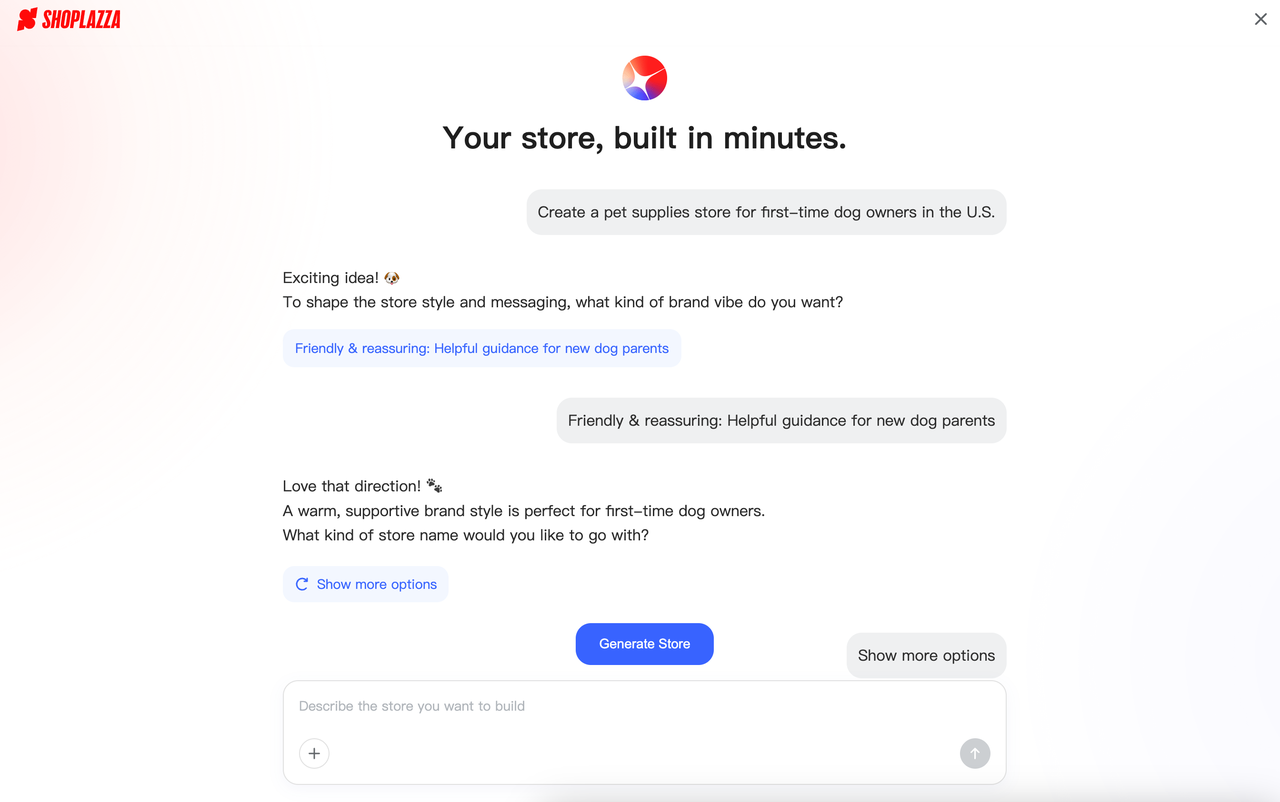
The output includes checkout, product pages, and SEO structure, not just visual layouts. Whether it's the right fit depends on your category and markets, but the no-registration preview makes it easy to assess without pressure.

How the process works:
- Describe your product, target audience, and style in the chatbox, like talking to your friends
- Review 3 store designs generated by AI, then choose one to generate it completly
- Refine details with drag-and-drop Store Builder, connect payments and logistics, publish
Your product pages are losing sales, but AI content can fix
There's a version of product content that checks all the boxes and still doesn't convert. It describes features without explaining why those features matter to the person reading it. In cross-border markets, this gets compounded by localization gaps, not just in language, but in tone and how benefits are framed for a specific audience.
The smarter approach with AI:
- Use AI to generate structured, keyword-aware first drafts across your full catalog
- Apply light human editing for brand voice and market-specific nuance
- Maintain consistent quality across hundreds of SKUs rather than letting the long tail of your catalog go under-optimized
The Zalando case makes this concrete. Europe's largest fashion platform used generative AI to produce 70% of its editorial content and marketing imagery in Q4 2024, cutting campaign production times from six weeks to under one — a 90% reduction in production costs according to their 2024 annual report disclosures.
That's not a technology experiment. It's a fundamental shift in how content scales. Zalando isn't a small seller, but the underlying logic applies at any catalog size: AI removes the bottleneck between having products and having compelling pages for them. The time recovered from content production goes back into decisions that actually require human judgment — pricing, supplier relationships, market strategy.
Beyond copy: the visual layer matters too.
Many sellers underestimate how much imagery affects conversion, especially in fashion, home goods, and lifestyle categories where aspiration is part of the sale. Professional product photography used to require a budget most independent sellers didn't have.
LazzaStudio, a AI visual creation tool, is built for exactly this situation. Instead of using supplier photos or generic stock, you can generate market-appropriate product visuals that reflect your brand. For cross-border sellers, the ability to adapt imagery for different markets without a full production cycle makes iteration significantly faster.

According to McKinsey, content quality and personalization together can drive up to 15% revenue uplift and increase marketing efficiency by 30%. Product pages are where that upside lives.
Marketing automation that actually runs while you sleep
Ask any solo e-commerce operator what eats the most time in their week, and the list is predictable: writing emails, chasing abandoned carts, scheduling social posts, monitoring ad performance. All necessary. All largely automatable. The key distinction: automation that feels attentive vs. automation that feels robotic.
An abandoned cart email sent 30 minutes after someone leaves, referencing the specific product they looked at, feels responsive. A generic blast to your whole list every Tuesday morning feels like noise. The difference is behavioral triggers and a personalization layer, both of which AI handles well once configured.
Tools worth knowing by channel:
- Social media: SocialEcho works as an AI social workspace for sellers managing multiple accounts across regional markets, which becomes unmanageable fast without a centralized tool.
- WhatsApp markets: Bird combines email, SMS, and WhatsApp in one workflow, relevant for sellers in Southeast Asia, Latin America, and parts of Europe where WhatsApp is the dominant consumer channel.
- Email and SMS: Omnisend (free tier available) builds behavior-triggered sequences, like welcome flows, re-engagement campaigns, post-purchase review requests, and so on, that run without ongoing manual effort.
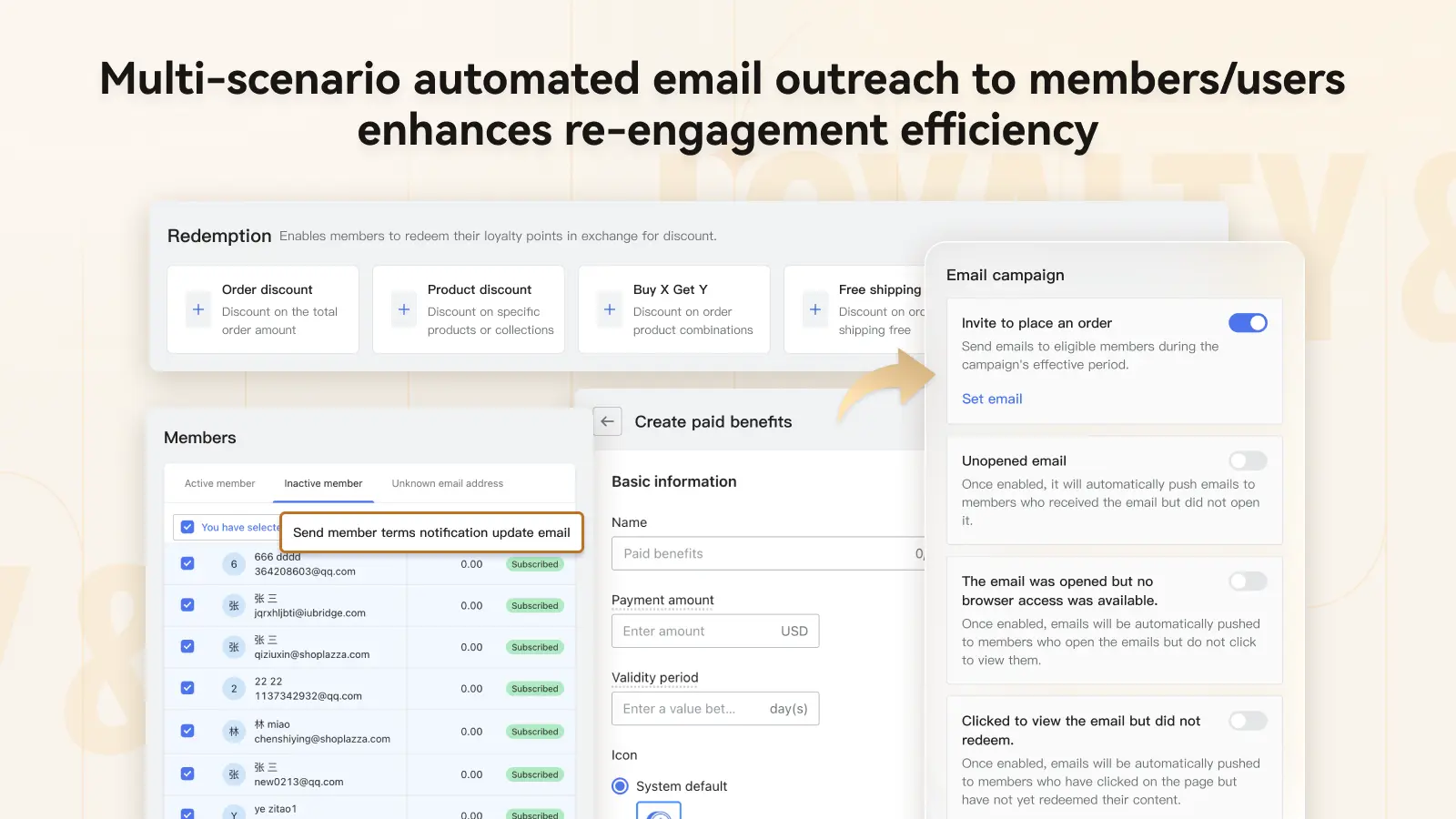
- Loyalty and retention: Loyalty & Push combines a membership program with email marketing in one tool — at up to 88% lower cost than using separate plugins for each. It ships with five built-in AI automation workflows: AI-powered member tiering and benefit configuration, AI-enabled point redemption plan setup, AI-driven product categorization, AI-generated product lists for promotional emails, and AI-recommended operational strategies for edge cases like low average revenue per account.
The productivity impact is real. HubSpot's AI Trends 2026 research found marketers recover an average of 6.1 hours per week through AI-assisted workflows. For a small team, that's the equivalent of gaining a part-time employee without the overhead.
AI turns browsers into buyers, personalization at scale
Most stores do personalization poorly. It gets reduced to "show related products at the bottom of the page" and left there. Real personalization adapts the experience to individual visitor behavior in real time — and the business impact is substantial.
McKinsey's research shows personalization can:
- Reduce customer acquisition costs by up to 50%
- Lift revenue by 5–15%
- Increase marketing ROI by 10–30%
Fast-growing companies derive 40% more revenue from personalization than slower-growing peers. That gap widens over time as the data advantage compounds.
The reason most independent stores don't execute this well isn't capability — it's the absence of a customer data foundation. You can't show relevant recommendations to a returning visitor without a structured view of what they've browsed, bought, and abandoned. CRM and behavioral analytics tools provide that foundation; personalization tools sit on top of it.
What a working personalization stack looks like:
- Product recommendations: Intelligent Product Recommendation (free, 4.9 stars on the Shoplazza App Store) surfaces relevant products at key decision points — homepage, product pages, cart — based on real-time behavioral signals. Recommendation engines can account for up to 31% of total e-commerce revenues in sessions where customers engage with them.
- Live chat: SaleSmartly handles routine inquiries automatically and escalates to a human agent when needed, keeping response times fast across time zones without requiring a shift-based support team.
- Shoppable video: QuickCEP embeds shoppable UGC video directly into product pages. Shoppers who engage with AI-powered interactive content convert at 12.3% vs. 3.1% without it — a fourfold difference.

Multichannel selling without operational chaos
Most cross-border sellers are running on multiple channels simultaneously — their own storefront, social commerce, and one or more marketplaces. Each channel managed in isolation creates friction that compounds quickly.
The operational risks are concrete:
- Overselling: your store runs out of stock, but your TikTok Shop listing is still live.
- Inconsistent product information across platforms confuses buyers and dilutes SEO.
- Manual updates to pricing and listings across four platforms means something always gets missed.
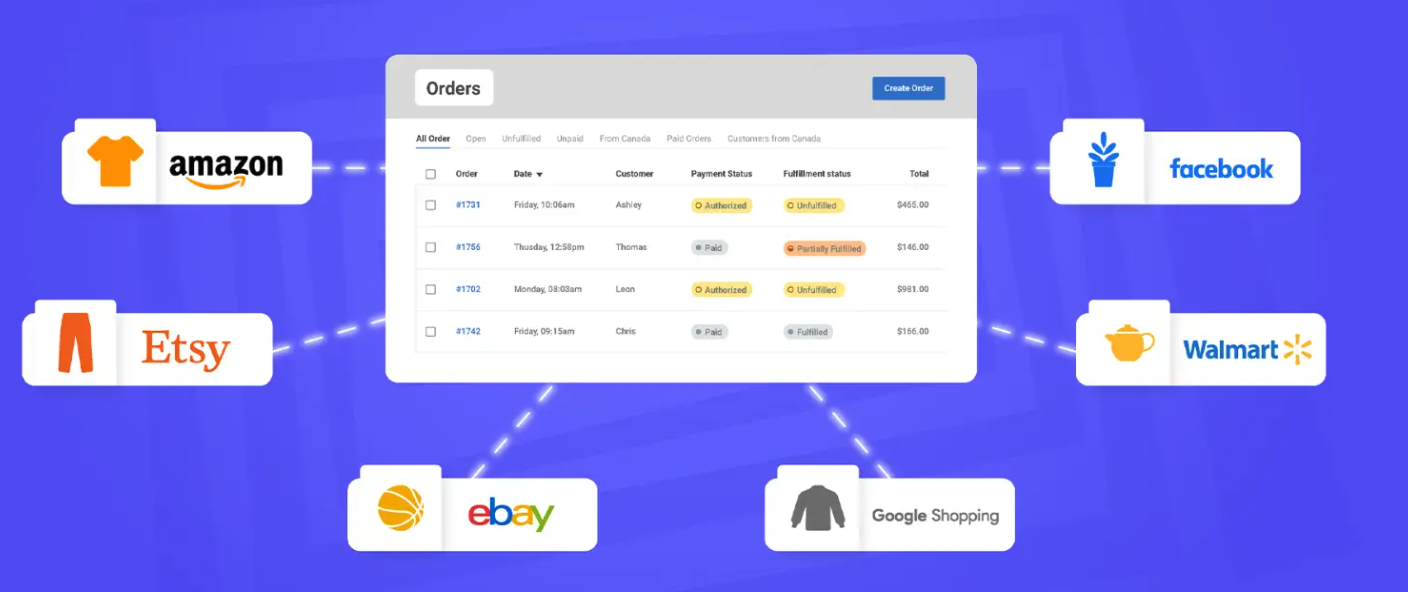
The solution is a sync layer, a single source of truth for inventory, pricing, and product data that pushes updates across all channels automatically. Shoplazza's multichannel management features handle this at the platform level. For sellers active on external marketplaces, LitCommerce extends that sync to Amazon, eBay, Etsy, TikTok Shop, Walmart, and more — routing orders and inventory back to one dashboard.
On pricing, a promotional campaign for your European market shouldn't have to be applied manually to every listing. Advance pricing management lets you set market-specific rules and promotional windows that apply automatically — relevant when you're running different pricing strategies across regions with different competitive dynamics.
The role AI doesn't replace and where your time should actually go
The concern that comes up most often: Will ai replace marketing jobs? Does AI just eliminate marketers or small teams? The data points to a more useful answer.
Gartner found that only 5% of marketing leaders who use AI purely as a productivity tool report significant gains on business outcomes. The upside goes to sellers who use AI to inform strategy and expand what's possible — not just to save time on execution.
In practice, what changes:
| AI handles | You focus on |
| Content drafts and product descriptions | Brand voice, positioning, creative direction |
| Email scheduling and behavioral triggers | Campaign strategy and offer design |
| Ad bid adjustments and performance alerts | Budget allocation and channel strategy |
| Routine customer service inquiries | Relationship-building and complex escalations |
| Inventory sync across channels | Supplier relationships and product selection |
Gartner's 2026 marketing trends analysis identifies digital dexterity, strategic thinking, and cross-functional problem solving as the skills that matter most going forward. Those belong to humans. The tools support them.
One area where human relationships still drive disproportionate returns: creator and affiliate partnerships. Shoplazza's affiliate marketing tools support building those programs at scale. WotoHub in the App Store gives access to an influencer database of over 60 million creators — practical for sellers who want to explore partnerships without building an outreach function from scratch.
You don't need a bigger team, you need smarter tools
The competitive gap in e-commerce marketing is no longer about budget — it's about how well you use the tools available. Salesforce's State of Marketing 2026 found that 87% of marketers now use generative AI in at least one workflow, up from 51% two years ago. The sellers who moved early are already compounding that advantage. The practical question isn't whether AI belongs in your stack. It's simpler: which workflows are still eating time that should go toward growing your business? Start there.
Frequently asked questions about AI marketing
Q1: Can a small e-commerce team use AI marketing tools without a technical background?
Yes. Most tools covered here, like email automation, product recommendation engines, AI store builders, are built for non-technical users with visual setup flows rather than backend configuration. The more common barrier is deciding which tools to prioritize. Start with whichever workflow is consuming the most manual time, and that's usually where the fastest return shows up.
Q2: Does AI-generated product content perform well for SEO?
When configured with proper keyword targets and brand voice guidelines, AI-generated descriptions can match or outperform manually written content — particularly across large catalogs where the long tail of listings would otherwise go under-optimized. The discipline is treating AI output as a first draft. Light human editing for accuracy and market nuance consistently improves performance over publishing unchanged.
Q3: How do I measure whether AI tools are actually improving performance?
Set baseline metrics before implementing anything: email open rates, conversion rate by traffic source, average order value, customer acquisition cost. Track the same metrics over a comparable window after implementation. AI-specific tools like recommendation engines typically include attribution reporting that shows revenue influenced, click-through rates, and performance against non-personalized baselines. Measurement discipline upfront separates sellers who can quantify ROI from those who are guessing.
Q4: Can AI handle visual content creation if I have no design experience?
Increasingly, yes. AI visual tools designed for e-commerce — like LazzaStudio — work from product information and brand preferences rather than design skills. For standard use cases like product imagery, banner creatives, and social content, the output is sufficient for most independent sellers and significantly better than unedited supplier photos. In visually driven categories like fashion, home goods, and beauty, the conversion improvement from better imagery typically covers the cost quickly.