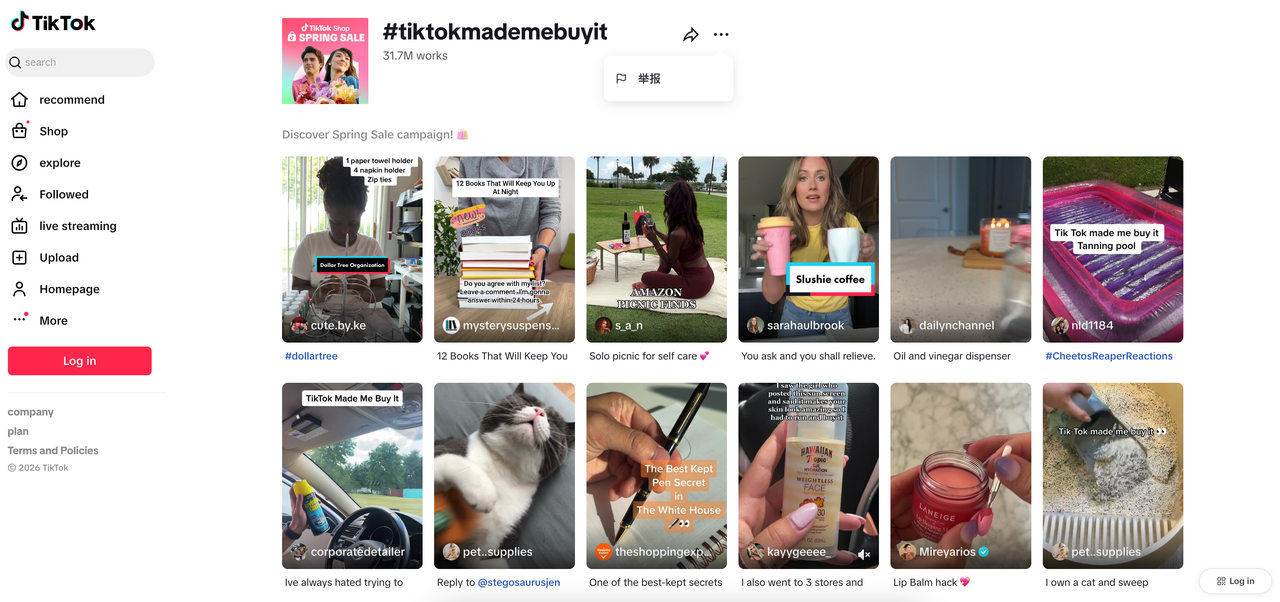
Many cross-border sellers put serious time into TikTok — shooting, editing, posting — and still can't get the views up. The problem usually isn't the content quality. It's timing. According to GWI research, over 40% of TikTok users discover new products through the platform. The hashtag #TikTokMadeMeBuyIt alone has accumulated more than 31.7 million videos. But here's the reality: TikTok trends move fast. A trending topic typically stays relevant for 72 to 120 hours, and the full peak window averages around 11 days.
By the time most sellers spot a trend, research it, shoot something, and post it, the window has already closed. And even sellers who know tools like Creative Center exist often don't know which metrics to look at, so they spend time analyzing data and still pick the wrong direction. This article covers three things: where to find trends, how to decide whether a trend is worth following, and how to turn trend insights into content that fits your product category.
What types of TikTok trends are there?
Before getting into tools, it helps to understand that "trends" on TikTok aren't one thing. There are several distinct types, and knowing which type you're looking at changes how you use it.
Trending videos and content
This is when a specific video structure or filming style gets picked up by large numbers of creators in a short period. Common examples include "expectation vs. reality" cuts, Vlog-style daily footage, and short scripted skits with a fixed narrative arc. There's also a category many people overlook: comment interaction patterns, where a specific phrase in the caption prompts users to respond in the comments, like "which type are you, A or B?" These format trends aren't tied to any specific product, which means almost any category can use them.
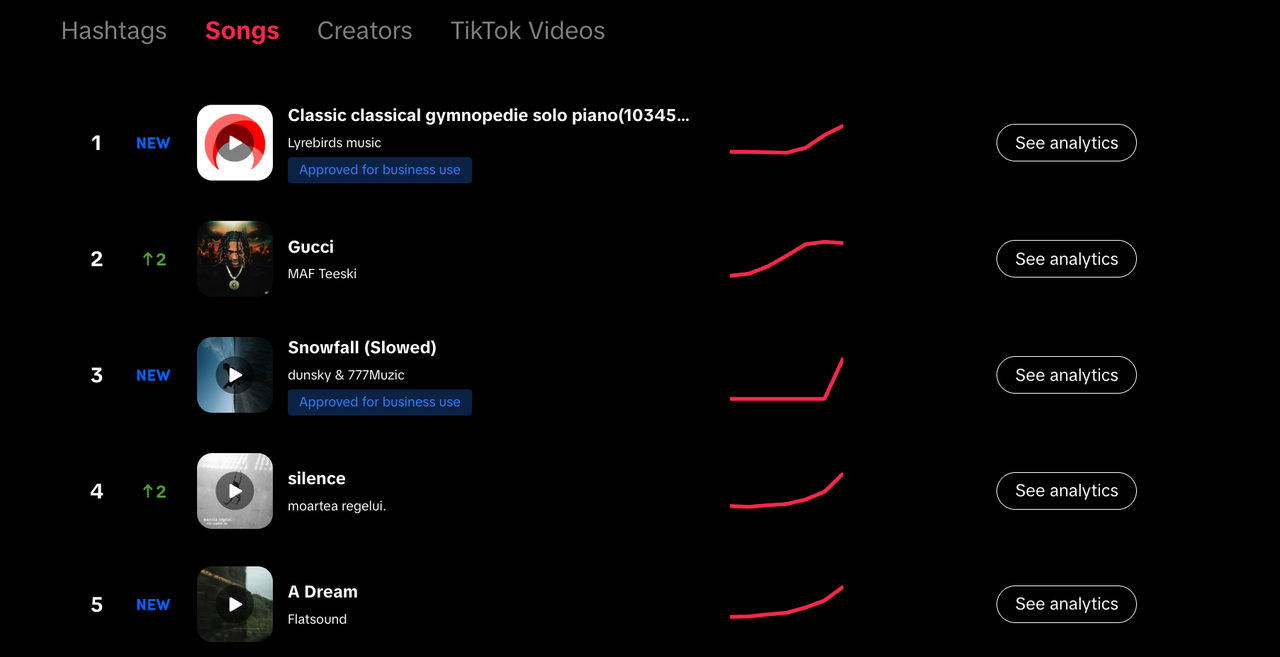
Trending songs and sounds
TikTok content and music are closely linked. When a song takes off on the platform, videos using that track tend to get higher recommendation weight because the algorithm recognizes the audio is in an upward phase. Beyond full songs, a viral line of dialogue or a specific sound clip can also form its own trend. The key is finding music that's rising, not music that's already peaked. More on how to spot that in the Creative Center section below.
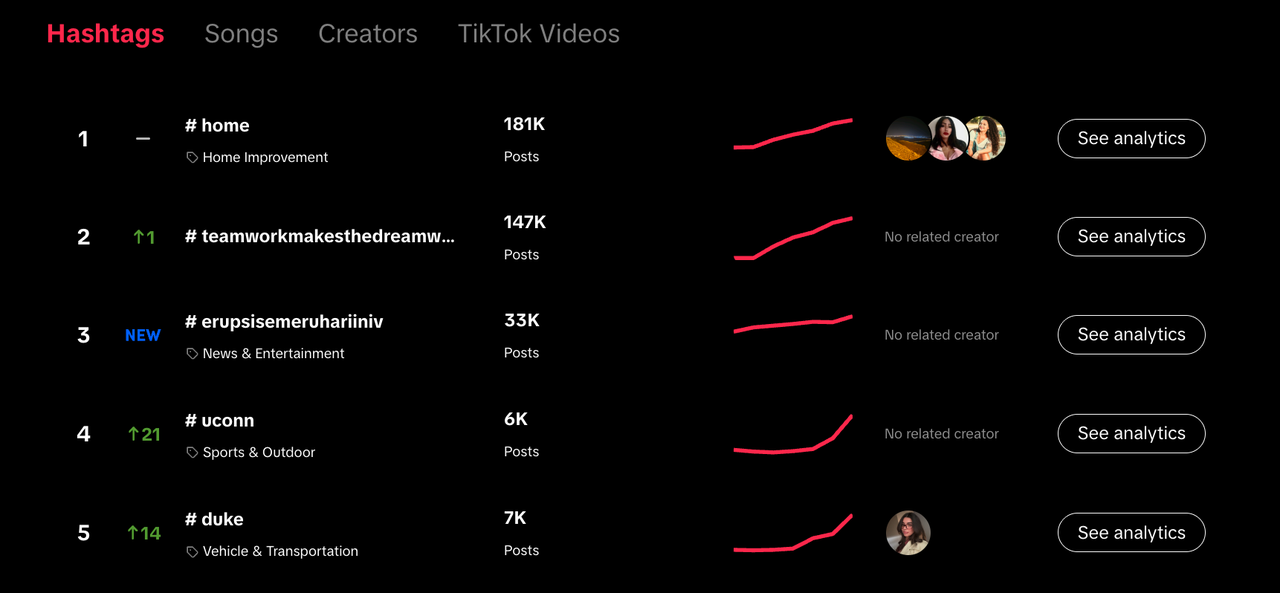
Trending hashtag
Hashtag trends come in a few forms. Community hashtags like #TikTokMadeMeBuyIt, #Home, and #BeautyTok have built stable user communities around them and stay relevant within their categories over time. Challenge hashtags have a clear participation action baked in — viewers know exactly how to join. Then there's a third type that's becoming increasingly important: long-tail search hashtags. As more users treat TikTok like a search engine, hashtags that match what people actually type into the search bar are gaining long-term value.
Trending products and shopping
This type follows a different logic from the other three. Product trends refer to a measurable rise in sales or interest around a specific category on TikTok, like LED projector lights or lip oil sets showing strong performance in TikTok Shop during Q1 2026. For cross-border sellers, this type is the most directly actionable because it can inform sourcing decisions. The relationship also works in reverse: when a particular home renovation style starts generating a lot of content on the platform, it often points to a cluster of related products worth considering.
Seven ways to find the latest TikTok trends
Here are seven methods covering free and paid options, along with how to actually use each one.
TikTok Creative Center
Creative Center is TikTok's official free analytics platform. You can use the basic features without a business account. It covers four areas: hashtags, songs, creators, and trending videos. For most sellers, this is the starting point for any trend research.
Tips to properly use hashtags on TikTok
Many people open this page and look at the top results on the first screen. Those hashtags are usually already saturated. A more useful approach is to filter by "entered top 100 for the first time," which surfaces hashtags that are just beginning to rise. When you click into a hashtag, look at the slope of the trend line rather than the absolute volume number. A steeper slope means faster growth but a shorter window, so you need to move quickly. The related hashtags section often contains less-used but highly relevant tags worth adding as supplementary labels.
Tips to find unlicensed songs on TikTok
The default view shows "popular" tracks. Switch to the "rising" tab instead — this shows music with the fastest recent growth, which is where the opportunity is before a song peaks. If you're using music for branded content, filter by "commercial music" to find royalty-free licensed tracks you can use in ads. Each song also shows audience demographic data, which helps you check whether the track's main listeners match your target customers.
Tips to find trending videos on TikTok
The most useful thing to do here isn't just watching what's popular. It's systematically breaking down the structure of those videos. Pay attention to what happens in the first three seconds, whether the video rhythm matches the music beat, and what questions appear most frequently in the comments. Comments asking "where can I buy this" or "how much is it" are a direct signal of purchase intent.
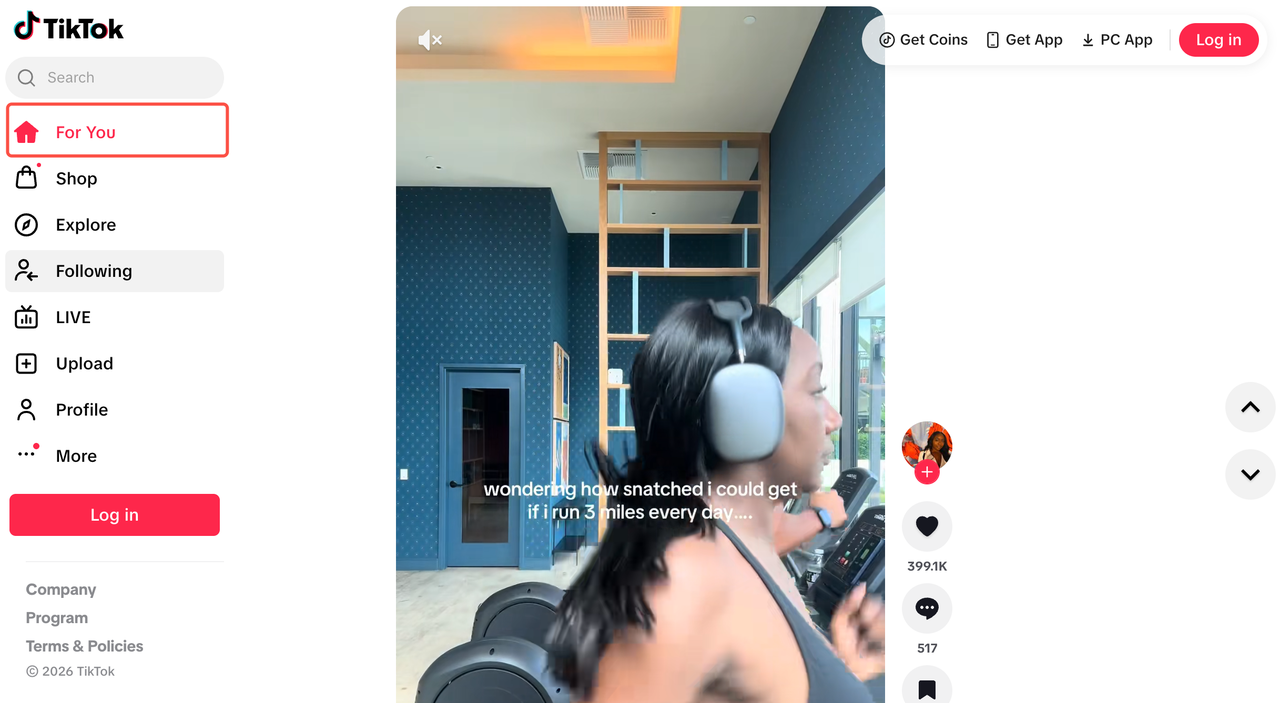
TikTok discovery
No tool replaces actually using the platform. Open TikTok, go to the Discovery page, and you'll see real-time view counts next to each topic. In the search bar, the "related searches" suggestions that appear are live signals of what's rising on the platform right now.
Building a vertical-focused account matters here. When you consistently browse and engage with content in one category, the For You page starts surfacing trending content in that space continuously, essentially letting the algorithm do passive trend monitoring for you. Also, don't skip the comments section on competitor and top-creator videos. High-frequency questions from real users are often the starting point for your next piece of content.
TikTok Ads
The TikTok Ads is a public database where you can filter by region, ad type, publish date, and keyword. Use it to study what competitors are doing with their content. Focus on ads that have been running for more than two weeks — sustained spend usually means positive ROI, which means the creative structure and copy direction are working. Analyzing the opening seconds and headline copy of those high-performing ads is a fast way to understand what's resonating in the current market.
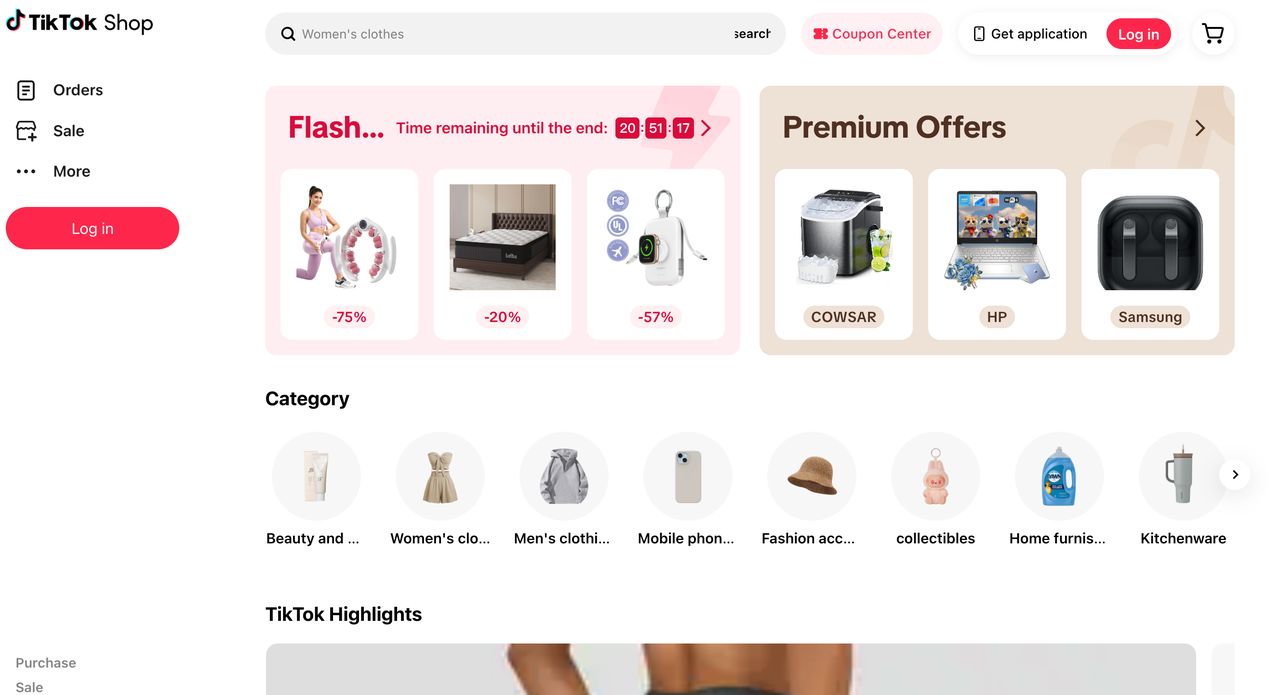
TikTok Top Products
This feature sits under the "Inspiration" tab at the top of Creative Center, then "Top Products." It's currently desktop-only. When using it, always switch to your target market — US, UK, Southeast Asia, or wherever you're selling. Global data gets diluted by large markets and isn't useful for cross-border planning.
Inside each product's detail page, focus on two things:
- The heat trend: prioritize products where heat is still climbing, not ones that have already peaked.
- The audience insights: check the age range and interest distribution of people interested in that product, and see whether it matches your actual target customers.
The related hashtags section shows what tags creators use when promoting that product, which you can directly apply to your own content. This section is also the most direct answer to how to find trending products on TikTok — the data is already aggregated for you.
Watch top creators in your vertical
You may find the top 10 creators in your category based on follower count and engagement rate, and spend a few minutes each day checking what they've just posted. Note which BGM they're using, which hashtags they've tagged, and when they're publishing. These creators typically pick up on emerging trends faster than any tool, and their content itself reflects what the platform is currently favoring.
TikTok Creator Marketplace lets you filter creators by category, region, and engagement rate, which helps you quickly identify the most active content producers in your target market. Checking in on these creators regularly is one of the most reliable ways to track where a vertical is heading.
Cross-checking on different platforms
Most TikTok trends don't appear from nowhere. They usually show up on other platforms first.
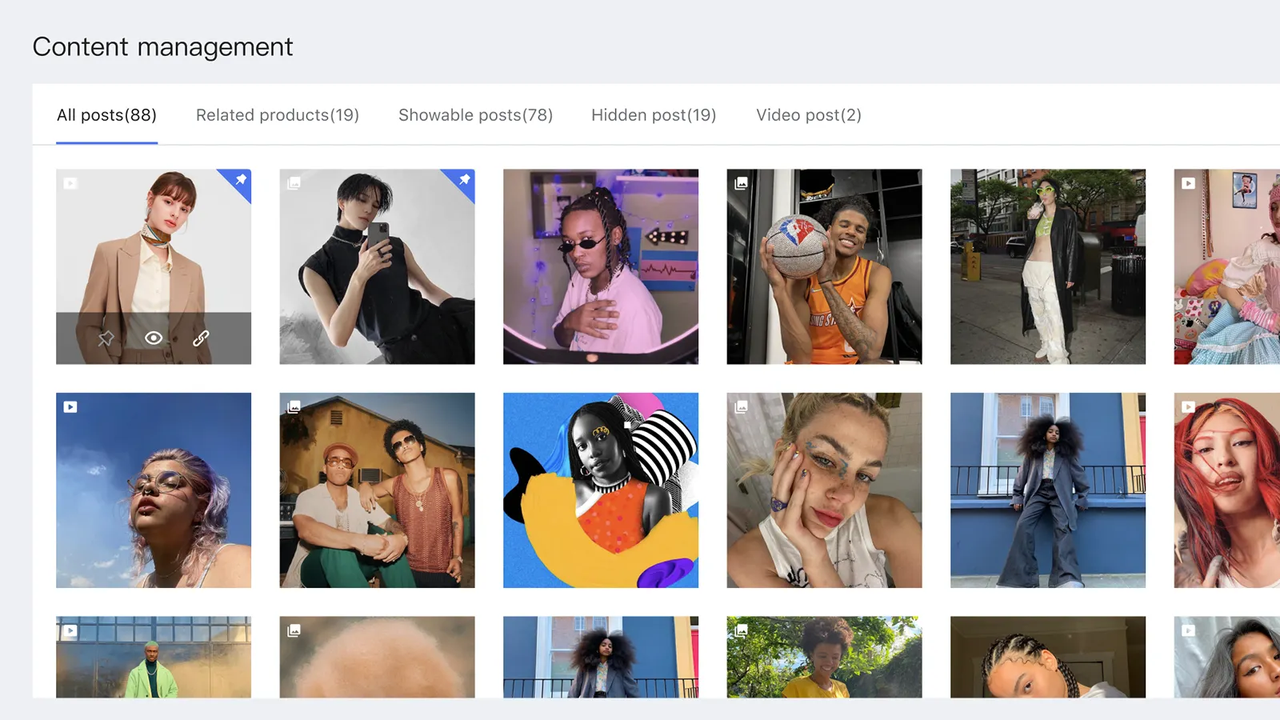
Instagram Reels trending content tends to surface similar trends roughly 48 hours before TikTok. For sellers running a DTC ecommerce website, syncing real user reviews and photo posts from Instagram to your store adds social proof. Tools like Instagram Show are available in the Shoplazza app marketplace.
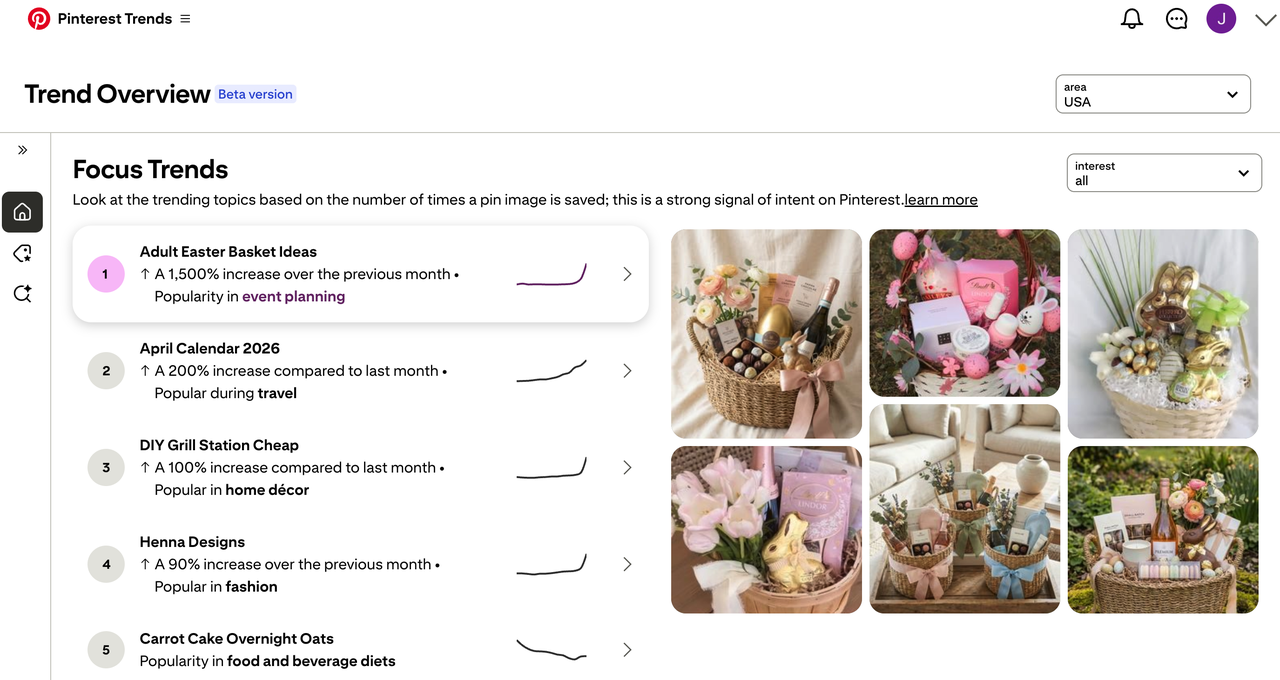
Pinterest is particularly useful for home and beauty categories. Pinterest trend reports can predict seasonal content directions three to six months in advance, which is valuable for sellers who need to plan inventory ahead of time. The Pinterest Pin It by Plumspace plugin lets visitors save product images directly from your store to Pinterest, which helps content spread organically within that community.
YouTube
YouTube Shorts trending content typically has a longer lifespan than TikTok. If a trend is performing well on YouTube Shorts too, it usually signals stronger staying power and is worth more sustained effort.
Google Trends lets you verify whether a topic has broken into broader search demand. When TikTok trend data and Google search volume are both rising together, that's a cross-platform signal worth taking seriously.
Third-party analytics tools
When free tools don't provide enough granularity, paid tools fill the gap. A few that cross-border sellers use frequently:
- Fastmoss is focused on TikTok Shop data specifically, useful for product-level trend tracking
- Pentos tracks competitor accounts including their BGM usage and video structure changes
- Kalodata provides deeper sales and creator data for TikTok Shop sellers
That said, for most small to mid-size sellers, Creative Center combined with the platform's native tools already covers the core research needs. Paid tools are most valuable for teams that need historical data comparisons and systematic competitor monitoring at scale.
How to tell whether a trend is worth following?
Finding a trend is step one. The harder question is whether it still has entry value right now. This is the part most guides skip, and where a lot of sellers get stuck.
The four stages of a trend lifecycle
Understanding the trend lifecycle helps you figure out which stage you're currently at and whether there's still value in jumping in:
- The emerging phase is the best time to enter. Only a small number of creators are using the topic or format, view counts are just starting to climb, and the hashtag may have just entered the top 100. Competition is low, and the algorithm still gives new content meaningful recommendation weight. Content published in this phase has the best chance of breaking into a larger traffic pool.
- The rising phase is still worth joining. The topic is growing at roughly 20 to 30 percent week over week, and the traffic opportunity hasn't been fully consumed. You still need a differentiated angle, though — simply repeating what others are already doing won't be enough.
- Peak phase requires caution. When the whole platform is using the same topic or format, competition is intense, and the algorithm's extra recommendation weight for new entries drops significantly. The return on effort at this stage is noticeably lower.
- The declining phase is generally not worth entering. View growth has slowed or reversed, users have developed fatigue with the format or topic, and even well-made content struggles to get meaningful reach.
To identify the current stage, check the slope of the trend line in the Creative Center. Steeper means faster growth but a shorter window. A simpler signal: search the hashtag on TikTok itself. If the results are filled with brand-paid ads, the trend has likely reached saturation.
Does this trend fit your category?
Finding a rising trend is only part of the picture. You also need to ask whether it actually matches what you sell. Three questions worth running through:
- Can I feature my product in this trend format without it feeling forced? Shoehorning a product into an unrelated trend usually reads as awkward, and users will scroll past. It can also hurt your overall account performance.
- Does the trend's main audience match my target customers? Use the audience insight data in the Creative Center to check the age range and geographic distribution of the topic or song's main viewers.
- Can I produce this content within 48 hours? Trends don't wait. If your production cycle is too long, the window may close before you publish.
In practice, a beauty brand that tried to join a fitness challenge trend produced a high-quality video that saw almost no traction within its actual beauty audience — the content reached the wrong people entirely.
How to make a trend your own?
Copying a trending format exactly tends to get about one-fifth the recommendation volume of original content — a pattern that multiple creators have observed across content experiments. TikTok's algorithm gives lower weight to duplicated content, and users scroll past anything that feels like something they've already seen.
The right approach is to extract the core elements — a rising BGM, a widely adopted topic structure — and then build your own product scenes and brand perspective inside that framework. Using the same song while showing a different product use case is an effective trend-leveraging. Pure copying is not.
How to analyze trending TikTok videos?
Once you've found a trend worth following, the next step is systematically breaking down the top-performing videos in that trend to find shared structural patterns. This is a deliberate process, not casual browsing.
Breakdown video structure: hook, body, CTA
- The first three seconds (hook): This determines whether viewers keep watching, which directly affects completion rate — one of the algorithm's core quality signals. Effective hooks tend to follow one of three patterns: a question ("Do you know why so many people are buying this?"), a visual contrast (before vs. after shown immediately), or a specific number ("5,000 orders in 7 days"). Avoid opening with your brand name or product name. Users haven't built any interest or trust yet, and leading with the brand is a fast way to lose them.
- Middle content (body): Whether the video rhythm syncs with the BGM beat — sometimes called beat sync — significantly affects completion rate because rhythmically coherent videos are easier to watch through. Information density matters too: top-performing videos tend to introduce a new visual element every two to three seconds, leaving little room for the viewer to get bored. Authenticity also plays a role here. Real-environment footage consistently outperforms polished studio-style ads on TikTok, because it fits what users expect from the platform.
- Closing prompt (CTA): Look at what's pinned in the comments — sellers often put this there intentionally to guide engagement or answer common questions. More importantly, check whether the comment section contains purchase-intent phrases like "where to buy" or "how much is this." Those are direct indicators that the content has successfully prompted consideration of a purchase.
Read the comments
The comments section is a separate data source from the video itself. High-frequency demand phrases like "where can I buy this," "do you have it in XX color," or "how much does it cost" reflect real user needs and can feed directly into your product page copy or your next video's angle.
Negative comments on competitor videos are also worth reading. User complaints about competing products are often exactly the differentiation points your content should highlight. And keep an eye out for hashtags that users mention organically in comments — those tend to have strong relevance and are worth adding to your own videos.
Metrics to reference
When evaluating trending videos, a few indicators are worth tracking:
| Metric | Reference value | What it means |
| Completion rate | >50% | Key threshold for whether the algorithm considers content worth recommending |
| Engagement rate | >3% | Likes plus comments plus shares divided by views |
| TikTok Shop conversion rate | >3.5% | Indicates strong purchase-driving effect |
| Save rate | The higher the better | Signals that viewers find the content worth coming back to |
One thing some TikTok Shop sellers have started tracking more recently: the time gap between a video receiving likes and actual purchases occurring. A shorter gap indicates the trend is in an active phase and user purchase impulse is high. When a trend topic's weekly search volume is growing at 20 to 30 percent, there's typically still two to three weeks of traffic opportunity remaining.
How to analyze region on TikTok, and why market-specific data matters?
Most sellers know to filter by region in analytics tools, but it's worth being clear about why and how to do it well.
Trending content in the US market looks very different from Southeast Asia in terms of style, pacing, and user preference. The same product needs a different content expression in the UK versus the Middle East — different music styles, language rhythms, and visual presentation. K-beauty products are a useful reference case: after trending in Korea and East Asia, they typically show significant US growth three to six months later. Tracking Asian market trends in Creative Center in advance can help you position for the US market before that wave hits.
When using Creative Center, a few rules of thumb:
- For hashtags, filter by target country specifically rather than using global data. Global figures get diluted by large markets, and smaller market trend signals get buried.
- For top products, always switch to your target market — the US, UK, Southeast Asia, and so on — before reading the data.
- For creators, filter by audience region matching your target market. Watching what those creators are producing is the most direct way to understand local trend direction.
Different markets also follow different content patterns:
| Market | Key characteristics | Content direction that works |
| United States | Gen Z dominant, authenticity over polish | UGC-style videos, real unboxing, side-by-side comparisons |
| United Kingdom | Strong sense of humor, high interactivity | Short comedy skits, relatable rant-style content |
| Southeast Asia | Mature live shopping culture | Live discount sessions, limited-time flash sale content |
| Middle East | High demand for beauty and fashion | Tutorial-format videos, before-and-after effect showcases |
How to turn trend data into a content plan?
Analyzing trends is only useful if it connects to an actual publishing schedule. Here's how to build that bridge. First, you may monitor daily and weekly:
- Daily, about 5 to 10 minutes: Open your TikTok For You page and scroll through 15 to 20 videos. Note any BGM or video format that appears two or more times — that's the fastest signal of something rising. Also check what top creators in your category posted today.
- Weekly, about 30 minutes: Open Creative Center and focus on the "entered top 100 for the first time" list for hashtags and songs, plus changes in the top products rankings. Also check the Ads Library to see whether competitors have shifted their content direction this week. Thirty focused minutes of structured research will consistently outperform scattered browsing because there's a clear analysis goal.
Once you've identified a suitable trend, the production flow can be standardized:
- Find the trend using the methods above
- Decide whether it's worth following based on lifecycle stage and category fit
- Extract the core elements: BGM, topic structure, video format
- Add your own product scenes and differentiated angle — adapt rather than copy
- Publish during the rising phase, not at the peak
- Track completion rate and engagement after publishing, and use that data to inform the next decision
On hashtags: use three to five per video, not more. A useful mix is one to two high-traffic trend hashtags for broader reach, combined with two to three tightly relevant vertical category hashtags to reach your actual target audience. Stacking unrelated trending hashtags doesn't help — TikTok's algorithm evaluates the relationship between content and tags, and irrelevant tags can actually hurt recommendation accuracy.
Six common mistakes that kill TikTok trend results
These come from patterns that cross-border sellers run into repeatedly, and they show up consistently in seller communities and forums.
Content goes viral, but the product side can't keep up
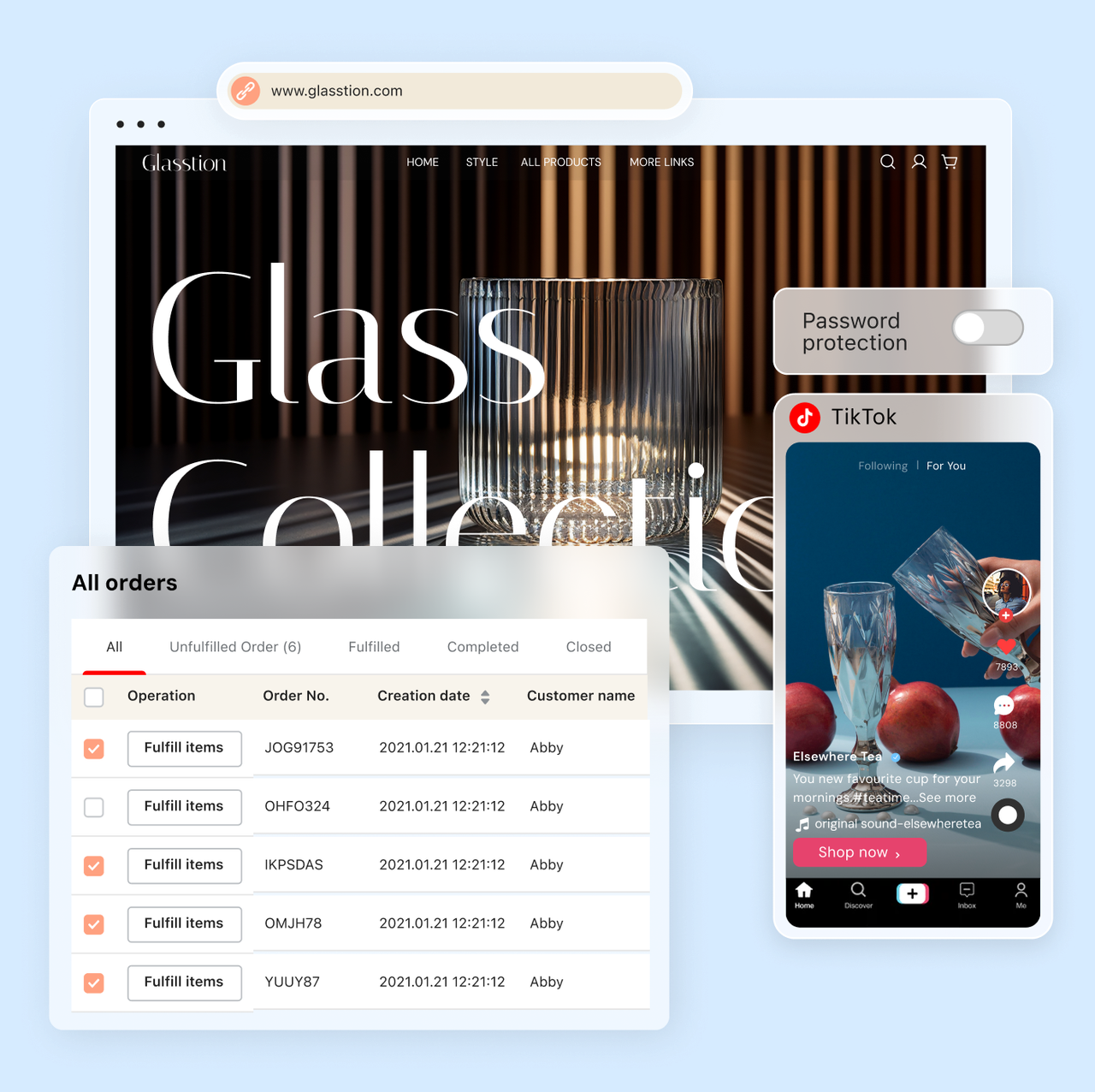
Before investing in trend content, confirm that your product pages, inventory, and fulfillment process can handle a sudden traffic spike. Having your own DTC ecommerce website is one of the more reliable ways to capture that traffic on your own terms. If you don't have one yet, Shoplazza's AI Store Builder can generate a complete store from a prompt in minutes. Once live, connecting to TikTok For Business automatically syncs your product catalog with daily updates, so you can promote on TikTok while routing customers to your own store for checkout, with inventory and orders managed centrally in one dashboard.
Chase trends that have already peaked
The most common situation: a seller spots a hot topic, spends two or three days producing content, posts it, and gets far less reach than expected. The likely reason is the trend already hit its peak — the algorithm has already reduced recommendation weight for new entries into that topic. The signal to watch for is whether a hashtag search returns a wall of brand-paid ads. If it does, the window has closed. Building the habit of checking trend lines in Creative Center before committing to production solves this.
Content that feels like an ad
TikTok users are quick to scroll past anything that reads as promotional. You might notice that one beauty brand, after switching from polished ad-style videos to a raw "first time trying this" format, saw engagement roughly 10 times higher than before. Videos don't need to be cinematic. They need to feel real.
Copying without adding anything
Pure format replication, with no original angle or perspective, tends to get about one-fifth the recommendation volume of original content. The effective approach is to use trending audio and topic structures as a frame, then fill that frame with your own product context and point of view. That's trend-leveraging. Copying is not.
Publish at the wrong time
Different categories have different peak activity windows. Based on RecurPost's analysis of over 2 million TikTok posts, beauty and fashion content tends to perform better published between 3pm and 6pm EST, when users have time after work to browse tutorials and outfit content. Fitness content performs better in the 9 to 11am EST window and again in the early evening, fitting users looking for morning motivation or winding down with health content. That said, your own professional account's follower activity data is always the more reliable reference since time zones vary significantly by target market.
Use global data for market-specific decisions
If your target market is the US but you're reading global trend data, your content direction will drift. Global numbers mask local signals. The fix is straightforward: always set the country filter in Creative Center before reading any data.
Wrapping up
TikTok trends change every day, but the underlying logic stays consistent: find the right timing, use the right data, and make content that has something distinct about it. Sellers who do those three things well don't need every video to go viral — the traffic and conversions build up steadily over time. Once content starts working, how you capture that traffic matters just as much. More cross-border sellers are building their own DTC ecommerce websites with Shoplazza, connecting to TikTok For Business to route platform traffic into their own brand ecosystem rather than depending entirely on a single channel. Trends change. Your own brand and customer base don't.
Frequently asked questions about TikTok trends
Q1: Is TikTok Creative Center free?
Yes, Creative Center is completely free and open to all users. Basic features including hashtag trends, songs, and trending videos are accessible without logging in. Some advanced features like Top Products require a TikTok business account, but registering one is also free.
Q2: Can I use Creative Center without a TikTok business account?
Yes. Most trend analysis features including hashtag trends, trending music, and trending videos are available without logging in — this is TikTok's stated open access policy. The Top Products section requires a business account login, so registering a free business account is worth doing to access the full feature set.
Q3: Which TikTok trend analysis tool do you recommend for cross-border sellers?
For sellers starting out, Creative Center combined with TikTok Shop's top products feature covers most trend research needs at no cost. For deeper product data, Fastmoss is focused specifically on TikTok Shop and is widely used. For competitor content analysis, Pentos can track competitor accounts' BGM usage and video structure. Paid tools make most sense for teams that already have meaningful sales volume and need systematic, ongoing competitor monitoring.
Q4: How many hashtags should a TikTok video use?
Based on creator experiment data and platform guidance, three to five hashtags consistently outperforms stacking large numbers of tags. A practical mix is one to two high-traffic trend hashtags plus two to three tightly relevant vertical category hashtags. Using many unrelated trending hashtags doesn't add reach — TikTok's algorithm evaluates the relevance between your content and the tags you use.
Q5: How do you know when a TikTok trend is ending?
A few signals to watch: in Creative Center, when the trend line slope flattens or starts declining, the trend is entering its wind-down phase. On TikTok itself, if a hashtag search returns mostly brand-paid ads, the trend has likely peaked and competitive costs have risen. When a video format starts being heavily replicated by low-quality content and overall engagement rates drop across the topic, that's another indicator the trend is close to its end. Combining these signals gives a reasonably reliable read on where a trend is in its cycle.
Q6: How do you find TikTok trending audio?
Open TikTok Creative Center and switch to the "Rising" tab under the Songs section. This shows audio with the fastest recent growth before it peaks. Inside the TikTok app, you can also tap any sound on a video you're watching to see how many videos are currently using it.