Ever notice that some loyal customers suddenly stop buying, even though they've loved your products before? Many merchants face this frustrating situation, spending on ads and promotions without seeing old buyers return. Understanding why this happens is the first step to fixing it. This guide shares practical strategies to increase repeat purchases, helping you reconnect with existing customers, build loyalty, and turn occasional buyers into steady, long-term supporters of your brand.
The real value of repeat purchases
- Customer acquisition is expensive. Research cited by Harvard Business Review shows that acquiring a new customer can cost 5–25× more than retaining an existing one.
- Returning buyers spend more. Studies indicate that repeat customers spend about 67% more per order than first-time buyers because they already trust the brand and product quality.
- Retention directly affects profit. Increasing customer retention by just 5% can boost profits by 25%–95%, since loyal customers purchase more often and require less marketing spend.
- A large share of revenue comes from existing customers. Industry analyses estimate that around 65% of business revenue is generated by repeat buyers, especially for brands that actively nurture customer relationships.
Data is critical to drive repeat purchases, but it's not easy to collect. The disappearance of third-party cookies and tighter privacy regulations make traditional tracking less effective. At the same time, marketplaces like Amazon and Etsy often don't fully share customer data, leaving merchants with limited visibility into buyer behavior, motivations, and long-term value.
That's why many ecommerce businesses are shifting toward first-party data strategies—building their own store and using integrated analytics tools to directly understand customers instead of relying on external data. Platforms like Shoplazza help with this by:
- Centralize customer insights: Shoplazza dashboards combine sales, browsing, traffic, and product data in one place. Merchants get a clear view of how customers discover, evaluate, and buy products across channels, making it easier to optimize marketing and improve repeat purchases.
- Connect marketing channels with store data: Shoplazza lets merchants link platforms like Facebook, Instagram, and TikTok. Sellers can create pixels, set up product catalogs, and run targeted ads, using store data to reach audiences while keeping full control over customer insights.
- Turn data into automated customer engagement: Tools like Loyalty & Push use AI to analyze behavior, membership, points, and spending. Merchants can automatically generate personalized campaigns and emails, boosting marketing efficiency, driving repeat purchases, and improving overall customer engagement.
Why don't loyal customers buy again? 3 Major reasons
Many merchants value old customers but miss why they leave. Unlike new buyers, loyal customers reconsider based on past experiences. Without understanding their motivations, even the best retention tools can't prevent lost purchases.
Fixed price sensitivity
New customers are still learning a product's value. Discounts or free shipping often push them to buy, with coupon click rates around 25%–35%. Loyal customers are different. They remember past prices, shipping, and promotions. For example, if a previous purchase had a 15% discount, a current 10% discount may not motivate them. This "price memory" makes them less responsive to standard promotions.
Merchants should understand this is not "being cheap"—it's a rational expectation formed from experience. Email campaigns for loyal buyers cannot simply copy new customer discount strategies.
Choice fatigue and higher expectations
New buyers are curious and willing to try based on pictures or descriptions. A "let's try it" mindset helps them take the first step. Loyal customers already know your products. They understand quality, fit, and value. When considering another purchase, they often ask, "Is this worth it?" Their doubts usually involve:
- Concerns about quality: Will the new batch match previous standards
- Functional fit: Does it meet current needs
- Value comparison: Is there enough reason to upgrade
Repeat buyers need a clear upgrade reason to justify spending again. Without it, they are more likely to stay put.
The loyalty paradox
At first glance, loyal customers seem easier to win back. But the opposite is often true. New buyers haven't built trust with competitors yet, so they may return quickly. Loyal buyers are picky but committed. When they hesitate, they often check other platforms first. This behavior stems from two key factors:
- Comparison mindset: they know your strengths and possible competitor options
- Opportunity cost: their time is valuable, so they won't risk it on a purchase that might not be perfect
How to increase repurchase? 7 Ways to boost more sales
Understanding why customers stop buying is just the first step. Increasing repeat purchases requires a systematic approach. These five strategies, ranked from easiest to hardest to implement, bring clear benefits:
- Economic incentives: Encourage purchases through discounts, rewards, or loyalty points.
- Convenience and friction reduction: Make buying fast, easy, and seamless.
- Emotional loyalty: Strengthen connection with your brand to drive long-term commitment.
Create a tiered membership system
A tiered membership system groups customers by purchase behavior and value, offering different benefits for each level. Common setups include 3–5 tiers:
- Basic member (1 repeat purchase): 1:1 points exchange, access to standard discounts
- Intermediate member (2–3 repeat purchases): 1:1.5 points exchange, priority support, birthday coupons
- Premium member (4+ repeat purchases): 1:2 points exchange, exclusive gifts, early access to new products
This design rewards high-value customers and encourages repeated purchases, forming a positive incentive loop.
Manual management is time-consuming, especially for cross-border stores. Tools like Loyalty & Push automate tiering using AI, following best practices for customer loyalty and repeat purchases. The system analyzes order value, buying behavior, and preferences to suggest levels, supports manual adjustments, and offers templates based on repeat purchases, order value, or activity. Merchants can combine criteria to target members for personalized campaigns. Besides, it is more flexible: new stores can start tiering from the first repeat purchase and refine tiers over time.
Internal Shoplazza tests show that repeat-customer order value increased by 45%+ during Black Friday, with a year-over-year average growth of 36%+. And from the measurable outcomes of Shoplazza merchants:
- Toy industry: Repeat purchase rate increased 11.5%
- Clothing industry: Repeat purchase rate increased 50.2%
- 3C electronics: Average order value increased 32%
- General daily sales: Average order value improved 7% to over 140%
Personalize email marketing
To address the three main reasons loyal customers hesitate to buy again, design a 3-step email sequence, each with a specific purpose. New customers need trust-building; returning customers need deeper, experience-based connections.
- The first email triggers memory (4 hours after abandonment): Avoid generic "first-time discount" messages. Reference the customer's last purchase, including item name, purchase date, and current status (restocked or upgraded). Connect new cart items to the previous purchase to create a sense of continuity.
- The second email shows upgrade value (30 hours after abandonment): Prove "this purchase is better than last time." Include product improvements (e.g., 30% longer battery life, upgraded materials, better service) and real customer upgrade stats. Example: "156 returning customers upgraded this version, with 27% higher satisfaction." Just avoid vague claims; focus on measurable improvements.
- The third email emphasizes exclusive benefits (72 hours after abandonment): Create scarcity for loyal customers only. Offer combo perks (exclusive gifts, priority shipping, double points) and highlight that new customers don't get this. Example: "As a top 10% customer, your exclusive perks expire in 24 hours and must be used with your cart items." Identity-based incentives outperform generic discounts.
Sounds complicated? Platforms like Shoplazza make it easy. You can recall incomplete orders automatically. The system generates a "recoverable orders" list in "Abandoned Checkout", and you can batch-send emails with promo codes or templates.
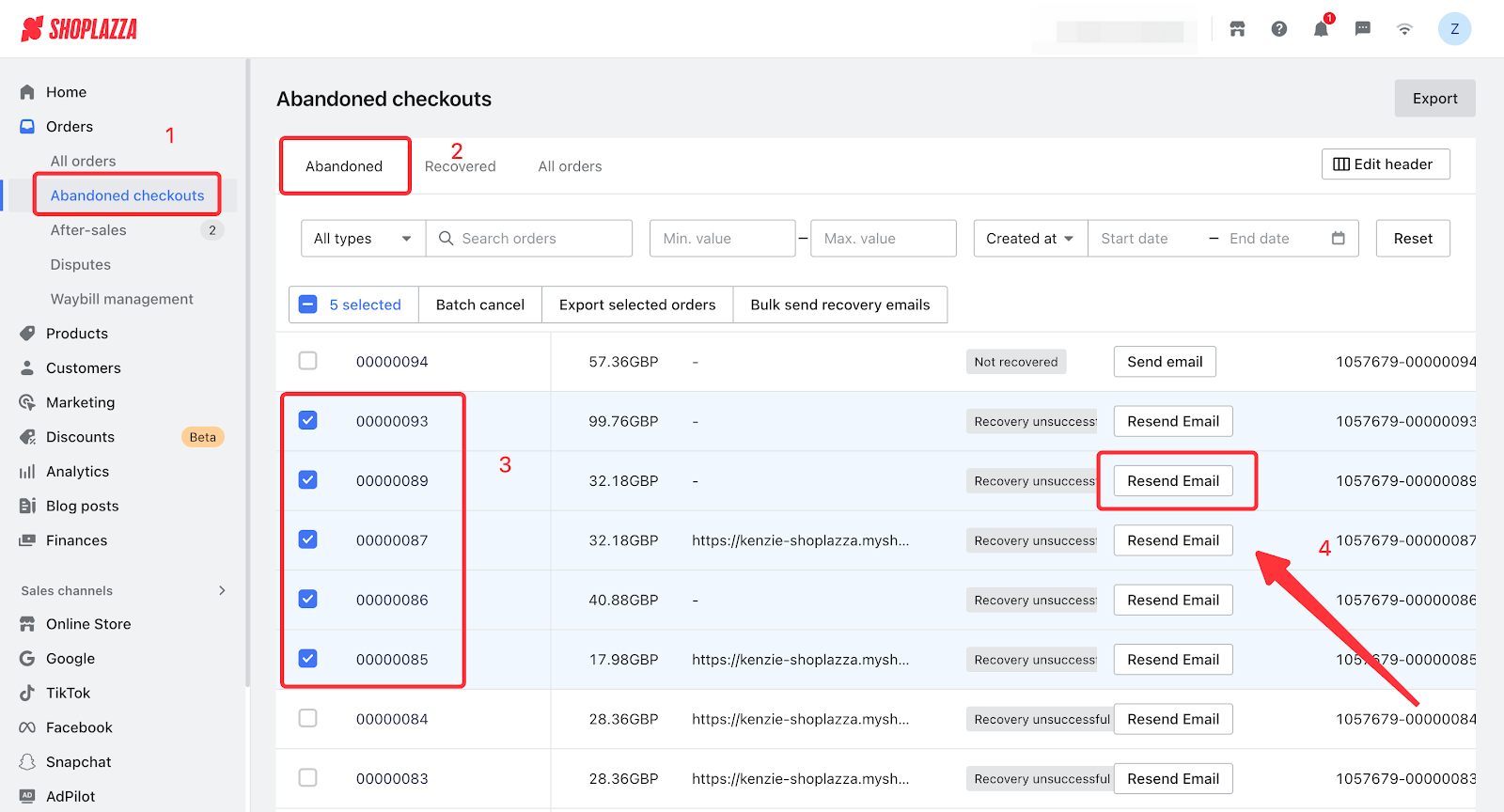
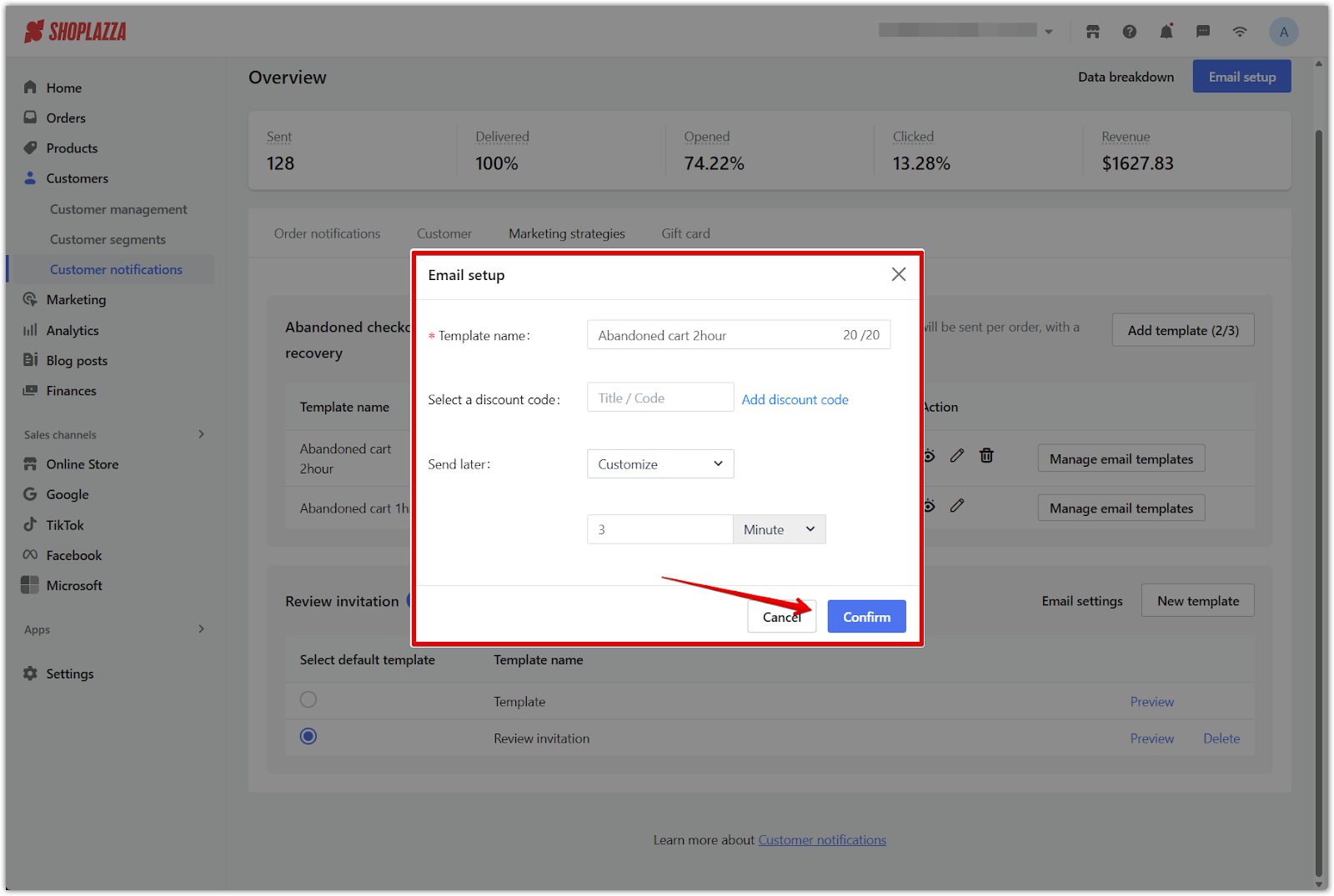
For more automation, set abandoned checkout recovery in "Customer Notifications" with millisecond-level delays to catch hesitant customers in real time. These tools are built-in and free.
By contrast, Shopify Messaging charges beyond 10,000 free emails per month:
- First 300k extra: $1 USD / 1,000 emails
- 300k–750k: $0.65 / 1,000 emails
- 750k+: $0.55 / 1,000 emails
When running abandoned cart recovery, promotions, and member notifications simultaneously, costs can quickly add up, requiring careful budget planning.
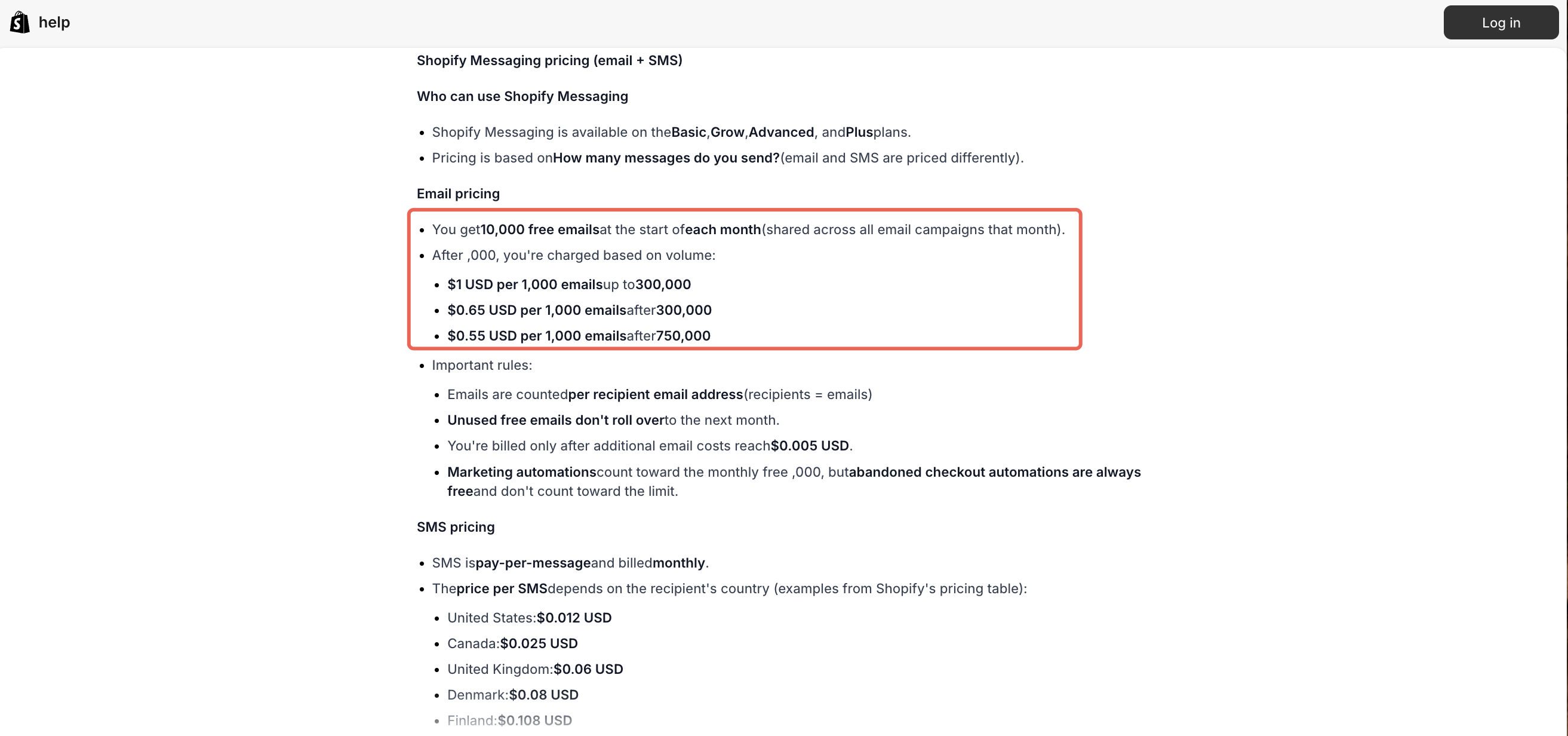
Source: Shopify Messaging Pricing
Launch affiliate marketing
Affiliate marketing doesn't just bring new customers. It helps boost repeat purchases too. On Shoplazza, merchants can connect with global networks like ShareASale, Awin, and CJ, tapping into over 500,000 affiliates ready to promote your products. It can let affiliates promote products to loyal audiences who already trust the brand. CPS campaigns reward affiliates when sales happen, encouraging them to drive both first-time and returning buyers.
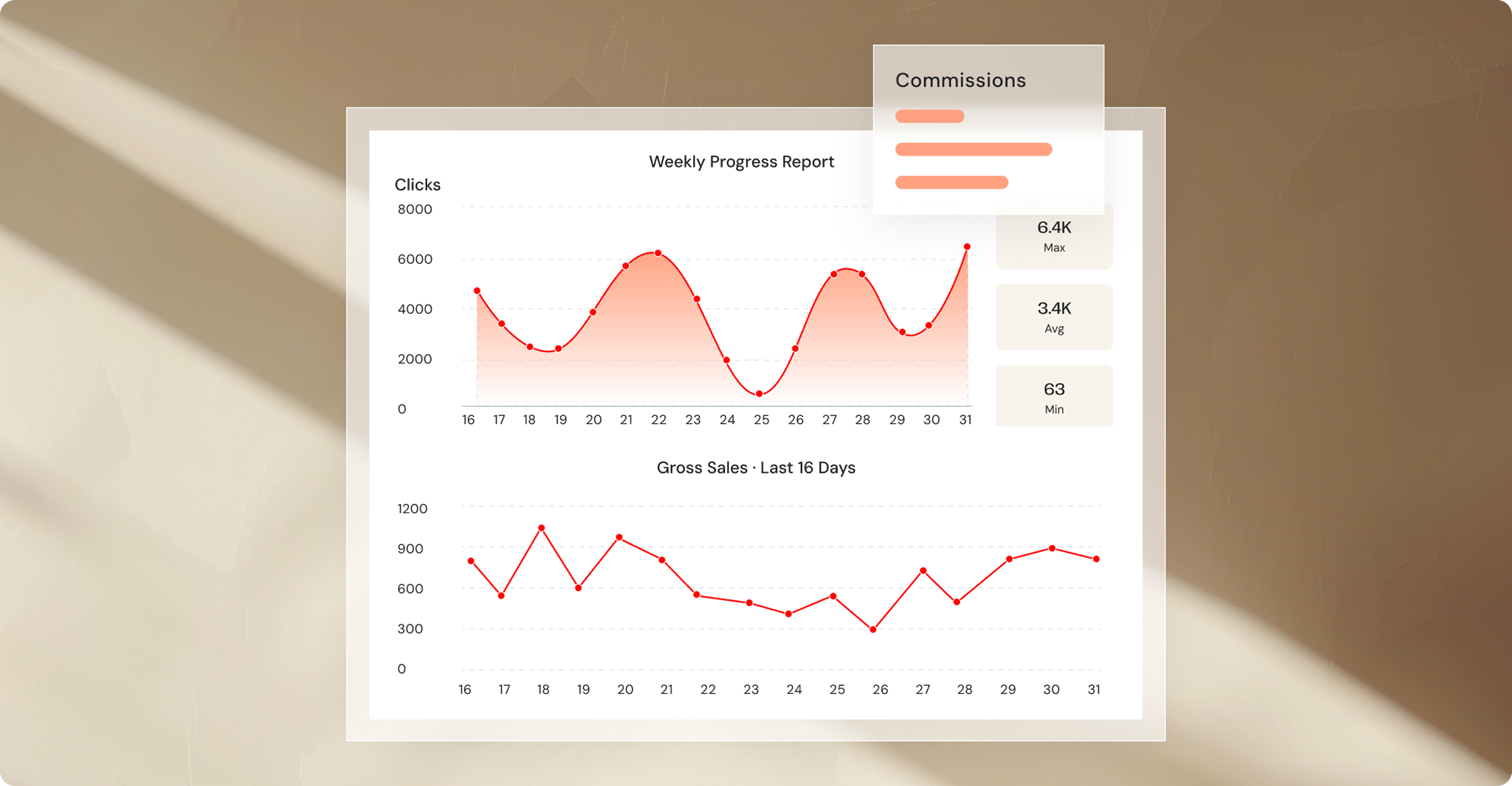
Affiliate marketing creates a new revenue stream while re-engaging past buyers, without upfront costs. It reminds customers of products they've purchased or introduces complementary items to encourage repeat orders. At the same time, performance-based commissions ensure you only pay for actual sales, making it a low-risk, cost-effective way to boost both revenue and customer loyalty.
Affiliates also strengthen brand presence across multiple channels, keeping your store top-of-mind for previous customers. This consistent exposure, combined with targeted promotions, turns one-time buyers into repeat buyers while expanding reach, improving loyalty, and driving long-term revenue growth.
Provide subscription service (ideal for consumables)
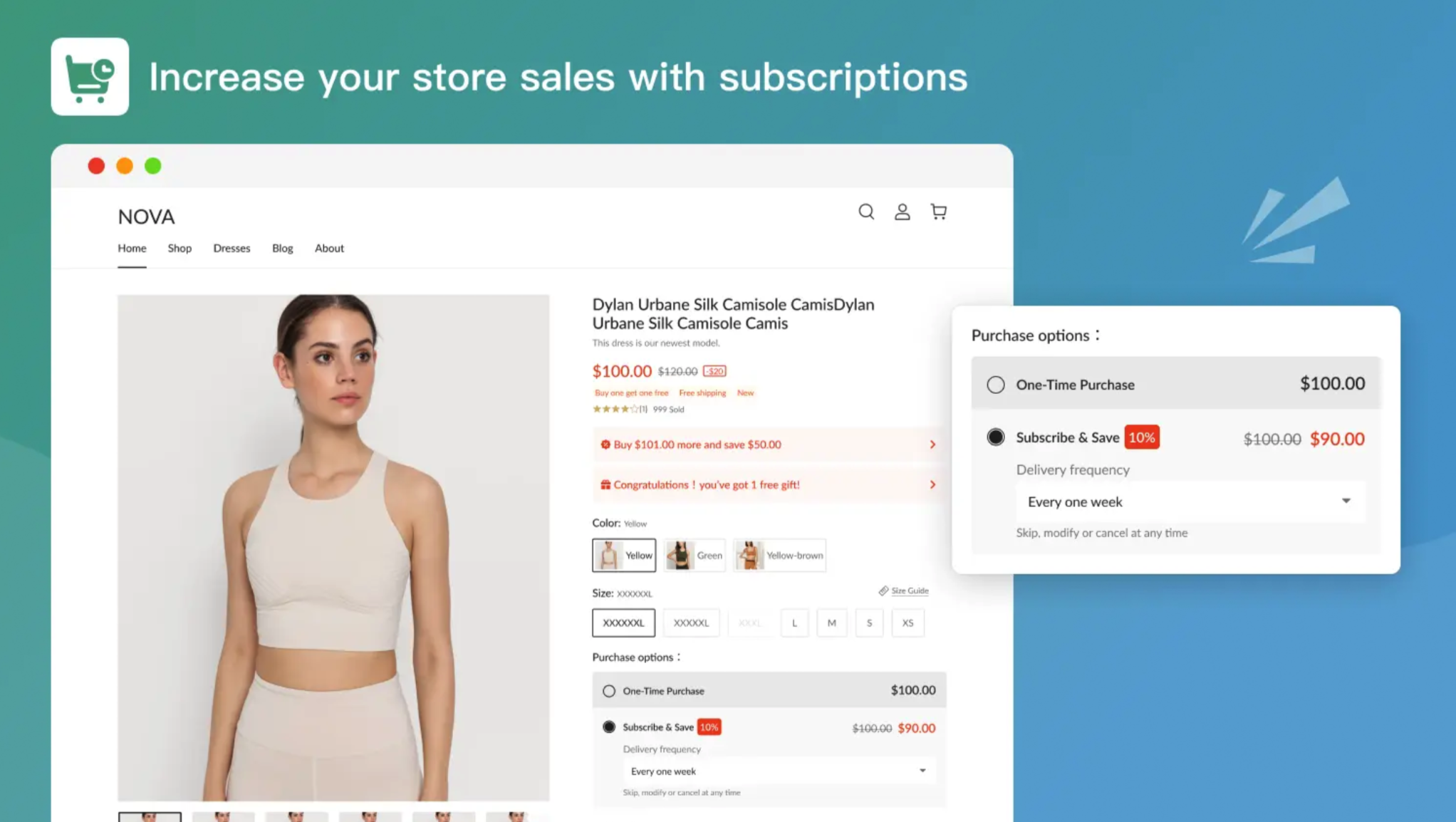
Subscription services work best for products with predictable consumption cycles, like skincare (one bottle per month), health supplements (monthly box), pet supplies (bag every 15 days), or baby diapers (weekly pack). Customers set up automatic deliveries, forming a stable repurchase habit and avoiding missed orders.The subscription process is simple. On the product page, customers choose a subscription option, set a first-order discount (e.g., 20% off), renewal discount (e.g., 15% off), and delivery cycle (e.g., every 15th of the month). The system automatically generates recurring orders. Customers can skip, reschedule, or cancel anytime, giving high flexibility and a smooth experience.Shoplazza's Subscription plugin is designed for merchants to convert consumables into automatic recurring orders. It helps build stable customer relationships, increase lifetime value, and grow predictable revenue. Key features include:
- Automated repurchase: Subscription increases store sales effortlessly.
- Smart order management: Customers can skip, reschedule, or cancel subscriptions.
- Flexible subscription plans: Create multiple discount options and custom renewal cycles.
- Data dashboard: Track subscription metrics, including new subscribers, fulfilled orders, and GMV.
Leverage points incentives program and UGC content
The points and user-generated content (UGC) program encourages loyal customers to share experiences, creating a positive cycle of content creation and repeat purchases. Customers earn points by posting photos, videos, or reviews, which can be redeemed for discounts or exclusive gifts. UGC also attracts new buyers, driving a growth flywheel. This works well for beauty, fashion, and home products, where visuals and experience matter most.
- Earning points: Customers gain points for actions like posting a photo (20 points), uploading a product video (100 points), referring a friend who buys (200 points), or completing timely purchases for three months in a row (500 points). Points convert to rewards at 100:1, e.g., 100 points = $1 credit, or redeem exclusive gifts and priority shipping.
- UGC content management: Display customers video, comments, and pictures on the homepage, category, or product pages with Instagram Show, showing the contributor or their membership level (e.g., "From VIP member Sarah"). Top 10 submissions each month earn 200–300 extra points, encouraging ongoing participation. Content automatically links to relevant product pages, boosting credibility and trust.
Optimize product lineup
Product assortment optimization helps prevent repeat-purchase fatigue by building related product sets and advanced solutions around top-selling items. It guides customers from single-item purchases to bundles, subscriptions, and personalized experiences, creating a full customer lifecycle. This works best for beauty, health supplements, and home goods with stable SKUs and recurring needs.
- New store strategy: Focus on the top 5 bestsellers. Identify 2–3 complementary products and create simple bundles, e.g., pair a serum with matching masks as a "daily care set," showing bundle suggestions and discounted pricing on product pages. Keep SKUs simple to test demand and manage inventory efficiently.
- Established store strategy: Expand into a multi-tier matrix. Upgrade popular bundles into monthly subscription boxes, and for high-value repeat buyers (3+ months), offer personalized combinations based on past orders. Add seasonal or VIP-only sets to strengthen brand differentiation.
When you execute, review top 10 products monthly, design essential bundles in reverse, automate "purchase → recommendation → subscription" flows, and remove low-converting combinations. Start simple in new stores and extend into subscriptions and customization in established stores to convert transactional buyers into loyal, repeat customers.
Offer exceptional and additional service
Providing exceptional service is one of the most effective ways to encourage repeat purchases. Customers remember experiences more than products, and positive experiences build loyalty. According to Salesforce, 80% of consumers consider the experience a company delivers as important as the product itself. Fast shipping, hassle-free returns, and responsive customer support create convenience and trust, making it easier for buyers to choose your store again. For instance, retailers offering free returns report up to 50% higher repeat purchase rates, showing that small service enhancements can have a big impact on loyalty.
Additional value, such as personalized recommendations, exclusive previews, or surprise gifts, can further strengthen customer relationships. Personalized suggestions based on past purchases can increase conversion rates by 20–30%, while exclusive offers for returning customers create a sense of privilege and appreciation. Together, these strategies turn one-time buyers into loyal customers, sustaining long-term revenue growth.
Conclusion
Winning back loyal customers requires understanding how they reassess high-value opportunities. By analyzing their behavior, merchants can design precise strategies to increase repeat purchases. Shoplazza offers small and medium cross-border businesses free and low-cost tools, including abandoned order recovery, follow-up emails, Loyalty & Push, subscription services, and Instagram photo walls, making it easy to boost repeat purchases without extra cost. Start now! Loyal customers aren't just operating costs; they're the engine of profits for the next three years.
FAQs about increasing repeat purchases
Q1: What is repeat purchase in ecommerce?
A repeat purchase occurs when an existing customer buys from your store again. It reflects customer loyalty, trust, and satisfaction, and is a key driver of long-term revenue.
Q2: How long does it take to see results from loyal customer recovery?
A typical test cycle is 14 days. Deploy a 3-email sequence in week one and monitor recovery rates in week two. Industry benchmarks are 3–5% for standard abandoned cart emails, 10–14% for top performers. If rates stay below 6%, review customer segmentation, personalization, and timing.
Q3: Which products benefit most from repeat purchase strategies?
Best suited are beauty, skincare, apparel, jewelry, health supplements, and daily necessities. These categories have clear consumption cycles and high brand loyalty. New stores should focus on the top 3–5 SKUs; established stores can expand to accessories and home goods. Key traits include stable SKUs, repeated purchase demand, price $20–$150.
Q4: Which products are suitable for subscription models?
Ideal products meet three conditions:
- clear consumption cycle (e.g., 30-day skincare, 15-day pet food);
- stable formulas to reduce churn;
- price $30–$120.
Recommended categories include serums, vitamins, pet treats, coffee beans. Subscription users typically repurchase 3× more than regular customers.
Q5: How to balance marketing resources between new and existing customers?
Allocate roughly 60% to existing customers and 40% to new customer acquisition. Existing customer LTV is 2.3× higher, offering better ROI. Use automated segmentation for precise targeting. New stores can start 50:50 and shift to 60:40 as the loyal base grows.
Q6: What are the top 3 reasons loyal customer strategies fail?
- No segmentation: All loyal customers receive the same message.
- Lack of personalization: Static messages without historical variables.
- Overfrequency: Weekly bombardment damages trust. Solution: segment by repeat purchase (3 tiers), use dynamic variables, and limit contact to 3–4 precise touchpoints per month. Test over 14–28 days to validate results.