In 2026, TikTok is one of the highest-converting platforms for beauty brands going global. But data shows that most brands' growth depends almost entirely on paid content. Is that sustainable? And beyond running ads continuously, are there other ways to grow? This article starts with real Q1 2026 data, walks through the main ways beauty brands operate on TikTok, and explains why a DTC ecommerce website is what turns that platform traffic into long-term customers.
TikTok beauty growth in 2026 is heavily paid
The numbers tell a clear story about where most brands are putting their weight right now. According to Spate, a US consumer trend data platform that tracks behavior across TikTok, Google, and Instagram, the top 10 beauty brands by TikTok view growth in Q1 2026 were almost all driven primarily by paid content rather than organic reach. This data was reported by WWD (Women's Wear Daily) in April 2026.
| Brand | TikTok view growth (Q1 2026) |
Primary growth driver |
| Tarte Cosmetics | 2.31 | Paid content |
| Dr. Melaxin | 1.89 | Paid content |
| Fenty Beauty | 1.56 | Mixed (paid + organic) |
| e.l.f. Cosmetics | 1.43 | Paid content |
| Rare Beauty | 1.28 | Organic + creator |
Source: Spate, as reported by WWD, April 2026. Note: Spate does not publish this ranking as a free public report. The data is tracked through its paid platform and was cited by WWD.
How beauty brands market themselves on TikTok Shop?
There are three main approaches brands use on TikTok right now, each with a different cost structure and time horizon.
Paid advertising
This is the dominant approach, and it accounts for most of the growth in the Spate data. The main TikTok ad formats include In-Feed Ads that appear in the For You page, TopView which is the full-screen ad users see when they open the app, and Spark Ads which boost a creator's organic content directly as a paid placement. For brands entering a new market, paid ads offer fast reach and precise audience targeting. The trade-off is that the traffic lives on TikTok. When the spend stops, the visibility stops with it.
Creator partnerships and affiliate programs
TikTok Shop's affiliate program lets creators link directly to products in their videos and earn a commission on sales. Beauty is a natural fit for this format because the content writes itself — application tutorials, skin transformations, and before-and-after comparisons all perform consistently well.
You might notice that nano and micro influencers with 10,000 to 100,000 followers often outperform larger accounts in engagement rate. For smaller beauty brands working with limited budgets, partnering with tightly focused creators in the right niche tends to deliver better return than chasing big follower numbers.
Brand-owned short video content
This is the most time-intensive approach and the slowest to produce results, but it builds the most durable long-term asset. Tutorial content like "how to choose sunscreen for oily skin" or "how to use retinol correctly," ingredient education, and genuine product reviews all have high retention rates on the platform. The case of Based Bodyworks shows that when content genuinely becomes part of a community's everyday conversation, organic reach can scale. It takes time to get there, but the traffic it generates doesn't disappear the moment a campaign budget runs out.
What beauty brands can do beyond TikTok promotion?
Many people overlook what's actually missing after a successful TikTok campaign. A brand can spend heavily on TikTok, get strong visibility, and close sales — and still walk away with nothing that belongs to them. The customer data stays on the platform. There's no way to reach those buyers again. The next time they want to reorder, they search TikTok, and they might buy from a competitor.
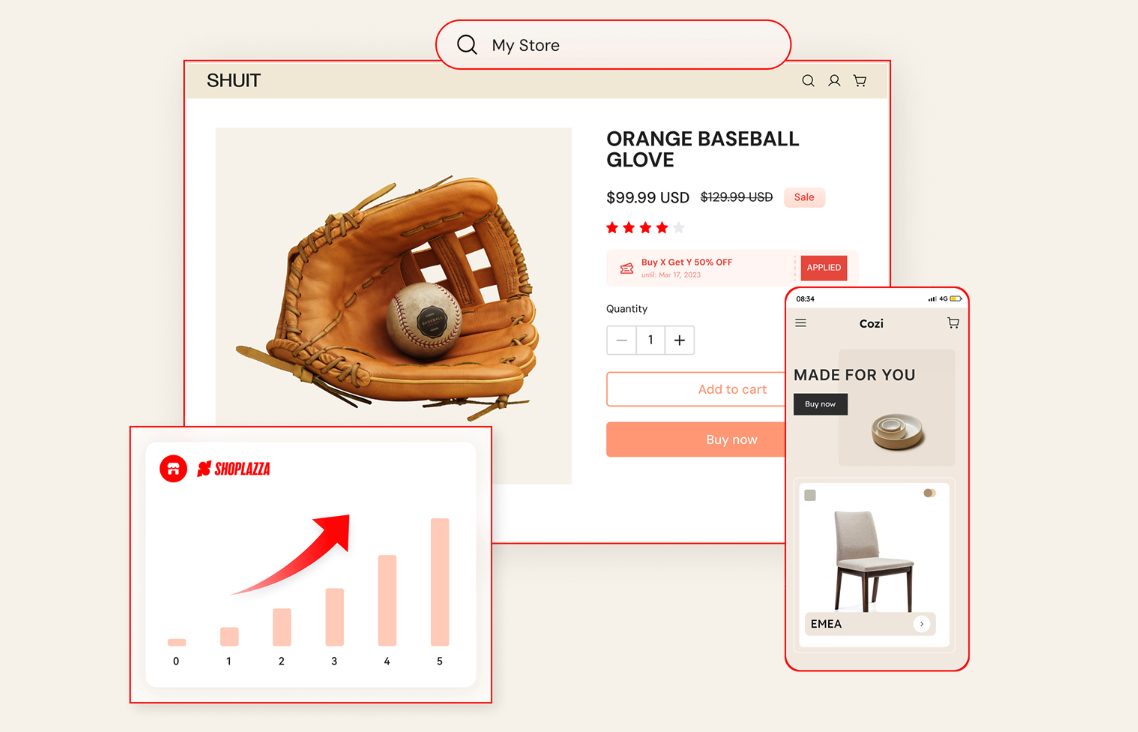
This isn't a niche problem. It's the default outcome for any brand operating only through a platform storefront. Beauty as a category is particularly well-suited for a DTC ecommerce website, for three specific reasons:
- High repeat purchase rate. Skincare and makeup are consumables. Customers who trust a brand come back regularly.
- Higher average order value potential. Beauty customers are receptive to bundles and sets. The gap between a $30 single product and an $80 kit isn't a hard sell — many customers will choose the kit if it's presented well.
- Short decision cycles. TikTok creates impulse interest fast. The conversion window is narrow, and a well-built product page can capture it.
TikTok Shop has real advantages for instant conversion, but it has structural limits on all three fronts: no membership system, limited bundling flexibility, and no customer data ownership. A DTC website addresses each of these directly.
Increase repeat purchases with loyalty and push
Repeat purchases are where beauty profitability actually comes from. Acquiring a new customer typically costs five to seven times more than retaining an existing one. If a customer buys once and doesn't come back, the brand has almost certainly lost money on that relationship after accounting for acquisition cost.
TikTok Shop can't solve this. After a purchase is completed on the platform, the brand has no contact information and no way to follow up. When that customer wants to repurchase, they search again, and the outcome is unpredictable.
A DTC website changes this fundamentally. When a customer creates an account or completes a purchase on your own store, you have their contact details and purchase history. From there, email, SMS, and push notifications become available channels.
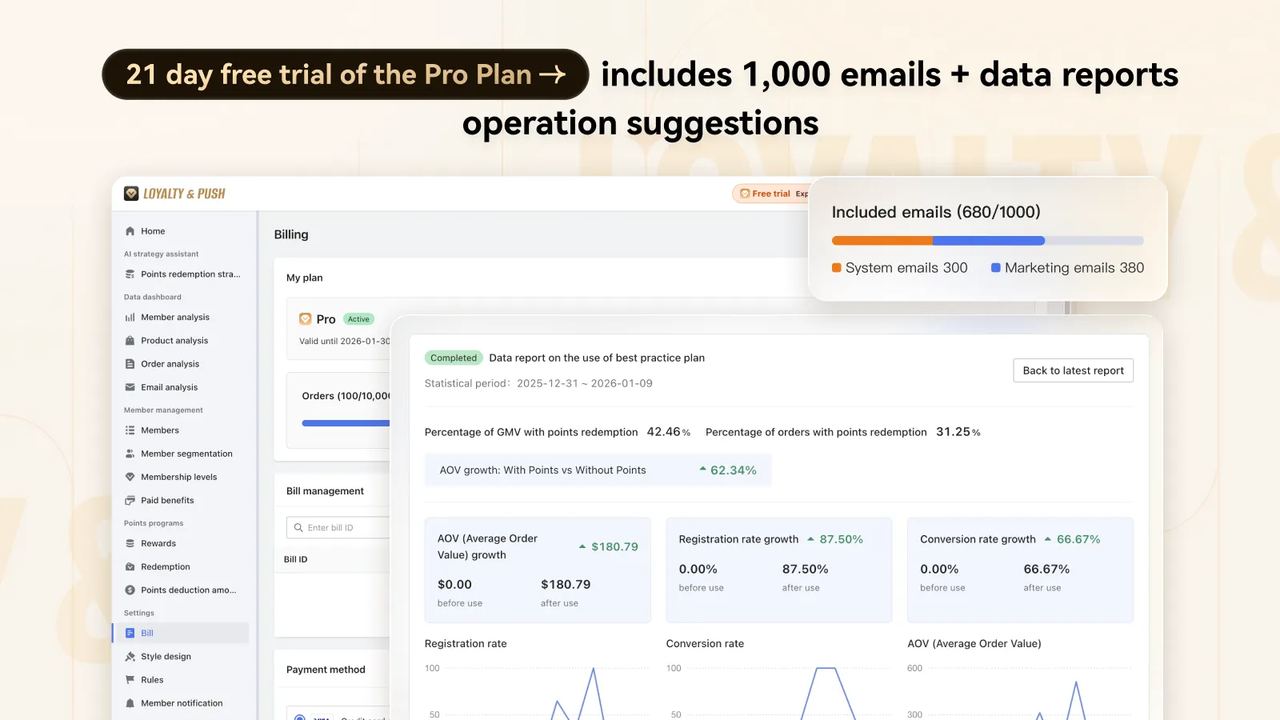
The Loyalty & Push in Shoplazza is designed specifically for this. Brands can set up a points system where customers earn points per dollar spent, redeemable automatically at checkout without any manual steps. Membership can be structured across up to five tiers, with each tier unlocking different benefits — early access to new products, exclusive discounts, or complimentary samples. These mechanics give customers a reason to keep buying from the same brand rather than shopping around every time.

The tool also consolidates data across interactions, generating regular reports on average order value, conversion rate, and repeat purchase rate, so brands can track what's actually working over time.
Push notifications are a separate but complementary channel. New product launches, limited-time promotions, and seasonal campaigns can all be pushed directly to existing customers at no additional ad spend. On mobile-first categories like beauty, push notification open rates tend to run higher than email — worth factoring in when planning retention strategy.
Increase average order value with bundles and sets
Beauty customers are natural bundle buyers. Someone using a cleanser almost certainly needs a toner, moisturizer, or mask alongside it. The product bundling and pairing logic is already there — it just needs to be surfaced at the right moment.
A brand store gives much more flexibility here than social media. A few approaches that work consistently:
- "Frequently bought together" modules on product pages. When a customer is viewing a cleanser, showing a curated companion recommendation below the fold — "many customers also bought this toner" — feels like a useful suggestion rather than a push. Done well, it doesn't read as upselling.
- Tiered discounts. One item at full price, two items at 10% off, three items at 20% off. This prompts customers to do the mental math and often leads them to add one more item. For a high-repurchase category like beauty, buying slightly more than planned isn't wasteful — customers know they'll use it.
- Holiday sets and gift packaging. Christmas, Valentine's Day, and Mother's Day are peak beauty sales periods and also the easiest times to increase average order value. A curated gift set solves the buyer's "what should I get" problem and typically commands a higher price than the same items sold individually — and customers accept that premium readily.
All of these approaches work toward the same outcome: a higher average order value, which spreads the acquisition cost across more revenue and improves the overall return on ad spend.
Build trust on your product pages
Beauty customers make fast decisions, but only when trust is established quickly. In practice, a first-time visitor to an unfamiliar brand's website will form an impression within a few seconds. Sparse product information, few reviews, or low-quality images are enough to trigger an exit.
Trust on a beauty product page comes from a few specific elements:
- Real customer reviews, especially with photos or videos. Buyers want to see how the product actually looks on someone's skin, not just the brand's marketing copy. Making review content prominent on the product page, and creating a dedicated section for real user feedback, has a direct effect on conversion rate.
- Before-and-after content. This is one of the highest-converting content formats in beauty — whether in a TikTok video or on a product page. Collecting genuine usage documentation from real customers, or building comparison visuals into product pages, gives potential buyers a direct reference point for what the product can do.
- Ingredient transparency. Younger beauty consumers, particularly Gen Z and millennials, pay close attention to formulation. A product page that clearly explains key active ingredients, suitable skin types, and usage instructions signals that the brand is knowledgeable and straightforward. This doesn't need to be dense or technical — clear and honest is enough.
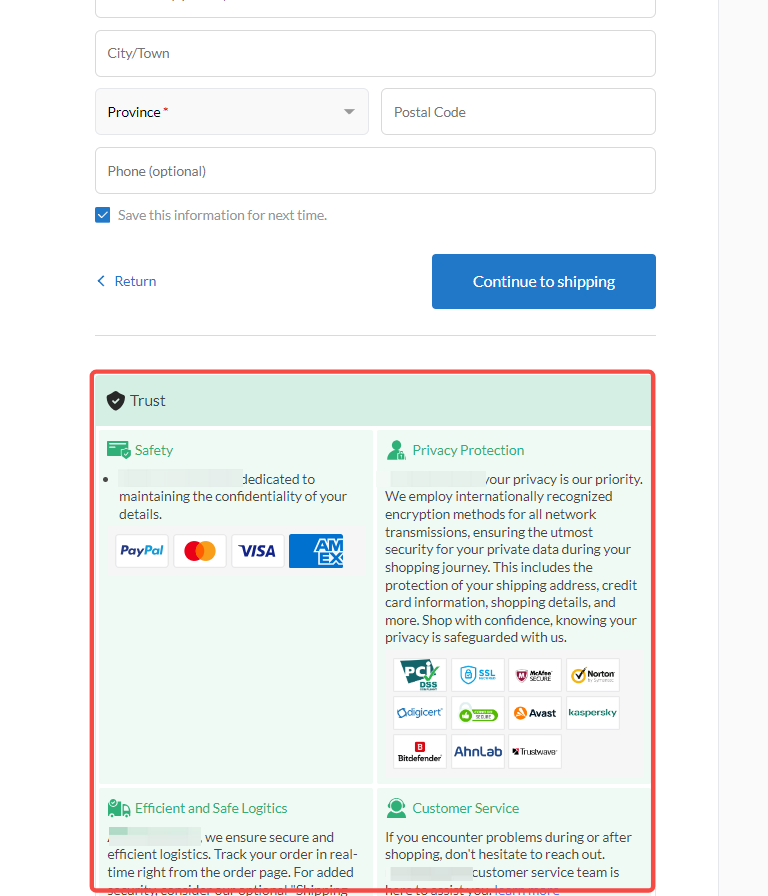
- Basic trust signals by Urgency Builder. Return policy, shipping timeline, and secure payment indicators. Many brands skip these or bury them at the bottom, but for a first-time buyer who's about to enter their card details on an unfamiliar website, these details matter more than most brands realize.
Drive traffic with SEO
Paid ads are the fastest way to start driving traffic to a website, but they're not the only way. For beauty brands specifically, SEO is one of the more reliable long-term traffic channels — and beauty happens to be a category where search-driven content works particularly well.
Consumers research before buying beauty products. Searches like "how to use retinol," "what does niacinamide do for skin," or "best skincare routine for sensitive skin" happen millions of times per day on Google. The people running those searches are actively in a purchase decision process. A brand that consistently publishes useful content around these long-tail keywords can attract that traffic without paying for each visit.
SEO content also compounds in a way ads don't. A well-written article keeps generating traffic after it's published, without requiring continued spend to stay visible. Over time, this builds a traffic base that doesn't disappear when a campaign ends.
TikTok content and SEO content also reinforce each other. When a user sees a brand's product on TikTok and feels interest but doesn't convert immediately, they often go to Google and search the brand or product name. If the brand has search visibility on that term, the user finds them and completes the purchase. Without it, that potential customer is lost to whatever appears in the results.
On the creative side, producing visual assets across TikTok, product pages, and paid ads traditionally required separate shoots for each context — expensive and slow to scale. AI product image generation tools like LazzaStudio can generate images across different backgrounds, scenes, and model skin tones without physical shoots. For beauty brands with wide product lines that need frequent asset updates, this reduces production cost and speeds up the time from product to published content.
Run TikTok and a DTC website together
Some brands frame this as a choice: focus on TikTok, or spread resources across a DTC website too. In practice, that framing misses the point. TikTok and a DTC ecommerce website serve different functions. They're not competing for the same job.
- TikTok's role is discovery and first exposure. Its algorithm can put a brand in front of large volumes of potential customers quickly, which makes it particularly effective for cold-start situations in new markets.
- A DTC website's role is retention and ownership. Customer data, membership records, and purchase history all belong to the brand. When TikTok's algorithm changes or policies shift, the customer asset built on the DTC side remains intact.
The operational flow that connects them is straightforward: use TikTok to attract new customers, use a profile link or ad to bring them to the DTC website, complete the purchase and enroll them in a membership program, then use push notifications and email to drive repeat purchases over time. It's not a complicated model, but many brands never build it — and as a result, they spend heavily on TikTok acquisition without accumulating anything that belongs to them.
Wrapping up
Paid content is how most leading beauty brands are growing on TikTok. But relying entirely on paid distribution has a ceiling — ad costs rise, algorithms shift, and none of the customers you acquire through the platform stay with you. The more sustainable path is treating TikTok as the top of the funnel and a DTC ecommerce website as where the customer relationship actually lives. Ads bring people in, content builds interest, and the DTC website handles conversion and retention. All three working together is what makes growth compound rather than reset every time a campaign ends.
Frequently asked questions about beauty products on TikTok
Q1: How should a beauty brand allocate budget when starting out on TikTok?
In the early stages, putting most of the budget toward TikTok paid ads and creator partnerships makes sense — it lets you quickly test which products and content types resonate in your target market. At the same time, set up a DTC ecommerce website from the start, even if traffic is low initially. Getting the conversion path working early means you're ready to capture and retain customers as paid traffic scales up.
Q2: Can a beauty brand run a TikTok Shop and a DTC website at the same time?
Yes, and running both simultaneously is worth doing. TikTok Shop works well for immediate conversion. A DTC website is where you build long-term customer relationships. The two channels aren't in conflict — the key is having a membership system on the DTC side that gives TikTok Shop buyers a reason to come back to your own store for their next purchase.
Q3: What kind of SEO content works for a beauty DTC website?
Focus on questions consumers ask before buying — ingredient breakdowns, usage tutorials, skin type guides, and product comparisons. These searches have stable demand and clear purchase intent, which makes them well-suited for accumulating long-term organic traffic. Start with a handful of well-researched articles rather than publishing high volumes of thin content.
Q4: What types of TikTok traffic does a DTC website convert best?
A DTC website captures traffic that needs more time or information before buying — typically higher-ticket products or first-time buyers who want reassurance. It's also where repeat purchase value lives: consumables, subscription-style replenishment, and loyalty program members. Low-ticket impulse products convert fine directly through TikTok Shop, so it's worth being deliberate about which products you route where.
Q5: How does LazzaStudio perform in TikTok ads?
AI-generated images by LazzaStudio work well for static ad creatives, product display posts, and TikTok video thumbnails. For In-Feed video ads, pairing them with real-use footage tends to perform better than either alone. The main advantage is speed — you can generate a wide range of visual styles quickly for A/B testing, which helps identify the highest-converting creative direction before committing to a full production shoot.