Over the past two years, something interesting has been happening in Amazon's toy category. Products like handheld hover balls, voice-activated robot pets, and AI drawing projectors have been quietly outperforming traditional toys at similar price points, while the number of sellers listing them stays relatively low.
That gap is the opportunity. According to Mordor Intelligence, the global smart toy market was worth around $21.4 billion in 2025 and is projected to exceed $38.2 billion by 2030, growing at a compound annual rate of 12.4%. This guide breaks down four AI toy niches worth paying attention to, covering price ranges, buyer profiles, and practical tips to help cross-border sellers figure out where to start.
Winning AI toys recommendations for cross-border dropshippers
The four niches below span from $15 entry-level test products to $180+ mid-to-high ticket items, so there's a starting point regardless of your budget or experience level.
AI entertainment toys
If you're looking for the most accessible entry point into AI toys, entertainment is it. According to SNS Insider, the entertainment and gaming segment accounted for around 40.25% of the smart AI toy market in 2025, which tells you something simple: people buy these products because they're fun, not because of the technology behind them. The core appeal is immediacy. You open the box, it works, and it does something that feels satisfying right away.
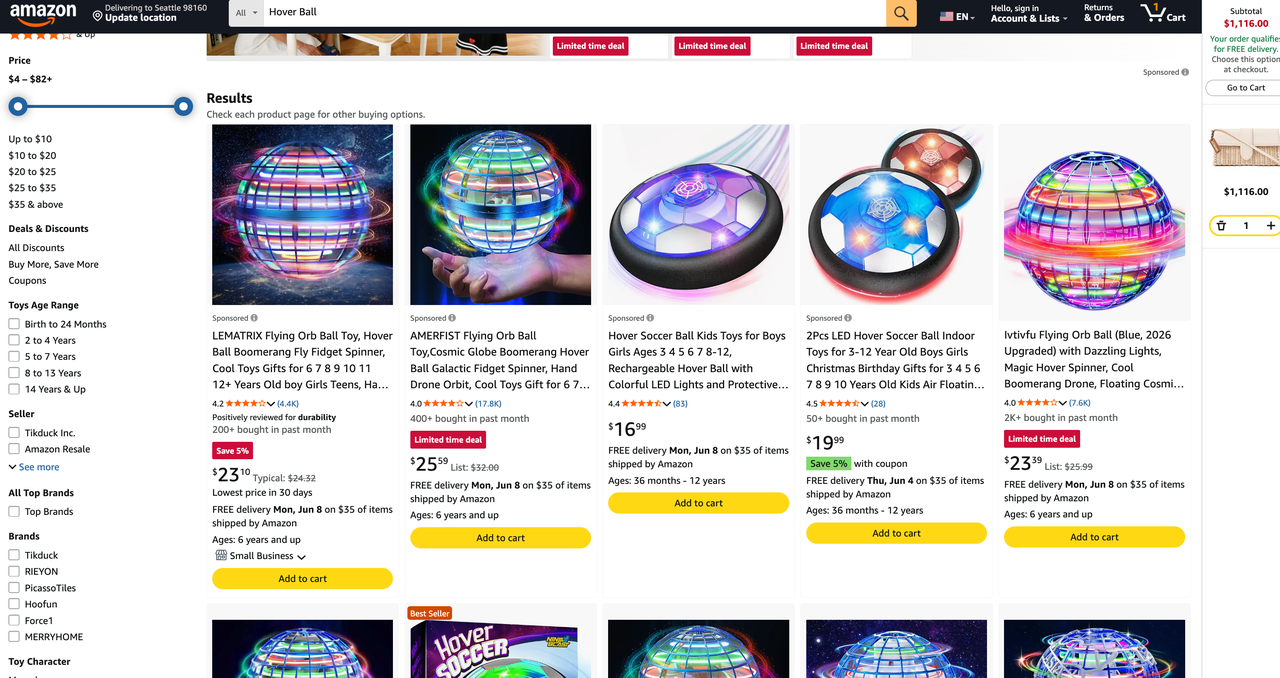
Main subcategories: AI hover balls / flying orb ball, kids stunt drones, and AI storytelling speakers.
The AI hover ball is one of the most consistently selling products in this space. It uses infrared sensing to float above your palm and avoid obstacles automatically, priced between $15.99 and $25.99, and works for kids aged 6 and up. Sales peak during Q4 (Halloween through Christmas), with top listings moving 700+ units per month.
Who's buying: Mostly parents shopping for holiday gifts for kids aged 1 to 14, plus younger adults looking for something fun and affordable to give as a gift. These buyers make decisions fast. Keywords like "flying," "obstacle avoidance," and "LED light" are often enough to close the sale.
Selling tips: This works best as a traffic driver or test product, not a hero SKU. Margins are thin, typically 20 to 30%, and volume is what makes the numbers work. The category is crowded, but there are a few ways to differentiate:
- Color and lighting options. RGB gradient or galaxy-style designs tend to perform better in main images and stand out more in search results.
- Gift-ready packaging. Adding a gift box, stickers, and an instruction card helps the listing show up for holiday gift searches and improves perceived value without changing the product itself.
- Bundle sets. Grouping two or three hover balls in different colors, priced at $39.99 to $49.99, improves your per-unit margin. Adding spare batteries, a storage bag, or replacement propellers also reduces the "what if it breaks" hesitation that some buyers have before purchasing.
AI drawing toys
There's a real tension parents feel when buying toys: anything purely fun feels like wasted time, and anything too educational sits on the shelf untouched. AI drawing toys land right in the middle. Kids think they're playing. Parents think they're learning. That positioning is why demand in this category has been holding strong.
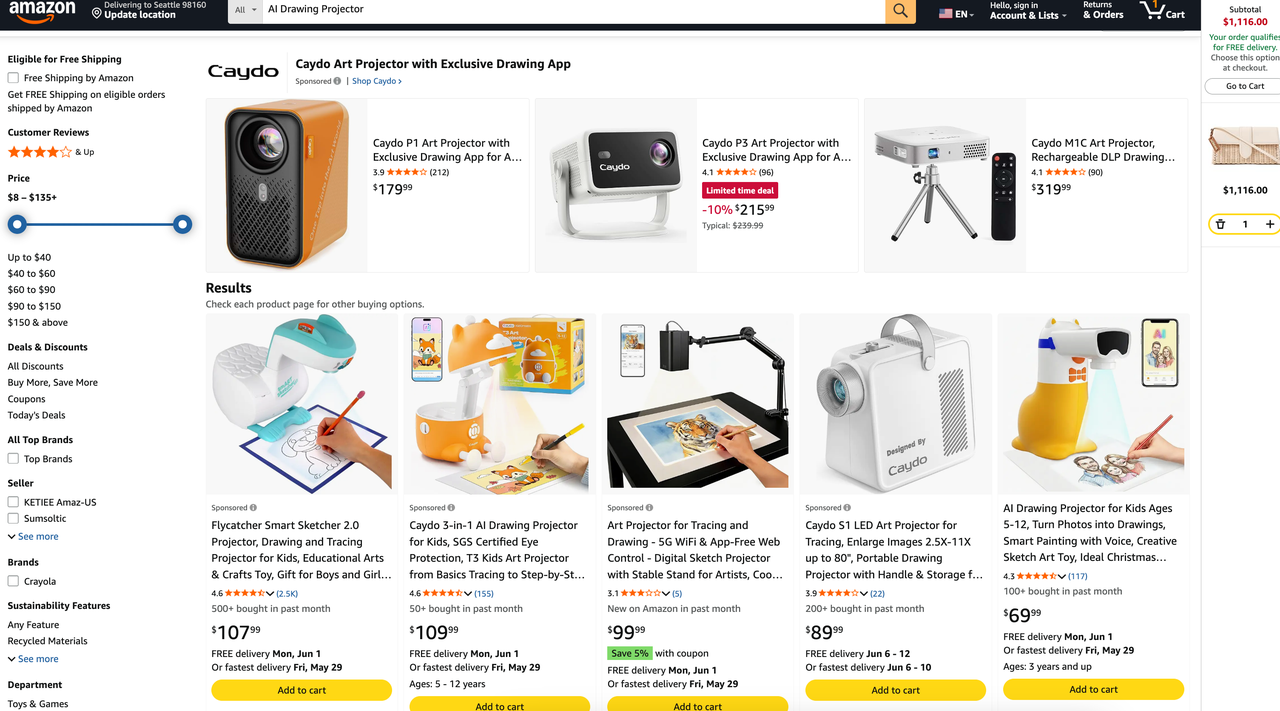
On Amazon, the number of SKUs in this niche is still limited, but top-selling products are moving 1,000+ units per month, which suggests the market is underleveraged for new sellers.
Main subcategories: AI drawing projectors and interactive drawing robots.
AI drawing projectors sit at the higher end of this niche's price range. Most products on Amazon fall between $69.99 and $150, with brands like Caydo and Flycatcher pricing their main models at $109.99 and above. The core function is projecting an outline that kids trace by hand, with some models offering App-free operation or 5G WiFi connectivity. These are aimed at kids aged 5 to 12. One thing to watch: buyers in this category are vocal about projection quality and setup friction. A large share of negative reviews mention poor visibility in normal lighting or difficult app connections. Avoid products with known issues in either area.
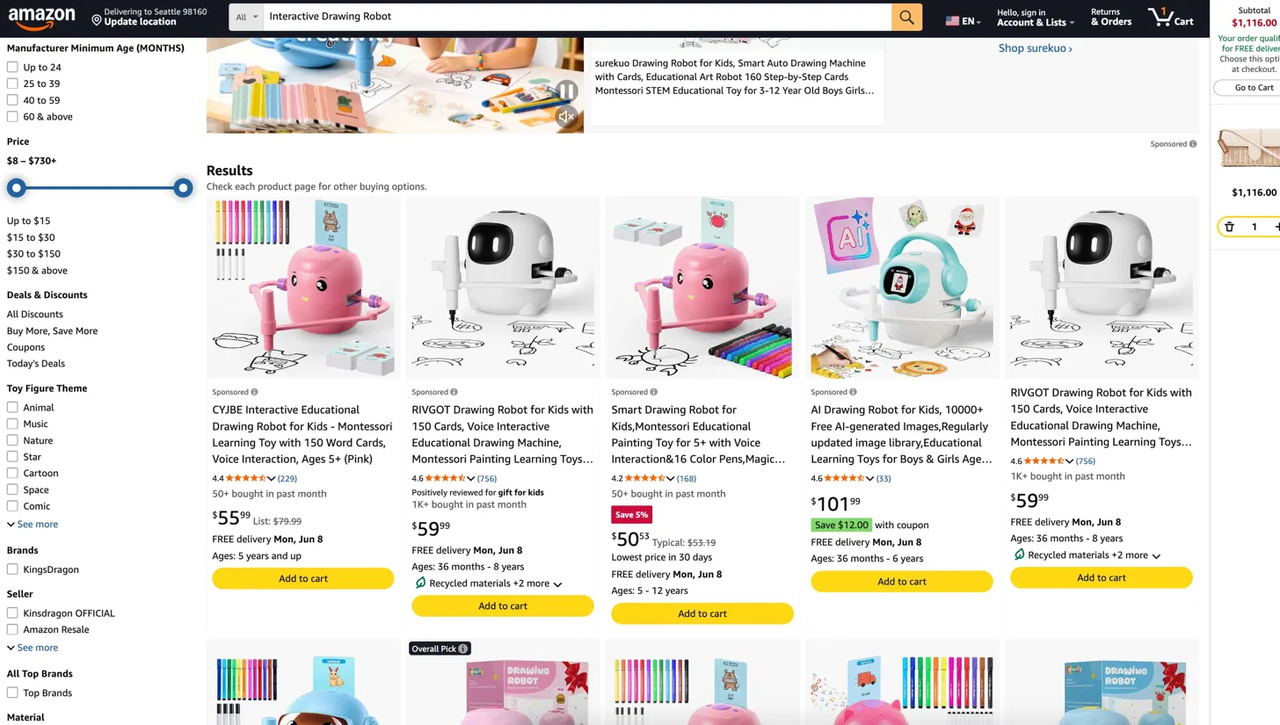
Interactive drawing robots are priced closer to the gift-buying sweet spot, with most listings falling between $50 and $60. RIVGOT is one of the top performers in this subcategory, consistently moving 1,000+ units per month. These products come in themed versions that map to different buyer segments. Animal themes work well for younger kids. Space and cartoon themes tend to resonate with boys aged 6 to 10. Star and nature themes show up more in gift purchases for girls. Listing multiple themed versions of the same product, rather than a single generic one, gives you broader search coverage without a completely different product line.
Who's buying: Parents with kids aged 3 to 10, shopping primarily for educational gifts. Common search terms include "no screen time toy," "STEM art toy for kids," and "drawing toy for girls age 6." Age labeling and real-use photos matter a lot to this buyer.
Selling tips: For new sellers, the $50 to $60 Interactive Drawing Robot is the better entry point. Look for models with 100+ word cards, 16+ color markers, and no app requirement to use the core functions. On the differentiation side:
- List themed versions separately. Space, animal, and nature themes each attract different search queries. Splitting them into individual listings gives you broader search coverage than one generic SKU.
- Lead with in-use photography. Images showing a child drawing and the finished artwork consistently outperform white-background product shots in click-through rate.
- Invest in gift-ready packaging. A proper gift box with a card slot positions the product directly for "birthday gift for kids" and holiday gift searches, which is where a large share of this category's volume comes from.
AI plush and companion toys
Plush toys have always been emotional purchases. Add AI and you get something that can actually respond, tell stories, and remember to some extent. What makes this category interesting from a business standpoint is how wide the buyer base actually is. It's not just parents buying for young kids. A significant portion of buyers are adults purchasing for themselves.
The success of brands like Jellycat and Pop Mart already proved that adults don't need a reason to buy a soft toy. AI plush taps into the same emotional consumer wave, just with an interactive layer on top. According to QY Research, the global AI companion plush market was valued at around $103 million in 2024 and is projected to reach $842 million by 2031, representing a compound annual growth rate of roughly 35%.
Main subcategories: AI talking plush and emotional support plush.
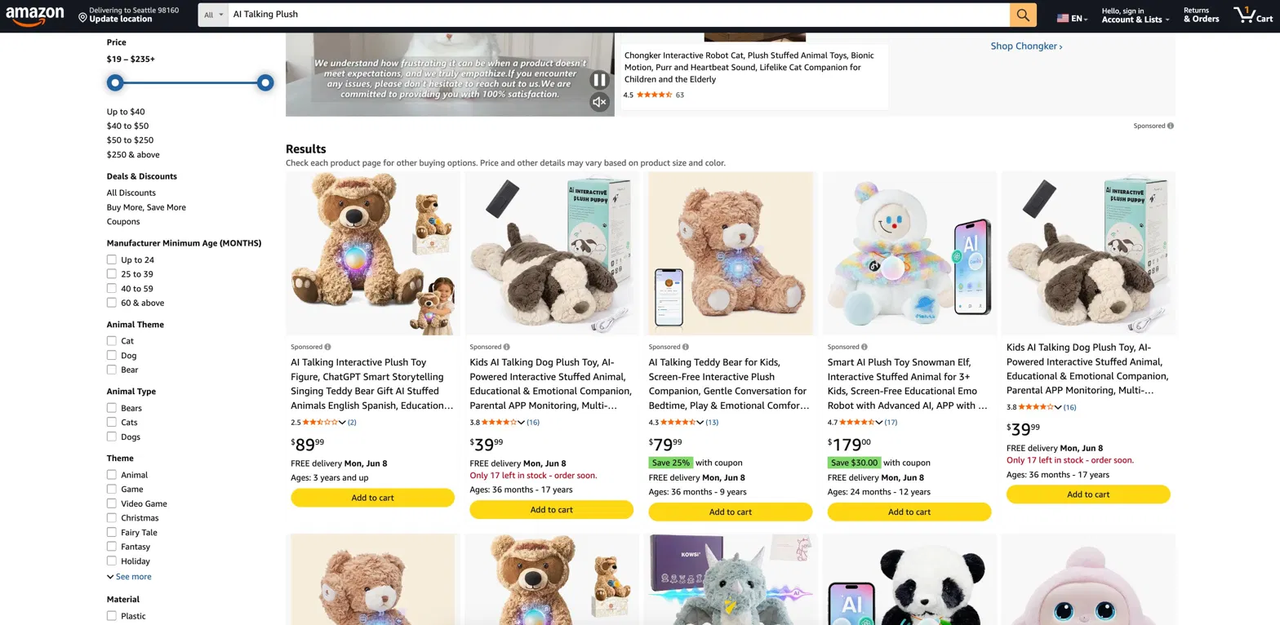
AI talking plush products are feature-heavy, combining voice conversation, storytelling, and emotional response functions. Amazon pricing runs from $39.99 to $89.99, with high-end models that include parental app monitoring reaching $179. Animal designs (cats, dogs, bears) dominate, and content themes range from Animal and Game to Christmas, Fairy Tale, Fantasy, and Holiday. Holiday and Christmas themes spike during gift seasons, while fantasy and fairy tale themes sell more steadily year-round for everyday companion use.
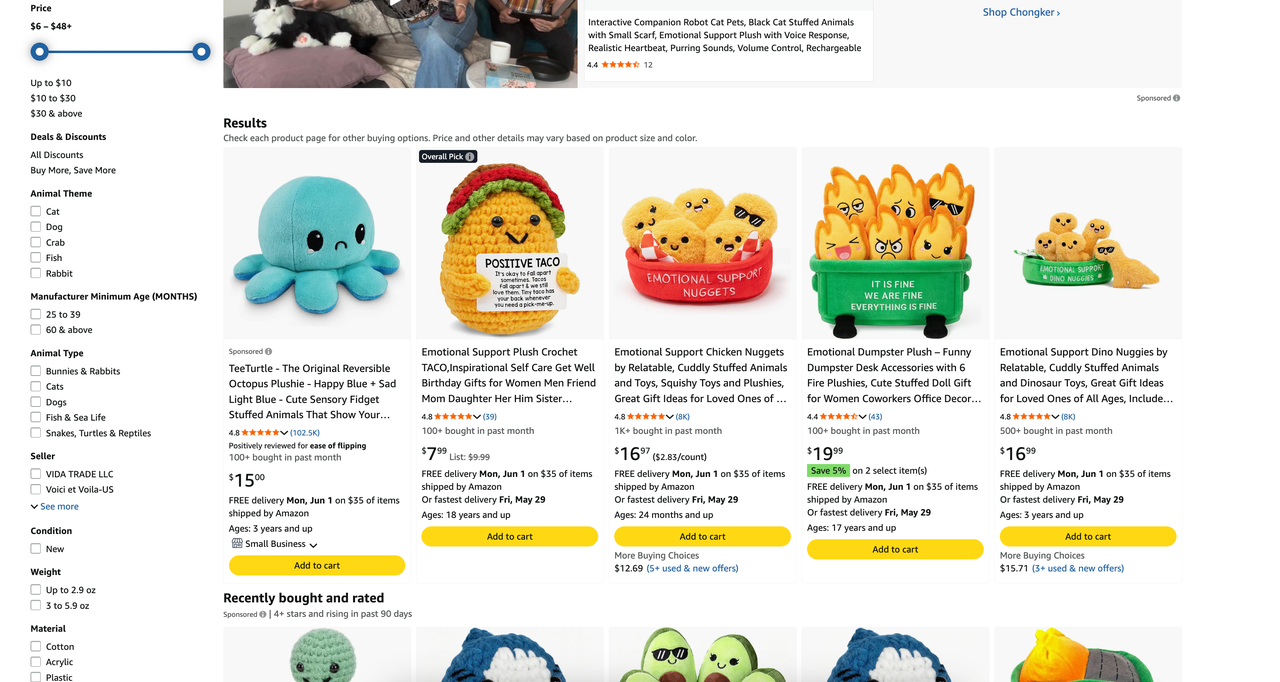
Emotional support plush takes a different approach. These products don't necessarily have advanced AI features, but they carry strong emotional symbolism. Products like reversible mood octopus plushies and emotional support novelty sets are priced between $15 and $20, and the majority of buyers are adults aged 18 and up. The purchase motivation is usually personal, either buying something to decompress or giving a friend something that says "I get it." Monthly sales on top listings can reach several thousand units. For this subcategory, the emotional resonance of your copy matters far more than specs.
Who's buying: Three main groups. Parents of kids aged 2 to 9 who want something for bedtime comfort or emotional support. Younger adults looking for a gift that feels personal and a little unexpected. Adults dealing with high-stress work, loneliness, or emotional fatigue, who are increasingly buying for themselves. This third group is growing faster than the children's segment and tends to be less price-sensitive.
Selling tips: For AI talking plush, prioritize models that work offline without a subscription. That's where the majority of negative reviews are concentrated right now. For emotional support plush, the low price point makes it ideal for quick test runs. The $15 to $20 range converts well on impulse and doesn't require much ad spend to validate demand. On the differentiation side:
- Lean into specific emotional symbolism. The mood-flipping octopus and emotional support nuggets sell because you understand the joke in two seconds. The more specific and relatable the concept, the more shareable it becomes.
- Write for emotion, not function. Copy like "It's okay to not be okay" consistently outperforms spec-driven descriptions in this category. Lead with the feeling, not the features.
AI robotic pets
No other AI toy category has a price range quite like this one. You can find an entry-level interactive robotic dog for $15.99 and a professional-grade quadruped robot for $3,990, and they're technically in the same category. For most cross-border sellers, the $39 to $179 range is where the real opportunity sits. It covers both gift buyers and experience-driven buyers, and the supply chain at this level is manageable.
According to Mordor Intelligence, the global robotic pet market was worth around $402 million in 2025 and is expected to reach $682 million by 2031, with a CAGR of 9.25%. The robotic dog sub-segment alone already exceeded $1.2 billion in 2026 and is one of the fastest-growing areas in the category.
Main subcategories: AI robotic dogs, AI robotic cats, and AI robotic dinosaurs.
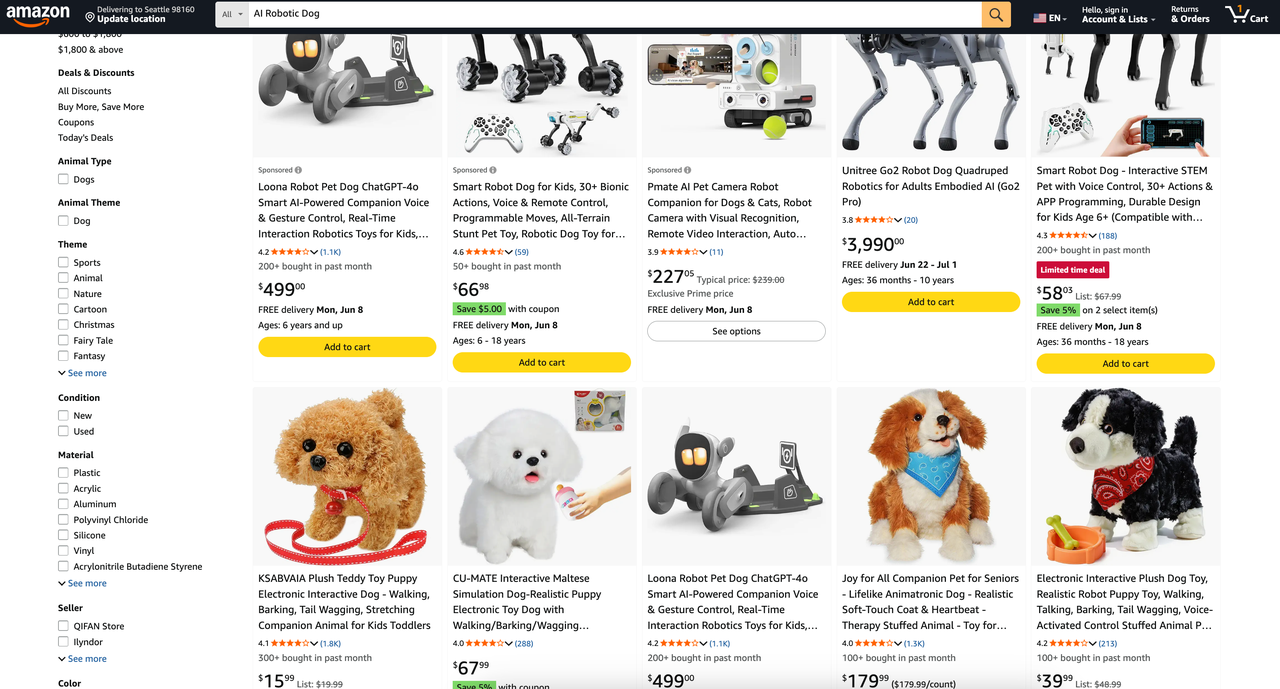
AI robotic dogs move the most volume. Entry-level plush interactive models start around $15.99, functional models run $58 to $67, and ChatGPT-4o-powered options like Loona are priced at $499. Theme options include Sports, Animal, Cartoon, and Fantasy. Animal and Cartoon themes tend to convert more reliably in gift-buying contexts.
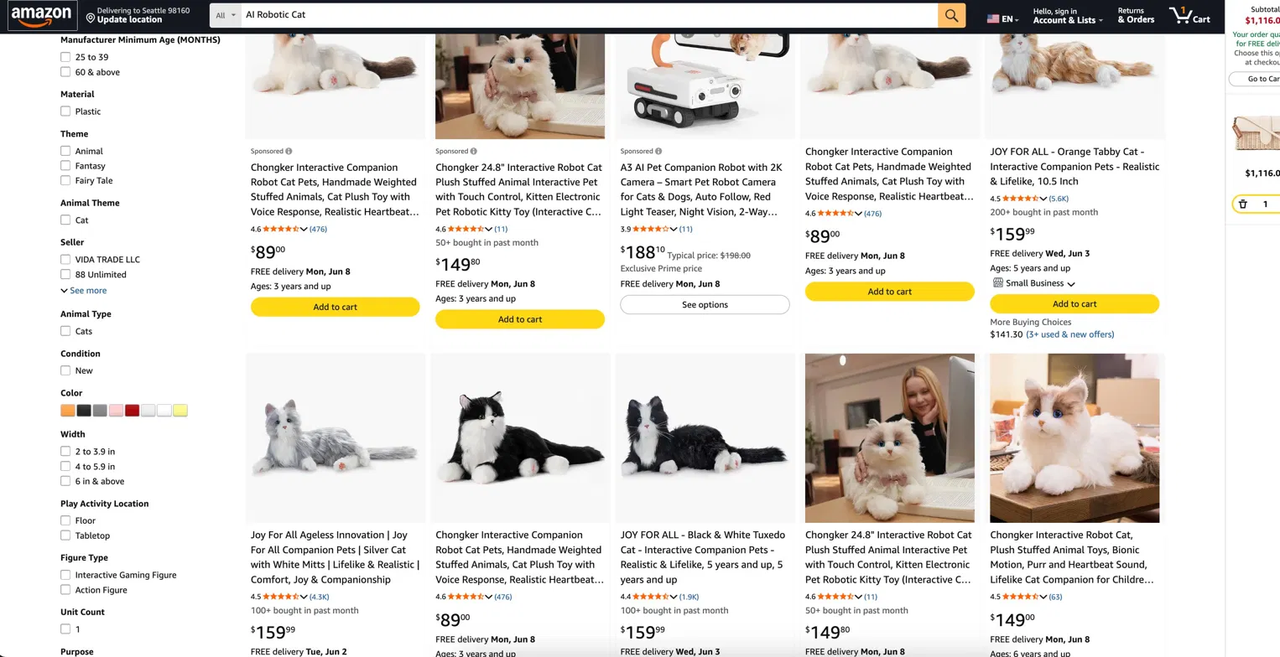
AI robotic cats draw a narrower but loyal buyer base. The main segments are families with pet allergies who can't keep a real cat, and elderly users looking for companionship. Chongker is one of the highest-rated brands in this space on Amazon, known for realistic fur texture and heartbeat and purring sounds. Most listings sit between $89 and $159.99, with top sellers moving 200+ units per month. Buyers in this category care deeply about tactile quality. A disproportionate share of negative reviews mention that the product doesn't feel realistic enough or that the sounds are too mechanical.
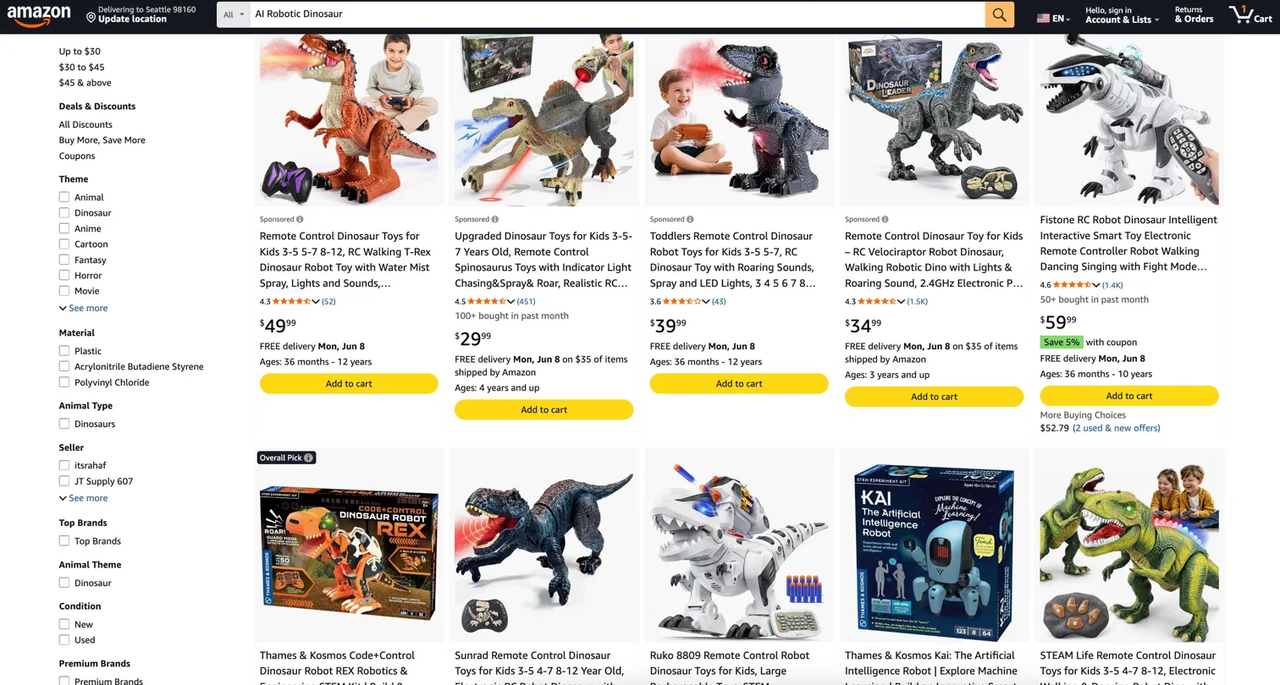
AI robotic dinosaurs are priced lower, with most listings between $29.99 and $59.99, targeting boys aged 3 to 12. Beyond dinosaur designs, the category also includes Anime, Horror, and Movie themes. Competition is relatively intense, so this works better as a supplementary SKU during holiday seasons rather than a standalone focus.
Who's buying: Parents are the core, but elderly buyers are a segment worth noting. There's also a steady group of adults who can't keep real pets due to allergies, rental restrictions, or schedule constraints. These buyers are less price-sensitive than gift shoppers and care more about product durability and how realistic the pet feels.
Selling tips: For new sellers, the $40 to $70 interactive robotic dog range is the most practical entry point. Look for models with touch sensors, voice commands, and basic emotional response functions that work fully without a subscription. This price range covers both impulse gift buyers and parents making more deliberate purchasing decisions, so the conversion logic is relatively straightforward. On the differentiation side:
- Prioritize realistic appearance. Fur texture, LED eye expressions, and overall build quality shape the unboxing experience and directly affect click-through rates on your main image.
- Choose models with room to grow. Products that support basic programming or app control can appeal to the STEM education segment as well, which gives you more pricing flexibility and a broader buyer base.
- Lower the learning curve in your copy. Phrases like "no coding required" and "ready to play out of the box" directly address the concern parents have about whether their kid will actually be able to use it. That one reassurance can meaningfully improve conversion.
How to start selling AI toys? It depends on where you are.
Once you've identified a niche, the next question is how to actually get started. Here are three approaches based on your resources and where you are in your selling journey.
Dropshipping to test the market (best for beginners with no inventory)
Dropshipping is the lowest-risk way to enter the AI toy category. You don't need to buy inventory upfront, which means you can test multiple products without committing to any of them. Both Amazon and your own ecommerce store can work for dropshipping, but they operate differently:
- Amazon gives you built-in traffic and a faster path to early sales, but ad costs are high and margins get squeezed. Running your own ecommerce store gives you more pricing flexibility. The same product can often be priced 15 to 30% higher on a DTC website compared to Amazon, which directly improves your profit structure.
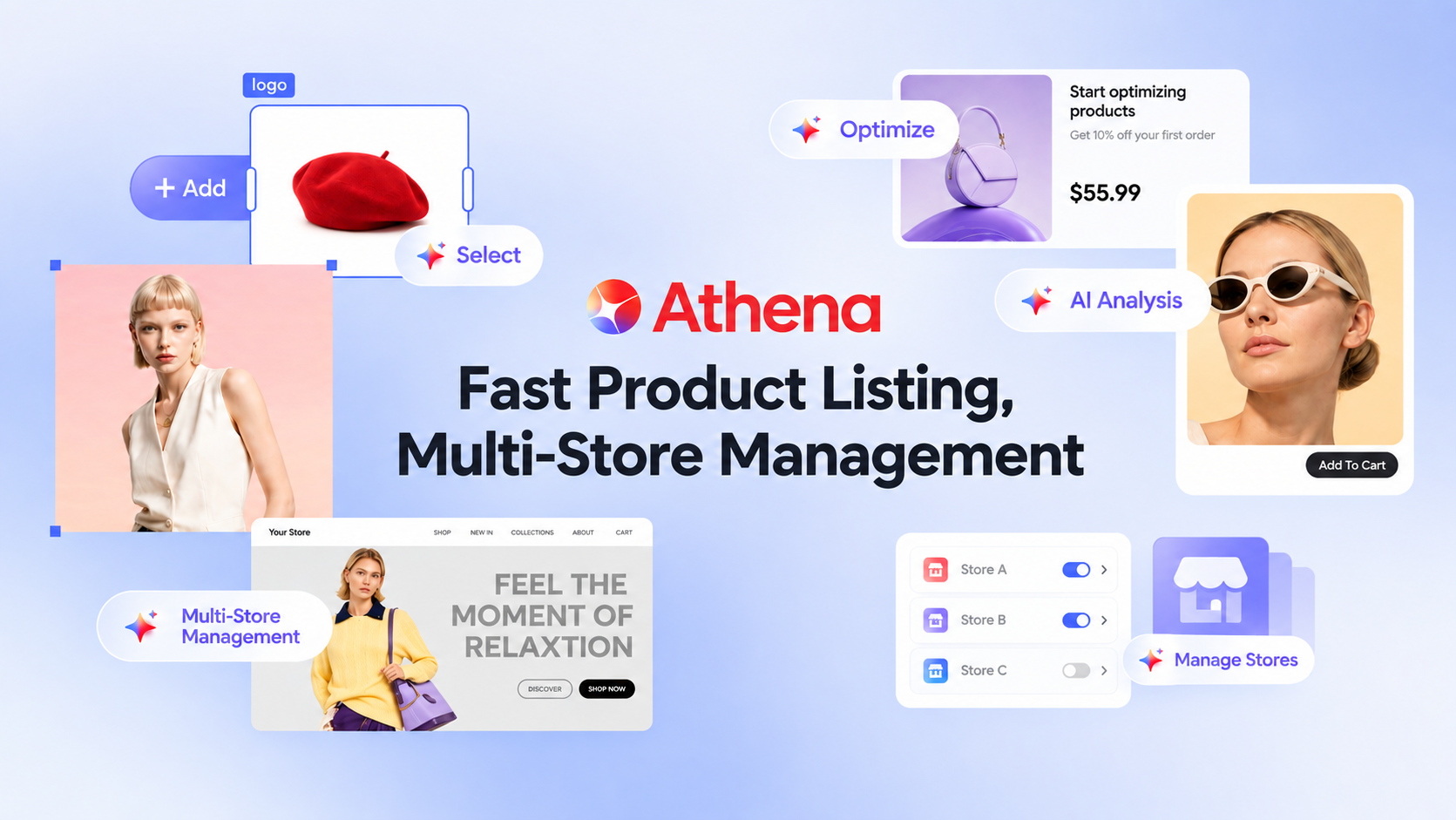
A lot of new sellers assume building their own store is complicated, but it doesn't have to be. With Shoplazza's AI store builder, you describe your niche or upload a few product images, and a fully functional store is ready in about five minutes, complete with checkout, layout, product copy, and images. From there, you're doing the same thing you'd do on Amazon: refining your product descriptions, improving your copy, and optimizing your page.
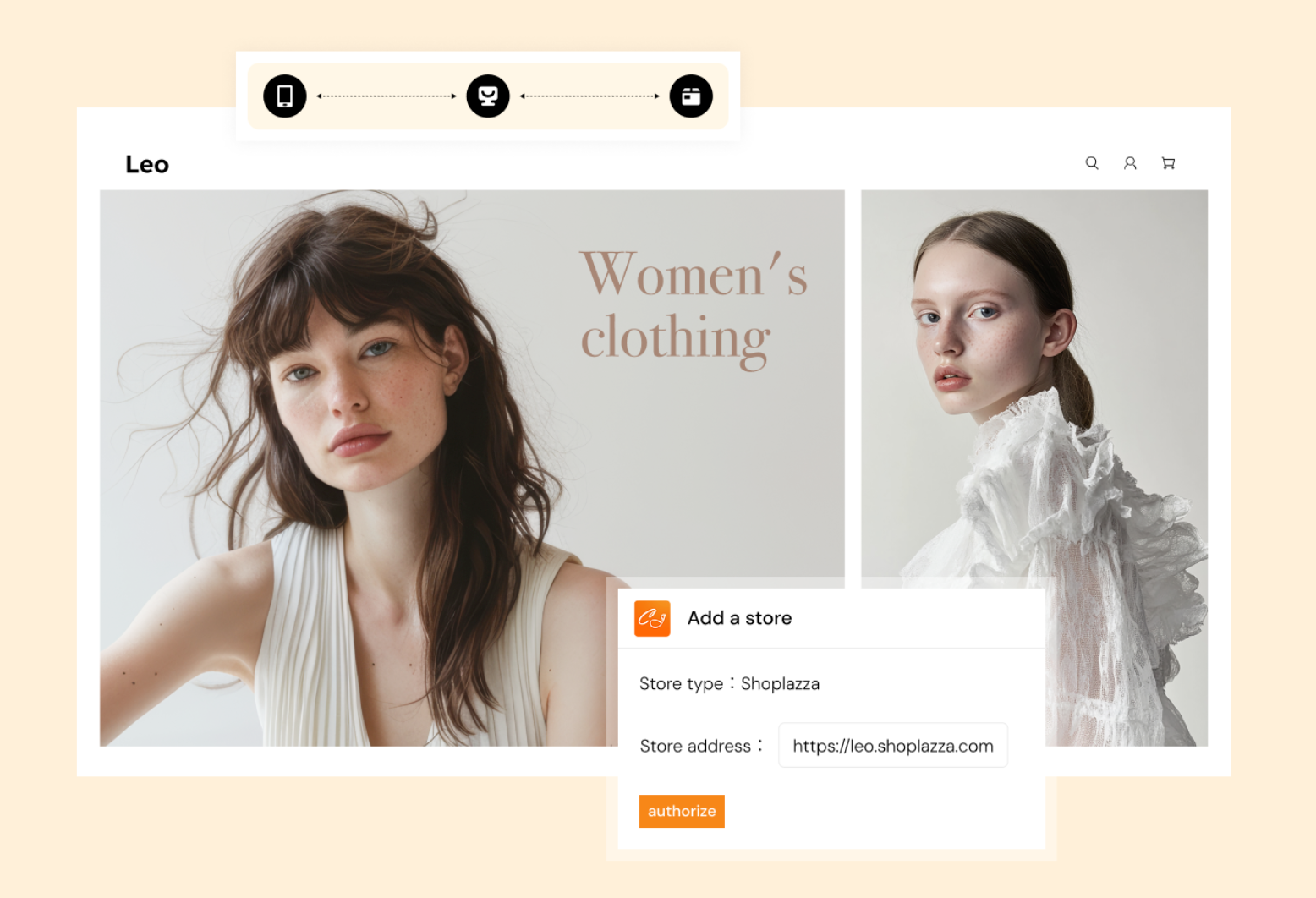
Once your store is live, Shoplazza lets you connect multiple suppliers from one dashboard, including CJdropshipping, DropCommerce, and AliExpress. Product imports are one-click, and orders sync automatically to your supplier for fulfillment. Inventory updates, shipping tracking, and order status are all visible in one place, so you're not jumping between platforms to keep things running.
For your first test, start with two or three products: an AI hover ball or an Interactive Drawing Robot in the $50 to $60 range works well. Run ads for one to two weeks and watch your click-through and add-to-cart rates. That data tells you more than any market report will.
Expanding into a new category (best for sellers with an existing store)
If you're already running an Amazon store or a DTC website, adding AI toys as a new category is a lower-effort move than starting from scratch, because your existing operation is already in place.
For Amazon sellers specifically, one approach worth considering is building a Shoplazza DTC website alongside your Amazon store to run both channels at the same time. On the Shoplazza side, you can add a "Buy on Amazon" button directly to your product pages, routing store visitors back to Amazon to complete their purchase. That helps increase your Amazon sales volume while giving you a second traffic channel you actually own. You can also connect Amazon MCF (Multi-Channel Fulfillment) to handle orders from your DTC website using Amazon's logistics network, which keeps fulfillment fast without adding operational complexity.
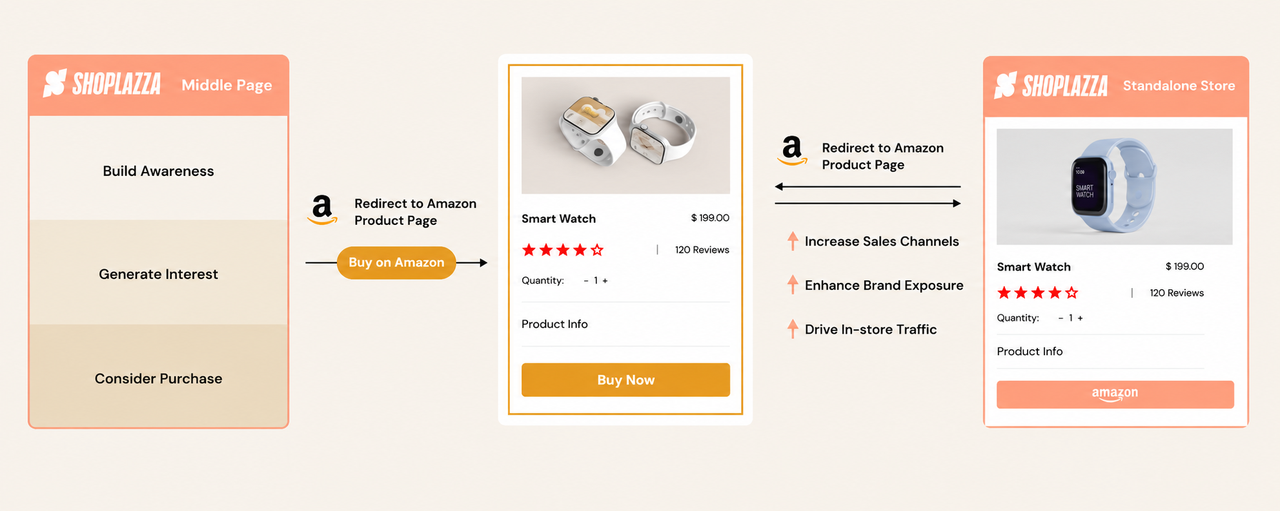
The longer-term benefit of running your own site is data and retention. Amazon keeps buyer information within its platform, so sellers can't re-engage customers directly. With your own website, you can run loyalty programs, email campaigns, and push notifications to turn one-time buyers into repeat customers and build an audience that belongs to your business.
For this path, AI drawing toys and AI plush and companion toys are good category choices. Both have strong gifting appeal and predictable Q4 traffic spikes, which you can plan around if you're already familiar with seasonal selling patterns.
Building a brand (best for sellers with supply chain access)
If you have a factory relationship or a reliable supplier, brand-building is a real option in the AI toy space, particularly in AI robotic pets and STEM programming toys. Registering your own brand, getting brand registry approval on Amazon, and investing in A+ content and a Brand Story separates you from white-label competition in a way that product features alone can't.
The compounding advantage of brand-building is trust. An Amazon brand account with 200 or more reviews and a 4.5-star rating can convert 30 to 50% better than a new listing with the same product at the same price. A Shoplazza DTC website can also function as your brand's home base, capturing off-Amazon traffic from social media, influencers, and SEO, so you're not entirely dependent on one platform for revenue.
Take your AI toy business global
The real opportunity in AI toys isn't the "AI" label. It's the underlying demand those products tap into: companionship, creative expression, parental anxiety about screen time, and an adult consumer base that's increasingly comfortable buying things that make them feel something. For most new sellers, the most useful thing you can do right now is pick one subcategory, test it with dropshipping, and treat your sales data as the actual research. Market reports can tell you the size of the opportunity. Only real orders tell you whether your product fits into it. The window is open, but it won't stay that way indefinitely.