Australians spent a record AUD$82.6 billion online in 2025, up 14% year on year, according to the Australia Post eCommerce Report. That is not a niche trend — it is how people shop now. If you are thinking about starting or growing an online store here, the first real decision is which platform to build on. There are dozens of options, and most will claim to be the perfect fit. The truth is, the right platform depends on your business model, not someone else's recommendation. This guide will cut through the noise and matches the best ecommerce platforms to the Australian sellers who will actually get the most out of them.
Key takeaways
The right ecommerce platform depends on your business model, not a universal ranking:
- Shoplazza is the strongest choice for dropshippers and beginners, with AI store creation and built-in supplier integrations.
- Shopify suits scaling DTC brands backed by a deep Australian ecosystem. It also supports physical stores by POS feature.
- BigCommerce works best for wholesalers and trade sellers that need native B2B tools.
- WordPress + WooCommerce gives content-driven brands the most SEO control of any platform on this list.
- Squarespace and Wix are practical for small-catalogue sellers who prioritise clean design and simple setup.
What Australian sellers should look for in an ecommerce platform?
Choosing a platform based on price or visual appeal alone is one of the most common and costly mistakes Australian sellers make. Before comparing tools, it is worth nailing down the five factors that actually affect how your business runs day to day.
- GST compliance. Your platform should calculate and apply the 10% Goods and Services Tax automatically at checkout, rather than requiring you to configure it manually or rely on a third-party plugin. Getting this wrong creates accounting headaches that compound quickly.
- Local payment methods. Australian buyers have specific payment habits. Buy now, pay later services like Afterpay and Zip are widely expected. POLi bank transfer is popular for higher-value purchases. A platform that supports these out of the box reduces checkout abandonment significantly.
- Shipping integrations. Australia Post, Sendle, and StarTrack are the three carriers most Australian ecommerce stores rely on. If your platform requires a separate app or manual configuration to connect these, you are adding friction to an already operational task.
- Accounting software compatibility. Most Australian businesses run their books through Xero, MYOB, or QuickBooks. Seamless integration between your storefront and your accounting software means no double-handling of orders and no end-of-quarter surprises.
- Cross-border readiness. Australia has a relatively small domestic population. Many sellers here find their real growth comes from selling internationally, particularly into the US, UK, and Southeast Asia. Multi-currency pricing, global payment gateways, and international shipping tools are not optional features if global expansion is part of your roadmap.
Quick comparison: best ecommerce platforms for Australian sellers
Use this table to orient yourself before diving into the full breakdowns below. All pricing reflects monthly billing.
| Platform | Best for | Subscription / month | Transaction fees | Key AU-relevant feature |
| Shoplazza | Dropshipping, beginners | From US$39/month (≈ AUD$55/month) | From 2% (waived on Pro with Shoplazza Payments) | AI Store Builder and global payments for 180+ country |
| Shopify | Scaling DTC brands | From AUD$56/month | 1.75% + 30¢ AUD (Basic, Shopify Payments) | Native GST, Afterpay, Australia Post |
| BigCommerce | Wholesale and B2B | From US$39/month (≈ AUD$55/month) | No platform fee (embedded providers); Open Payment Fee applies to others | B2B pricing tiers, no transaction fees |
| WooCommerce | Content and SEO-led brands | Free plugin; hosting from ~AUD$15/month | None from platform | Full SEO control, Xero and MYOB plugins |
| Squarespace | Small catalogue sellers | From US$39/month (≈ AUD$55/month) | 0% on Core, Plus, and Advanced | Clean design templates, simple setup |
| Wix | Beginner sellers, service businesses | From US$39/month (≈ AUD$55/month) | None on paid ecommerce plans | Drag-and-drop builder, basic ecommerce tools |
6 best ecommerce platforms for Australian sellers by business type
Every seller's situation is different. Here are the six platforms that consistently stand out when matched against specific business models and growth stages operating in the Australian market.
Shoplazza: best ecommerce platform for dropshippers and beginners
Shoplazza is a cross-border ecommerce platform built for sellers who want to launch fast and sell globally. It is one of the strongest Shopify alternatives available to Australian sellers right now, particularly if you are starting a dropshipping business or building your first store without a technical background.
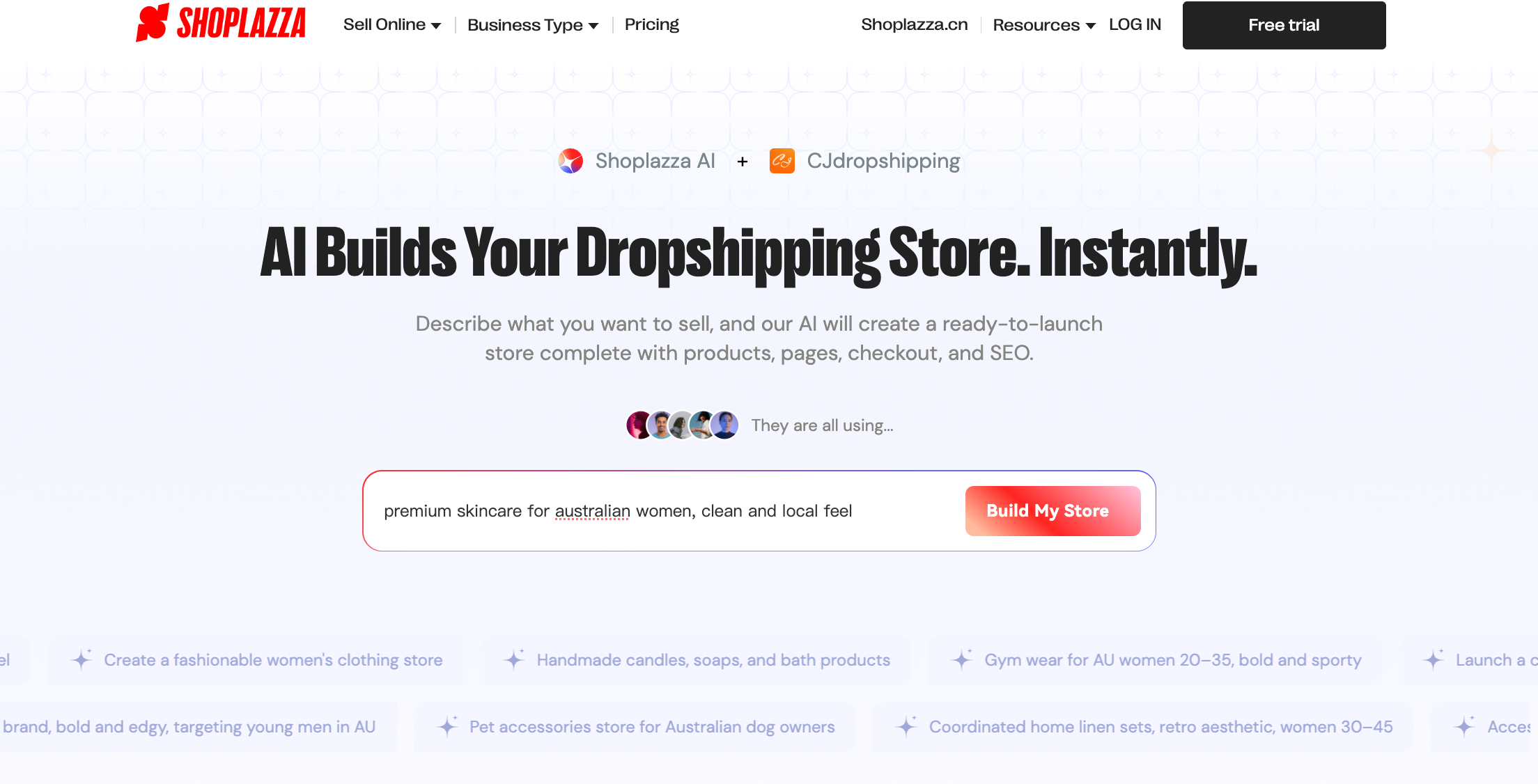
The AI Store Builder for dropshipping business is the standout feature. You describe your business, the system generates three store style designs to preview, and once you pick one, it builds out the full store, including homepage, product pages, About, Contact, policies, and checkout. No design skills needed. Free to preview with no sign-up or credit card required. On the dropshipping side, Shoplazza integrates natively with CJdropshipping and other dropshipping suppliers. Product imports and order routing are handled inside the dashboard automatically.
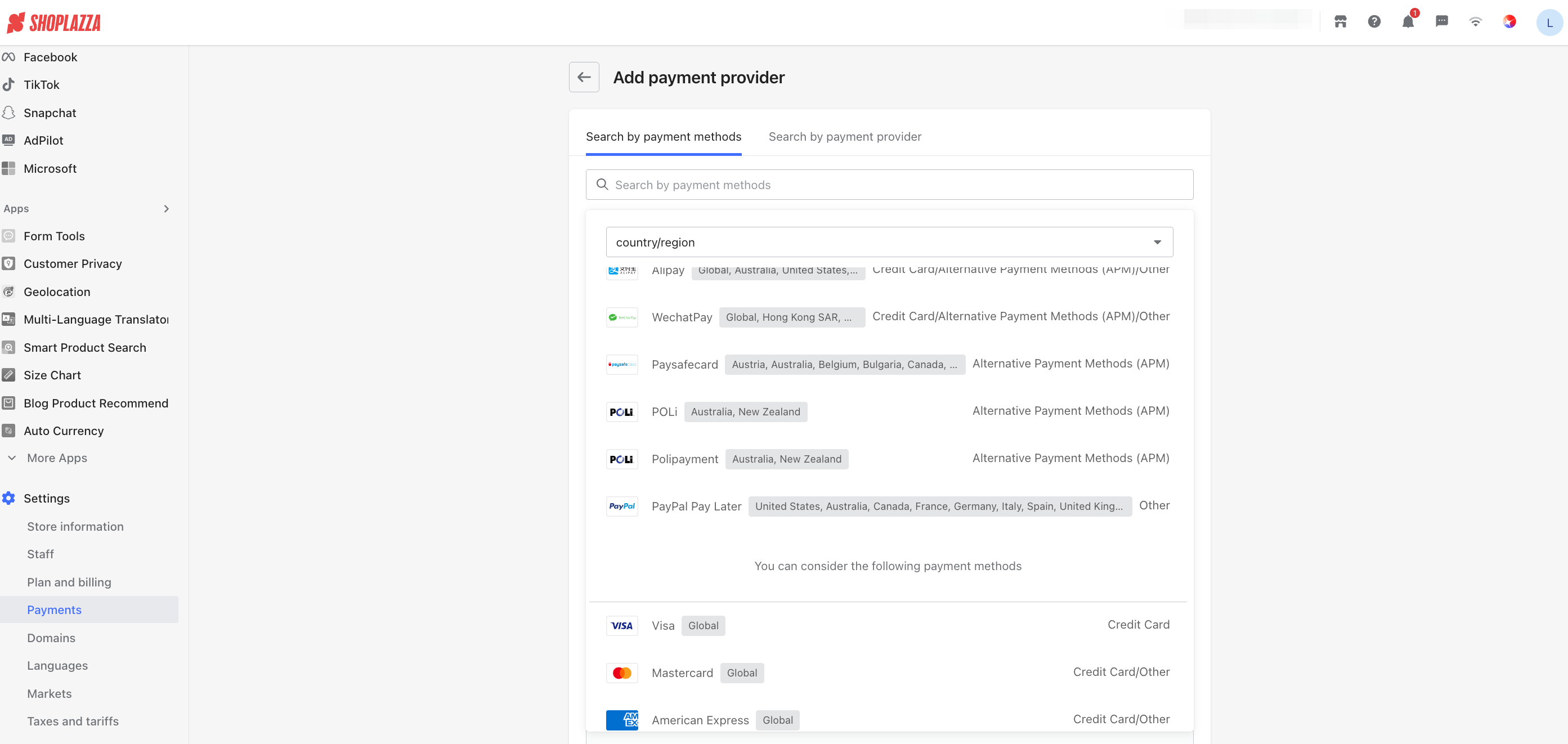
For Australian sellers, Shoplazza supports POLi, Polipayment, PayPal Pay Later, Alipay, and WeChat Pay alongside standard card payments (like Visa, Mastercard, and Apple Pay). Through Shoplazza Payments, you get coverage across 180 countries and regions with local payment methods built in.
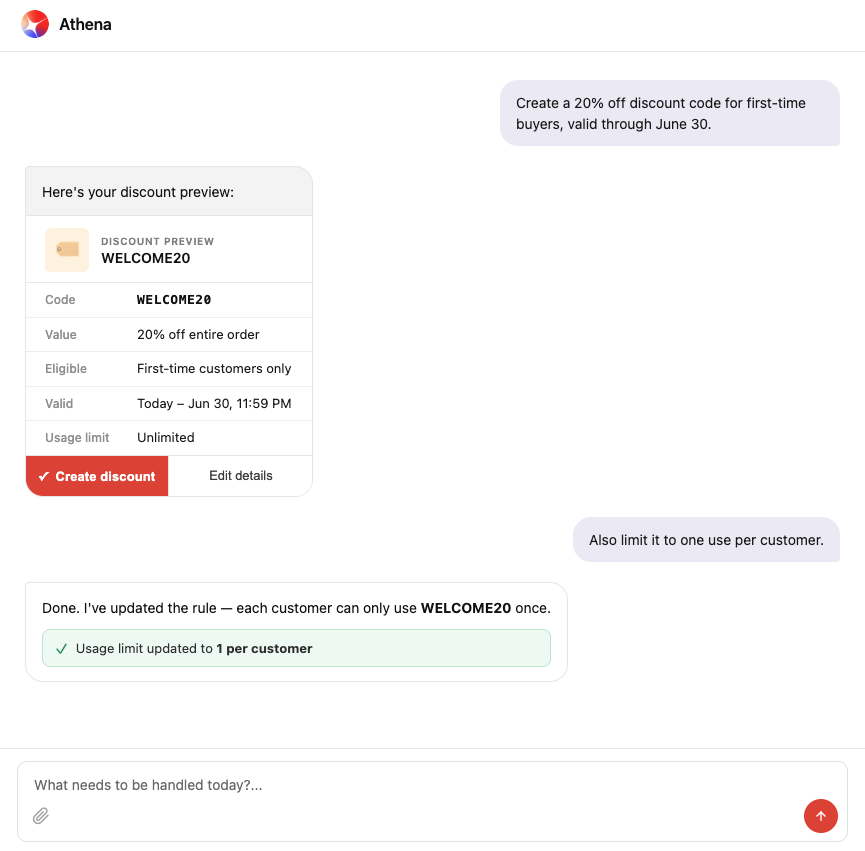
Athena, launched in May 2026, is an AI agent that runs directly inside your dashboard. Describe what you need in plain language and it handles product updates, discount setup, order checks, logistics queries, and data analysis, with your confirmation required before anything is executed.
Key ecommerce features:
- Native dropshipping order track and management system.
- LazzaStudio AI product image generator, with 100 free credits for new users.
- Direct social media and ads integration with Google, Facebook, Pinterest, and TikTok ads.
- App market with around 90% free apps, including AlphaRank AI SEO Optimizer.
- Built-in analytic dashboard for the viewers and sales of product, page, and the whole stores.
Tradeoff: Shoplazza's local brand recognition in Australia is still growing, and the AU-based developer and agency network is smaller than Shopify's.
Pricing:
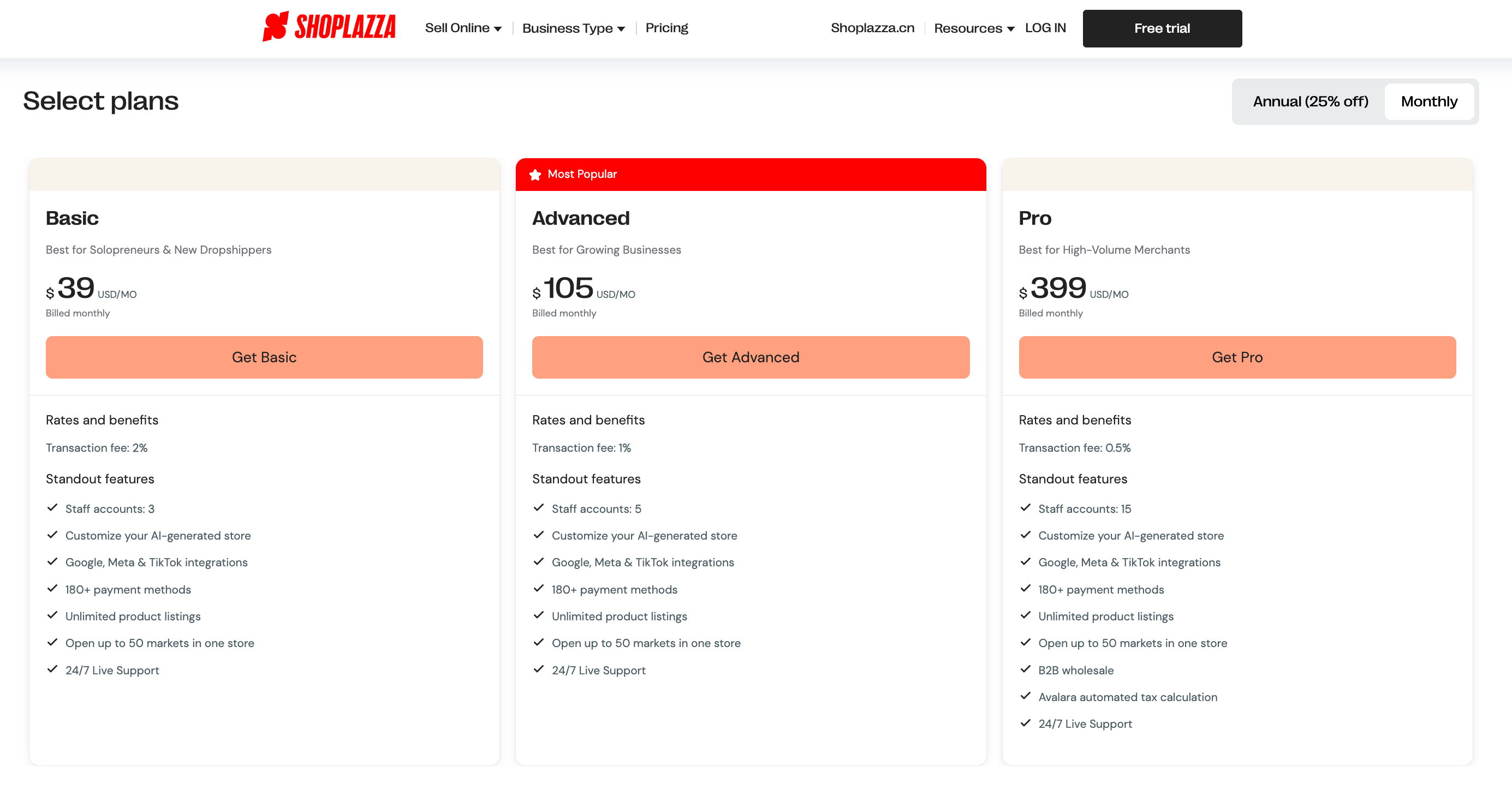
- Basic: US$39/month, 2% transaction fee, 3 staff accounts.
- Advanced: US$105/month, 1% transaction fee, 5 staff accounts.
- Pro: US$399/month, 0.5% transaction fee, 15 staff accounts, B2B wholesale tools, Avalara tax automation. Transaction fees waived on Pro when using Shoplazza Payments.
Shopify: best ecommerce platform for scaling DTC brands
Shopify is the most widely used ecommerce platform in Australia, and for DTC brands focused on growth, that market position translates into real advantages. The local ecosystem is deep: thousands of Australian agencies, developers, and freelancers know the platform well, and finding support when you need it is straightforward.
For Australian sellers, Shopify handles the local essentials out of the box. GST is calculated automatically at checkout. Afterpay and Zip are available through Shopify Payments. Australia Post, Sendle, and StarTrack all connect natively or through well-supported apps.
That said, Shopify's real strength is its ecosystem size. The app marketplace covers almost every operational challenge a growing store encounters, from loyalty programs and subscriptions to advanced inventory management and multi-currency pricing. For a DTC brand planning to grow from modest volume to serious scale, having that breadth of options available matters.
Key ecommerce features:
- Shopify Payments available in Australia with competitive card processing rates.
- Built-in analytics and reporting tools that improve with higher plan tiers.
- Social and ad channel integrations with Google, Facebook, Pinterest, and TikTok.
- Shopify POS available for sellers who also operate a physical retail location.
Tradeoff: App costs stack up quickly. A store with moderate operational complexity can easily spend AUD$150 to AUD$400 per month on apps on top of the subscription fee. Third-party payment gateways also attract additional transaction fees, which adds up at volume.
Pricing:
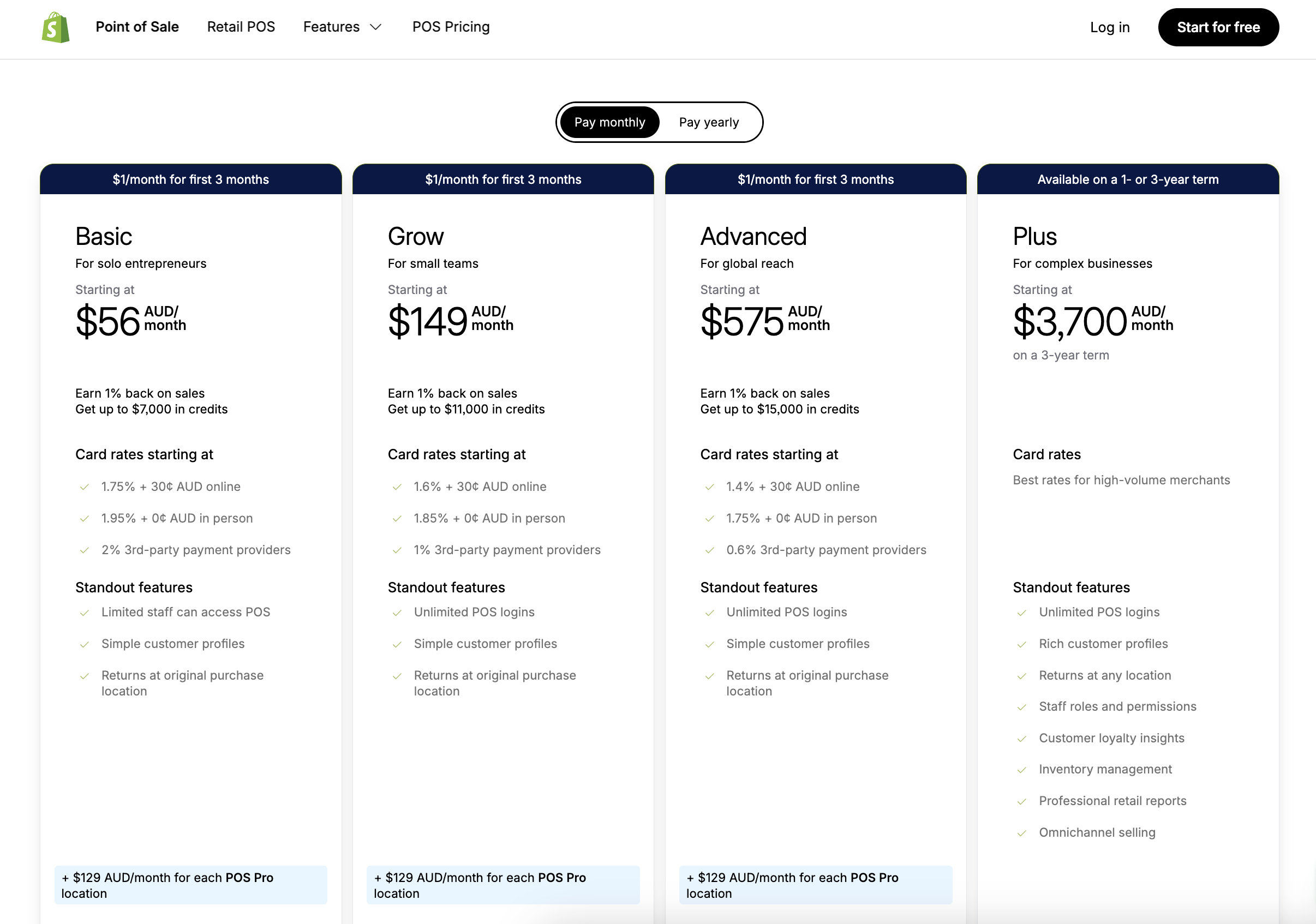
- Basic: AUD$56/month, 1.75% + AUD$0.30 per transaction via Shopify Payments.
- Grow: AUD$149/month, 1.6% + AUD$0.30 per transaction via Shopify Payments.
- Advanced: AUD$575/month, 1.4% + AUD$0.30 per transaction via Shopify Payments.
- Additional transaction fees apply if using a third-party payment gateway on any plan.
BigCommerce: best ecommerce platform for wholesalers and trade sellers
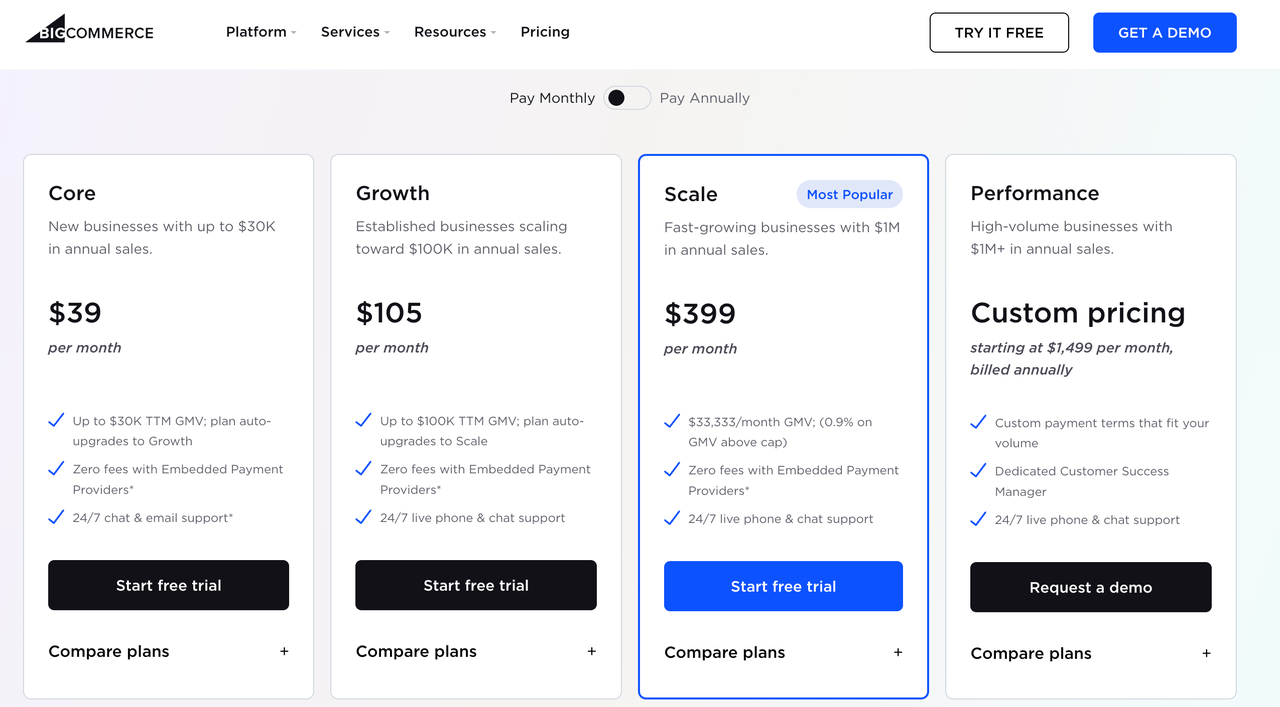
BigCommerce is built for businesses that need more than a standard consumer storefront. For Australian wholesalers and trade sellers, the platform's native B2B tools are the main draw. Customer group pricing, bulk order forms, quote management, and net payment terms are all included without requiring third-party apps, which is a meaningful cost difference compared to platforms that sell these features separately.
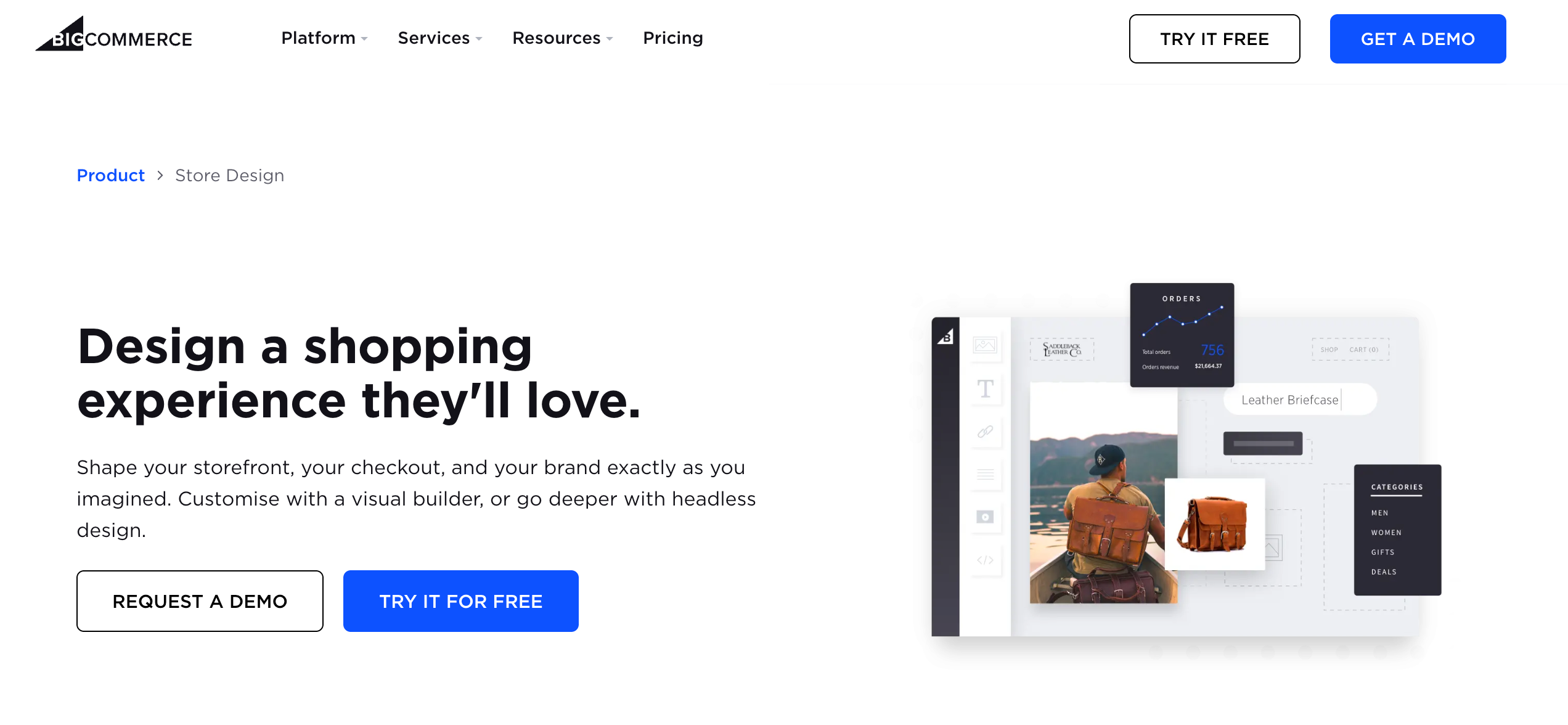
If you run both a wholesale channel and a consumer-facing store, BigCommerce supports that with multi-storefront capability. One back-end manages multiple storefronts with separate pricing rules, branding, and product visibility settings per audience.
It is worth noting that BigCommerce introduced an Open Payment Provider Fee in June 2026. This applies to orders processed through third-party payment gateways not on their embedded provider list, at 2% on Core, 1% on Growth, and 0.6% on Scale. If you use a gateway outside their list, factor this into your monthly cost calculation.
Key ecommerce features:
- Native B2B tools including customer group pricing, bulk order forms, quote management, and net payment terms.
- No platform transaction fees when using an embedded payment provider.
- Xero and MYOB integrations available for Australian accounting workflows.
- Advanced product filtering and Google Customer Reviews available on Scale plan.
- 15-day free trial available.
Tradeoff: The learning curve is also steeper than most hosted platforms, and the Australian agency and developer network is smaller than Shopify's.
Pricing:
- Core: US$39/month, supports up to US$30,000 in annual sales.
- Growth: US$105/month, supports up to US$100,000 in annual sales.
- Scale: US$399/month, supports up to US$400,000 in annual sales.
WooCommerce: best ecommerce platform for content and blog-driven brands
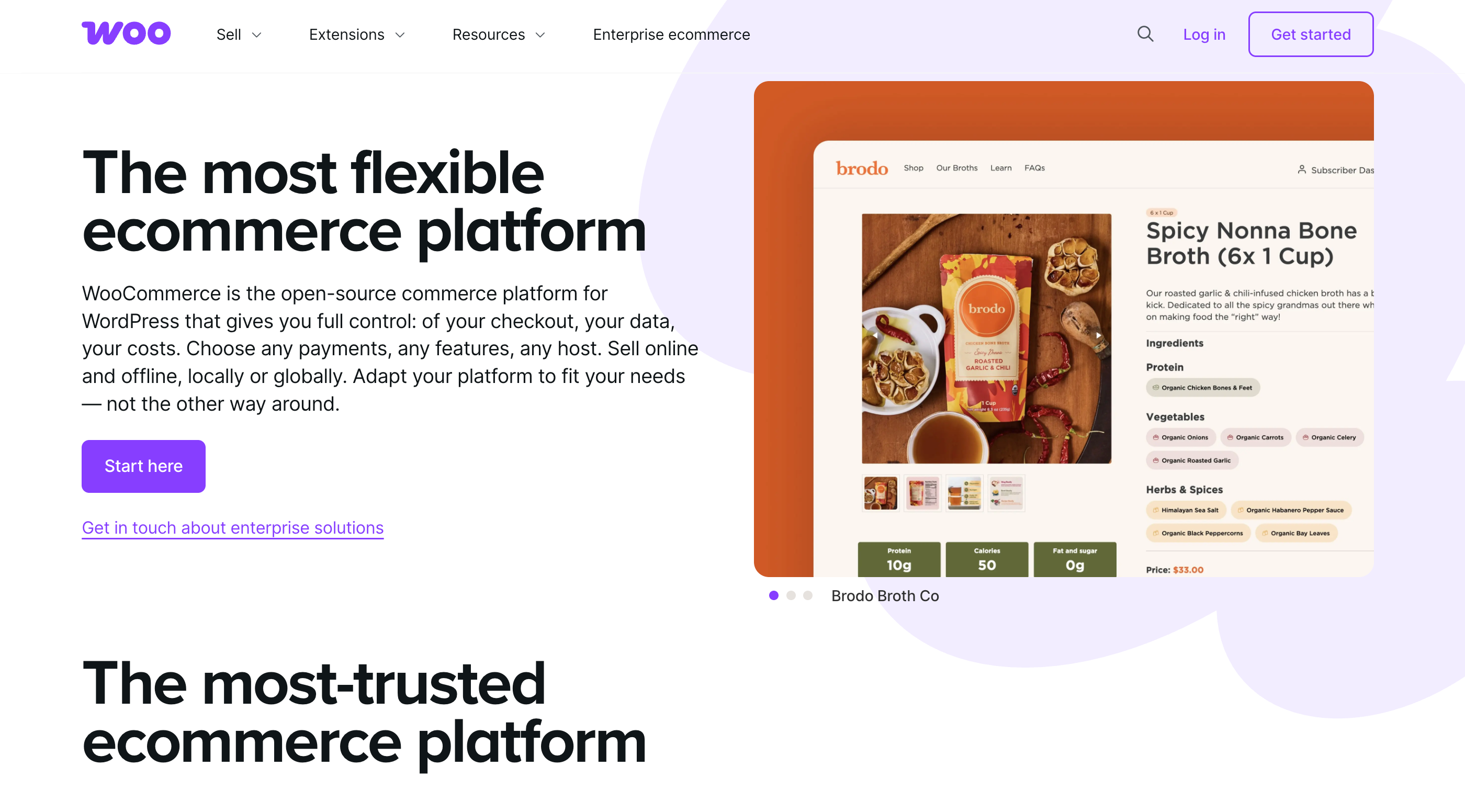
WooCommerce is a free plugin that runs on WordPress, and that setup is the whole point. For Australian brands where content drives traffic and sales, such as product review sites, lifestyle blogs with a store, or educational brands selling physical and digital products, no other platform gives you the same depth of control over how your site is built and indexed.
You control the full URL structure, heading hierarchy, schema markup, canonical tags, and page load performance. WordPress gives you access to mature SEO tools like Yoast and Rank Math that have no real equivalent on hosted platforms. For a brand trying to rank for competitive keywords in Australian Google Search, that level of control is genuinely valuable and hard to replicate elsewhere.
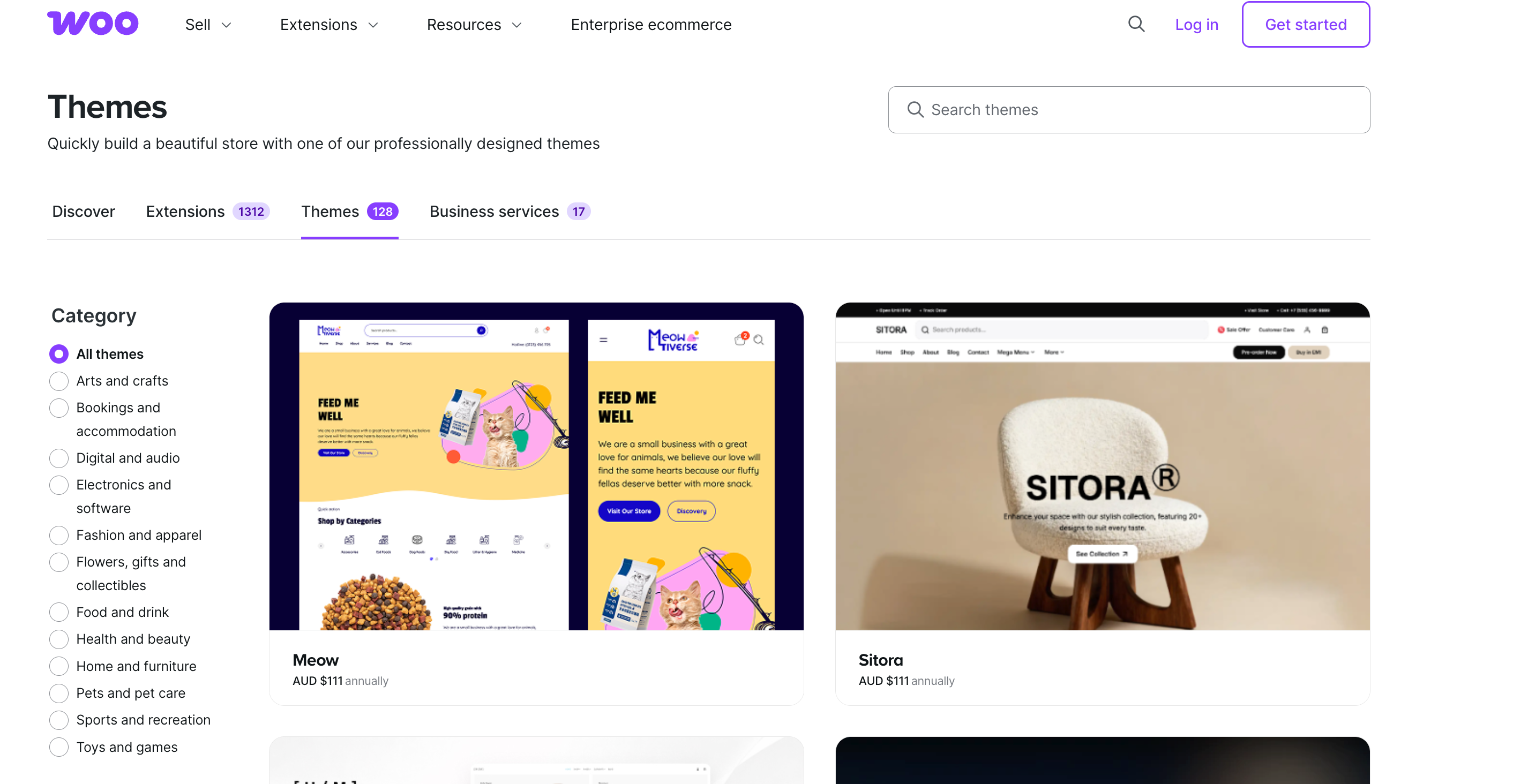
The plugin itself is free. Your ongoing costs are hosting, a theme, and any premium plugins you need. Managed WooCommerce hosting from reputable Australian providers starts at around AUD$15 to AUD$30 per month for a store with moderate traffic. Xero, MYOB, and QuickBooks all have well-maintained WooCommerce plugins, so accounting integration is straightforward.
Key ecommerce features:
- Multi-currency selling available through plugins like WooPayments and Currency Switcher.
- Guest checkout, one-page checkout, and cart abandonment recovery available through free and premium plugins.
- Extensive product variation support, useful for clothing, accessories, and configurable products.
- Full ownership of store data, with no platform lock-in or data access restrictions.
Tradeoff: WooCommerce requires ongoing technical maintenance. Hosting, security updates, and plugin compatibility are your responsibility. It is not the right choice for a seller who wants a managed, hands-off setup or needs to launch quickly.
Pricing:
- WooCommerce plugin: free and paid avaliable.
- Managed hosting: from approximately AUD$15 to AUD$30/month depending on traffic and provider.
- Premium plugins and themes: variable, typically AUD$0 to AUD$200/month depending on the tools you use.
- No platform transaction fees.
Squarespace and Wix: best ecommerce platform for small-catalogue sellers
If you have a focused product range, typically under 50 SKUs, and want a clean, professional-looking store without a long setup process, Squarespace and Wix are both worth considering. They serve similar sellers, but they are not the same platform.
Squarespace wins on design. Templates are polished out of the box, and visual product categories like boutique clothing, homewares, food, and photography consistently look great without a designer. For Australian sellers, it supports Stripe and PayPal at checkout, with AfterPay available through third-party integrations. Local shipping carriers like Australia Post and Sendle can be connected through the app extensions.
Wix wins on flexibility. The drag-and-drop editor gives you more layout control, and the app marketplace is broader, so adding functionality as you grow is straightforward. For Australian sellers, Wix accepts payments through PayPal, Stripe, and a range of regional gateways. Australia Post rates can be configured through shipping apps in the Wix marketplace.
The tradeoff between them really comes down to this: Squarespace looks better by default, and Wix does more by default. Neither is designed for dropshipping, high-volume order processing, or cross-border selling at scale.
Key ecommerce features:
| Feature | Squarespace | Wix |
| Design quality | High, template-driven | Good, highly customisable |
| Product listings | Unlimited | Up to 50,000 (Core) |
| Transaction fee | 0% on Core, Plus, and Advanced | None on paid ecommerce plans |
| Abandoned cart recovery | Plus plan and above | Business plan and above |
| Automated sales tax | Not included | Business plan and above |
| App marketplace | Limited | 800+ third-party apps |
| Free trial | 14 days | 14 days |
| Local shipping integrations | Via apps | Via apps |
Tradeoff: Neither platform is designed for high-volume order processing or cross-border selling at scale. If your catalogue grows significantly or you expand internationally, you will likely need to migrate to a more capable platform, and that migration carries its own cost and effort.
Pricing (Squarespace):
- Basic: US$25/month, 2% online store transaction fee, credit card rate 2.9% + US$0.30.
- Core: US$39/month, 0% online store transaction fee, credit card rate 2.9% + US$0.30.
- Plus: US$65/month, 0% online store transaction fee, credit card rate 2.7% + US$0.30.
- Advanced: US$139/month, 0% online store transaction fee, credit card rate 2.5% + US$0.30.
For ecommerce sellers, Core at US$39/month is the practical entry point since it removes the transaction fee entirely. Plus and above add lower card processing rates as volume grows.
.png?width=3344&height=1676&name=Pricing%20(Squarespace).png)
Pricing (Wix):
- Core: US$29/month, entry-level ecommerce, up to 50,000 products.
- Business: US$39/month, advanced ecommerce features including automated tax and abandoned cart recovery.
Business plan is more ideal for ecommerce business.
.png?width=3356&height=1542&name=Pricing%20(Wix).png)
AU-built ecommerce platforms worth considering
Some Australian sellers prefer platforms built specifically for the local market, and there are two worth knowing about.
- Maropost (formerly sold as Neto) is purpose-built for Australian and New Zealand retail. GST, Afterpay, and Australia Post are built into the core platform rather than added through apps, which removes a layer of configuration for domestic-focused sellers. It works well for established Australian retailers who run both online and in-store operations and have no plans to expand internationally. The platform's strength is domestic operational depth. Its limitation is that the global infrastructure needed for cross-border selling at scale is not where the product has been built to compete.
- Web Ninja Webstores takes a connected commerce approach designed specifically for the AU and NZ market. The platform is built around tight integration with Xero, MYOB, and QuickBooks, which makes it a natural fit for businesses where accounting reconciliation is the primary operational pain point. If your team spends significant time reconciling orders across systems, Web Ninja's approach addresses that directly.
Both platforms are strong choices for sellers whose business is anchored in the Australian domestic market. For sellers who want to reach customers in the US, UK, Southeast Asia, or beyond, the global payment infrastructure and multi-currency tools on platforms like Shoplazza or Shopify are better suited to that ambition.
Popular marketplace platforms in Australia
Amazon Australia, eBay Australia, Catch, and Kogan are the four platforms most Australian online shoppers visit first. Combined, they attract millions of buyers every month, and listing your products there gives you immediate visibility without building anything from scratch. For sellers testing a new product or validating demand, that reach is genuinely useful.
But selling on a marketplace and building an ecommerce business are two different things.
When you sell through a marketplace, the platform owns the customer relationship. You cannot build an email list. You cannot control how your brand looks at checkout. You are subject to fee structures and algorithm changes that can shift your margins or visibility overnight. The longer you sell on a marketplace, the more competitors enter the same listings, and the harder it becomes to differentiate on anything other than price.
The more durable approach for most Australian sellers is to treat marketplaces as a discovery channel rather than a foundation. Use them to generate early sales and validate products, then direct that momentum toward a branded store you own and control. Your store is where you set the pricing, run loyalty programs, build an email list, and create a repeat purchase experience that no marketplace can replicate.
For sellers ready to make that move, Shoplazza's AI Store Builder gets you from zero to a fully configured store in a single session, with no design skills or technical setup required.
Conclusion
The right platform is not the one with the most features. It is the one that fits how you actually run your business today. No matter what you are selling, whether it is dropshipping, print-on-demand, or building a DTC brand from scratch, the hardest part is usually just getting started. Shoplazza is built to remove that barrier. The AI Store Builder gets you live in a single session, the order management handle fulfilment simply, and Shoplazza Payments covers both Australian buyers and international markets from day one. You can preview the store for free, no sign-up or credit card required.
Frequently asked questions about ecommerce platforms in Australia
Q: What is the best ecommerce platform for Australian sellers in 2026?
It depends on your business model. Shoplazza suits dropshippers and beginners. Shopify works best for scaling DTC brands with native GST and Afterpay support. BigCommerce fits B2B and wholesale. WooCommerce is the strongest choice for SEO-led brands. Squarespace and Wix serve small-catalogue sellers who want simplicity.
Q: What is a good Shopify alternative for Australian dropshippers?
Shoplazza. It integrates with CJdropshipping, EPROLO, and more dropshipping suppliers with third-party apps, no code needed. The AI Store Builder launches a fully configured dropshipping store in one session. Shoplazza Payments covers 180 countries and supports AU-specific methods including POLi and PayPal Pay Later. Basic plan starts at US$39/month.
Q: What ecommerce platform is best for selling from Australia internationally?
Shoplazza is built for cross-border selling, covering 180 countries through Shoplazza Payments with local payment methods across major markets. Shopify supports multi-currency in select markets. BigCommerce offers multi-storefront and multi-currency tools on the Scale plan. WooCommerce handles international selling through plugins but requires more configuration.
Q: Can I start an Australian dropshipping business without holding inventory?
Yes. Dropshipping means your supplier ships directly to the customer when an order is placed. Shoplazza supports this through CJdropshipping. Product imports and order routing are automated inside the dashboard. You can preview a dropshipping-ready store for free before subscribing.
Q: Is there an AI-powered ecommerce platform for Australian sellers?
Shoplazza is a AI-native option available. The AI Store Builder generates a complete storefront through a guided conversation. Athena, launched May 2026, manages back-office tasks including product updates, orders, discounts, and data analysis through natural language. LazzaStudio handles AI product image generation with 100 free credits for new users.