Every guide on this topic reads the same way. It hands you a list of ten directories, twenty marketplaces, and a paragraph telling you to "vet your suppliers carefully." Then it stops right where the real question starts. You're not short on options. You're short on a way to filter them fast enough to actually launch.
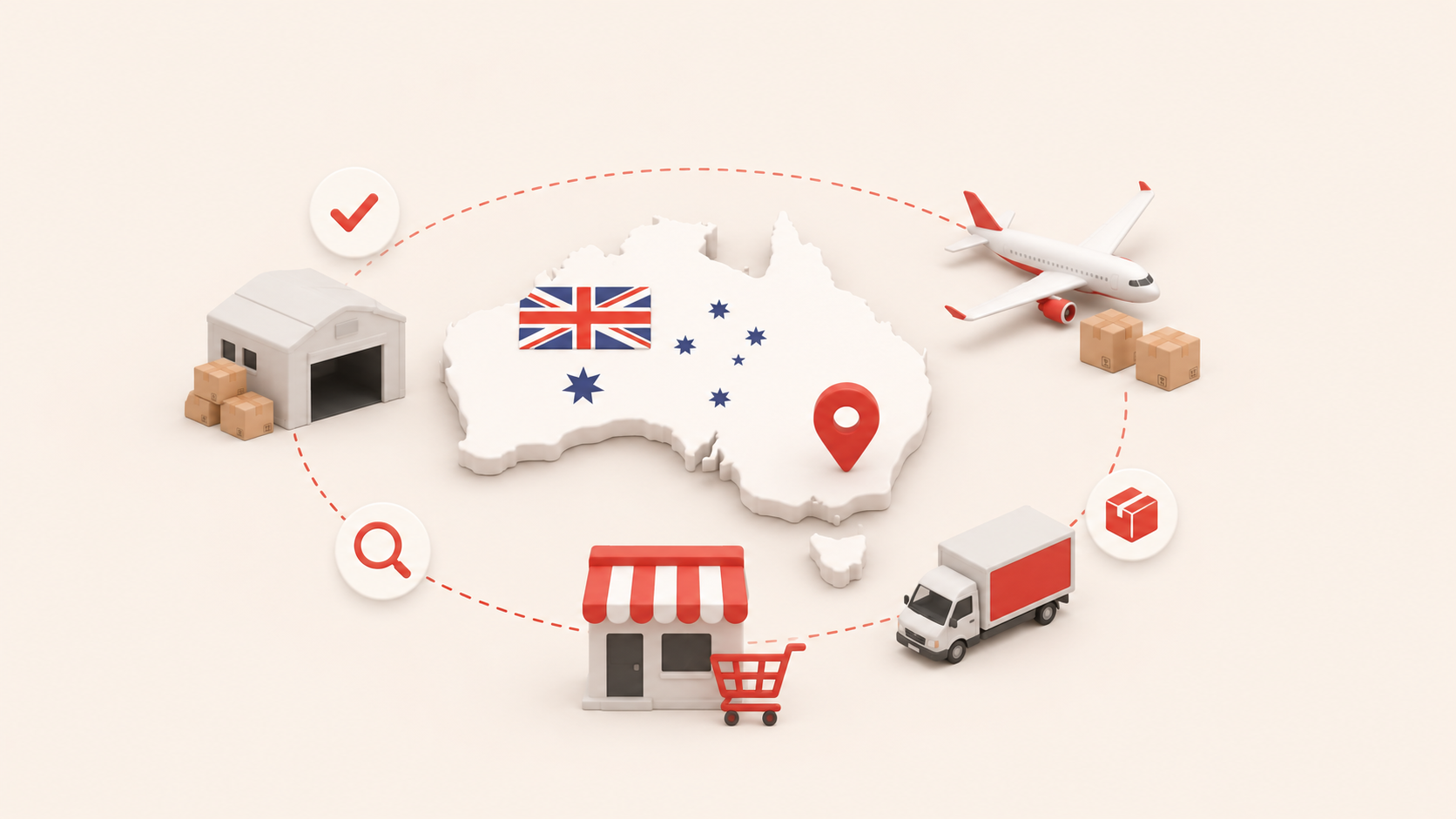
That's the gap this article fills. Instead of another list, you're getting a filtering method built around the four channels sellers actually use to find dropshipping suppliers in Australia: directories, marketplaces, direct wholesalers, and trade shows. Each one solves a different problem, and each one has a specific filter that separates a workable supplier from a waste of time.
How can I find dropshipping suppliers for my store
When you do dropshipping business, finding a supplier and filtering down to the right one are two different steps, and treating them separately is what makes this process faster. The four channels below (directories, marketplaces, direct wholesalers, and trade shows) each surface suppliers in a different way, so each one also needs a different first filter to narrow the list quickly.
Here's a fast way to see how the four channels stack up before you commit time to any of them.
| Channel | Best for | Filter first by |
| Directories | Fast discovery, low research time | Stock region, then niche fit |
| Marketplaces | Trend validation, evergreen sourcing | Product lifecycle stage |
| Direct wholesalers | Niche-specific sourcing, long-term margin | Dropship policy in writing |
| Trade shows | Local or unlisted suppliers | Face-to-face dispatch confirmation |
The sections below cover each channel in order, since each one needs a different filter to find the right supplier.
Local supplier directories
We've already covered which directories are worth starting with in our Australian dropshipping suppliers roundup, so this section skips the list and focuses on something that piece didn't have room for: the order you should apply filters in once you open one.
Most sellers scroll a directory by category, which is the slowest way to use it. A faster sequence looks like this.
- Filter by stock region first. A directory review that flags whether a supplier holds AU-local stock versus ships from overseas saves you from discovering the shipping problem two weeks into a customer relationship instead of before you sign up. CJdropshipping, for example, operates an Australian warehouse alongside its overseas fulfillment options, and that distinction is exactly what a stock-region filter should surface before you go further.
- Filter by niche specialization second. A supplier that only serves one category, like Agline, a South Australia-based pet supplies wholesaler that dropships exclusively within that category, tends to apply more category-specific vetting (in Agline's case, requiring a business registration and a completed website before approving a dropship account) than a general marketplace carrying dozens of unrelated categories.
- Check the dispatch commitment last, and only in writing. A support rep telling you "usually two to three days" isn't the same as a published dispatch policy you can point back to later.
Applying the filters in that order means you rule out mismatched suppliers before you've spent any time reading their catalogs.
Marketplaces
Marketplaces solve a different problem than directories do, because instead of a curated list you're pulling from live, moving inventory, and that only works if the marketplace type matches how fast your product category moves.
Marketplaces generally fall into a few different logics, and picking the wrong one for your product's stage is a more common mistake than picking the wrong platform entirely. A few examples illustrate the differences, though this isn't an exhaustive list:
- Aggregator-style marketplaces (Wholesale2B is a commonly cited example) pull inventory from multiple wholesalers into one catalog. They work well when you've already validated a niche and need a stable, ongoing product range rather than a single test batch.
- Filter-based global marketplaces like AliExpress, using the "Ship from" filter to surface Australia-based warehouse listings, let you list a product quickly with minimal upfront commitment. Stock levels across individual sellers can vary, so this suits testing demand before scaling a listing.
- Trend-discovery marketplaces, where you start from what's gaining traction on a platform rather than from a supplier list, fit short-lifecycle products. TikTok's own Creative Center tracks trending hashtags, content, and product categories, and Amazon's Movers & Shakers page tracks the biggest 24-hour sales rank gainers by category, updated hourly. Both are reasonable starting points for spotting momentum before you go looking for who can supply it.
The judgment call isn't which platform sounds most established. It's whether your product needs stable, repeatable stock or fast validation with less certainty attached, and that answer should decide which type of marketplace you open first.
Direct wholesalers
Going straight to a wholesaler skips the marketplace fee structure entirely, but only if you can actually find one willing to dropship, which means the search itself has to be more targeted than typing a category name into Google.
Search smarter than "wholesaler Australia." A generic search returns retail sites competing for the same keywords wholesalers are trying to avoid. A few adjustments narrow things down:
- Add a site restriction, like [niche] wholesaler Australia site:.com.au, to filter out international retail results that happen to rank for Australian terms.
- Use quotation marks for exact-phrase matching, such as "dropship" "Australia" "[niche]", which surfaces pages that explicitly mention dropshipping rather than general wholesale listings.
- Check page two and three of the results. Wholesalers rarely invest in SEO the way retail brands do, so a lower ranking often means a business that hasn't been contacted by every seller in your category yet, not a less credible one.
- Search by state rather than country, pairing your niche with "NSW" or "VIC" instead of "Australia." Regional wholesalers are often smaller and more open to a direct conversation than a national distributor fielding hundreds of inquiries.
Beyond Google, a few channels reach wholesalers who don't optimize for search at all:
- Industry association member directories, since most publish a searchable list of members by category
- LinkedIn's advanced search, filtered by company type and location, which surfaces businesses maintaining a page without any real SEO strategy
- Trade publication classifieds, where wholesalers who target other businesses (not consumers) often advertise instead of running Google ads
Once you've got a shortlist, the outreach email matters more than the search method. Ask these four things directly, and treat a vague answer as a signal to move on:
- Do you support dropshipping, and can you confirm your minimum order requirements for it?
- Do you provide a stock feed or API for inventory syncing?
- What are your standard dispatch times, in writing?
- Do you allow resale through marketplaces like eBay or Amazon, or does that violate your terms?
Trade shows
A trade show can't scale your sourcing the way a directory can, but it answers one question none of the other channels can: whether a supplier hesitates when you ask them something they weren't prepared to answer.
Face to face, ask directly whether they offer blind shipping or direct-to-customer fulfillment for ecommerce orders. A supplier who answers immediately and specifically has likely done this before. One who pauses, deflects, or asks what you mean probably hasn't set up dropshipping fulfillment at all, and that hesitation is worth more than anything printed on their brochure.
Not every show is worth the entry fee either. A general trade expo covering dozens of unrelated categories is a poor use of a day compared to a niche-specific event where every exhibitor already matches your product category. Match the show to your niche before you match your calendar to the show.
Which channel actually fits your situation?
Knowing what each channel is good for still leaves one open question: which one fits where you actually are right now, given your budget, the time you can spend on outreach, and how proven your niche already is.
| Channel | Budget sensitivity | Time to invest | Niche maturity needed |
| Directories | Low to medium (some charge a subscription) | Low | Works even for unproven niches |
| Marketplaces | Low to start | Low to medium | Best once demand is validated |
| Direct wholesalers | Can be very low, since you're at wholesale pricing | High (outreach takes time) | Best for niches you've already committed to |
| Trade shows | Medium (travel and entry costs) | High | Best for niches ready to scale |
If you're testing an idea with no committed budget yet, a directory or a filter-based marketplace gets you moving fastest. If you already know the niche works and margin matters more than speed, direct wholesaler outreach is worth the extra time it takes.
What to check before you commit to any supplier?
Regardless of which channel led you to a candidate, the same verification steps apply, and skipping them is what turns a promising supplier into a customer service crisis three weeks after launch.
- Verify their ABN. Registration through the Australian Business Register is free and typically takes ten to fifteen minutes to complete, so a legitimate wholesaler should have one on record without hesitation. If a supplier can't or won't provide one, treat that as a real warning sign rather than a minor omission.
- Place a real sample order, not just a review of their catalog. A supplier's photos tell you nothing about how long an order actually takes to arrive or how it's packaged when it does.
- Check their return policy against your actual legal obligations. This is the part sellers get wrong most often. Under the Australian Consumer Law, the retailer, not the manufacturer, wholesaler, or overseas supplier, is responsible for providing a refund, repair, or replacement when a product fails to meet a consumer guarantee. A supplier's written return policy doesn't replace that obligation, and you can't contract out of it even if your supplier's terms say something different.
- Test their support response time with a genuine question, not a sales inquiry. Sales teams respond fast to leads. Whether operational support responds just as fast to an existing partner is a different test entirely.
Two additional compliance points are worth knowing before you scale past a handful of orders. If your annual turnover reaches $75,000, you're required to register for GST within 21 days of crossing that threshold. And your legal responsibility to the customer doesn't shift just because your supplier is the one shipping the product. The contract, in the eyes of the law, is between you and your customer.
Get your store ready once you've picked a supplier
Passing the vetting checklist is only half the job, because a supplier relationship that works on paper can still fall apart operationally if your store isn't set up to keep up with it.
You don't need to build the storefront and the supplier connection as two separate projects. Shoplazza's AI Store Builder for dropshipping can generate a complete store, product pages, checkout, and policies included, from a short chat describing what you're selling, an uploaded product image, or even a URL pasted in directly. Once the store is live, connecting it to a supplier like CJdropshipping or Wholesale2B lets product data, stock levels, and order routing sync automatically instead of getting updated by hand.
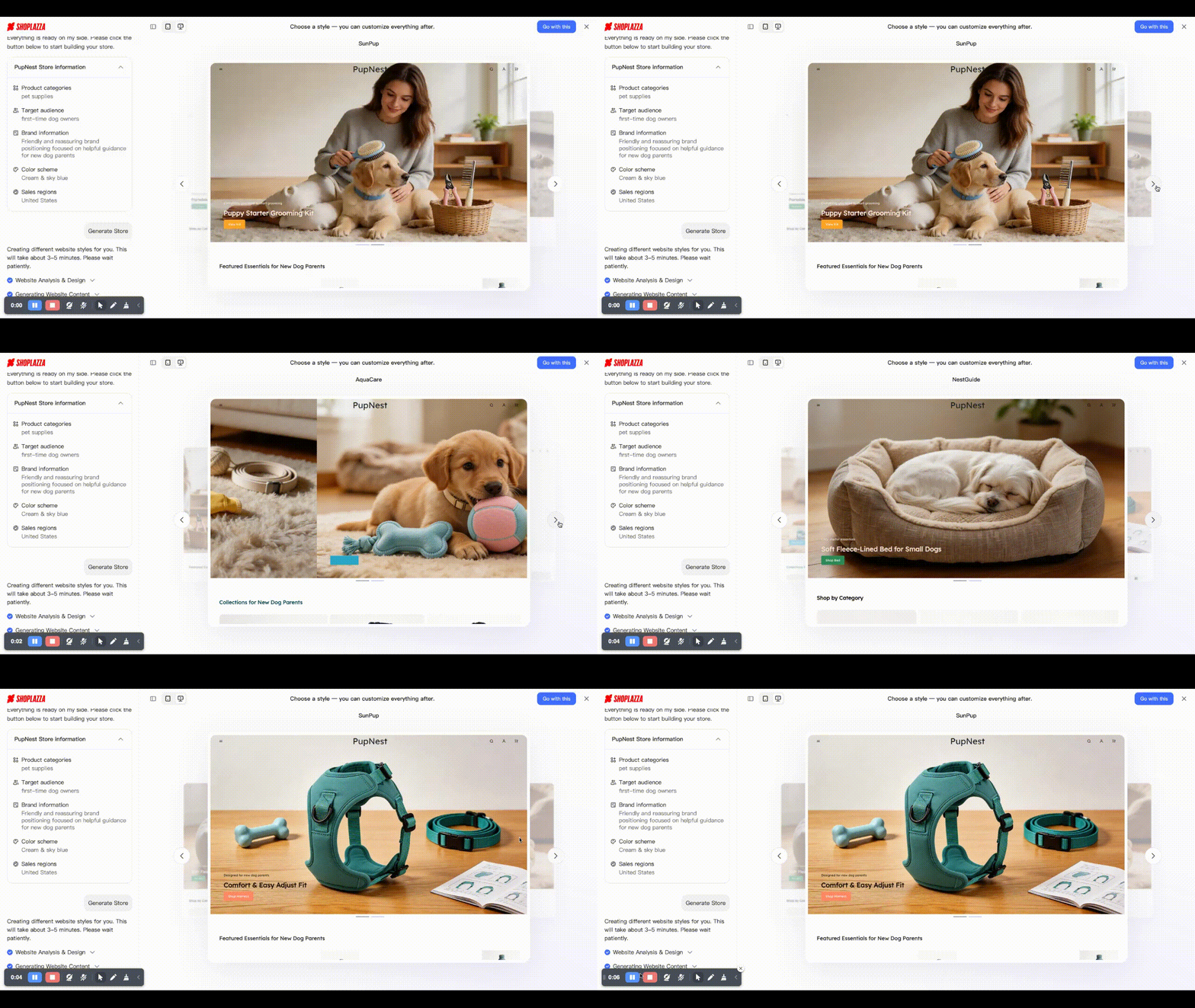
That sync matters more than most sellers expect going in. If a supplier updates stock levels but your store doesn't pull that data automatically, you'll sell products that are already out of stock, which erodes customer trust faster than almost anything else. Getting order sync and fulfillment connected from day one closes that gap before it turns into a pattern of refunds and complaints.
The channel matters less than the filter you apply to it
There isn't one best channel for finding Australian dropshipping suppliers, and any guide claiming otherwise is skipping the part where your budget, timeline, and niche maturity actually decide the answer. What consistently separates sellers who launch smoothly from those who spend months cycling through unreliable suppliers is whether they filtered before they committed, not which channel they happened to start with.
Pick the channel that matches where you are today, run every candidate through the same four vetting checks, and place a real test order before you list anything at scale. That sequence costs you a little more time upfront and saves considerably more of it later.
Frequently asked questions about finding AU dropshipping suppliers
Q: Is it better to use a directory or contact wholesalers directly when I'm just starting out?
Directories are the faster starting point if your niche isn't proven yet, since the time investment is lower. Direct wholesaler outreach pays off once you know your niche works and you're optimizing for margin over speed.
Q: How do I know if a marketplace supplier actually has stock, not just a listing?
Place a small test order and track it end to end. A listing showing available inventory doesn't guarantee the supplier can fulfill it on the timeline they advertise, and the only reliable way to confirm that is to buy from them yourself first.
Q: Do I need an ABN before wholesalers will talk to me?
Many wholesalers expect one before setting up a trade account, since it signals you're operating as a genuine business rather than a one-off buyer. Registering is free and quick, so there's little reason to skip it before reaching out.
Q: Who's responsible for refunds if my supplier ships a faulty product, me or them?
You are. Under Australian Consumer Law, the retailer carries the obligation to provide a refund, repair, or replacement, regardless of where the product came from or who physically shipped it.
Q: How many suppliers should I test before scaling with one?
There's no fixed number, but testing at least two or three candidates side by side, using the same sample-order and support-response checks, gives you a real comparison instead of a decision based on one supplier's first impression.