Clothing is one of the most entered niches in e-commerce and one of the most abandoned. Most people set up a store, list a few products, and wait. When sales don't come, they assume the model is broken. It usually isn't. Learning how to start a clothing dropshipping business the right way means doing the unglamorous work first: picking a real niche, vetting your suppliers, building a store that actually converts, and earning organic traction before you spend a cent on ads. This guide walks through each of those steps in order, with the numbers and practical details that most guides skip.
Key takeaways: how to start a clothing dropshipping business
- Pick a specific clothing niche before you pick products — broad stores rarely convert
- Vet suppliers by ordering samples yourself, not just reading their website
- Sizing and returns are the biggest profit killer in clothing dropshipping — fix them before launch
- You can build a store with a pre-built template or an AI store builder — no coding required
- Prove organic conversion before spending on paid ads
- Plan for a 2–4 month runway before you see consistent daily orders
Is clothing dropshipping still worth it in 2026?
Before you build anything, it's worth asking whether the opportunity is still real. The short answer is yes, but the longer answer depends on how you approach it.
The market opportunity
The global e-commerce apparel market was valued at approximately $779 billion in 2025 and is projected to reach $1.84 trillion by 2035, growing at a compound annual growth rate of around 9%, according to Precedence Research. Almost half of all global fashion purchases in 2025 are expected to occur online, with forecasts pushing this figure past 50% by 2026.
TikTok's influence on purchase decisions has grown significantly. In 2025, 47% of TikTok users say they've purchased a product after seeing it in a creator's video. Another 67% report being inspired to shop for something they saw on the platform, even when they weren't planning to buy. Fashion consistently ranks as one of TikTok Shop's top-performing categories, which makes content-led selling a real acquisition channel — not just a branding exercise.
Why the model still works?
Clothing dropshipping has a structural advantage that most physical retail models don't: you carry zero inventory. You only pay for a product after a customer has already bought it. That limits your downside significantly, especially during the testing phase when you're still figuring out which products your audience actually wants.
Fashion also has strong repeat purchase behavior when you build around a real identity. Someone who finds a brand that fits their aesthetic and their body tends to come back. That's very different from, say, selling phone cases, where there's little reason for loyalty.
Where it gets difficult?
You might notice the same warning signs appear across almost every failed clothing dropshipping store: too broad a niche, no differentiation from competitors, and a return rate that quietly erodes whatever margin existed.
Online clothing returns average 20–30%, compared to roughly 8% for general e-commerce, according to the Baymard Institute. The primary driver is sizing — customers receive something that doesn't fit and send it back. That cost lands on you.
Generic fashion stores that compete on price against fast-fashion retailers and marketplace sellers are also structurally disadvantaged. The sellers who sustain profit tend to be the ones who pick a specific audience, solve a specific fit or style problem, and build content around it.
A realistic profit margin picture
| Cost type | Typical range |
| Supplier cost per item | $8–$25 |
| Selling price | $30–$80 |
| Platform transaction fee | 0.5%–2% per order |
| Ad spend per order | $5–$20 |
| Net margin | 15%–35% |
These numbers assume you're running some paid traffic. If you build organic channels first, your effective margin is higher, but it takes longer to reach consistent volume.
How to start a successful clothing dropshipping business?
As mentioned above, a successful clothing dropshipping business starts with a specific niche and the right products. Here is how to build each piece correctly, step by step.
Pick a niche
A niche is a specific segment of the clothing market with its own audience, buying patterns, and content style. This is broader than the individual products you'll sell. It's the lens through which everything else gets filtered. "Women's fashion" is a category. "Modest workwear for professional women" is a niche. The difference matters because a niche gives you a reason to exist in a crowded market.
Test whether a niche is worth pursuing
A simple three-part check helps here
- Does the niche have search demand? Look for 10,000–100,000 monthly searches using a tool like Google Trends, Semrush, or Ahrefs. Too little demand means a small market; too much demand usually means entrenched competition.
- Does it have repeat purchase potential? Seasonal niches like "Halloween costumes" can generate a burst of sales but don't build a customer base you can market to year-round. Lifestyle niches, like athleisure, adaptive clothing, modest fashion, tend to create more durable businesses.
- Can you build content around it? A brand needs a point of view. If you can't imagine 30 TikTok videos or Instagram Reels that would speak directly to your audience, the niche may be too broad or too undefined.
Clothing niches worth paying attention to in 2026
- Modest fashion: Growing consumer interest across Muslim, conservative Christian, and modest-by-choice communities in the US, UK, and Southeast Asia. The global modest fashion market was valued at $318 billion in 2022 and is on a sustained upward trend, according to DinarStandard's State of the Global Islamic Economy Report.
- Gender-neutral streetwear: Gen Z-driven and well-represented on TikTok. Strong visual identity potential.
- Adaptive clothing: Designed for people with physical disabilities or limited mobility. Significantly underserved, with very low competition and high customer loyalty once trust is established.
- Hybrid workwear: Professional enough for in-person meetings, comfortable enough for a home office. A real product gap that emerged from the shift to remote and hybrid work.
- Extended sizing with accurate fit data: Plus-size and tall/petite clothing with real measurement data, not just scaled-up standard patterns. High demand, chronic underservice.
Validate before you build anything
Search your niche on TikTok and look for creators with 10,000–500,000 followers making content in that space. Active creators signal active audiences. Read Amazon reviews in the same category — complaints about sizing, missing styles, or poor quality are product gaps you might be able to fill. You can also check competitor store traffic using SimilarWeb or Semrush to confirm there's real demand before you invest time building a store.
Select winning clothing products
Choosing a niche tells you who you're selling to. Choosing products is about figuring out exactly what to put in front of them.
Visual appeal matters more in clothing than in almost any other category. If a product doesn't look distinctive in a photo or video, it won't perform on social media — which is where most clothing dropshipping stores find their early customers. Beyond aesthetics, look for products that solve a specific problem: coverage, a flattering fit for a particular body type, and versatility across occasions.
Pricing is also a practical filter. Products that allow a 3x markup while staying competitive typically land in the $25–$80 retail range. Below that, you don't have enough margin for ad spend and returns. Above it, you need a stronger brand story to justify the price.
Where to find products that are actually selling
- TikTok's trending page and TikTok Shop are genuinely useful here. Search your niche keyword and look at recent videos with high engagement. Try-on content and "outfit of the day" posts that go viral tend to reflect real purchasing behavior, not just browsing.
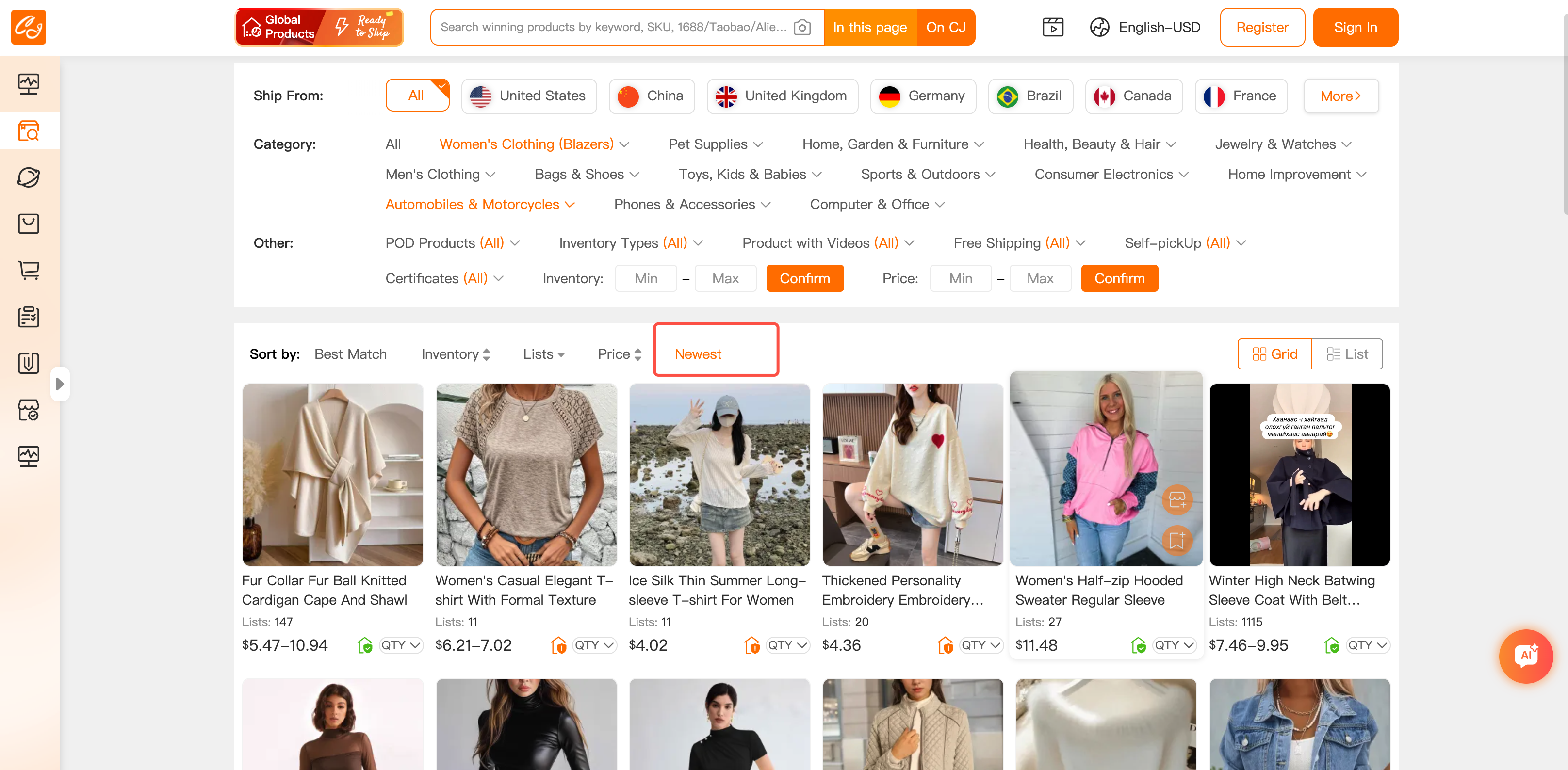
- Product research tools like Minea show what's performing across social ads in real time, which saves a lot of guesswork. Your supplier's bestseller list is another practical shortcut — CJdropshipping, for example, flags its top-performing items regularly. Pinterest Trends can also surface aesthetic directions before they reach saturation.
Find and vet clothing suppliers
There are two main types of clothing dropshipping suppliers.: fashion and wholesale suppliers that carry ready-made styles, and print-on-demand suppliers that let you add custom designs to blank garments. Popular options include EPROLO, Kakaclo, and AliExpress for ready-made fashion, and Printful or Printify for custom designs.
Before committing to any supplier, run through these checks first:
- Order 2–3 samples yourself. Check fabric weight, stitching quality, color accuracy, and packaging before you list anything.
- Time for delivery. A supplier who promises 5–8 days but consistently takes 14 will generate complaints before you even notice the problem.
- Ask about their return and replacement policy. Get the answer in writing. Suppliers who can't give a clear response are worth avoiding.
- Use original photos. Dozens of stores run the same unedited supplier images. Even basic editing sets your listings apart — or use an AI product image tool like LazzaStudio, powered by GPT Image 2, to generate clean, professional product visuals without a photo shoot.

Sizing deserves specific attention. Online clothing returns average 20–30%, and most come down to fit issues. Add a size guide with real body measurements on every listing, and include a short fit note — something like "runs small, size up if between sizes." That small addition alone reduces returns noticeably.
Set up your dropshipping clothing store
You don't need to code anything or hire a designer to launch a professional clothing store. There are two practical paths, and the right one depends on how much control you want and how fast you need to move.
Website themes
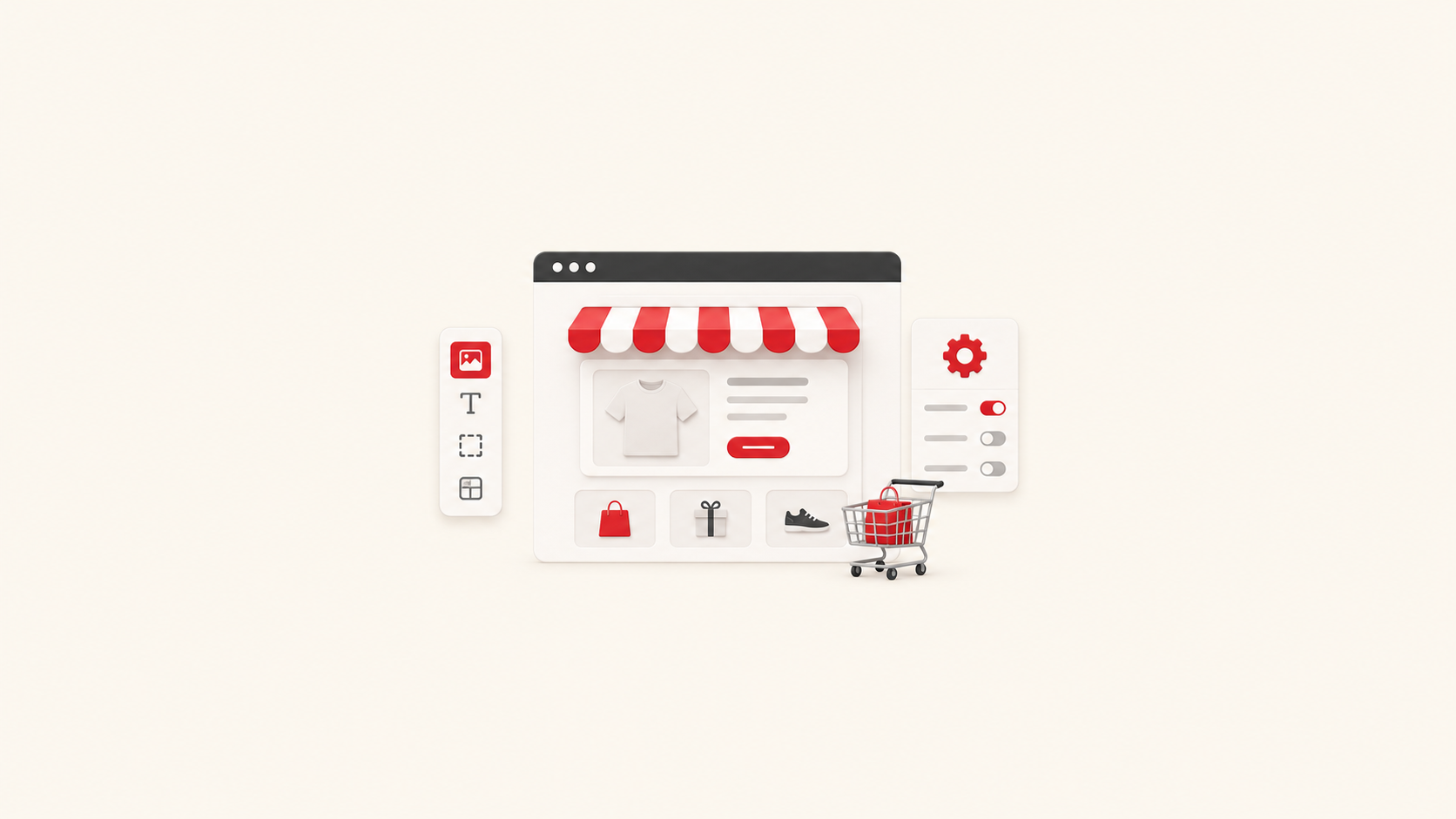
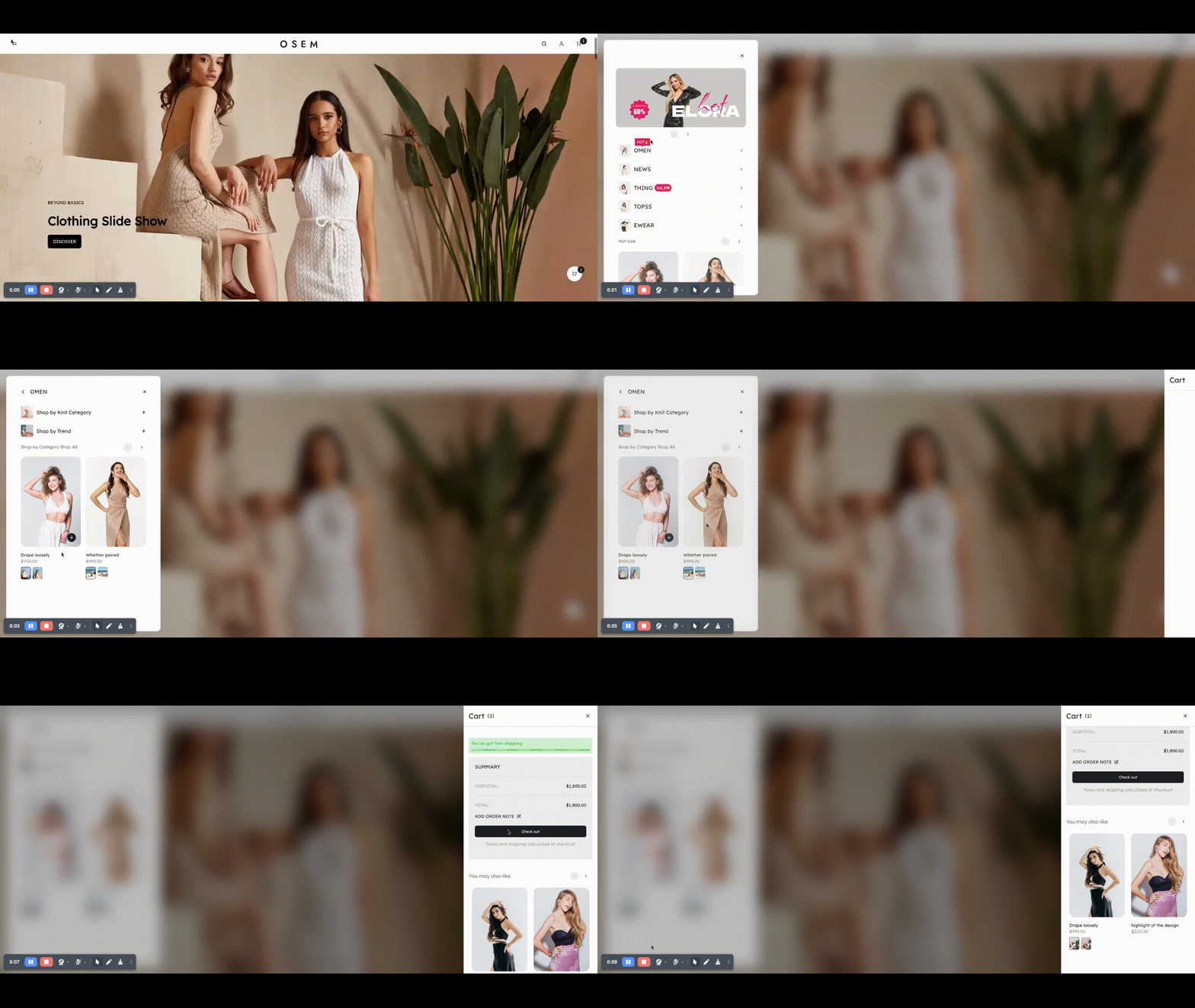
A theme-based store gives you more control over how your brand looks and feels. You pick a pre-built fashion template, then customize colors, fonts, logo, and product layouts to match your niche identity. Platforms like Shoplazza offer ready-made templates designed for e-commerce from the start, with built-in global payments and checkout already configured. This path works well if you have a clear brand direction, want deliberate design decisions, and don't mind spending a week or two on setup before launch.
AI store builder
Shoplazza's AI Store Builder for dropshipping takes a different approach. It just spend around 5-10 minutes. You describe your store through a guided chat, and the builder generates 3 store design options for you to choose from. Once you pick one, it builds the full store automatically — homepage, product pages, About page, Contact page, policy pages, and checkout — with no design decisions from scratch and no technical setup required. And you can even directly some dropshipping suppliers on Shoplazza. This path suits sellers who want to move fast, skip the setup phase, and get straight to testing products and driving traffic.
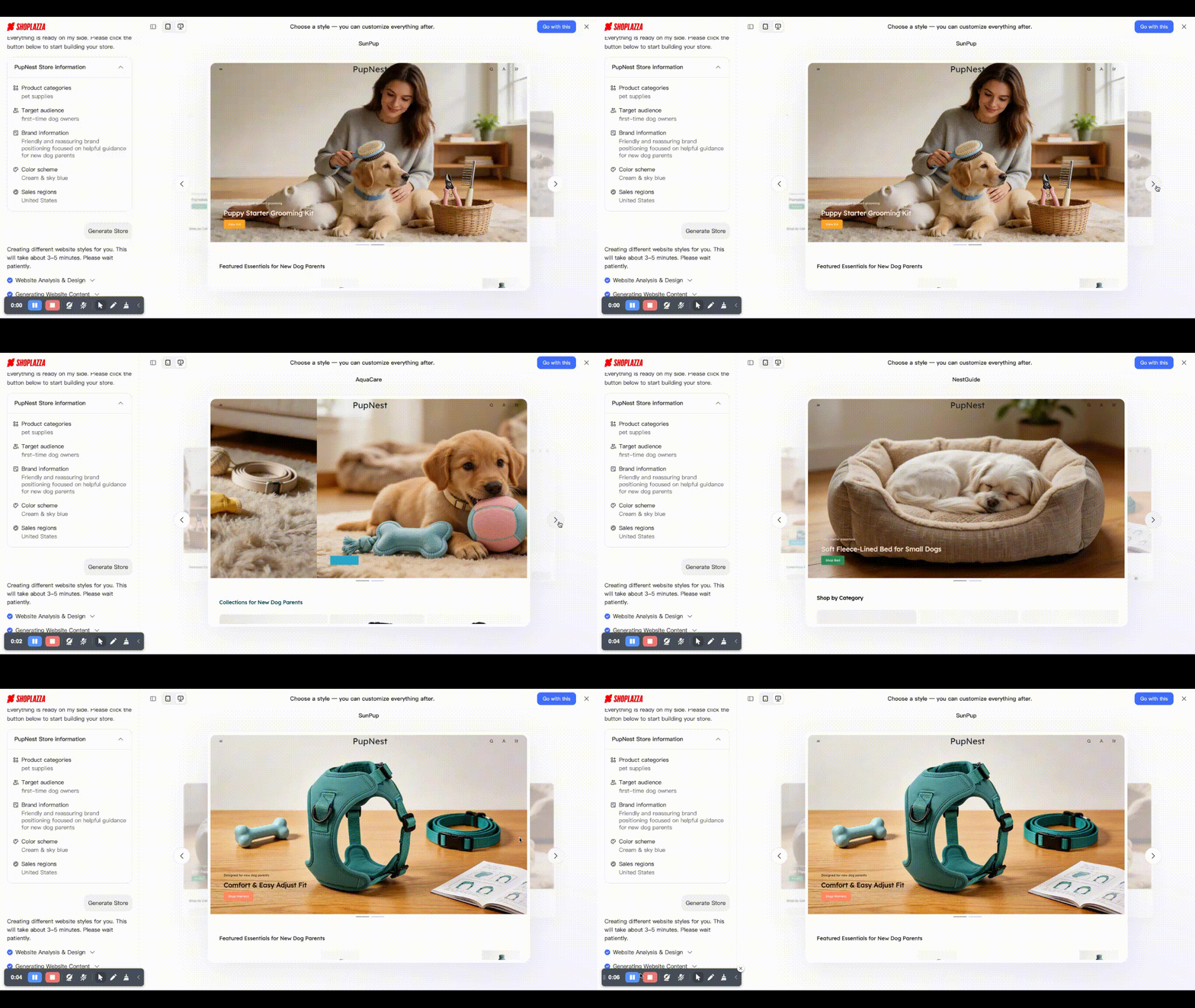
The main difference between the two comes down to speed versus control. Templates give you more flexibility to shape every detail. The AI builder gets you live faster with less effort upfront. Either way, the store itself is only as good as what's on the pages.
What your store actually needs to convert?
A polished store that doesn't convert is one of the most common problems in clothing dropshipping. A few things reliably make the difference:
- Homepage clarity. Visitors should know in three seconds what you sell and who it's for. Put your niche statement above the fold — if they have to scroll to figure it out, you're already losing them.
- Product page depth. Include 3–5 photos per item (flat lay, model shot, close-up detail), a size guide linked directly from the listing, real measurements in the description, and shipping time visible near the Add to Cart button.
- Trust signals. Show your return policy on the product page itself, not just in the footer. Add real customer reviews and a clear way to contact you. Customers can't touch the product before buying — these details reduce hesitation.
- Mobile performance. Your store should load in under three seconds on a phone. Over 70% of fashion browsing happens on mobile, and a slow or clunky experience is one of the most direct causes of abandoned carts.
Don't spend weeks perfecting your logo before you have a validated product. Launch with 8–12 focused listings rather than 50 thin ones.
Price your products correctly
Sell at three times your supplier's cost. If a supplier charges $15 per item, your retail price should be around $45. That spread covers platform fees, an expected return rate, and some ad spend while leaving a real margin.
You can price higher than 3x when your brand identity, original photography, and product page quality signal premium value. Adaptive clothing brands, modest fashion stores with a strong aesthetic, and extended-sizing labels with a loyal community all command higher prices because they're solving a problem competitors aren't.
You'll be stuck at thinner margins if you're selling generic fashion with no differentiation. In that case, the 3x rule barely covers costs once you account for returns and acquisition.
Calculate your real cost per order
| Cost component | What to include |
| Product cost | Supplier price plus shipping to the customer |
| Platform fee | Monthly subscription plus per-order transaction percentage |
| Marketing cost | Average ad spend per sale, or time cost if organic |
| Returns buffer | 5–10% of revenue set aside for refunds and chargebacks |
In practice, many new sellers price from supplier cost alone and forget to factor in ad spend. If you're paying $18 for a product, selling it at $54, and spending $22 per sale in ads, the math doesn't work. Know the full picture before you start scaling.
Build a marketing strategy
Getting traffic takes a plan. Start with organic channels to prove your store converts, then layer in paid ads and retention tools once you have real data to work with.
Organic traffic
Prove your store converts before spending on ads. The most sustainable way to do that is through search — optimizing your store so buyers find you without paid spend.
- Product page titles and descriptions. Use the exact terms your customers search for. "Modest maxi dress for women" converts better than "elegant long dress." Write descriptions with AI that answer real questions about fit, fabric, and sizing.
- Collection page SEO. Each collection page should target a specific keyword — think "women's adaptive clothing" or "gender-neutral streetwear" — with a short descriptive paragraph above the product grid.
- Blog content. A few well-written guides around your niche ("how to style modest workwear" or "what to wear for hybrid office days") build topical authority and bring in long-tail search traffic over time.
- Image SEO. Every product photo should have a descriptive alt tag. It takes minutes to add and contributes to both image search visibility and overall page SEO.
- Site speed and mobile performance. Google ranks fast, mobile-friendly stores higher. Aim for under three seconds load time on a phone — this affects both rankings and conversion.
Once organic traffic starts coming in and your page converts at 2% or better, you have the data you need to run paid ads profitably.
Paid ads
Run paid ads when you have 10 or more real reviews, a 2%+ organic conversion rate, and a $500–$1,000 test budget you can afford to lose. Meta ads work well for interest-based targeting, Google Shopping captures high-intent buyers already searching for your product, and TikTok Ads suit visually strong products with viral potential. Test one channel at a time.
Email and loyalty
Once you have 100 or more customers, email outperforms every paid channel for ROI. Three automations do most of the work: a welcome series covering your brand story and bestsellers, an abandoned cart reminder sent one hour after someone leaves, and a post-purchase recommendation email sent seven days after delivery.
As your customer base grows, Shoplazza's Loyalty and Push tool handles member tier calculation, discount optimization, personalized email campaigns, and checkout-page points redemption automatically — so retention doesn't become a manual job.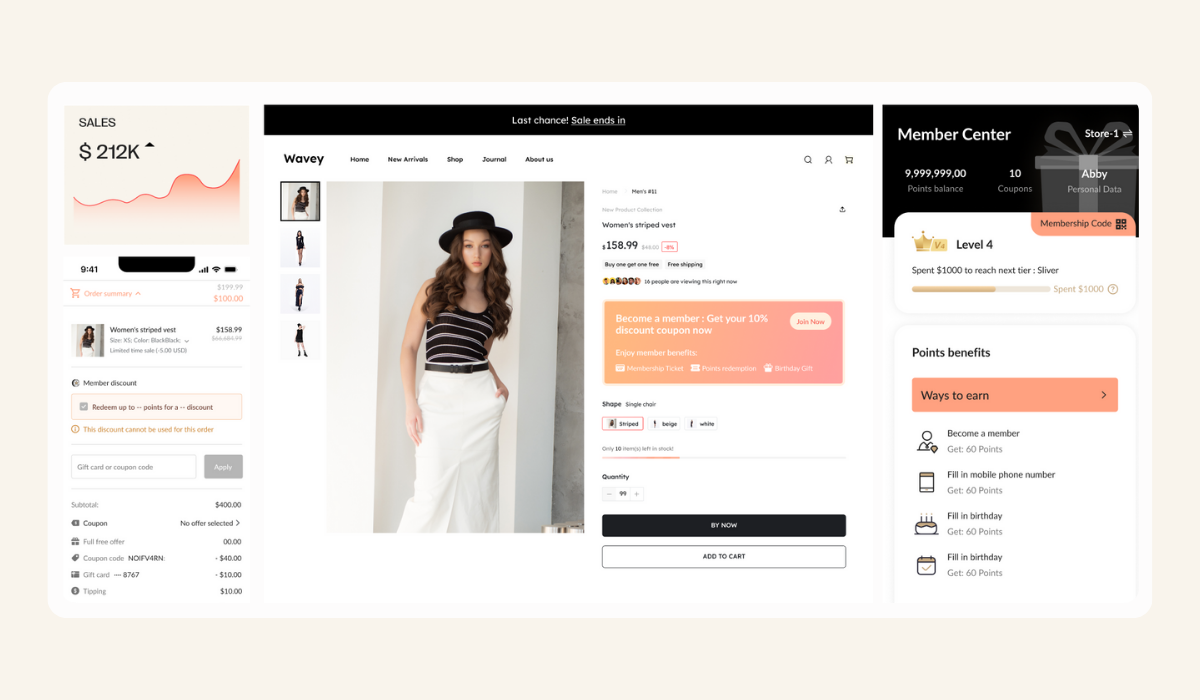
Automate and optimize operations
Set up the right automations early, but keep a few things manual until you know your business well enough to hand them off.Automate from day one:
- Order fulfillment syncing so orders flow to your supplier without manual processing.
- Inventory and price monitoring to avoid selling out-of-stock items at stale prices.
- Shipping tracking notifications to reduce "where is my order" support tickets.
Keep manual early on:
- Customer service replies: handling inquiries yourself for the first 100 orders reveals product problems and sizing issues faster than any tool will.
- Product selection: automated import tools pull entire catalogs, including poor listings; curate manually for quality control.
A few basics that protect your reputation:
- Use a branded email address tied to your domain.
- Respond to inquiries within 24 hours.
- Make your size exchange policy easy to find — this one detail reduces negative reviews more than almost anything else.
Common mistakes to avoid
Even with the right steps in place, small missteps can quietly cost you margin and customers. Here are the ones that come up most often:
- Selling too broadly. "Women's fashion" is a product category, not a business. If you can't describe your ideal customer in one sentence, your niche isn't defined enough. A vague niche produces generic content, low conversion, and no reason for customers to choose you over anyone else.
- Skipping the sample order. You will encounter a bad supplier batch at some point. The question is whether your customers find it first or you do. Ordering samples before listing any products is the most direct way to protect your brand from quality issues you didn't create.
- Using unedited supplier photos. Your competitors using the same supplier are running the same images. Identical listings erode brand trust and hurt your search visibility. Even minor editing differentiates your store meaningfully.
- Ignoring sizing. A 25% return rate will erase your profit margin faster than a failed ad campaign. Building accurate size guides and fit notes into every listing is operational work that pays back in reduced returns and improved reviews.
- Running paid ads before organic conversion is proven. Scaling a page that doesn't convert doesn't fix the conversion problem — it just makes it more expensive. Prove that your product page works first.
- Choosing a platform based on price alone. A cheaper platform that has slow checkout, poor mobile performance, or no built-in global payment support costs more in lost sales than it saves in monthly fees. Platform selection deserves real evaluation.
- Launching with too many products. Eight to twelve well-built listings will outperform fifty thin ones. Starting focused lets you invest properly in each listing and understand what's working before you expand.
How long does it take to make money from clothing dropshipping?
This is one of the first questions new sellers ask. Here's a realistic breakdown based on consistent effort, not passive setup.
| Milestone | Realistic timeline |
| Store live with 8–12 products | Week 1–2 |
| First sale from organic or social | Week 2–6 |
| Consistent 5–10 orders per day | Month 2–4 |
| Profitable with paid ads at scale | Month 4–8 |
These timelines assume you're actively working on the business: posting content regularly, responding to customer feedback, improving product pages based on what you learn. A store that goes live and waits for traffic will take much longer — or never reach these milestones at all.
Conclusion
Learning how to start a clothing dropshipping business takes an afternoon. Building one that actually sustains takes a few months of consistent work — picking the right niche, vetting suppliers properly, and earning traffic before spending on ads. None of the steps are complicated, but skipping them is where most stores run into trouble. Get the foundation right, and the rest becomes much easier to manage.
Frequently asked questions about dropshipping clothing business
Q: How much does it cost to start a clothing dropshipping business?
You can get started for roughly $50–$200 per month. That typically covers a platform subscription — Shoplazza starts at $39/month, or as low as $29.25/month on an annual plan — a domain name (around $15/year), and product samples ($30–$100 to test your supplier). If you plan to run paid ads from the beginning, add a test budget of $500–$1,000 that you can afford to lose while you figure out what converts.
Q: Do I need a business license to dropship clothing?
It depends on your location. In the United States, most sellers benefit from a basic business registration and a resale certificate, which allows you to purchase from wholesale suppliers without paying sales tax. Requirements vary by state and country, so it's worth checking your local regulations before you start selling.
Q: What profit margin should I expect from clothing dropshipping?
Most clothing dropshippers net 15–35% after accounting for product cost, platform fees, and marketing spend. Higher margins come from strong branding, repeat customer behavior, and a niche with genuine differentiation — not from selling cheaper products.
Q: How do I handle returns in clothing dropshipping?
Set a clear 30-day exchange policy and make it visible on your product pages, not just in your footer. Include accurate sizing information upfront to reduce the volume of returns before they happen. Before listing any supplier's products, confirm their return and replacement terms in writing. Budget 5–10% of revenue for refunds and factor that into your pricing from the start.