Want to start an online business in Australia? Dropshipping is one of the lowest-barrier ways to do it. No warehouse. No upfront inventory. No fulfilment headaches. But jumping in without a plan is how most beginners waste months on a store that never sells. This guide breaks down exactly how to start a dropshipping business in Australia — the right niche, the legal basics, the supplier setup, and everything in between. Let's get into it.
What is dropshipping and how does it work?
Dropshipping is a retail model where you sell products without ever stocking them. You run the store, set the prices, and handle the customer relationship. Your supplier manages the inventory, packs the orders, and ships directly to your customers. No warehouse lease. No bulk purchasing. No logistics headaches. Here is exactly how the money and the product move.
The three-party model: manufacturer, supplier, and you
Three parties are involved in every dropshipping transaction: the manufacturer, the supplier, and the retailer — which is you.
Manufacturers produce goods in bulk and sell them wholesale to suppliers. Suppliers stock those products, mark them up, and make them available to retailers like you. As the retailer, you list those products in your own store at your own price point. You set the margin, you own the brand experience, and you handle customer service. You never purchase stock upfront, and you may never touch the physical product if you don't buy it yourself.
Here is how a single order moves through the system:
- A customer visits your store and places an order
- You receive payment from the customer
- You forward the order details to your supplier and pay the wholesale price
- The supplier packages and ships the product directly to your customer
- The difference between what your customer paid and what you paid the supplier is your margin
Your job is to run the storefront, handle customer relationships, and market the products. The supplier handles everything behind the scenes. It is a clean division of responsibility — and it is why dropshipping works as a starting point for sellers who want to move fast without heavy upfront investment.
Why Australia is a strong market for dropshipping right now?
The numbers are hard to ignore. The Australian dropshipping market reached USD 8.1 billion in 2025 and is projected to hit USD 46.5 billion by 2034, growing at a CAGR of 20.77%. That kind of growth rate does not happen in a saturated market — it happens in one that still has significant room for new entrants.
The market is fuelled by rising ecommerce adoption, demand for sustainable products, the popularity of niche-specific stores, and low startup costs that make it easy for entrepreneurs to enter without heavy capital investment. In March 2026, major dropshipping platforms including CJdropshipping and EPROLO expanded their Australian warehouse operations to meet growing local fulfilment demand — a signal that suppliers are actively investing in the market, which directly benefits sellers who need faster local delivery.
For new dropshippers, this matters. You are entering a market that is growing fast, has infrastructure support from major suppliers, and still rewards sellers who go deep on a specific niche rather than trying to compete on price and breadth.
Is dropshipping legal in Australia?
Yes, dropshipping is legal, but you are the seller of record. Dropshipping is legal in Australia. However, you must comply with Australian Consumer Law, tax obligations, and ATO requirements, as you are considered the seller, not the supplier.
That distinction matters more than it might seem. Even if your supplier is based in China and ships from an overseas warehouse, the Australian Competition and Consumer Commission (ACCC) holds you responsible for the transaction. If a product arrives damaged, does not match its description, or fails to meet consumer expectations, the customer's dispute is with you — not your supplier.
Three things Australian Consumer Law requires from every dropshipper
The Australian Consumer Law (ACL) applies to every business selling to Australian consumers, dropshipping included. Three requirements are particularly relevant:
- Accurate product descriptions: You cannot use misleading or deceptive language in product listings, even if that language came directly from your supplier's catalog. If the supplier's description overstates a product's capabilities, you are responsible for correcting it before publishing.
- Consumer guarantees: You must ensure products match their descriptions and meet consumer guarantees, such as acceptable quality and fitness for purpose. You also cannot exclude these guarantees in your terms and conditions.
- Refund obligations: You cannot publish a "No Refunds" policy. Under ACL, customers are entitled to a remedy — repair, replacement, or refund — when a product fails to meet consumer guarantees. This applies regardless of whether your supplier agrees to accept the return.
How do I start a dropshipping business step by step?
Most people overthink the starting point. The reality is that getting a dropshipping business off the ground in Australia comes down to six core steps — and each one builds directly on the last. Get the sequence right, and you have a live, legally compliant store with real products faster than you think.
Step 1: Research a niche
A niche gives you a defined audience. That makes your marketing sharper, your supplier search shorter, and your ad spend more efficient.
A good dropshipping niche has three qualities: consistent demand, manageable competition, and low return risk. Clothing with non-standard sizing, for example, generates high return rates due to fit issues. Tools, home gadgets, and pet accessories tend to perform much better on that metric.
How to research a niche before committing?
- Search the category on Google Trends and confirm interest is growing or stable, not declining.
- Check order volumes on TikTok, AliExpress, or CJdropshipping as a proxy for real demand.
- Calculate whether your retail price leaves at least 30% margin after supplier cost and shipping.
- Assess return risk. Products with significant size, color, or quality variation carry higher refund rates.
What sells well in Australia right now?
- Beauty and skincare: facial tools, serums, LED masks, acne patches
- Pet care: slow feeder bowls, pet cameras, grooming kits, orthopedic beds
- Health and wellness: massage guns, posture correctors, resistance bands, sleep aids
- Home and kitchen: air fryers, compact appliances, organizer systems, smart plugs
- Smart home devices: security cameras, automated lighting, smart locks, voice-controlled accessories
- Sustainable products: reusable household goods, bamboo alternatives, eco-friendly packaging
- Digital and tech accessories: phone stands, cable organizers, wireless chargers, laptop peripherals
Emerging niches worth watching in 2025 and 2026
- Mini projectors saw search interest effectively double from July 2025, with Australia and New Zealand leading globally. Demand has shifted from niche gadget to mainstream lifestyle product.
- Vitamin C shower filters exploded from near-zero to near-peak search interest around July 2025, sitting at the intersection of home utility and wellness, a high-margin niche driven by conscious consumers.
- High-end relaxation products, like zero-gravity recliners, foot massagers, massage chairs, are gaining traction as Australians invest in at-home comfort and stress relief.
Step 2: Register your business and understand your legal obligations
Once you have decided to move forward, get your legal setup done before you accept a single payment. This step is straightforward and mostly free, but skipping it creates compliance problems later.
- Register for an ABN. Registering for an Australian Business Number (ABN) is free, non-negotiable, and how the government officially recognises your business. You apply through the Australian Business Register at abr.gov.au. Most applications are approved instantly.
- Understand your GST obligations. GST registration becomes mandatory once your annual turnover hits $75,000. Below that threshold, registering for GST is optional — many new stores hold off to keep prices more competitive in the early stages. Once registered, you collect 10% GST on sales to Australian customers and remit it to the ATO. Start tracking your turnover from your first sale, not from when you expect to hit the threshold.
- Choose your business structure. The two most common structures for dropshippers are sole trader — simple to set up but with no personal liability protection — and company (Pty Ltd), which provides limited liability but has more regulatory requirements. Most beginners start as sole traders and restructure as the business scales. If you are unsure which structure suits your situation, a registered accountant or business advisor can help you make that call based on your specific circumstances.
Step 3: Find a supplier with a local warehouse
Your supplier is your silent business partner. Their stock quality, shipping speed, and reliability shape every single customer experience your store delivers. Pick the wrong one and you will spend more time handling complaints than making sales.
Local vs. overseas suppliers, what to consider?
For Australian dropshippers, local warehousing is worth prioritising wherever your niche allows it. Australian consumers expect fast delivery. A 7 to 20 day international shipping window is one of the most common triggers for disputes and chargebacks. Local suppliers like Dropshipzone and Ozdingo — both Australia-based — deliver within one to five business days in most major cities. That is competitive with domestic retail and makes a real difference in repeat purchase rates.
The trade-off is real though. Local suppliers carry a narrower product range and price higher than overseas counterparts. If your niche requires overseas sourcing, it can still work — but you need to be upfront about shipping windows on every product page and in your Shipping Policy. That transparency is not just good practice. Under ACL, it is a legal requirement.
Before committing to any supplier, run through this checklist:
- Place a test order and evaluate packaging quality, actual shipping time, and the unboxing experience
- Confirm their returns and refund process in writing before listing a single product
- Check whether they offer platform API integration so orders route automatically without manual processing
- Ask how many other retailers they supply with the same products — this directly affects how differentiated your store can be
Shoplazza integrates natively with CJdropshipping, EPROLO, and more, all accessible through the app store with no code required. Product data, images, and inventory levels sync automatically, and orders route to your supplier without manual handling on your end.
Step 4: Build your dropshipping store
With a niche validated, legal setup in place, and a supplier connected, the next step is building a store that converts visitors into buyers from the moment it goes live.
The platform you choose determines how smoothly your supplier integrations, payment processing, and order management work together. For dropshipping specifically, the most important criteria are native supplier integrations, payment method coverage for your target market, and mobile performance. 77% of site visits in Australia happen on smartphones, which means mobile checkout experience matters more than store completeness at launch.
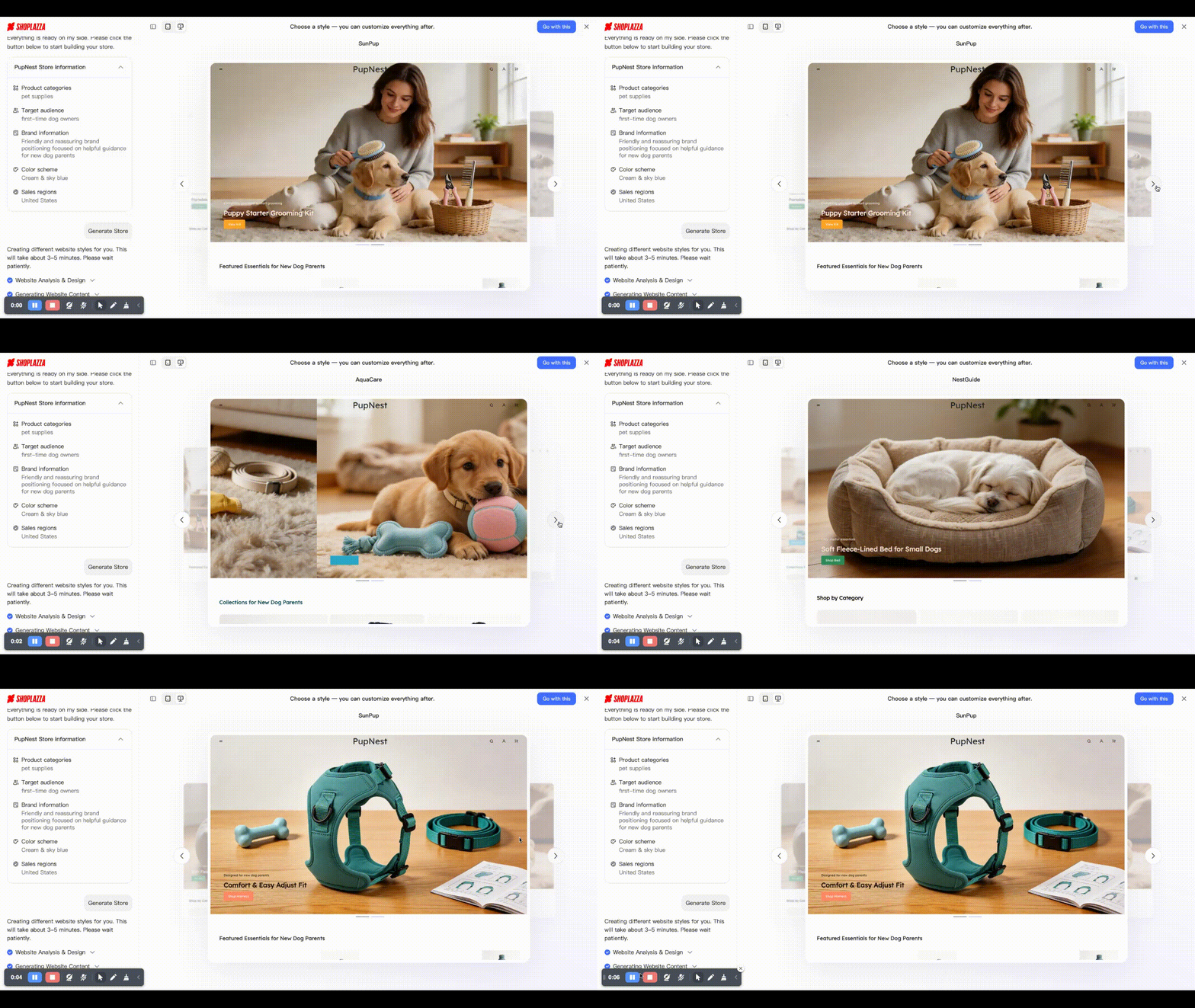
Shoplazza's AI Store Builder is designed specifically for dropshipping workflows and mobile responsiveness. Here is how the setup works:
- Describe your niche and target customer, or upload product images for reference.
- The AI generates three store style designs, each showing a distinct visual direction with banner and product collection layouts.
- Select the design that fits your brand direction.
- The AI builds out a complete store, including homepage, product pages, About page, Contact page, policy pages, and checkout flow.
- Your store is ready to preview within five to ten minutes, with no coding required and no credit card needed to preview.
Before going live, confirm that your store has the following in place:
- Product pages with clear titles, descriptions, images, prices, and stated shipping timeframes.
- A Shipping Policy that explicitly states delivery windows, especially if using overseas suppliers.
- A Refund Policy that aligns with ACL requirements.
- A Privacy Policy covering how customer data is collected and used.
- A completed mobile test to confirm checkout works correctly on a smartphone.
Step 5: Source and upload your products
Getting products into your store is faster than most beginners expect. How you present them once they are there, however, is what determines whether they actually convert.
Importing products into your store:
- For Shoplazza's natively integrated suppliers, lile CJdropshipping, EPROLO, and others, products import with one click. Product data, images, and variants sync automatically to your store.
- For non-integrated suppliers, the Skuowner tool lets you import products from AliExpress, Amazon, and even Shopify stores directly into your Shoplazza store with a single click, without manual data entry.
- For sellers with existing product data, Shoplazza supports bulk upload via Excel, which is useful when migrating a catalog or working with a supplier who provides a product spreadsheet.
Optimize your products after import
Supplier images and descriptions are a starting point, not a finished listing. The same supplier is often fulfilling orders for dozens — sometimes hundreds — of other sellers running the same catalog. Publish those assets unchanged and your store looks identical to every competitor sourcing from the same place. Differentiation starts with the content layer.
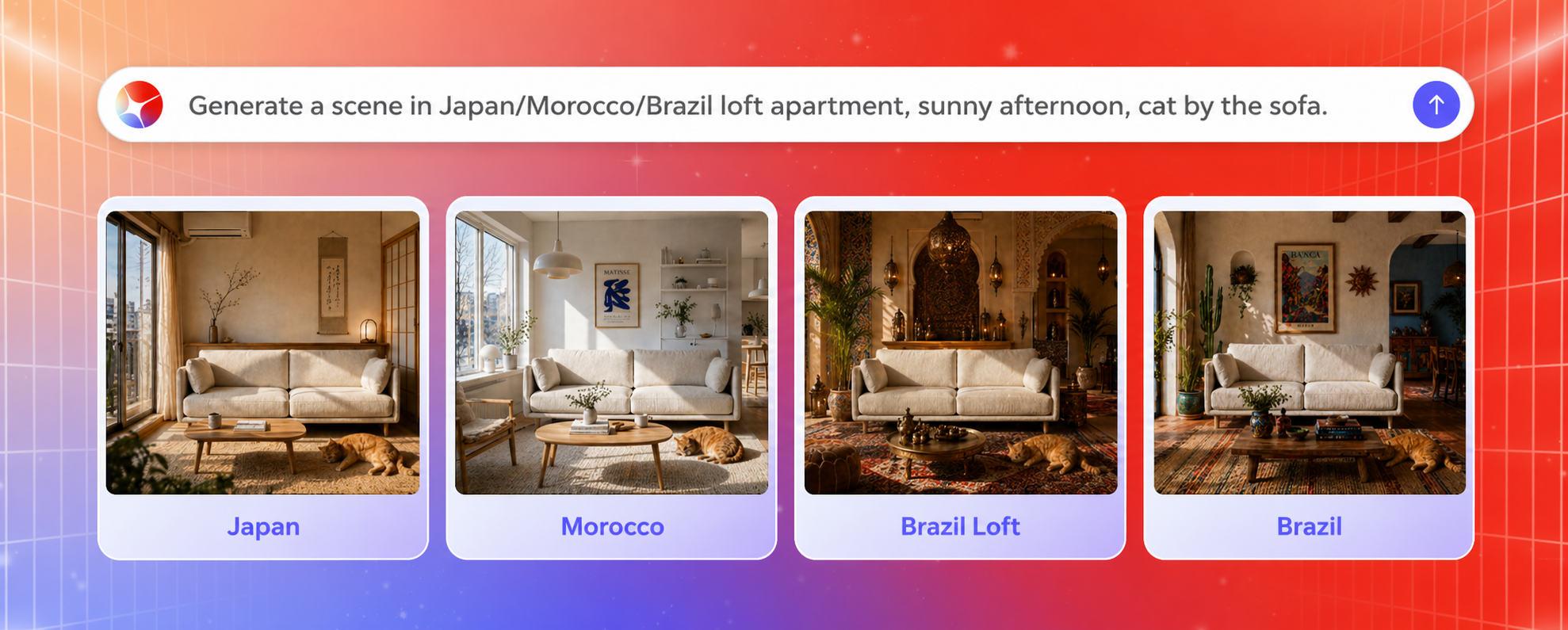
For product descriptions, Shoplazza's LazzaStudio generates commercial-quality visuals from a plain white background shot, an unedited snapshot, or a rough reference image — no photography studio needed. The tool produces lifestyle context shots and creative backgrounds tailored to your brand direction, with 2K and 4K resolution output that meets the creative specs for Meta, TikTok, and Google ad placements directly. For Australian sellers running paid social, that means your creatives are ready to deploy without additional editing.
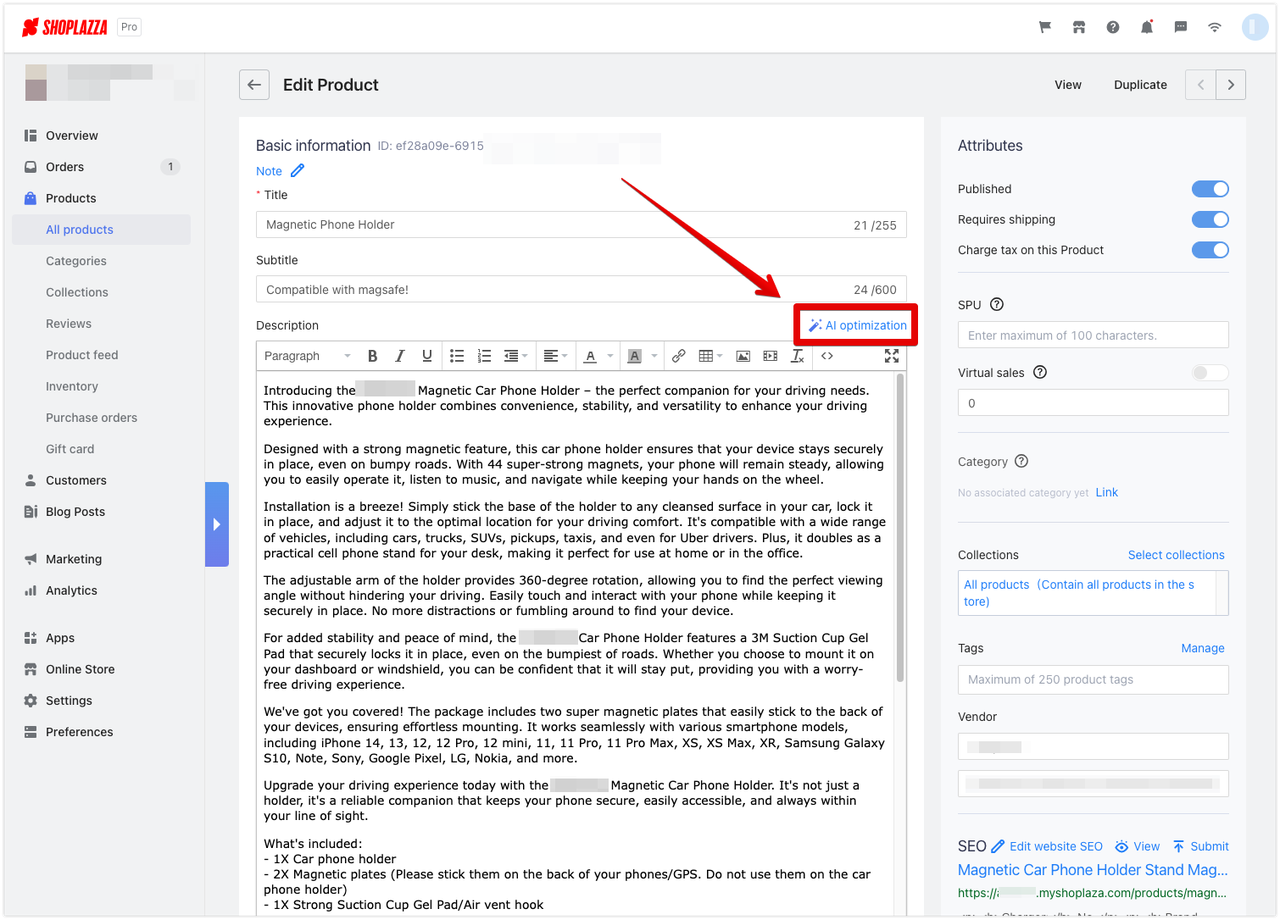
For product descriptions, Shoplazza's built-in AI description generator lets you input your product title, key attributes, preferred tone, and target word count, then generates structured copy in 16 languages. The localised expression mode goes a step further — specify a target city or region, like Sydney or Melbourne, and the tool generates copy written for that specific market context. For dropshippers selling into a defined Australian niche, that level of localisation is a genuine conversion advantage over sellers publishing generic supplier copy.
Step 6: Market your dropshipping store
Getting your store live is step one. Getting it to consistently make money is a different challenge entirely. That requires a marketing approach that matches your current budget, tests fast, and scales what is actually working.
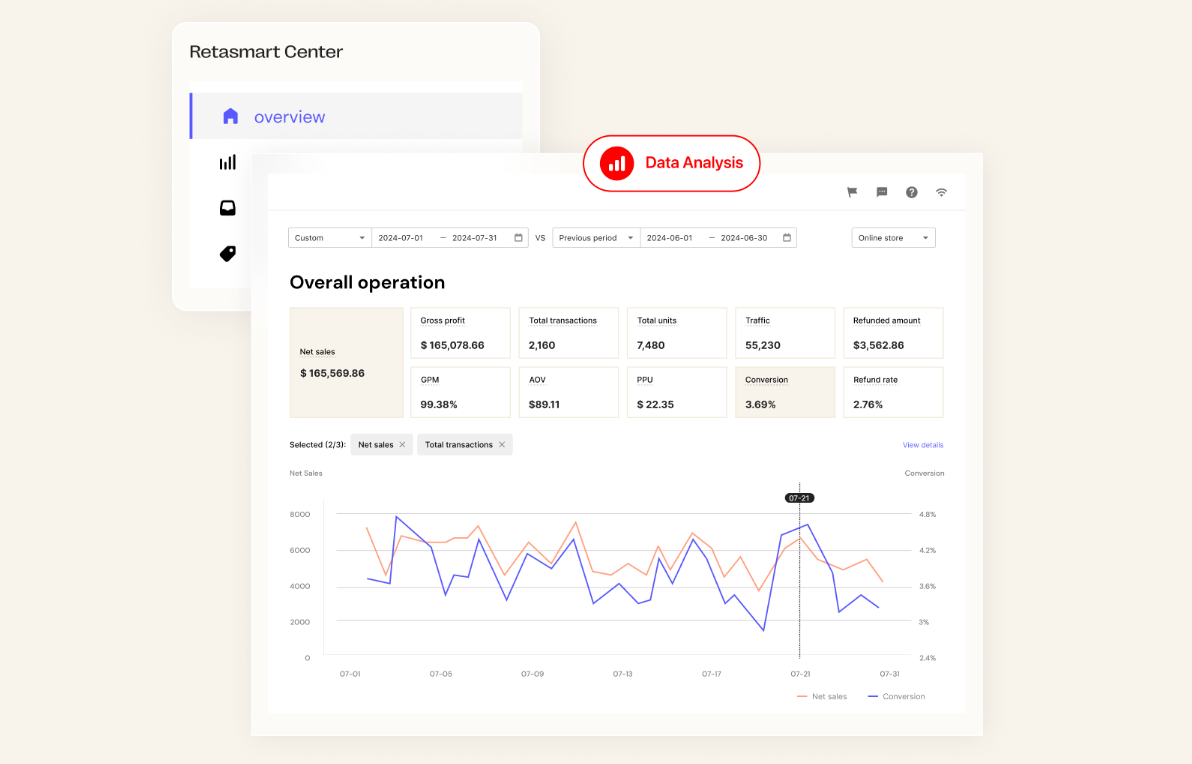
Start with data, not spend. Before putting money into any ad channel, use Shoplazza's built-in analytics dashboard to understand your baseline — where traffic is coming from, which products are getting views, and where shoppers are dropping off in the checkout flow. That data tells you which product deserves budget before you commit to amplifying it.
Paid traffic options for Australian dropshippers
- Meta Ads (Facebook and Instagram) are the most practical starting point for product testing. Precise audience targeting, relatively low minimum spend to generate useful data, and strong performance for visual product categories like home goods, beauty, and pet accessories
- Google Shopping works best when buyers already know what they want. If your product has clear search intent — "smart plug Australia" or "posture corrector" — Google puts you in front of people already ready to buy
- Pinterest Ads have a longer content lifespan than social feeds. For home decor, lifestyle, and beauty niches, a well-targeted Pinterest campaign can keep driving traffic weeks after it runs
Scale operations with Athena
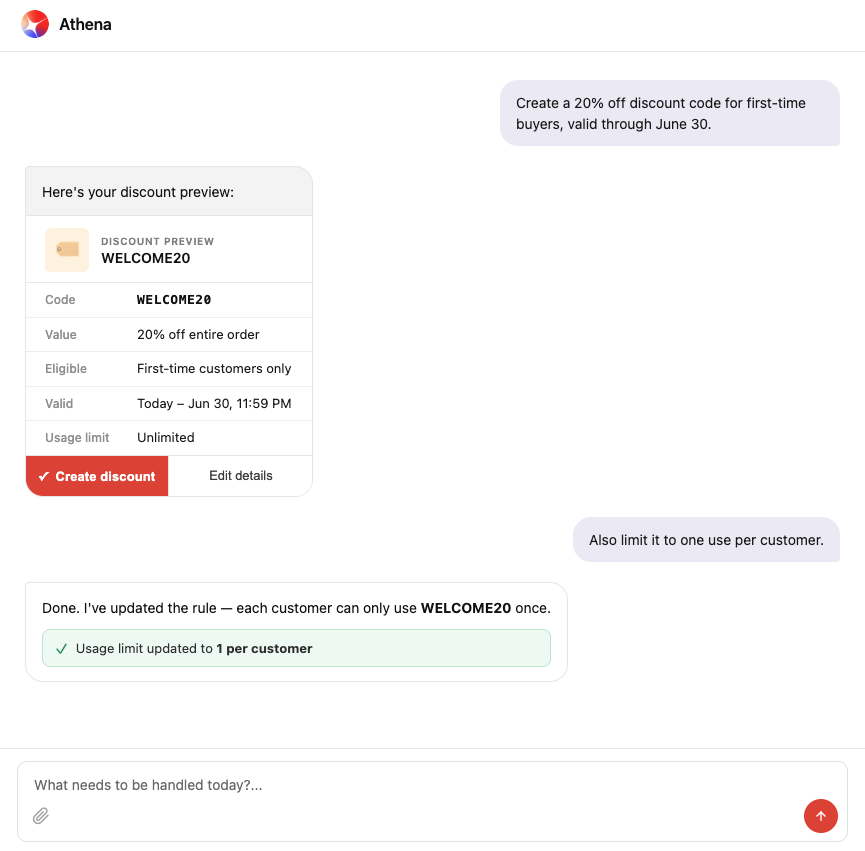
Athena is Shoplazza's AI admin agent that manages back-office ecommerce workflows through natural language — no dashboards, no manual clicking. Here is what it handles:
- Product management: Create and edit listings, rewrite SEO titles across hundreds of products in one instruction, or input via product links, images, and Excel files.
- Order management: Check order status, track logistics, and handle order inquiries without switching between pages.
- Discount and promotions: Configure new campaigns, clone previous campaign settings, or end expired promotions in bulk.
- Data analysis: Query sales performance and pull reports without building them manually.
- Shipping and logistics: Update shipping configurations and check fulfilment information on demand.
For critical actions, Athena asks for required details, presents a preview, and proceeds only after merchant confirmation — you stay in control. No payment required, no plugins to install. Currently free for all Shoplazza sellers.
How to get your first sales without a big ad budget?
Paid advertising is not the only path to your first sale, and for a store that has not yet been validated, organic channels are a smarter starting point that costs effort rather than budget.
- TikTok and Instagram Reels are the highest-leverage organic channels for visually engaging products. A short video showing the product in use — unboxing, before and after, or a problem being solved — can reach thousands of relevant viewers at zero cost. Home gadgets, pet products, and beauty tools perform particularly well in this format.
- SEO-optimised product pages and blog content capture buyers who are already searching for what you sell. Shoplazza includes built-in SEO Opitmizer covering automatic ALT text, meta tag management, real-time sitemaps, and JSON-LD structured data, which means the technical foundation is handled without additional configuration.
- Pinterest suits home decor, lifestyle, and beauty niches where content has a longer discovery window than social feeds. A well-optimised Pinterest board can continue driving traffic months after it is published.
- Reddit and Facebook Groups are useful in the early stages for collecting real feedback from potential buyers. Australian communities such as r/auscommerce and relevant niche Facebook groups can surface genuine product interest before you invest in advertising.
The practical principle here is to use organic channels to validate that a product generates interest, then use paid channels to amplify the products you have already confirmed people want.
Key considerations when dropshipping in Australia
Beyond the setup steps, a handful of Australia-specific factors catch new sellers off guard. Knowing them in advance is more efficient than learning them through customer complaints.
- Shipping time transparency is non-negotiable. If you are sourcing from overseas suppliers, your customers will wait longer than they are used to from domestic retailers. State your shipping window clearly on every product page and in your Shipping Policy. Customers who know upfront that delivery takes 10 to 15 days are far less likely to dispute a charge than customers who were not told.
- You own the return process. As the seller, you are responsible for legal compliance even if your supplier ships the order. If a customer requests a refund and your supplier refuses to accept the return, you still need to provide a remedy under ACL. Negotiate return terms with your supplier before you start listing their products, not after a dispute arises.
- Check import restrictions for your product category. Electronics, cosmetics, food items, and certain health products are subject to Australian import regulations and may require specific documentation or testing compliance. A product that ships freely within China may face delays or rejection at the Australian border if it does not meet local standards.
- Independent stores need a differentiation strategy. The top online retailers by traffic in Australia are Amazon, eBay, Kmart, Temu, and BIG W, which dominate with aggressive pricing and wide product ranges. Competing on price against those platforms is not a viable strategy for a new dropshipping store. Competing on niche focus, brand storytelling, and a better product content experience is.
Conclusion
Starting a dropshipping business in Australia does not require a warehouse, upfront inventory, or technical skills. What it requires is the right niche, a reliable supplier, and a store that earns customer trust from day one. Shoplazza gives you the infrastructure to build that — from the AI Store Builder that gets your store live in minutes, to LazzaStudio for professional product visuals, to Athena handling your backend operations around the clock. The tools are there. Pick your niche, set up your store, and start building something worth scaling.
Frequently asked questions about starting a dropshipping business in Australia
Q: How much does it cost to start a dropshipping business in Australia?
The minimum startup costs are a platform subscription, a domain name, and optionally a small ad budget for initial testing. No inventory purchase required. Shoplazza's Basic plan starts at $39 per month, which includes global payments, supplier integrations, built-in SEO tools, Australian payments, and ecommerce functions. Many sellers launch with zero ad spend and use organic social content to validate their niche before committing to paid channels.
Q: Can I dropship in Australia while living abroad?
Yes. Since you never handle inventory or ship products yourself, your physical location does not affect day-to-day operations. However, if you are selling to Australian consumers, ACL still applies to you as the seller. You will also need to consider ABN registration requirements and tax obligations based on your specific circumstances.
Q: Do I need a local Australian supplier to start dropshipping?
Not necessarily, but it helps. Local suppliers like Dropshipzone and Ozdingo offer one to five day delivery windows, which reduces disputes and improves repeat purchase rates. Overseas suppliers give you a wider product range at lower cost, but require full shipping time transparency on your product pages. The right choice depends on your niche and how competitive delivery speed is in that category.
Q: How do I stand out from other dropshippers selling the same products?
Most dropshippers publish supplier images and descriptions unchanged — which means their store looks identical to dozens of competitors. The fastest way to differentiate is through your content layer. Use LazzaStudio to generate unique product visuals, use Shoplazza's AI description generator to write copy tailored to Australian buyers, and focus on a tightly defined niche rather than a broad general catalog. That combination builds a brand, not just a storefront.