A lot of people want to sell on TikTok Shop but get stuck at the very first step — no supplier, no warehouse, no idea where to start. You don't need any of that to get started. TikTok Shop supports a model called dropshipping, where you list products, take orders, and let your supplier handle the rest. No upfront inventory, no storage costs.
That said, this isn't a "set it and forget it" business. Getting the wrong products won't get you sales. Slow shipping will get your store penalized. And without content, your listings just sit there with no visibility. Platform rules have also gotten stricter — deposits, fulfillment deadlines, and content compliance. There's more to navigate now than there was two years ago. This guide walks through everything: how to dropship on TikTok Shop, what to sell, how to fulfill orders, and how to actually drive sales.
What is TikTok dropshipping?
The concept is straightforward. You list products on TikTok Shop, a customer places an order, and your supplier ships directly to them. You source from platforms like CJdropshipping or other suppliers that support cross-border or local fulfillment — no packing, no warehousing, no logistics coordination on your end. You pocket the difference between what the customer paid and what you paid the supplier.
Compared to traditional inventory-based selling, the differences are pretty clear:
| Dropshipping | Traditional business model | |
| Startup cost | Low ($150–$1,500+) | High (upfront stock purchase) |
| Inventory risk | Almost none | Overstock is a real risk |
| Shipping speed | Depends on supplier | You control it |
| Profit margin | ~15%–25% | ~25%–40% |
| Best for | Testing products, getting started | Scaling proven winners |
One thing worth keeping in mind: dropshipping is a starting point, not an end goal. Most sellers who do well long-term use it to test products at low cost, then move to stocking inventory once they find what actually sells.
What to know and what to prepare before you open a store?
Before anything else, it helps to get a few basics sorted — whether you're eligible to sell, how much it actually costs, and what tools you'll need.
Where can you sell on TikTok Shop and how?
TikTok Shop is currently open in the US, UK, and Southeast Asia (Indonesia, Vietnam, Thailand, Philippines, Malaysia, Singapore). Requirements vary by market:
- US: You need a US business license or SSN. The security deposit for cross-border sellers is $1,500, required from December 15, 2025 onwards.
- UK: Local shops need a UK business entity. Cross-border sellers can also apply, with a deposit of around £400 (roughly $540).
- Southeast Asia: The most accessible entry point. Basic deposits start at around $90, with a 90-day waiver currently available for new sellers. Individual business registration is accepted across most markets, good if you're just getting started and don't have a formal company set up yet.
How much does it cost to start?
One of the genuine advantages of dropshipping is the low upfront cost. Here's a rough breakdown:
- TikTok Shop security deposit: $90–$1,500 depending on market
- Supplier platform (CJdropshipping and EPROLO both have free tiers): $0
- Sample orders to check product quality before listing: $50–$100
- Content creation (if you're filming yourself): close to zero
Overall, Southeast Asia is the cheapest way in — total startup cost can stay under $250 including test orders. The UK runs around $600. The US is the most expensive upfront, largely because of the $1,600 deposit requirement.
Recommended dropshipping suppliers for TikTok Shop
Finding a reliable supplier is one of the most important decisions you'll make. Two platforms that work well with TikTok Shop are CJdropshipping and EPROLO.
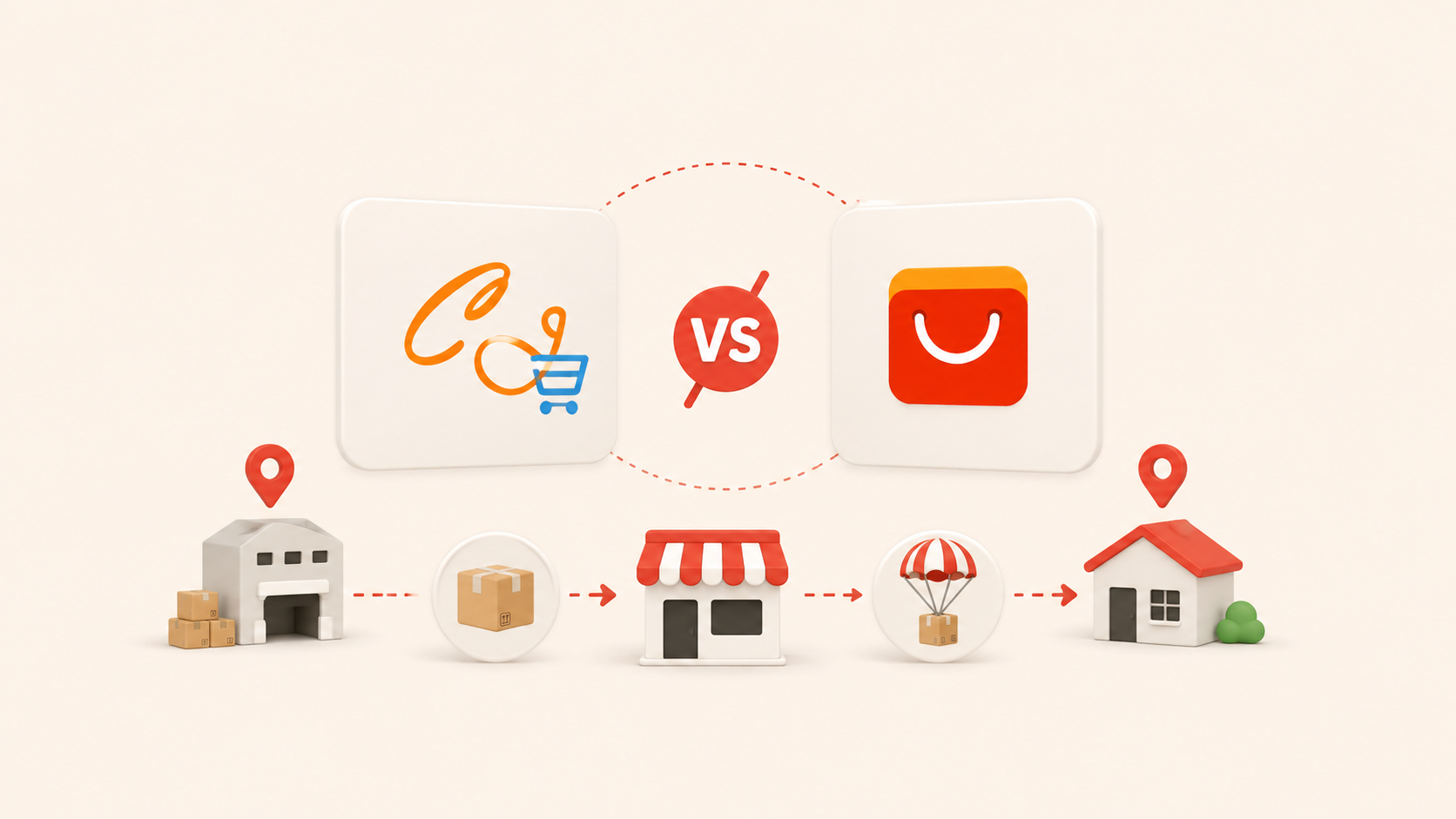
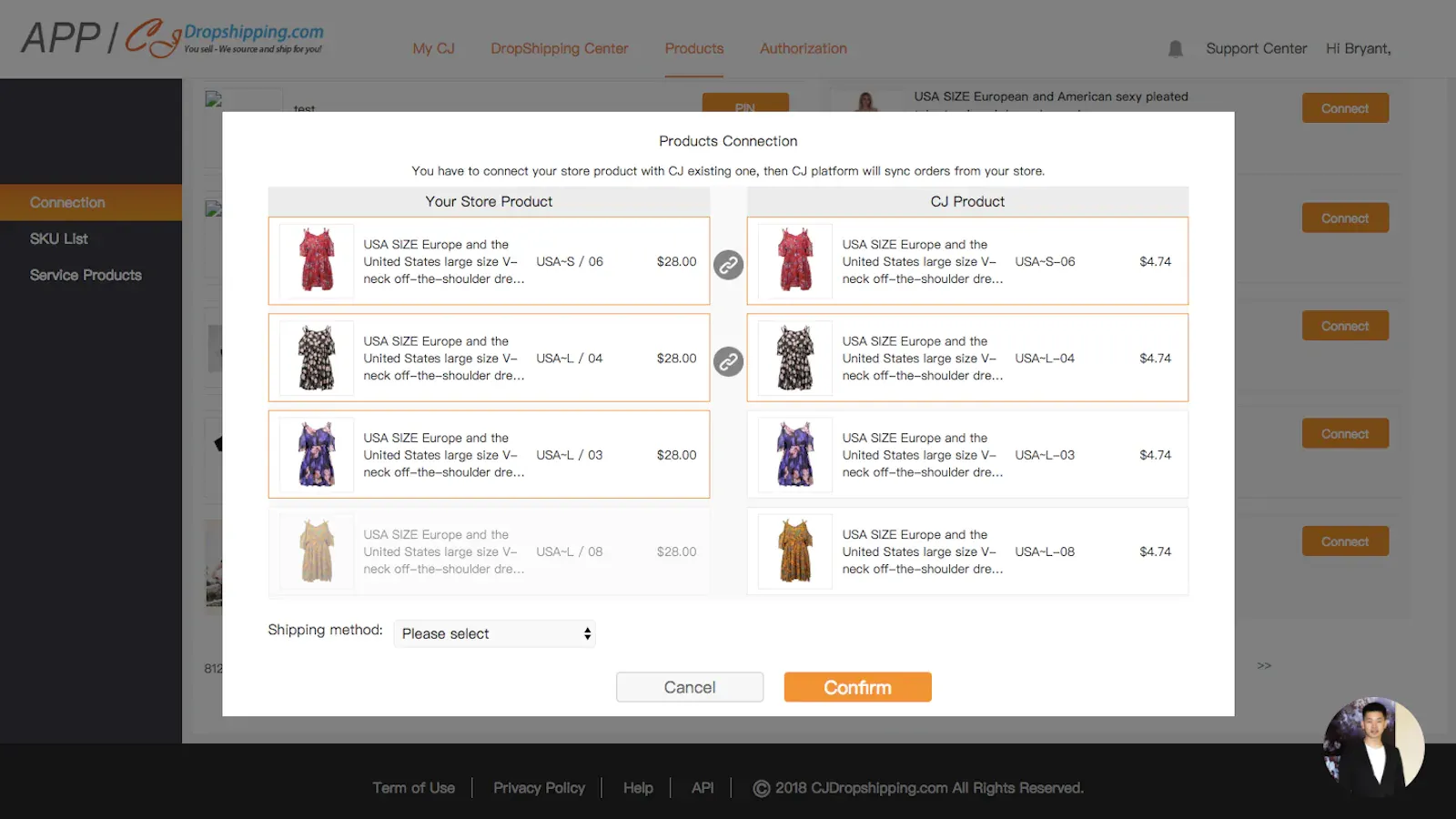
- CJdropshipping: You can connect your TikTok Shop account through CJ's dashboard, browse their product catalog (including a dedicated TikTok collection with US-stocked items), and push products directly to your store. Orders sync automatically — when a customer buys, CJ gets the order, fulfills it, and pushes the tracking number back to TikTok. They have warehouses in the US, UK, EU, and China, with US-based items shipping in roughly 3–7 days. There's no monthly fee, and they also offer product sourcing (if you can't find something in their catalog, their team will source it), custom packaging, and private labeling once you're ready to build a brand.
- EPROLO: It carries over 100,000 products with a strong focus on fashion and lifestyle categories. Shipping to the US, UK, and EU typically runs 5–15 days. EPROLO also supports custom branding — you can add your logo to packaging with no minimum order requirement, which is useful if you're thinking about building a brand longer term. They integrate with Shoplazza and work well as a bridge to TikTok Shop if you're running both channels.
Both platforms handle automated order fulfillment and tracking sync, which saves a lot of manual work once orders start coming in.
How to find products that actually sell?
Many people overlook this part and go straight to listing products. That usually doesn't end well.
You can use TikTok Creative Center to see what's trending in your target market — filter by country to find top-performing ads and products right now. Both CJdropshipping and EPROLO also have trending product sections in their dashboards worth checking.
Once you have candidates, verify the supplier side: is inventory stable, and can they ship within 48 hours? This matters more than it used to. Since January 26, 2026, TikTok requires all orders to update to "in transit" within 2 business days of being placed. A late dispatch rate above 10% triggers penalties including order limits, delayed payouts, and a $5 fine per late order.
What makes a good dropshipping product?
- Small and lightweight: shipping costs directly affect your margin, and lighter items are cheaper to return
- Visually demonstrable: products that show a before/after, a use case, or a clear result tend to perform better on TikTok
- Priced between $10 and $25: this is the sweet spot for the US market. Too cheap and there's no margin. Too expensive and conversion drops.
- At least 30% gross margin after supplier cost, shipping, and platform fees (typically 5%–8%)
A quick example: supplier cost $5, selling price $15, shipping $3, platform fee $0.90 — gross profit roughly $6.10, about 40% margin. That's a workable product.
Products to avoid
- Branded items with logos, character prints, or anything could trigger a copyright flag. TikTok uses AI image scanning to detect this.
- Restricted shipping items: liquids, knives, pure electronics with batteries, powders, compressed gas
- Highly seasonal products: cross-border shipping takes time, and you can easily miss the window
- Saturated basics like generic phone cases or plain t-shirts, where there are tens of thousands of competing listings and prices have bottomed out
- Products with export restrictions or complex customs clearance requirements
How to dropship on TikTok Shop: list, fulfill, and sell
Once you have your setup ready, here's how the actual workflow looks.
Get products into your TikTok Shop
For a small number of products (say, 1–3), listing manually is fine. Once you're testing 10 or more SKUs, connecting your supplier platform directly saves a lot of time.
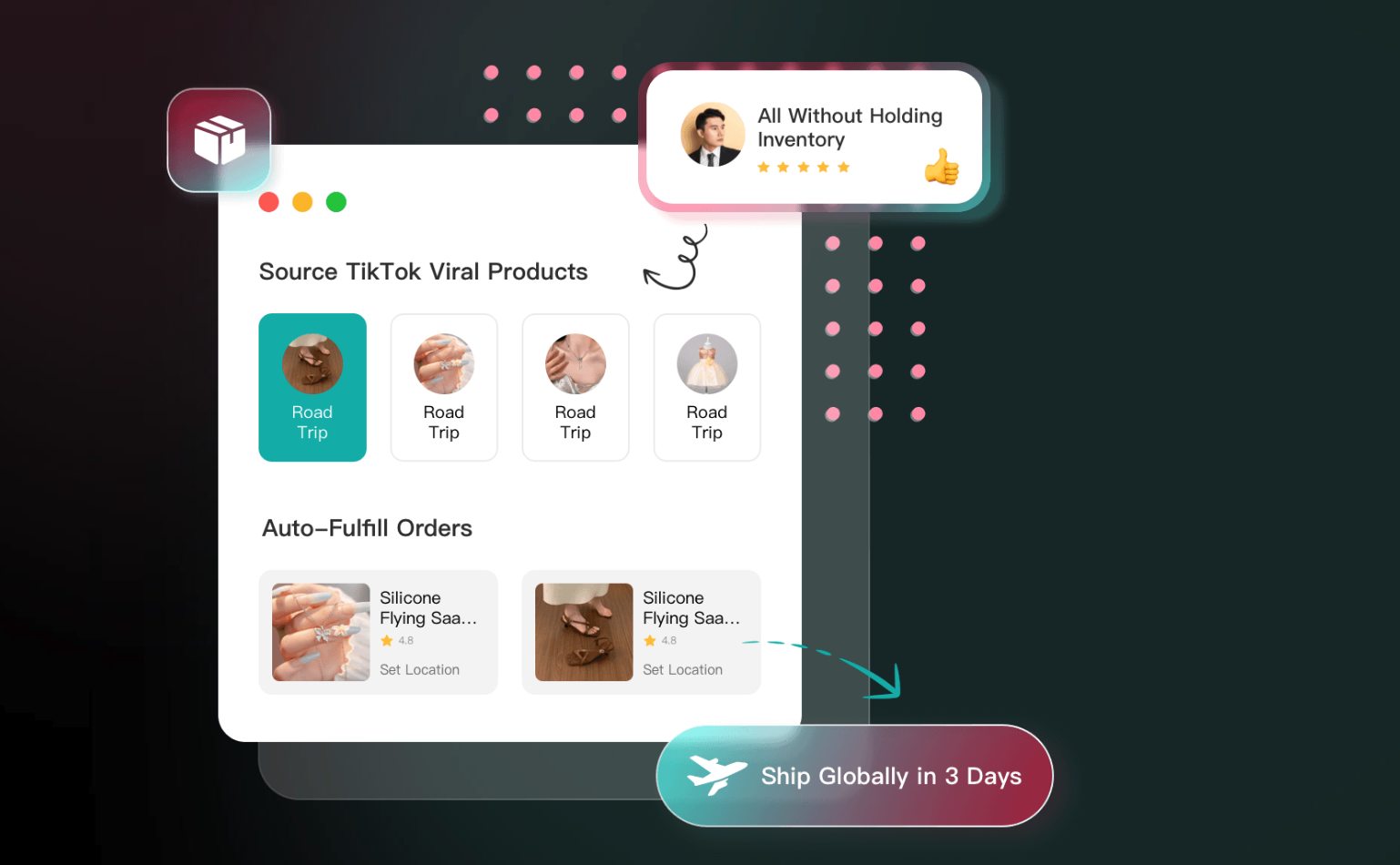
With CJdropshipping, you browse products in their catalog, select items from their TikTok-specific collection, and push them directly to your shop. Product details, images, and pricing sync automatically. With EPROLO, the process is similar — browse, select, import to your store with one click. Both platforms let you edit titles, descriptions, and pricing before going live.
Source from CJdropshipping
A few things to get right on your listings:
- Pricing: Check what similar products are selling for on TikTok Shop. Pricing too low signals low quality to buyers, not a deal.
- Title: Write in the local language, include the key search terms, keep it under 80 characters, and don't stuff keywords. Something like "3-Tier Adjustable Drawer Organizer for Kitchen Utensils" works better than a keyword dump.
- Product description: Focus on use cases and key benefits. Don't translate directly from a supplier listing — the copy usually doesn't read naturally. Shoplazza's AI description generator can help create product copy that reads like it was written for your audience.
- Main image: Use white background or lifestyle images. Promotional-style graphics with text overlays and price tags don't convert well with international buyers. If you want to generate clean, localized product images without a photoshoot, LazzaStudio, AI product picture maker, can replace backgrounds and generate scene-based visuals that fit your target market.

Fulfill orders automatically or manually
When an order comes in, CJdropshipping and EPROLO both handle fulfillment automatically if you've set up the integration. The order syncs to the supplier, they pack and ship it, and the tracking number gets pushed back to TikTok Shop without you doing anything manually.
If you prefer to stay more hands-on, for example, if you're using a different supplier — you'll need to place the order yourself, get a tracking number, and upload it to TikTok Seller Center before the shipping deadline.
Shipping rules by market
This is where things get more complicated, and it's worth paying attention to. The US market has seen the most policy changes. Here's the timeline:
- December 15, 2025: Cross-border POP sellers required to stop self-shipping and switch to TikTok Shipping or FBT.
- February 9, 2026: New sellers must use official logistics from day one.
- February 25 – March 31, 2026: Existing local sellers phased into official logistics.
- Early March 2026: Platform paused the forced switch — self-shipping is still allowed for now, but the platform is still pushing toward official logistics long-term.
Current options for US sellers:
| Fulfillment method | How it works | Good for |
| Self-shipping | You pack and ship using your own third-party carrier | Still available during the policy pause, but carries shipping deadline risk |
| FBT (Fulfilled by TikTok) | Pre-stock inventory at TikTok's warehouse; platform handles picking, packing, and delivery | Sellers with steady order volume who want faster delivery and more platform traffic |
| TikTok Shipping | You pack the order; platform provides the label and handles last-mile delivery | Sellers with their own or 3PL warehouse who want to keep control of storage |
| CBT (Collections by TikTok) | You pack at your own overseas warehouse; TikTok picks up and delivers | Sellers who already have overseas warehouse infrastructure |
UK and Southeast Asia haven't seen the same policy pressure. Rules are more stable:
- Orders using TikTok's official logistics (pickup): update to "awaiting pickup" within 48 hours of order creation
- Self-shipped orders: update to "shipped" within 120 hours
- UK sellers using self-ship must use carriers from TikTok's approved list
- Southeast Asia cross-border orders need to reach a domestic sorting hub (Shanghai, Quanzhou, Yiwu, Dongguan) within 72 hours of the order; delivery to buyers typically takes 7–15 days, or 3–6 days if your supplier has local warehouse stock
In all markets, if your late fulfillment rate exceeds 4%, TikTok will apply order limits for 7 days until the rate recovers. One practical tip: set up order alerts in your supplier platform so nothing slips through.
The UK and Southeast Asia haven't seen the same level of disruption. Rules are relatively stable in both markets:
- Orders using TikTok's official pickup logistics must be updated to "awaiting pickup" within 48 hours of order creation
- Self-shipped orders must be handed to a carrier and marked as shipped within 120 hours
For the UK market, self-shipping sellers must use carriers from TikTok's approved list. If you have a warehouse or fulfillment partner based in the UK, local delivery typically runs 1–3 days — a noticeable improvement over cross-border shipping times.
For Southeast Asia, cross-border fulfillment is still the standard route. Orders need to reach a sorting hub within 72 hours of being placed, and delivery to buyers in markets like Indonesia and Vietnam typically takes 7–15 days. If your supplier has local warehouse stock in the destination country, that can come down to under 6 days. When evaluating suppliers for Southeast Asia, local warehousing capability is worth prioritizing.
Regardless of which market you're selling in, if your late fulfillment rate exceeds 4%, TikTok will apply order limits for 7 days until the rate recovers. Setting up order alerts in your fulfillment platform helps make sure nothing slips through.
Sell your products
Listing products is the easy part. TikTok isn't a search-first platform — it's content-driven. Without content behind your products, your listings mostly sit idle. Over 80% of TikTok Shop's organic traffic comes from the algorithm's recommendation feed (For You page), not from search.
There are three ways to drive traffic to your products:
- Short-form video content works well if you're comfortable on camera or willing to create. The first 3 seconds need to hook the viewer — show the product working, or raise a question your audience cares about. Aim for 15–60 seconds. Use the local language in captions and voiceover. During the early stage, posting 3–5 videos a week is enough to start building momentum.
- Affiliate creator partnerships are worth exploring if you'd rather not create content yourself. Open your products to TikTok's Affiliate program and set a commission rate (15%–30% is typical in the US). Reach out to mid-size creators (10K–100K followers) with sample products and a commission offer. This can scale faster than creating all your content in-house. One thing to note: since January 2026, posting more than 5 non-interactive shopping videos in 7 days triggers platform restrictions, and static image slideshows are getting less reach.
- Product card organic traffic requires no content at all. You optimize your titles with relevant keywords, join platform promotions like PayDay, and maintain a good seller score (SPS above 4.0 helps). This approach is slower, but it's free and can compound over time. Most sellers use it alongside one of the other two methods.
Is TikTok Shop enough on its own? Running a second channel makes sense
For a lot of sellers, TikTok Shop works well as a starting point. But the platform's rules change frequently, like shipping policy, content rules, and deposit requirements, and building everything on one channel creates real risk.
A more resilient approach is running TikTok Shop alongside your own DTC ecommerce website. TikTok handles discovery and impulse purchases. Your own site captures repeat buyers and builds a customer base you actually own. If TikTok tightens a rule, your site keeps running regardless.
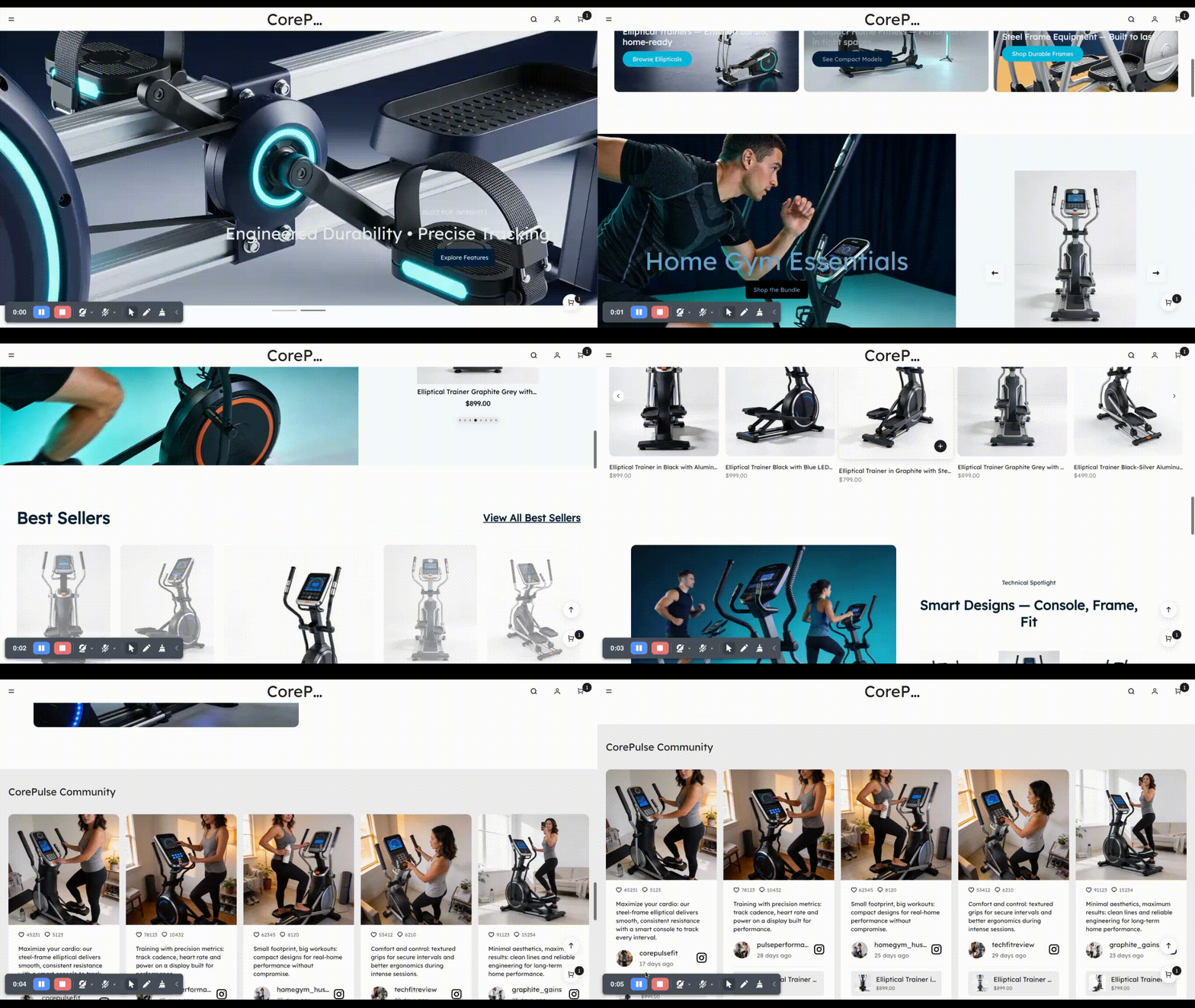
Setting up a dropshipping-ready store used to take days. With Shoplazza's AI store builder, it takes about 3–5 minutes. You tell the AI your product category, target market, and type of customer, and it generates a complete store, including homepage, product pages, cart, and checkout, ready to use straight away, no manual setup needed.
For dropshipping sellers, the startup cost is low when combined with Shoplazza's built-in dropshipping features. But the longer-term value is what matters more: every order placed on your own site is your customer data, not the platform's. Over time, that accumulates into something real — an audience you understand, a repeat purchase base, and the foundation for building an actual brand rather than just moving products.
Wrapping up
TikTok dropshipping has a low barrier to entry, but doing it well takes real effort. Product selection, supplier reliability, content — each part matters. If you haven't started yet, don't wait for perfect conditions. Pick 3 products, run through one complete order cycle, and you'll learn more from that than from any guide on how to dropship on TikTok Shop. Once you find something that sells consistently, drive TikTok traffic to your own site, owning your customer data, and growing a brand over time.
Frequently aksed questions about TikTok dropshipping
Q1: Is TikTok dropshipping legal?
Yes. Dropshipping is a widely used ecommerce model and TikTok Shop doesn't prohibit it. You do need to make sure your products meet the compliance requirements of your target market — for example, US product safety regulations or EU GPSR certification — and follow TikTok's own product listing rules.
Q2: Can I do TikTok dropshipping without a business license?
It depends on the market. If you don't have a business entity, you can still participate through TikTok's Affiliate program — no shop required. You apply for the product showcase feature (usually needs 1,000 followers), pick products from TikTok Shop's affiliate catalog, link them in your videos, and earn commission when someone buys. The supplier handles shipping and returns; you handle content. If you want to open an actual store, Southeast Asia is the most accessible entry point — individual registration is accepted in most markets there.
Q3: How long does shipping take for TikTok dropshipping?
It varies a lot depending on where your supplier is and whether they have local stock. Cross-border shipping from China to Southeast Asia typically takes 7–15 days, and to the US around 10–15 days. If your supplier has warehouse stock in the destination market, delivery can be 3–7 days. For the US market, TikTok currently requires first delivery within 6 business days.
Q4: What's the profit margin on TikTok dropshipping?
Typically 15%–25% gross margin, which is lower than self-stocked inventory (25%–40%). The margin depends heavily on your niche and pricing. Highly competitive categories tend to compress margins fast. Finding a differentiated product in a less crowded space tends to yield better results. Once you find a product that sells consistently, moving to inventory usually pushes margins up by 10–15 percentage points.
Q5: How do I handle returns in TikTok dropshipping?
Returns are one of the messier parts of dropshipping. If the order hasn't shipped yet, cancel and refund immediately — it's the simplest outcome. If the item was already delivered and the buyer complains about quality, you'll need to decide between a partial refund, full refund, or replacement, depending on your supplier agreement. A high return rate usually points to a product description or image problem, not just a logistics issue — worth investigating before scaling that product further.
Q6: Can you dropship on TikTok Shop?
Yes, you can. TikTok Shop supports dropshipping — you list products, take orders, and have your supplier ship directly to the buyer. You never handle inventory yourself. The key is making sure your supplier can meet TikTok's fulfillment deadlines (orders need to ship within 2 business days in most markets) and that your products comply with platform listing rules.