Amazon is one of the largest ecommerce platforms in the world, with over 300 million monthly active users. The platform didn't get built this way in one sitting. It's the result of years of back and forth between sellers and buyers. When buyers complained search results were off, Amazon rebuilt the search algorithm. When sellers complained checkout took too many steps, Amazon trimmed it down. Over the past year, as AI and GEO (generative engine optimization) have moved fast, Amazon has rolled out a wave of new AI features covering both sides of that relationship, buyers and sellers.
Amazon is a marketplace, and your own website is a brand-owned business, so the two aren't the same thing. But the path a visitor takes from landing on a page to completing checkout follows the same basic logic on both. If you're new to selling overseas and still not sure what your brand store needs, the features Amazon has already tested and rolled out make a solid reference list.
This post walks through the AI features Amazon has launched over the past year, then covers what a comparable setup looks like for your own store, including a couple of areas where a marketplace structurally can't compete with a brand-owned site.
Amazon's new AI ecommerce features
These features split into two groups. One set helps buyers find what they want faster. The other helps sellers run their business with less manual work.
Dynamic Canvas
- Function: an AI dashboard built for sellers
- Cost: free
- Available in: the US and UK
Seller Central used to only show fixed reports, so finding a specific number meant clicking through several pages. Dynamic Canvas, launched in March 2026, flips that process. Sellers type a question in plain language, something like "how is my product performing" or "what happens if demand drops 10 percent," and the AI generates the matching chart or scenario projection on the spot, along with an estimate of how revenue and cash flow would shift. The tool builds on Seller Assistant and runs on Amazon Bedrock, using Nova and Anthropic's Claude models. It's currently free for sellers in the US and UK.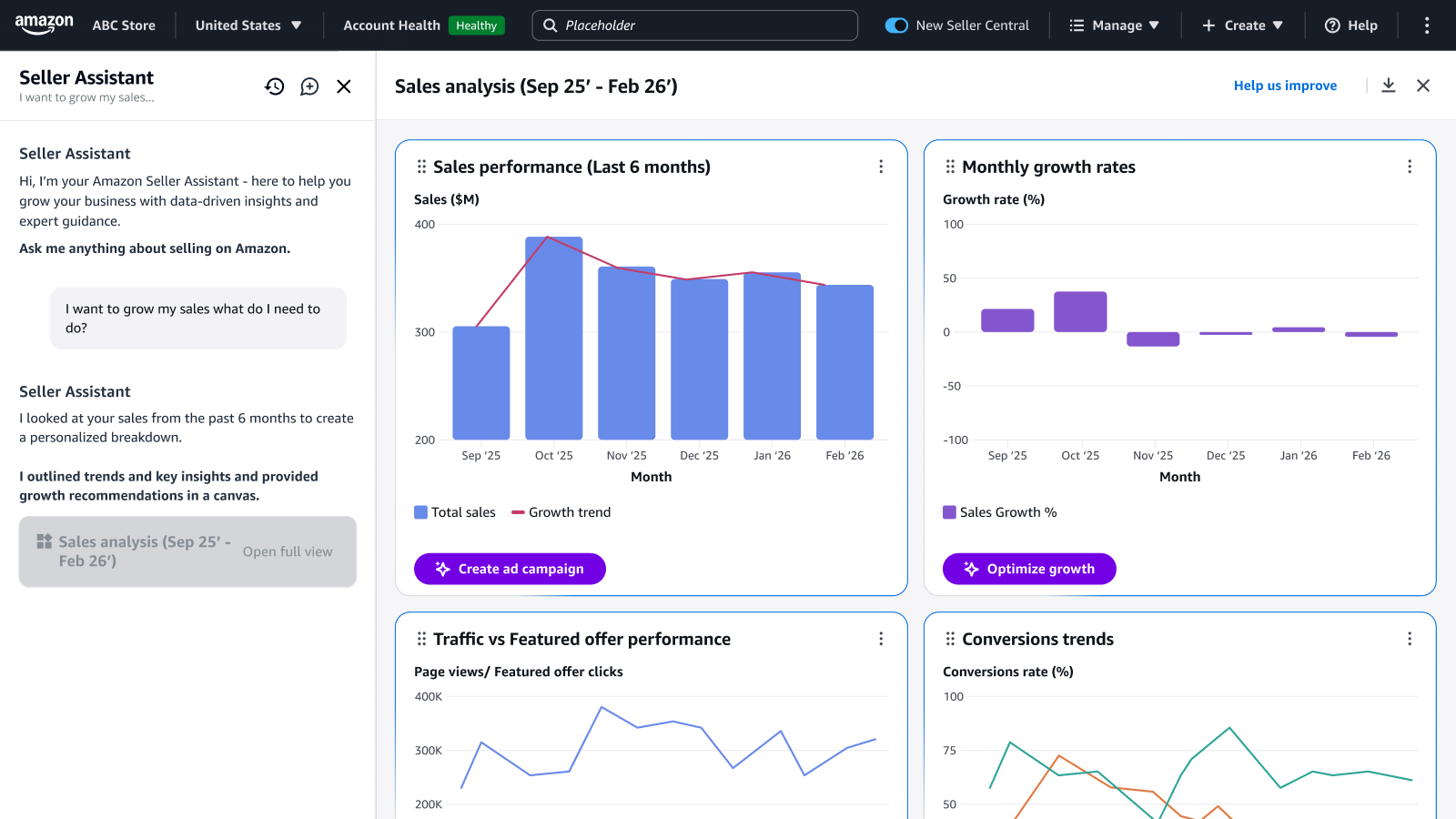
Source from Amazon News_Dynamic Canvas
Alexa for Shopping
- Function: an AI shopping assistant, formerly known as Rufus
- Cost: free
- Available in: the US
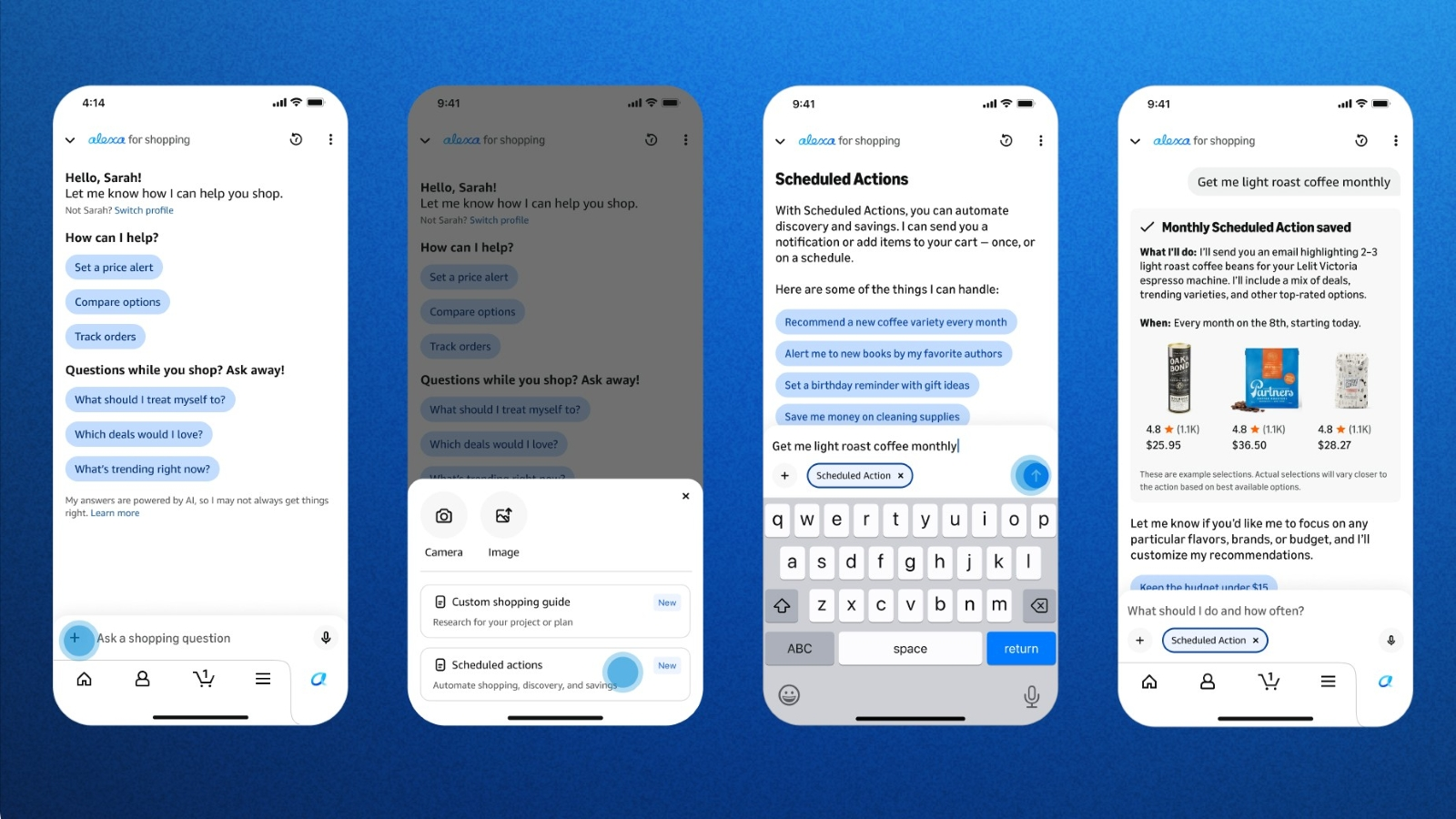
In May 2026, Amazon merged what used to be a standalone assistant, Rufus, with Alexa+, and renamed the combined tool Alexa for Shopping. It's built into the main search bar, product pages, and Echo Show devices, and buyers don't need a Prime membership or an Echo device to use it.
Source from Amazon News_Alexa for Shopping
One core feature is contextual search. Instead of typing exact keywords, a buyer can ask something like "a coffee maker for a small kitchen under $50," and the AI returns matches along with the reasoning behind each pick, plus a side-by-side comparison right in the results so buyers don't have to open several product pages to compare specs. Price history tracking shows 30-day and 90-day trends, so buyers can judge whether now is a good time to buy, and buyers can also set a target price alert or let the AI complete the purchase automatically once that price hits.
Beyond items Amazon sells directly, Alexa for Shopping can also use a feature called Buy for Me to purchase products listed on other websites that Amazon doesn't carry, using the payment and shipping details already saved to the buyer's Amazon account, so there's no need to re-enter anything.
AI product design
- Function: connects to Merch on Demand, turning a text description into a product design
- Cost: free, only pay for the physical product
- Available in: the US
On June 8, 2026, Amazon added this feature inside Alexa for Shopping, compressing what used to require a design tool, a print platform, and a fulfillment service into one text prompt and a few taps.
A buyer opens the Amazon Shopping app, taps the Alexa icon, or searches "customize" in the search bar and opens the dropdown option, then describes what they want in a sentence, matching t-shirts for a family gathering, or their dog reimagined as a lawyer in a '90s suit and tie. The AI generates a design in seconds, and buyers can keep refining it through follow-up prompts until they're happy with the result. Once the design is ready, it can go on t-shirts, v-necks, jerseys, hoodies, tank tops, or insulated tumblers, produced and shipped through Merch on Demand with Prime delivery, and Amazon handles production, fulfillment, shipping, and customer service end to end. Buyers can also share a link to their design so friends can order the same item separately.
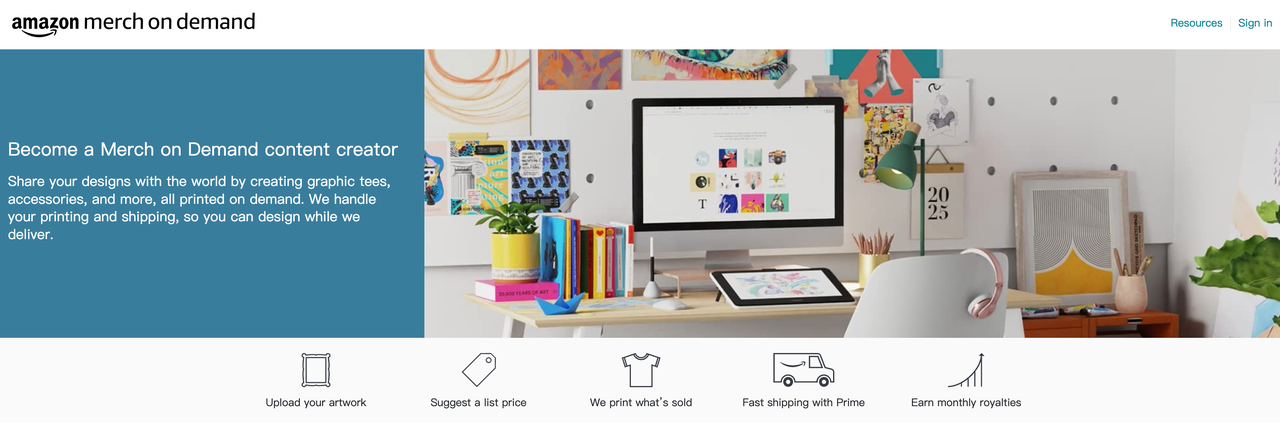
Every design has to follow Amazon's content policy, and anything involving a trademark or copyrighted material gets flagged before checkout. The feature is currently US-only, available on both web and the app.
This feature is clearly aimed at existing print-on-demand platforms like Printful, Shutterfly, and Etsy, folding a process that used to live across several separate platforms into Amazon's own first-party shopping experience.
Video Generator
- Function: turns a single product photo into an ad video
- Cost: pricing not publicly disclosed, part of the Amazon Ads toolset
- Available in: the US, Canada, Mexico, the UK, France, Germany, Italy, Spain, India, and Australia
A seller uploads one product photo, and the AI generates a video highlighting the product's selling points for use in Amazon Ads. Making a video ad used to mean either shooting and editing it yourself or hiring an outside team. Now that entire process gets reduced to uploading one image, and the AI builds out the shot sequence and copy around the product's core selling points, producing a video ready to run as an ad. This lowers the barrier for smaller sellers who don't have a content team or budget for video production, letting them use video ads, a format that typically converts better, at a much lower cost.
Amazon Lens
- Function: search for matching products by photo, uploaded image, or barcode scan
- Cost: free
- Available in: the core features (photo capture, image upload, barcode and QR scanning) work in most countries, while Lens Live and the Rufus-based AI assistant are currently US-only
Buyers can photograph an item, upload an image, or scan a barcode to find the same product or something similar in Amazon's catalog. This feature has existed for a few years, and the 2026 update mainly focused on two areas, real-time scanning and creative search.
Lens Live, launched in 2026, supports live scanning. Point the camera at an item and a scrollable carousel of matching products pops up on screen, letting buyers add to cart or save without leaving the camera view, which also works for comparing prices while browsing in a physical store. Around the same time, Amazon added a feature that generates AI images directly in the search bar as buyers type, so the image updates in real time alongside the text, helping buyers visualize the style they have in mind before they click through to an actual product.
There's also Shop by Style, which groups clothing and accessories into clickable style collages, something like "urban minimalist" or "soft elegance." Clicking one of these collages brings up a full set of outfit or pairing recommendations built around that look. iPhone users can also add Amazon Lens to their lock screen widget, so it opens straight to the camera without needing to launch the app first.
Ecommerce and support features your own store should have
Every one of these Amazon features has a version you can set up on your own store, but that depends on whether your ecommerce platform has the capability built in natively or needs a third-party app added on top. Using Shoplazza as an example, most of these are already available. Here's how each one lines up.
Athena
- Function: an AI dashboard built for sellers
- Cost: free
- Available for: all Shoplazza merchants worldwide, no extra installation needed
Athena is the AI operations agent built into the Shoplazza admin, available around the clock. Like Dynamic Canvas, it goes beyond conversation, it can actually carry out tasks in your backend. Merchants can ask a question in plain language, like which category is trending or which products are running low on stock, and Athena generates the matching chart or visualization on the spot, the same "ask a question, see a chart" logic as Dynamic Canvas.
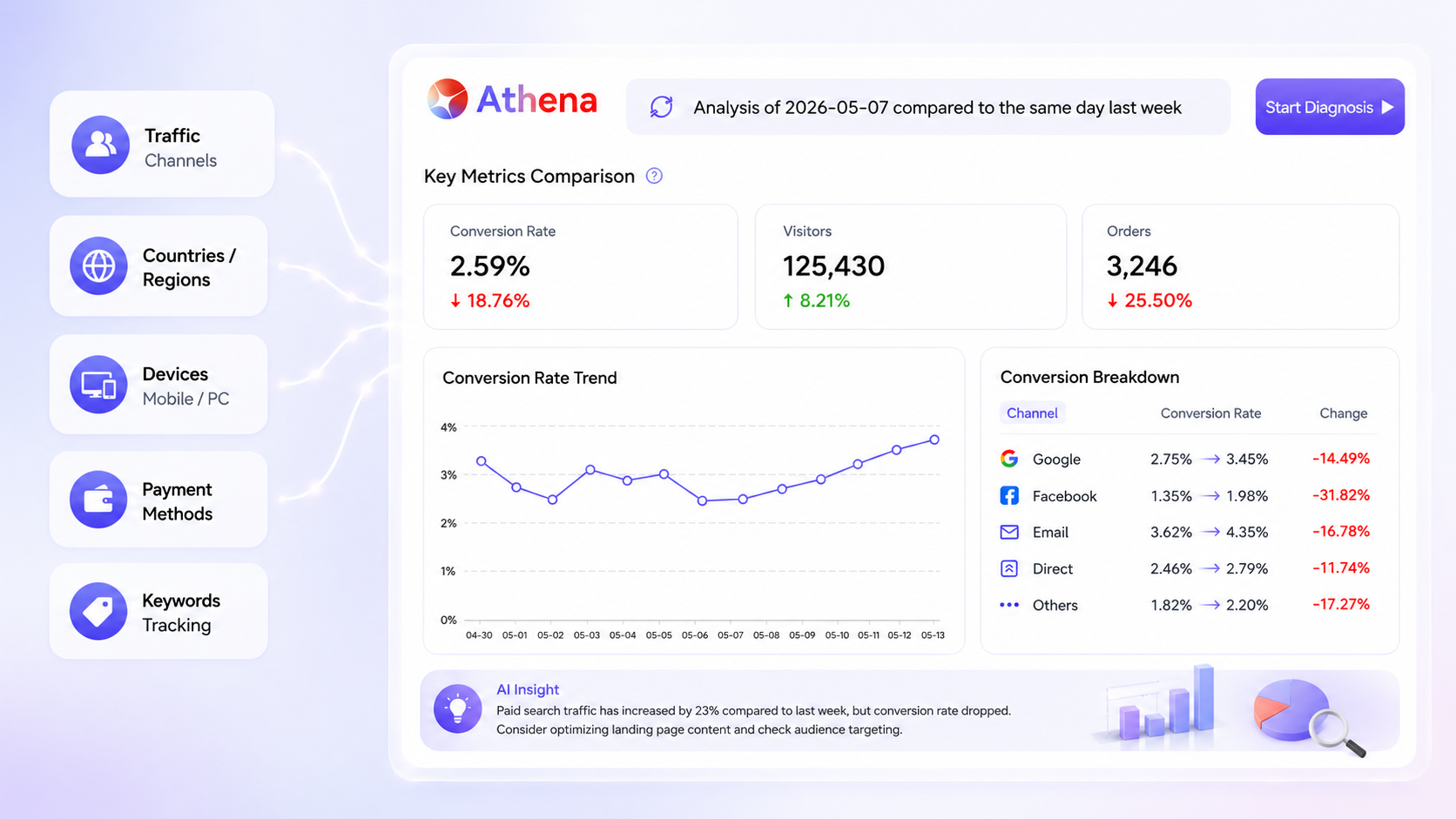
Athena's scope goes wider than data analysis alone. It can handle product management, including bulk listing and editing from a URL, image, spreadsheet, or AliExpress source, create orders in bulk, and configure discounts and shipping rules. Merchants can also ask Athena directly when they run into an operational question. For anything involving money or inventory changes, Athena shows a preview and waits for confirmation before acting, automatically flagging anything that looks risky to prevent costly mistakes.
LazzaStudio
- Function: an AI product image generation tool
- Cost: billed by generation, with paid rates starting around $0.019 per image, and 100 free credits for new accounts
- Available: all Shoplazza merchants worldwide, no extra installation needed
Where Amazon's AI product design only applies to print-on-demand items through Merch on Demand, LazzaStudio covers a much broader need. A merchant uploads a real photo of the product, and the AI generates professional-quality product shots and lifestyle scenes without a photo studio, with output up to 4K using the GPT Image 2 model.
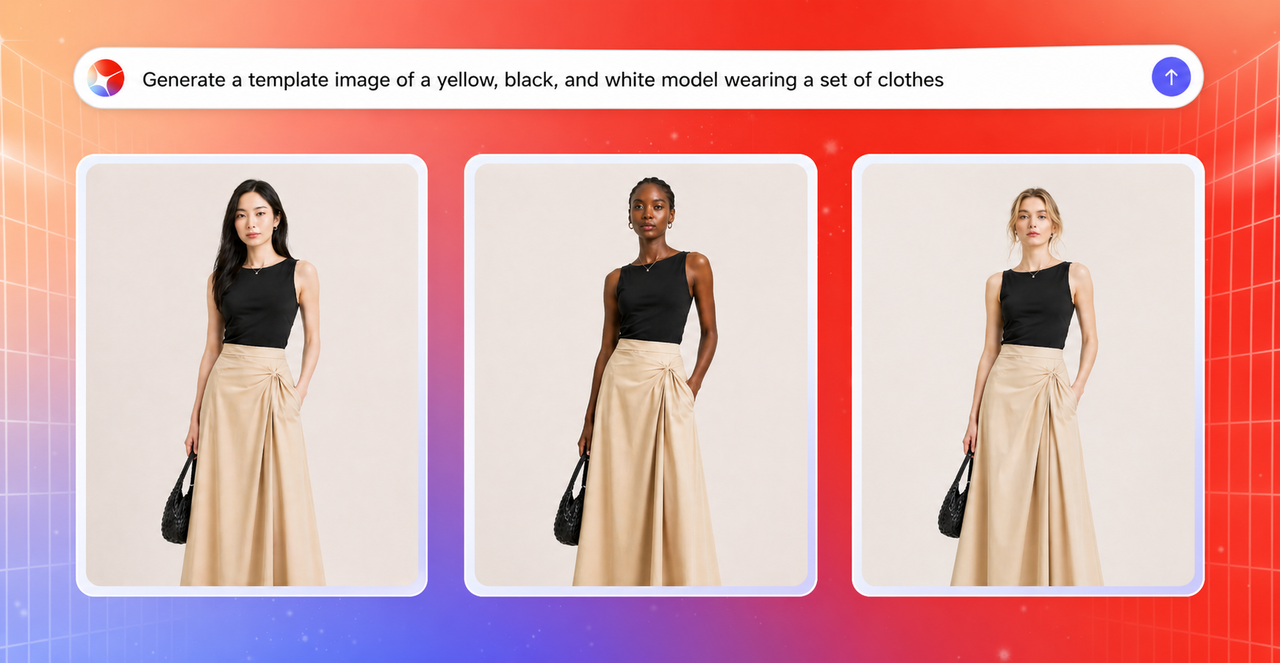
Merchants can set up a Brand Bible first, locking in their brand's visual tone, color palette, and style, so every new image generated afterward stays consistent without having to reset the parameters each time. Generated assets save automatically to a cloud asset library for reuse, and the tool also supports upscaling and watermark removal for older or low-resolution product photos. The images meet standard commercial use requirements and can go straight into store listings or ad campaigns.
Worth noting, labeling requirements for AI-generated content differ by country, and some markets may require product photos or ad creative to be labeled as AI-generated, so it's worth checking the specific rules for your target market before running anything live.
Intelligent product recommendation
- Function: an AI shopping assistant powered by AI-driven personalization
- Cost: free
- Available for: all Shoplazza merchants worldwide, installed as an app
Intelligent product recommendation lets merchants configure recommendation modules across different pages in the store, using AI or custom rules to surface related products to visitors. It covers personalized recommendations based on visitor behavior, spanning pre-purchase, mid-purchase, and post-purchase stages, and merchants can also set manual rules based on product tags, sales volume, or stock levels instead of relying entirely on the algorithm, with the option to adjust anytime. Recommendation modules can sit on the product page, homepage, or cart page.
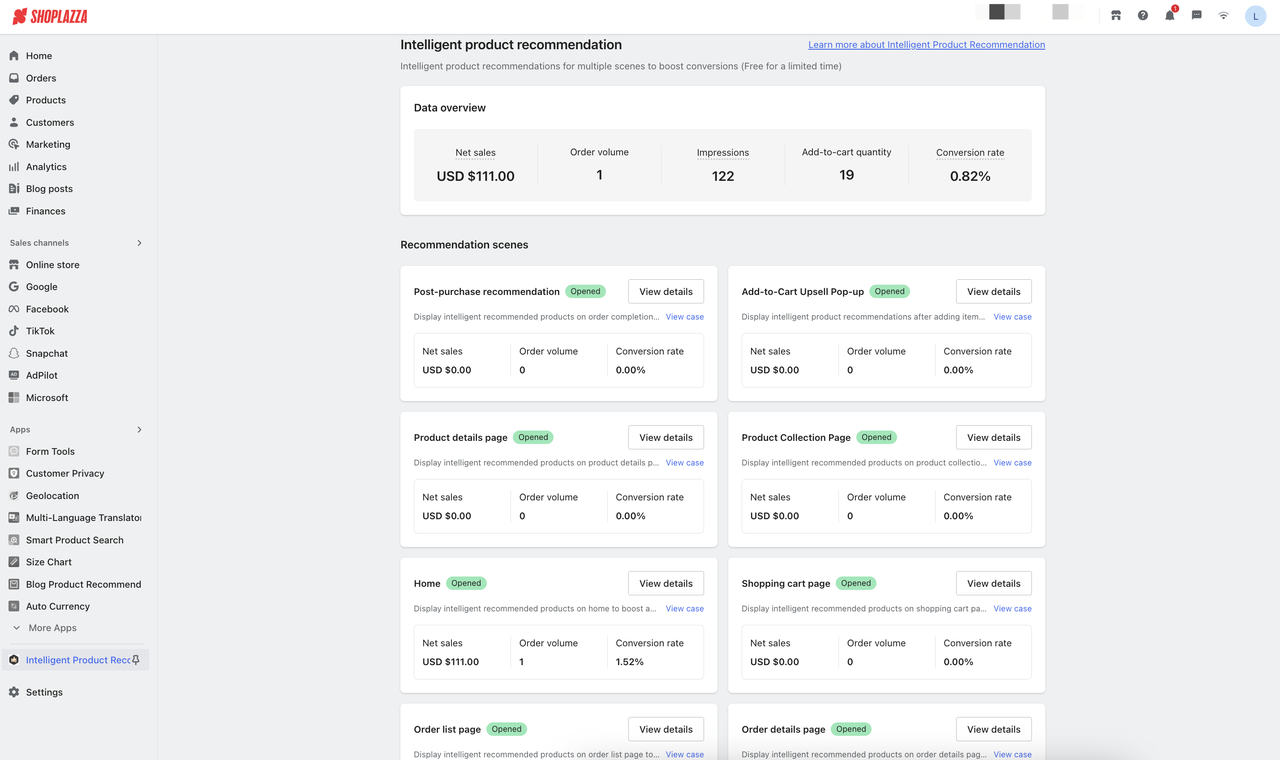
In the app's own reviews, one beauty tools store mentioned that different skincare needs led to different matched device bundles after switching on AI recommendations, and a coffee store said the feature recovered a meaningful amount of sales from abandoned carts.
Print-on-demand (POD)
- Function: lets shoppers customize their own designs, or lets merchants sell customized products made to order
- Cost: depends on the specific POD platform's pricing
- Available for: all Shoplazza merchants worldwide, installed as an app
Amazon closes the loop from design to fulfillment with AI-generated designs paired with Merch on Demand. Your own store can follow the same print-on-demand model by connecting to a POD platform, so merchants don't need to stock inventory upfront, and products get made and shipped only after an order comes in, which works well for testing a new product before committing to real sales volume.
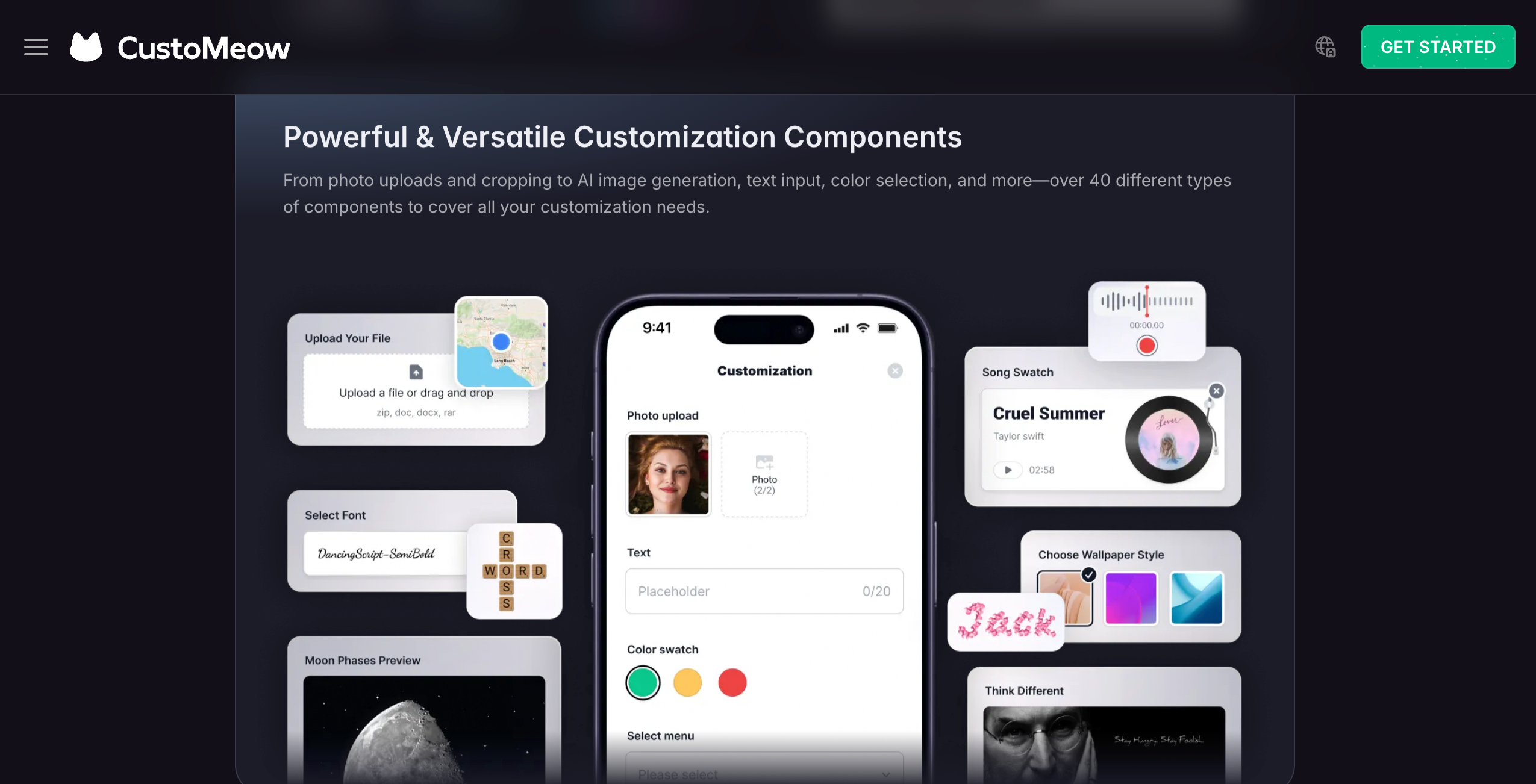
Take CustoMeow as an example. The platform connects to global supplier networks including Printful and Printify, handling production and fulfillment on the back end so merchants don't need to manage that supply chain themselves. CustoMeow also has a few built-in AI capabilities on the design side that work similarly to Amazon's AI product design, letting a buyer upload one photo and go straight from idea to finished product.
That breaks down into three pieces:
- First, AI image filters and generation, with a built-in image generation model, app-specific AI filters that convert a photo into different art styles, and real-time image generation.
- Second, smart background removal, offering a background removal tool along with Cutout 1.0 and Cutout 2.0, which can quickly isolate faces, including children and pets, to pull out usable design assets.
- Third, 3D bobblehead customization, which turns any photo into a bobblehead-style figure and generates 2D, 3D, and photorealistic mockups so buyers can see roughly what the finished product looks like before ordering.
These capabilities follow the same logic as Amazon's AI product design, turning what used to require professional design software into a single photo upload, lowering the barrier for buyers who want to customize something themselves.
Smart product search
- Function: shows search history, suggests related results, and lets merchants set custom sort rules
- Cost: free
- Available for: all Shoplazza merchants worldwide, installed as an app
Amazon Lens relies on photo recognition to match items across a catalog of hundreds of millions of products, but your own store doesn't need that heavy a tool, since your SKU count is nowhere near Amazon's scale, and a lighter search setup covers the need just fine. This Smart product search shows a visitor's search history in the search bar, lets merchants set custom sort rules by price, sales volume, or newest arrivals, and supports multi-dimension filtering. Merchants can even manually tag specific products with target search terms, and the tool also auto-suggests high-frequency search terms for quick display.
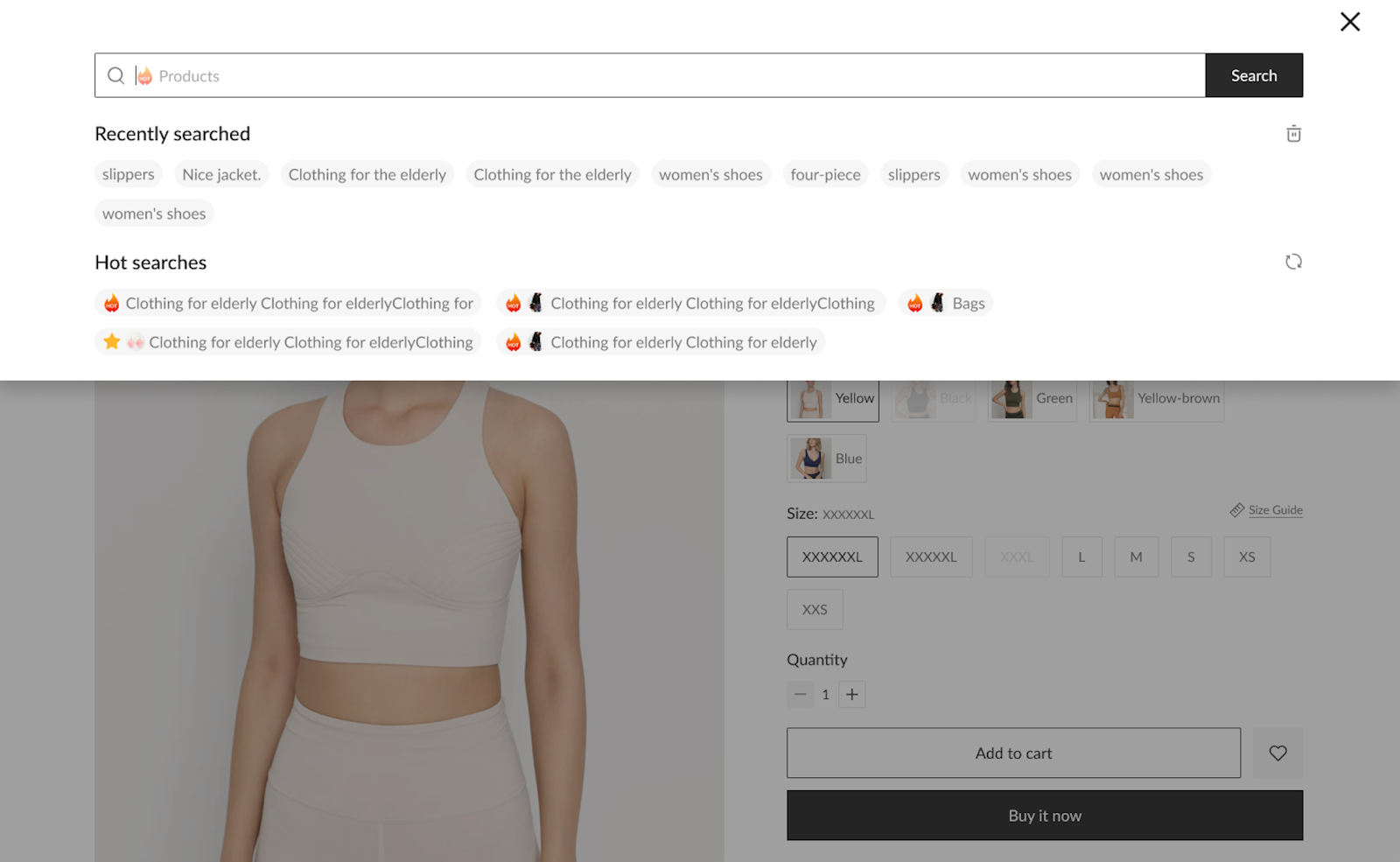
The more important piece is related-result suggestions. When a search term doesn't exactly match a product, the system automatically surfaces related results, cutting down on visitors who search, come up empty, then message support asking if a specific item is in stock, and reducing how often shoppers hit a zero-result page.
In the app's reviews, one merchant said customers messaging support to ask about specific products dropped noticeably after installing it, and a DIY craft store said related-result suggestions recovered some of the visitors who would have otherwise bounced from an empty search.
Loyalty and Push
- Function: membership points and repeat purchase management, something a marketplace like Amazon or eBay structurally can't offer
- Cost: free tier available, paid plans start at $27 a month for the Starter tier, with a 21-day free trial of the Pro tier on first install
- Available for: all Shoplazza merchants worldwide, works across every category, installed as an app
On Amazon, the traffic and customer data belong to the platform, so a seller can't turn buyers into an owned audience they can reach again directly. Your own store works the opposite way, visitor data and purchase history belong to the merchant.
Loyalty and Push combines membership, points, and email marketing into one tool. It starts at signup, where a new customer who opts into membership at checkout gets points immediately, and those points convert straight into a discount on that first order rather than something they'd only use on a future purchase, so joining itself comes with a real, immediate benefit that makes conversion easier.
Once someone's a member, the AI handles tier assignment automatically based on order value, purchasing behavior, and preferences, though merchants can adjust manually too, and a dozen-plus segment templates make it easy to isolate groups like high-value active members or people with items sitting in an abandoned cart. From there, merchants can build campaigns targeted at specific segments, and the system generates a matching email automatically, with product recommendation inside each email personalized per recipient, so the same campaign email shows different products to different members based on what they've bought or browsed before.
Deciding whether to discount, and by how much, also gets handed to the AI, which calculates how much of a discount would lift spending without eating too far into margin, rather than merchants guessing at a number. From the point-based signup incentive, through segmented campaigns, to the discount decision, the whole loop closes end to end.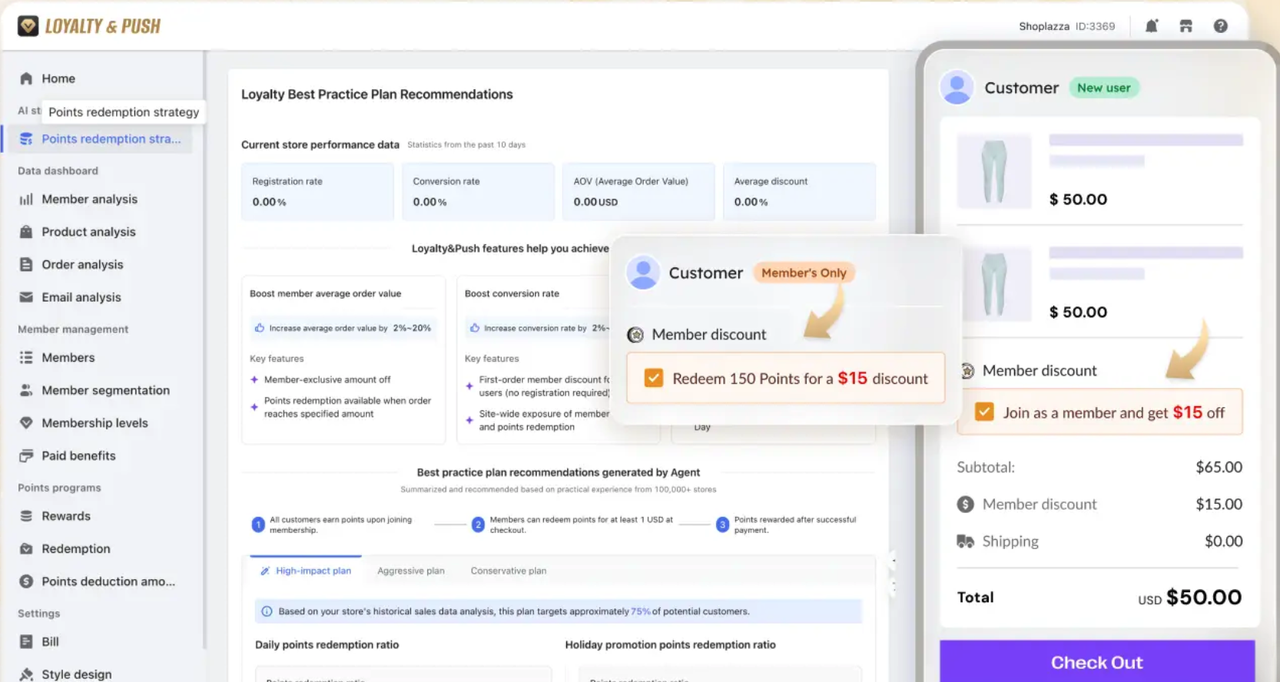
Live Shopping and Shoppable Videos
- Function: live and short-video shopping, an optional add-on rather than a must-have
- Cost: billed by viewing minutes, Start tier from $97 a month, 14-day free trial
- Available for: all Shoplazza merchants worldwide, works across every category, installed as an app
Live Shopping and Shoppable Videos isn't something every store needs by default. It fits best for merchants who already have short-video or livestream content built up on TikTok or Instagram. It covers two core capabilities. One is in-store livestreaming, where products are pinned directly to the stream so viewers can add to cart without leaving the broadcast, with support for multiple hosts and stream replays. The other is shoppable video, which turns existing TikTok or Instagram clips into a clickable, purchasable format, reusing content that's already been shot rather than creating something new.
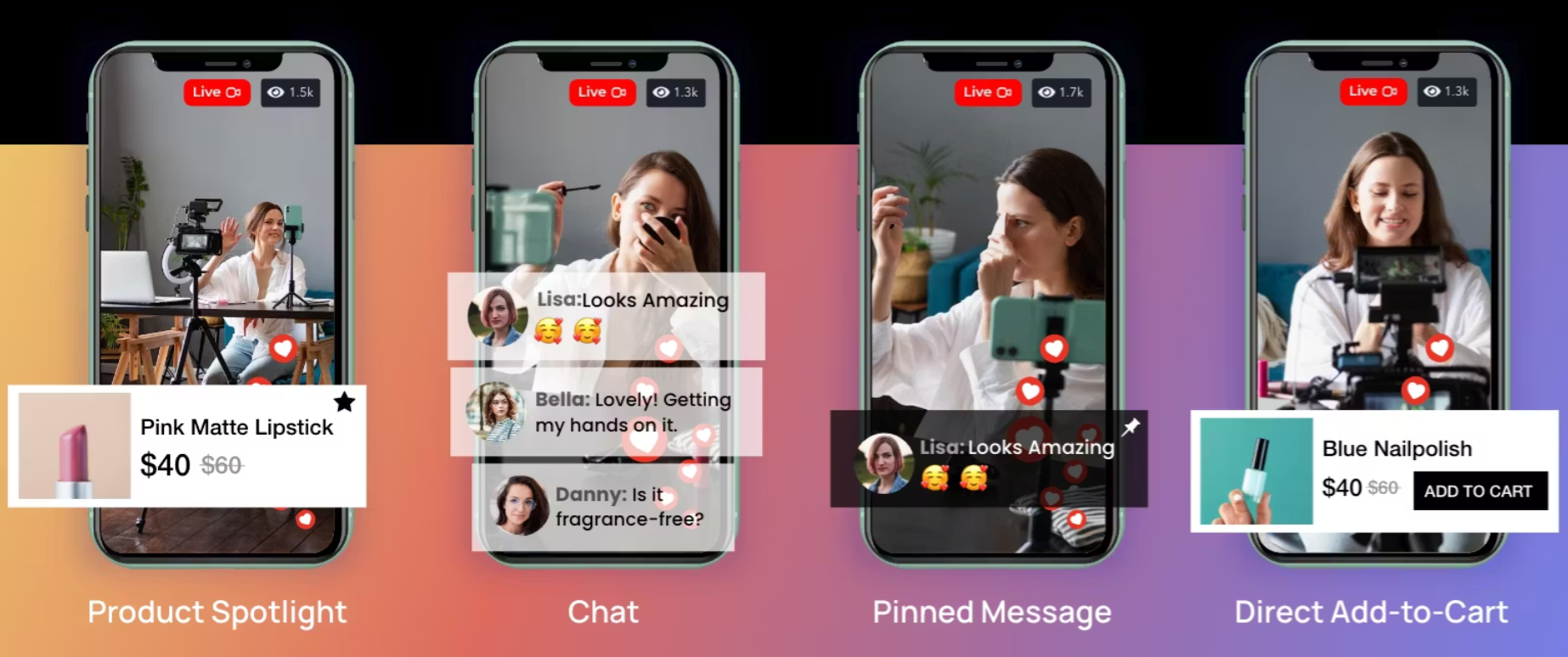
Pricing scales by viewing minutes, with the Start tier covering 15,000 minutes, Grow covering 50,000, and Pro covering 100,000, each with a 14-day free trial. Merchants without an existing library of short-video or livestream content shouldn't feel pressure to add this in.
The bottom line
What Amazon has tested and validated here really comes down to solving one thing on each side, helping buyers decide faster and helping sellers run the business with less manual effort. You don't need to copy every single feature onto your own store. Pick what actually fits your category and team size, starting with the basics like an AI dashboard and smart product recommendation, since those carry the most immediate value, and leave content-heavy features like Live Shopping until your team has actually built up that kind of content. Shoplazza is building toward an AI agent-powered ecommerce operating system, and most of these capabilities are either built in natively or available as an app, so there's no need to build any of this from scratch, just configure and go.
Frequently asked questions about AI ecommerce features
Q: How does an AI dashboard on your own store compare to Amazon's Dynamic Canvas?
The underlying capability is similar, both let you ask a question in plain language and get a chart back in real time. The main difference is data scale, since Amazon's platform traffic is far larger than any single store, which supports more detailed scenario modeling. For your own store, the core need is usually just visibility into conversion and repeat purchase numbers, and Athena already covers that.
Q: Can a team without design skills still offer AI product customization?
Yes. POD apps connected to platforms like CustoMeow have built-in AI design generation and background removal, so a buyer or merchant can upload one photo and get a finished design without needing graphic design experience, and production and fulfillment run through the POD platform itself, so there's no supply chain to manage.
Q: Does intelligent product recommendation conflict with the membership program in Loyalty and Push?
No, they actually work together. Intelligent product recommendation handles what a visitor sees while browsing, and Loyalty and Push handles what gets recommended in emails after someone's segmented as a member. The two tools operate at different points in the journey, and running both together covers the full path from an anonymous visitor to a registered member.
Q: Is it worth setting up these AI features on a small store?
You don't need everything at once. Basics like a dashboard, product recommendation, and product search cost little to set up and work fine even with modest traffic. Something like Live Shopping, which needs both content and an ongoing paid plan, can wait until your team and content library catch up.
Q: Is there a copyright risk with AI-generated product images or designs?
Amazon has already run into this, flagging designs involving third-party trademarks or copyrighted material before checkout. The same risk applies on your own store. When generating assets through LazzaStudio or a POD app, merchants should check that generated content doesn't involve someone else's trademark or copyrighted likeness, to avoid a dispute after the product goes live.