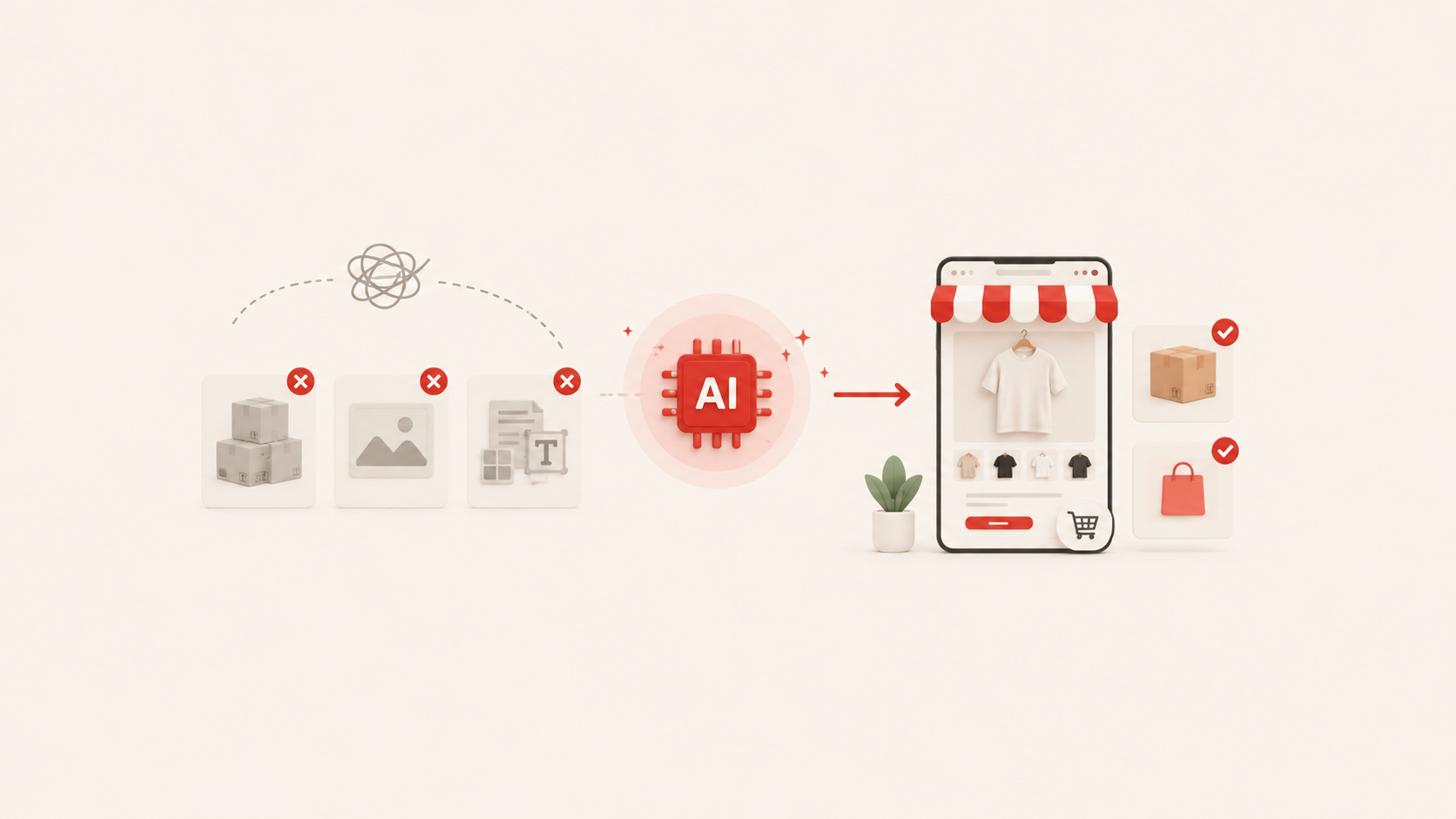
AI tools are changing how dropshipping actually works. Store setup, product copywriting, and listing uploads that used to take weeks can now get done in hours. That's genuinely useful — but it also creates a misconception. If AI can handle so much, does that mean you can skip most of the work?
Not quite.
What AI tools handle well is execution: repetitive, process-driven tasks that follow a consistent logic. What they can't replace is judgment — deciding whether a product is worth selling, whether a supplier is reliable, whether your policy page actually matches how your business operates. Skipping those judgment calls doesn't save time. It creates problems that show up later, when they're harder and more expensive to fix.
This article breaks down exactly where AI earns its place in a dropshipping workflow, and where you still need to be the one making the call.
AI vs. manual: a quick breakdown
| Step | Verdict | Why |
| Store setup | Automation | AI generates a complete, ready-to-use store |
| Product copy | Automation (review required) | AI generates in bulk; human checks accuracy |
| Product images | Automation | AI creates scene photos that solve the duplicate-image problem |
| Supplier and system integration | Automation | Native integrations handle inventory and order sync automatically |
| Routine customer service | Automation | AI handles high-frequency, repetitive inquiries |
| Product validation | Manual operation | AI data has a time lag; final judgment requires a human |
| Supplier vetting | Manual operation | Shipping speed, quality, and returns need to be verified through test orders |
| Policy page content | Manual operation | Terms must match how your business actually operates |
| Payment and tax setup | Manual operation | Rules vary by market; misconfiguration creates compliance risk |
| Pre-launch end-to-end testing | Manual operation | Last chance to catch problems before they affect real buyers |
| Complex complaints and negative reviews | Manual operation | Communication strategy requires human judgment |
| Ongoing data review | Manual operation | Deciding what to adjust and act on requires a human |
What AI can handle?
The steps below are ones where AI tools can now do most of the heavy lifting. That doesn't mean zero human involvement — it means the bulk of the work gets done by the tool, and you just review and confirm before moving forward.
Store setup
For sellers without a technical background, building a store is often the slowest part of getting started. Putting together a homepage, product pages, about page, policy pages, navigation, checkout flow, and mobile layout from scratch can take a week or more.
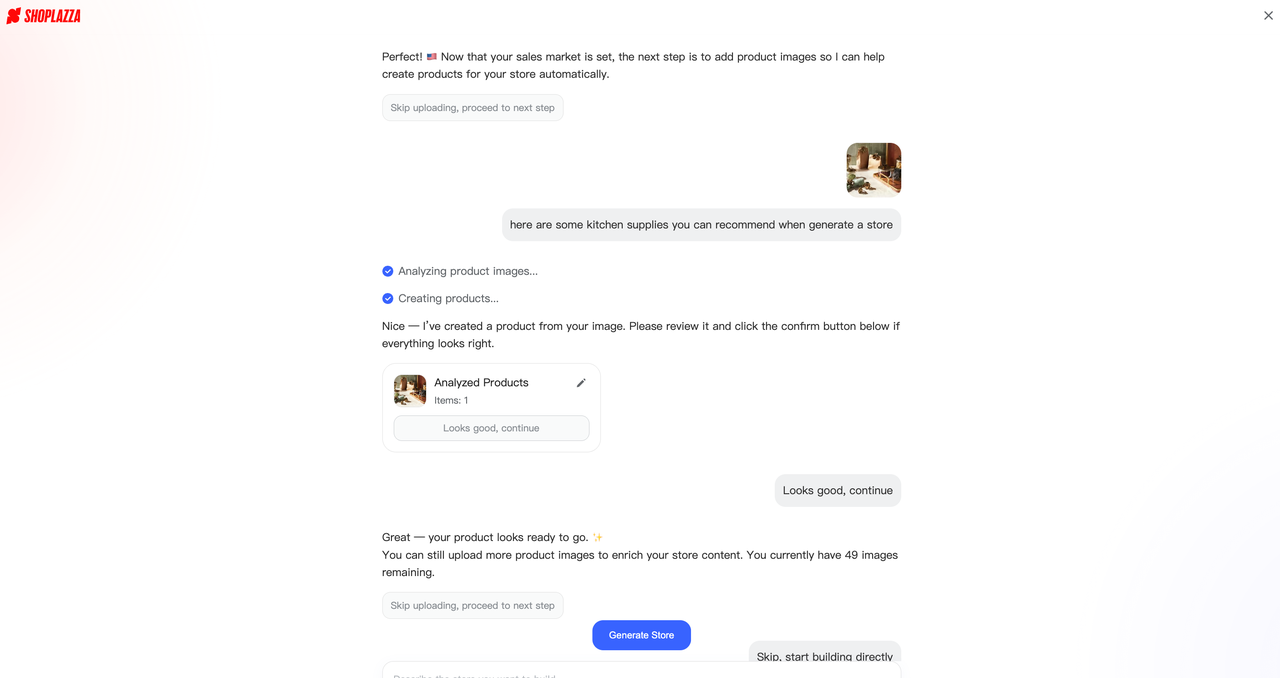
Shoplazza AI Store Builder offers three different starting points depending on where you are in the process:
- The first is conversational generation. If you don't have a specific product category yet, you can describe your intended niche, target market, and general style preferences in a chat interface. The AI builds out a complete store from that input — homepage, product pages, supporting pages, cart, and checkout. If you're targeting English-speaking markets, the store generates in English. If you're going into Japan, Thailand, or another non-English market, the AI generates the store in that language, skipping the need for a separate translation step later.
- The second is image-based generation. If you already have a product you want to test, you can upload product images directly. The AI identifies the product, generates the corresponding pages, and suggests a category structure. It's the faster path for sellers who already know what they want to sell.
- The third is reference URL generation. If you've seen a competitor store with a layout or aesthetic you like, you can submit the URL. The AI uses it as a style reference and generates a store with a similar visual direction, without you having to describe it from scratch.
The AI handles the storefront. What you sell and how you price it — those are still your calls to make.
Product copy
Writing product descriptions at scale is one of the most time-consuming parts of running a dropshipping store. If you're listing dozens of SKUs at once, manually writing titles, selling points, and SEO descriptions for each one is slow and inconsistent.
AI can generate and optimize product titles and descriptions based on product images, AliExpress links, spreadsheets, or competitor pages. Shoplazza AI operations agent Athena supports product creation from multiple source types and generates SEO titles and descriptions automatically, cutting out the need to fill in each field manually.
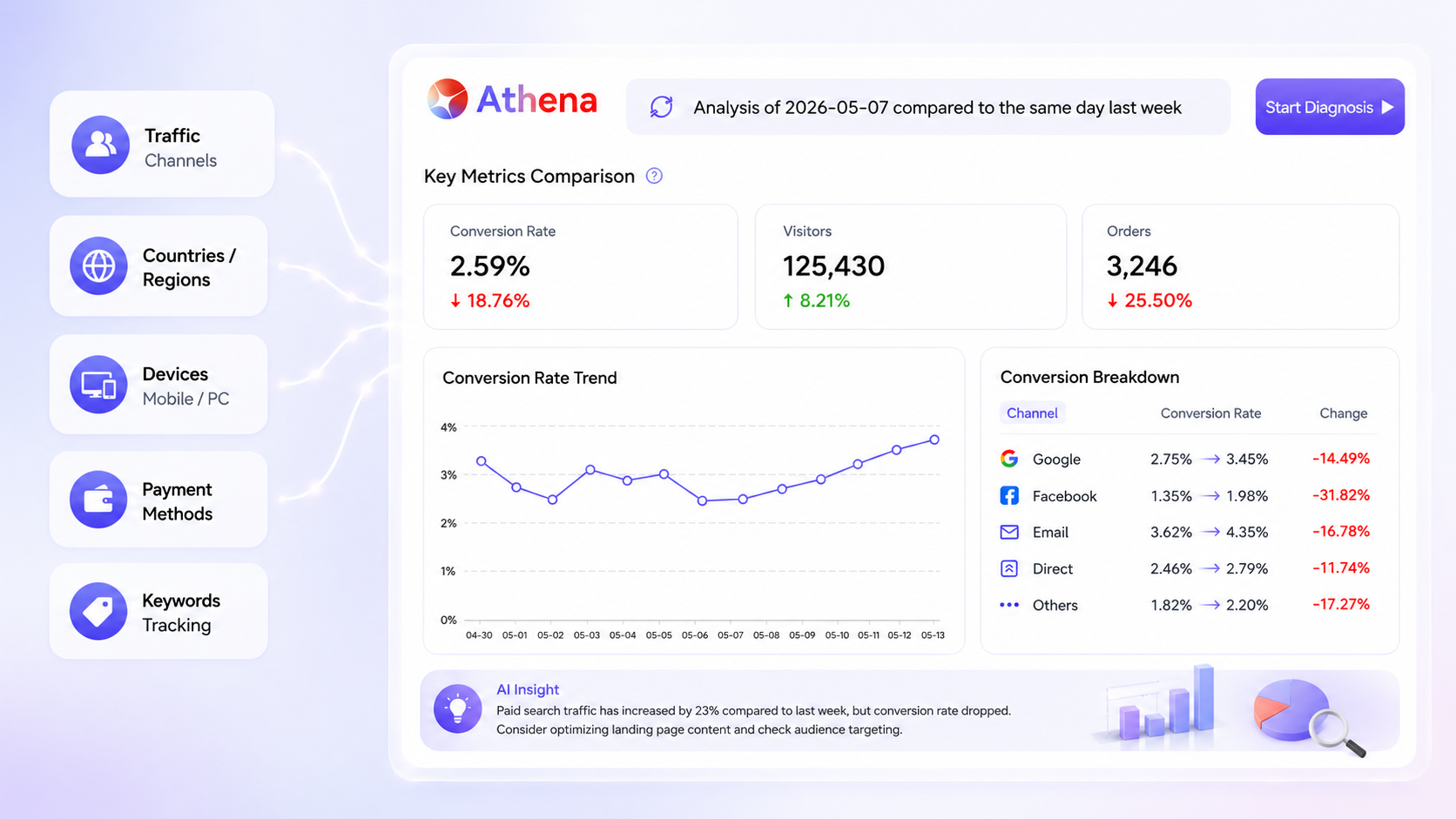
One thing worth noting: AI-generated copy is a first draft. Before anything goes live, do a quick read-through to confirm the selling points are accurate and there are no obvious factual errors or awkward phrasing.
Product images
Most dropshipping sellers use the same supplier images as everyone else. The same product, the same photos, listed across dozens of stores. Buyers recognize it immediately, and when everything looks identical, price becomes the only differentiator. Margins get thin fast.
Shooting your own photos is one solution, but it's not a cheap one. Studio rental, models, post-production — the cost and time add up quickly. For sellers still in the product-testing phase, it's hard to justify that investment before you know whether the product will actually sell.
LazzaStudio, Shoplazza's AI image generation tool, is built for exactly this stage. You upload a white-background supplier image, choose a scene style, background environment, and lighting direction, and the AI generates commercial-quality scene photos at 2K or 4K resolution — ready to use on product pages and in ad creatives. No photographer needed, no post-production required. New users get 100 free credits to start.

In a market where most stores look the same, different images are one of the few things that can make your store look genuinely distinct. It matters more than most sellers realize.
Supplier and ERP integration
A lot of the day-to-day work in dropshipping is manual data transfer — copying order details from your store into your supplier's system, then pasting tracking numbers back. At low volume it's manageable. As orders scale, it becomes both time-consuming and error-prone.Which supplier you connect to depends on your stage:
- If you're still testing product categories, CJdropshipping has broad coverage across niches and works well for exploring before committing to a direction.
- If you're already focused on fashion, Kakaclo specializes in women's apparel and is a better fit for fashion-specific stores.
- If you want branded packaging to differentiate the unboxing experience, EPROLO supports custom packaging so buyers don't receive a generic box.
- If you're running a print-on-demand model, Customall produces after the order comes in, with no inventory required.
Shoplazza integrates natively with all of these. Product listing, inventory sync, and order forwarding can all run automatically once the connection is set up.
For sellers managing higher order volumes, ERP systems can centralize order management, fulfillment, and multi-channel data in one place. Shoplazza supports integration with Mabang ERP and others. Mabang also pulls in TikTok Shop product data and creator sales rankings, which is useful if you're running both TikTok and a DTC store simultaneously.
Routine customer service
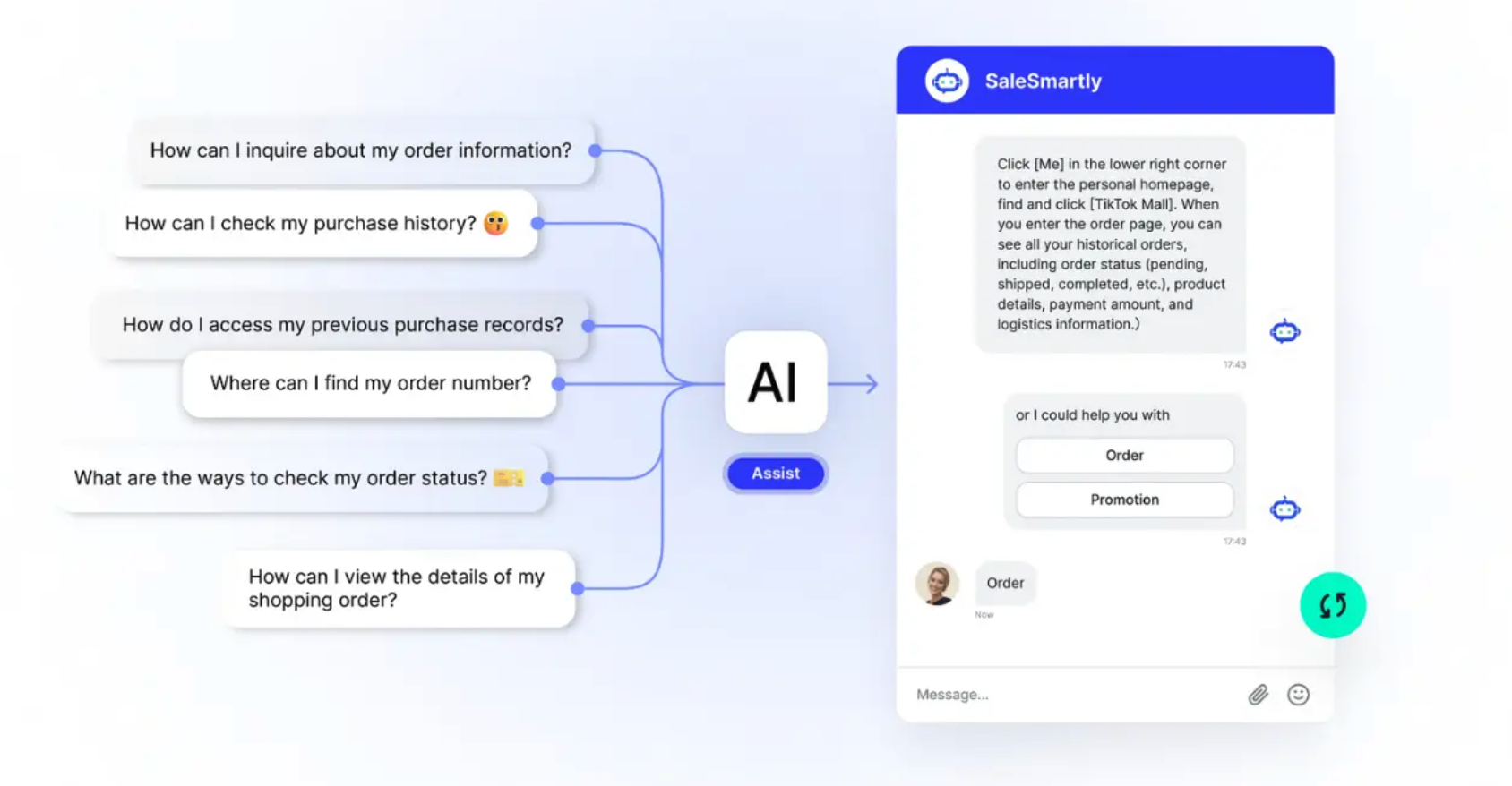
A significant portion of customer inquiries follow predictable patterns. "When will my order ship?" "Do you accept returns?" "How do I choose the right size?" These questions have consistent answers, and they don't need a human to handle every single one.
AI customer service tools can identify these standard queries and generate responses automatically, typically covering 70% to 80% of daily support volume. For sellers running their stores solo without a dedicated support team, this kind of automation frees up real time to focus on the situations that actually require judgment.
What you still need to do yourself?
Most repetitive execution work can go to AI tools. But some parts of running a dropshipping store aren't about execution — they're about judgment. No tool can reliably replace these, and skipping them tends to create problems that compound over time.
Product validation
AI product research tools work by scanning sales data, social media trends, and search volume changes to surface fast-growing categories. That's useful for initial scanning, but it has a fundamental limitation: these tools work with historical data, not forward-looking demand signals. By the time a product appears on an AI trend list, every seller using the same tool has seen the same data. Competition is usually already accelerating.
Product validation still needs a human to:
- Check Google Trends to confirm whether demand is sustained or a short-term spike
- Search for the product in your target market to assess how many competitors are already selling it and at what price
- Calculate actual profit margin after ad costs to confirm the product is worth running
- Assess whether the product fits the buying habits and use cases of your target audience
AI tools can help you scan faster. The judgment calls above are still yours to make.
Supplier vetting
Finding a product with market demand and finding a reliable supplier to fulfill it are two separate problems. A supplier's shipping speed, product quality consistency, return policy, and responsiveness directly determine what your buyer's experience looks like. Based on feedback across multiple dropshipping communities, a significant share of negative reviews and returns trace back to supplier execution issues — not the product itself.
Before you list anything, place a test order and walk through the entire fulfillment process yourself. When you reach out to potential suppliers, get clear answers on:
- Shipping times under normal conditions, and whether peak seasons cause delays
- Which logistics carriers they use and average delivery times to your target market
- Whether they can ship without supplier branding or Chinese labeling, and whether custom packaging is available
- Their process for damaged or incorrect shipments, and who covers return shipping costs
- Whether high-selling SKUs stay consistently in stock, and how much notice they give for stockouts
- What channel they use for daily communication and how quickly they typically respond
The answers to these questions determine whether you can fulfill orders reliably once sales come in. A test order plus direct responses from the supplier tells you more than any platform rating system.
Your policy page content
AI can generate the structure of a return policy, shipping policy, and privacy policy. The actual terms need to be filled in based on your specific supplier conditions and target market requirements.
That sounds straightforward, but it's where a lot of sellers make a costly mistake. If your supplier only accepts returns within 15 days and your policy page says 30-day no-questions-asked returns, you have a problem the moment a buyer files a return request. At best it leads to a complaint. At worst, a payment processor flags it as a policy violation and affects your ability to collect payments.
Different markets have different expectations and legal requirements:
- In the US, buyers are accustomed to 30-day return windows as a baseline expectation. If your supplier only supports 15 days, state that clearly on your policy page and note it on product pages. Mismatches between your stated policy and your actual process are a common trigger for chargebacks.
- In the EU, buyers have a legal right to at least 14 days of returns under consumer protection law. You cannot restrict or shorten this in your policy. GDPR also requires your privacy policy to clearly state what data you collect and how it's used.
- In the UK, the same 14-day return right applies post-Brexit, and product descriptions must be accurate — your product pages and policy pages need to be consistent with each other.
- In Australia, the Australian Consumer Law gives buyers the right to a refund or replacement for products with major faults. "No refunds" or similar limiting language in a policy page doesn't just create friction — it violates local law.
- In Southeast Asia, consumer protection frameworks vary significantly by country. Buyers in this region tend to care more about shipping transparency than return policy detail. Your policy page should clearly state delivery time ranges, how to track orders, and how to contact you for returns. Vague information is a more common source of disputes than policy terms.
A template generated by AI is a starting point, not a finished document. Cross-check every term against what your supplier actually supports and what your target market legally requires before you publish.
Payment and tax setup
Different markets have different consumption tax requirements. A few common ones:
- Australia: GST at 10%, registration required once annual revenue exceeds AUD 75,000
- UK: VAT at 20% standard rate, registration required above GBP 90,000 annual revenue
- US: Sales tax is set at the state level, with different rates and thresholds across states
Incorrect tax configuration leads to pricing errors or compliance risk at filing time. Platform default settings aren't a substitute for proper setup. Before you go live, confirm your payment and tax configuration with a tax professional familiar with your target market.
Pre-launch end-to-end testing
A lot of new sellers skip this step. It's the last chance to catch problems before they affect real buyers. A checkout error, a missing shipping option, or a confirmation email that doesn't trigger are all issues that cost more to fix after launch than before.
Before going live, walk through this sequence yourself:
- Add a product to cart
- Proceed to checkout and confirm shipping options display correctly
- Complete a payment and confirm the order confirmation email triggers
- Check that the order tracking page loads correctly
- Repeat the entire flow on mobile to confirm the mobile layout works
For the payment test, you don't need to use a real card. Shoplazza's Bogus Gateway is a built-in virtual payment tool that lets you simulate successful payments, payment failures, and gateway errors at checkout. Once testing is done, you disable it and your normal payment configuration is restored. No real transaction is created.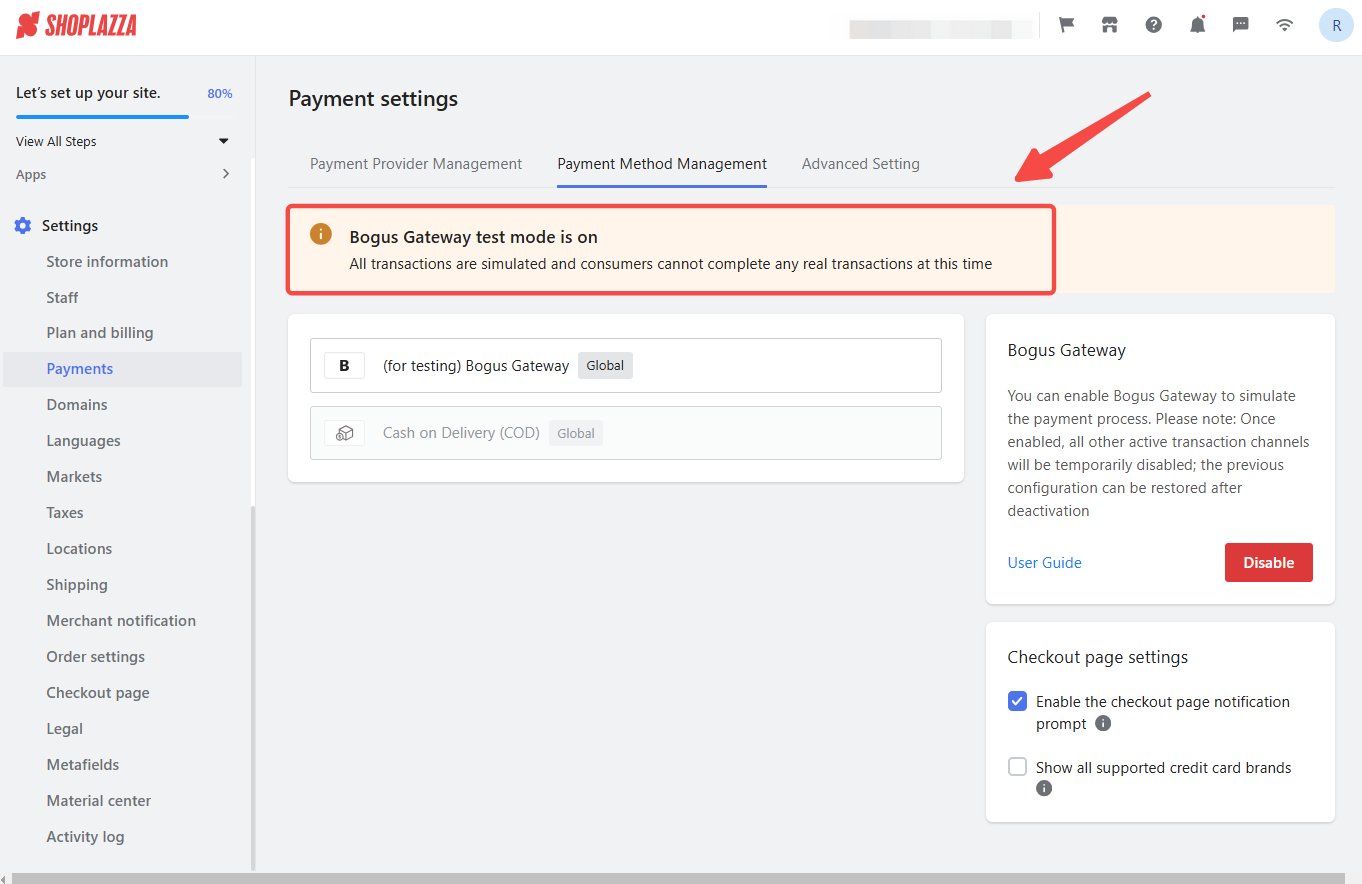
Complex complaints and negative reviews
AI customer service handles questions with fixed answers well. It doesn't handle situations that require judgment calls:
- A buyer receives a damaged or wrong item and wants a refund, but the supplier won't cooperate
- A buyer threatens a negative review unless you provide additional compensation
- A package goes missing in transit and responsibility isn't clear
- A buyer files a chargeback through their card issuer
The goal in these situations isn't to provide information — it's to decide how to respond in a way that minimizes damage to your store. A public negative review that stays up affects every future visitor who reads it. Handled well, some complaints can turn into repeat customers. That kind of judgment isn't something a tool can make for you.
Ongoing data review
Once your store is running, data tells you where things are going wrong. But data doesn't tell you what to do about it. Which product's conversion rate is sliding, which traffic source has the best return on ad spend, which page has an unusually high bounce rate — these need a person to look at them regularly and make a call.
Athena can pull store analytics, generate visual charts, and surface operational recommendations, which lowers the barrier to reading your data. But after the review, deciding what to change and what to prioritize is still your decision. Data is an input. The decision is yours.
Putting it together
The real efficiency gain from using AI in dropshipping isn't skipping steps — it's offloading execution so you have more capacity for judgment. Product selection, supplier vetting, and data review are the variables that actually determine whether a dropshipping store generates consistent orders over time. AI tools change how fast you can execute. They don't change the underlying logic of the business. How well things go depends on the quality of your decisions about the market, your supply chain, and your customers — not on how fast the execution happens.
Frequently asked questions about AI role
Q: What steps do I still need to handle myself when using AI for dropshipping?
The steps that require human judgment: product validation, supplier vetting and test orders, policy page content review, payment and tax setup, pre-launch end-to-end testing, complex complaint handling, and ongoing data review. These involve market judgment, compliance decisions, and supplier communication that AI tools can't reliably replace.
Q: Can AI product research tools replace manual product validation?
They can speed up the initial scan, but not replace the judgment. AI tools work with historical data — by the time a product appears on a trend list, competition is usually already building. Whether the profit margin is sufficient, whether the product fits your audience, and whether demand is sustainable all require you to evaluate the specifics of your situation.
Q: Can supplier integration be fully automated?
Order sync and inventory updates can be automated through native platform integrations. Supplier vetting and testing can't. Checking reviews, confirming shipping times and return policies, and placing a test order before listing are steps that need to happen manually. Skipping them usually shows up later as higher return rates and negative reviews.
Q: Can AI customer service fully replace a human support team?
Not completely. AI handles high-frequency standard questions well — order tracking, product specs, basic return process — typically covering 70% to 80% of daily volume. For refund disputes, chargebacks, lost packages, or emotionally escalated buyers, human judgment is needed. These situations are about decision-making and communication, not information retrieval.
Q: What's the most commonly skipped step when using AI for dropshipping?
Based on community feedback, the two most frequently skipped steps are policy page content review and pre-launch end-to-end testing. Policy issues usually surface when a buyer requests a return — at that point there's little room to fix them quickly. Testing issues are more immediate: a checkout error or missing confirmation email affects conversions from day one. Both steps take relatively little time, and skipping either one tends to be more costly than the time saved.